
Chick-fil-A’s Sunday closure is one of the most talked-about policies in American fast food. While many restaurants operate seven days a week, Chick-fil-A stands out by remaining closed every Sunday without exception. This decision has sparked curiosity, admiration, and debate. The real reason goes beyond simple tradition — it’s rooted in the company’s founding principles, employee well-being, operational strategy, and long-term brand identity. Understanding this policy reveals how deeply held values can shape a billion-dollar business.
The Founder’s Faith-Based Decision
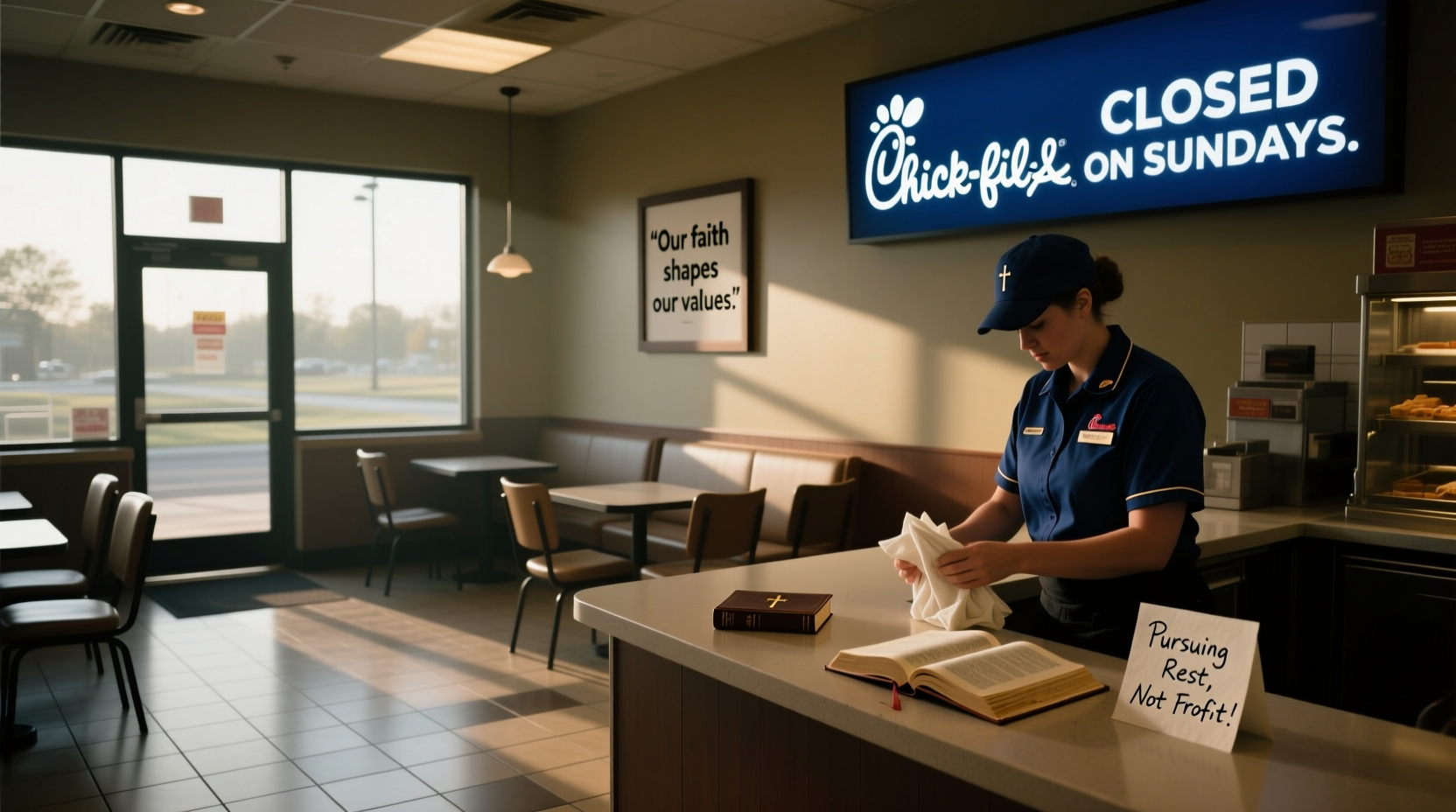
Truett Cathy, the founder of Chick-fil-A, established the first Dwarf Grill (later renamed Chick-fil-A) in 1946. A devout Southern Baptist, Cathy believed in honoring the Sabbath as a day of rest and worship. From the beginning, he made the deliberate choice not to open on Sundays, even as competitors pushed for round-the-clock operations to maximize profits.
This wasn’t just a personal preference — it was a core business principle. In interviews, Cathy often said, “We close on Sundays because we believe in keeping the Sabbath.” He viewed rest as both a spiritual and human necessity. His commitment to this value remained unchanged even as the chain expanded across the country.
“We decided early on that we would honor God through our work and also through our rest.” — Truett Cathy, Founder of Chick-fil-A
Employee Well-Being and Work-Life Balance
One of the most significant impacts of the Sunday closure is on employees. In an industry known for demanding schedules and burnout, Chick-fil-A offers its team members a guaranteed day off each week. This policy supports mental health, family time, and personal development.
Unlike many fast-food chains where weekend shifts are mandatory, Chick-fil-A employees know they will never be scheduled on Sundays. This predictability builds trust and loyalty. Many crew members cite the consistent day off as a major reason they stay with the company longer than at other jobs.
Operational Benefits Beyond Morality
While the original motivation was faith-based, the Sunday closure has yielded practical business advantages over time. These include:
- Reduced labor costs: One less operating day means lower weekly payroll expenses and scheduling complexity.
- Equipment maintenance: Stores use Sundays for deep cleaning, repairs, and inventory checks without disrupting service.
- Supply chain efficiency: With six-day delivery cycles, distributors can consolidate shipments and reduce overhead.
- Staff retention: Employees are more likely to stay when they have guaranteed downtime, reducing hiring and training costs.
In effect, what began as a moral stance evolved into a strategic differentiator. Competitors like McDonald’s or Wendy’s may earn extra revenue on Sundays, but they also face higher operational strain and employee turnover.
Brand Identity and Public Perception
Chick-fil-A’s Sunday closure has become a signature part of its brand. It communicates consistency, integrity, and a set of values that resonate with millions of customers. For some, it reflects a refreshing contrast to the \"always-on\" culture of modern consumerism.
A 2022 YouGov survey found that 57% of Americans view Chick-fil-A more favorably because of its Sunday closure, seeing it as a sign of respect for workers and tradition. Among religious consumers, approval jumps to over 70%. Even secular customers appreciate the message: this company prioritizes people over profit.
| Perception Factor | Positive View (%) | Negative View (%) |
|---|---|---|
| Supports work-life balance | 68% | 12% |
| Reflects strong values | 61% | 15% |
| Hurts convenience | 29% | 44% |
| Outdated practice | 22% | 38% |
Despite criticism about reduced accessibility, the overall sentiment leans positive. The closure reinforces authenticity in a marketplace where corporate claims of “values” are often met with skepticism.
Real Example: A Franchisee’s Perspective
Consider Sarah Lin, a franchise owner in suburban Atlanta who operates two Chick-fil-A locations. When she applied to become an operator, she was required to affirm her willingness to uphold all company practices — including the Sunday closure.
“At first, I worried about lost revenue,” she shared in a regional operator forum. “But within six months, I saw fewer no-shows, better morale, and smoother operations. My team uses Sundays to recharge, attend church, or spend time with family. They come back Monday refreshed. That energy shows in guest satisfaction scores.”
Her stores consistently rank in the top 10% for customer service in the region. She credits much of that success to the rhythm created by the weekly reset. “Closing one day lets us focus on doing the other six really well.”
Common Misconceptions About the Policy
Several myths surround Chick-fil-A’s Sunday closure. Clarifying these helps reveal the full picture:
- Myth: The company loses too much money.
Reality: While Sunday sales could add hundreds of millions annually, the cost savings and indirect benefits offset much of that loss. - Myth: Only religious employees benefit.
Reality: All staff gain from structured rest, regardless of belief. The policy is inclusive in practice. - Myth: It’s legally required.
Reality: No U.S. law mandates Sunday closures; it’s entirely voluntary.
Step-by-Step: How Chick-fil-A Maintains Operations Without Sunday Sales
Behind the scenes, the weekly shutdown is integrated into a disciplined operational cycle:
- Saturday Night: Managers conduct final sales audits and prepare for closure.
- Sunday: Designated maintenance crews perform deep cleans, equipment servicing, and safety inspections.
- Inventory Reconciliation: Stock levels are reviewed and adjusted ahead of Monday deliveries.
- Team Planning: Assistant managers review schedules, training logs, and performance metrics.
- Monday Morning: Restaurants open with fully stocked supplies, clean facilities, and rested staff.
This rhythm ensures quality control and prevents the gradual decline seen in constantly operating locations.
Checklist: What Other Businesses Can Learn From Chick-fil-A
Whether you run a small café or manage a national chain, consider adopting elements of Chick-fil-A’s model:
- ✅ Offer employees a guaranteed weekly day off
- ✅ Align operations with core values — not just profits
- ✅ Use downtime for preventive maintenance and training
- ✅ Communicate your reasons clearly to customers
- ✅ Measure long-term loyalty, not just daily sales
Frequently Asked Questions
Does Chick-fil-A ever open on Sundays?
No. Chick-fil-A does not open on Sundays, even during holidays like Easter or Christmas. The only exceptions are airports and hospitals, where 24/7 access is critical and staffing models differ.
Could Chick-fil-A make more money by opening on Sundays?
Potentially, yes. Analysts estimate that system-wide Sunday sales could generate over $1 billion annually. However, increased labor, logistics, and potential drops in employee satisfaction might erode those gains. Long-term brand equity may matter more than short-term revenue.
Do customers complain about the closure?
Some do, especially in areas with limited dining options. But most regular customers understand and respect the policy. Online reviews often praise the company for “sticking to their beliefs” and “treating workers right.”
Conclusion: Values-Driven Business Done Right
Chick-fil-A’s Sunday closure is more than a quirky policy — it’s a testament to how purpose-driven leadership can create sustainable success. What started as a faith-based decision has evolved into a holistic strategy supporting employee well-being, operational excellence, and brand trust.
In an era where consumers increasingly demand authenticity from corporations, Chick-fil-A demonstrates that standing firm on values isn't just ethical — it's smart business. By closing one day a week, they’ve built stronger teams, cleaner stores, and deeper customer loyalty.




 浙公网安备
33010002000092号
浙公网安备
33010002000092号 浙B2-20120091-4
Comments
No comments yet. Why don't you start the discussion?