
Clifford, the towering red canine who lives on Birdwell Island, has been a beloved figure in children’s literature and television for over six decades. At first glance, his most defining trait is obvious: he’s enormous—so large that he towers over houses, fits only partially in doghouses, and requires special accommodations just to exist in a human-scale world. But why is Clifford so big? The answer isn’t as simple as “because he’s fictional.” His size serves deeper narrative, emotional, and educational purposes that reflect thoughtful design by his creator, Norman Bridwell, and resonate with generations of young readers.
Understanding Clifford’s size means looking beyond the surface into the psychology of childhood imagination, the role of metaphor in early learning, and the evolution of character design in educational media. This article explores the multifaceted reasons behind Clifford’s colossal stature, blending historical context, authorial intent, and cultural impact.
The Origin Story: A Sketch That Grew Into a Legend
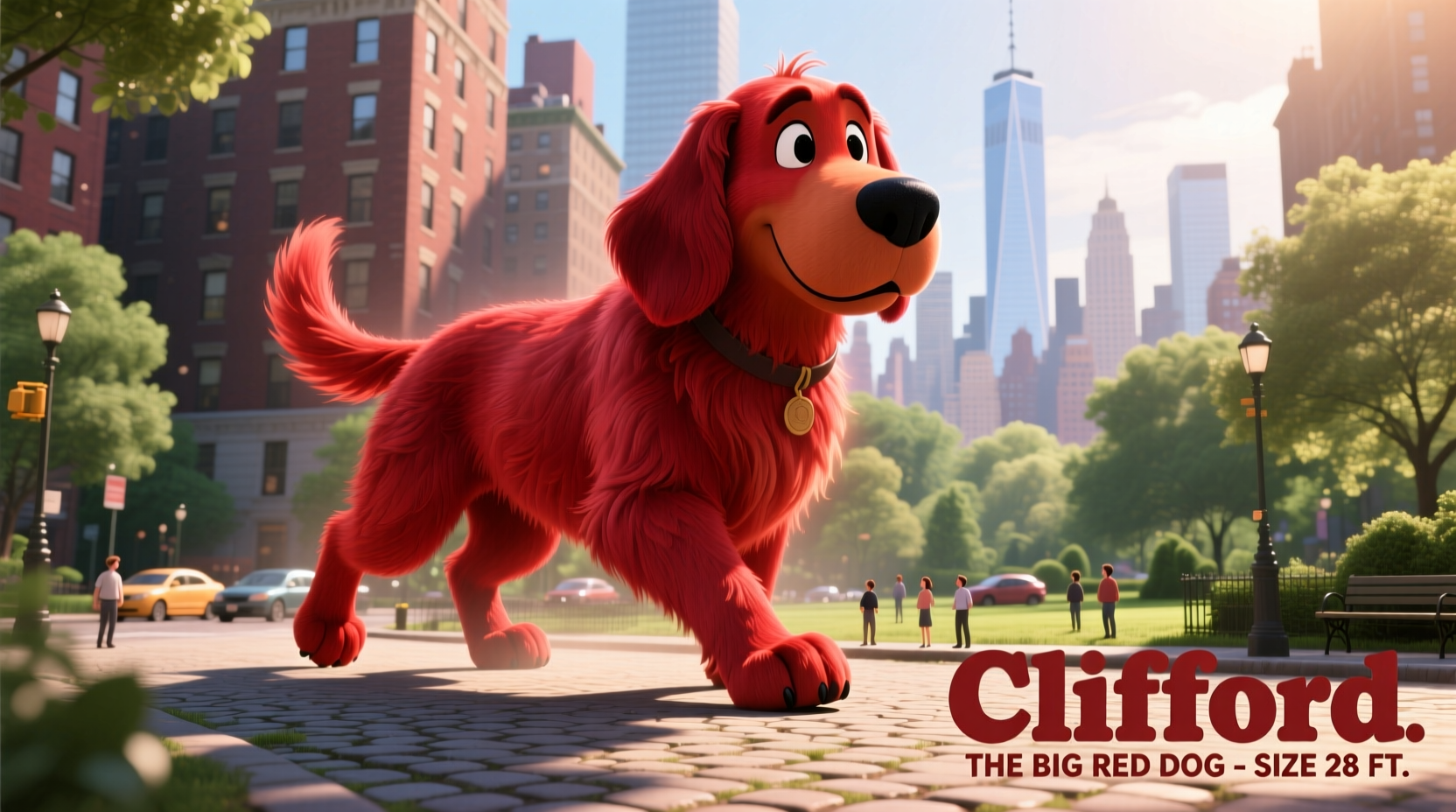
In 1963, artist and writer Norman Bridwell pitched a children’s book idea based on a doodle of a giant red dog. Publishers initially rejected the concept, calling it too unrealistic. But Bridwell persisted, believing that children would embrace the fantastical element. He named the dog Clifford after his childhood imaginary friend, and the rest became literary history.
Bridwell once said: “I thought a big red dog would be fun. Kids love things that are exaggerated—big, loud, colorful.” This insight reveals a foundational truth: Clifford’s size wasn’t an accident or oversight—it was intentional exaggeration designed to capture attention and spark wonder.
“Children don’t need everything to be realistic. They need it to feel true emotionally.” — Norman Bridwell
His size immediately sets him apart, making him memorable and visually striking. In a market crowded with animal characters, being literally larger than life ensured Clifford stood out on shelves and in classrooms.
Symbols of Love and Belonging: The Emotional Logic Behind Size
Clifford’s physical enormity mirrors emotional magnitude. Though he’s massive, he’s gentle, loyal, and deeply affectionate. This contrast teaches children that size doesn’t dictate character—kindness and empathy do. Emily Elizabeth, his owner, is a small girl, yet she has immense influence over Clifford through love and guidance. Their relationship models nurturing care regardless of physical differences.
In psychological terms, Clifford represents what child development experts call “safe exaggeration”—a fantastical element that helps children process real emotions. His size amplifies everyday situations: when he knocks over a mailbox, it’s not destruction; it’s a lesson in responsibility. When he scares neighbors with his bark, it becomes a story about managing fears and misunderstandings.
Educational Function: Making Lessons Unmissable
Clifford’s size isn’t just whimsy—it’s pedagogical strategy. Because he’s so large, every action has amplified consequences. This makes cause-and-effect lessons easier for young minds to grasp. If Clifford runs through a garden, the damage is visible and immediate. If he shares his doghouse with a smaller pet, the act of generosity feels monumental.
In early literacy programs, Clifford books are often used to teach social-emotional skills precisely because his actions are so visually and narratively prominent. Teachers can point to his behavior and ask: “What happened when Clifford didn’t wait his turn?” or “How did he fix the problem?” The scale makes abstract concepts concrete.
Clifford’s Size as a Teaching Tool: Real-World Classroom Applications
| Behavior | Lesson Taught | Why Size Helps |
|---|---|---|
| Knocks over a fence while playing | Responsibility & Repair | Damage is obvious; repair effort is visible |
| Barks too loudly at night | Community Awareness | Entire island hears him—impact is collective |
| Helps pull a stuck boat ashore | Strength Used for Good | Demonstrates power + kindness = heroism |
| Tries to hide but can’t fit anywhere | Self-Acceptance | Being different is unavoidable—and okay |
Cultural Evolution: How Media Amplified His Stature
While Clifford began as a series of picture books, his presence expanded into television, films, and merchandise. With each adaptation, his size became more pronounced—not physically, but symbolically. Animated versions emphasize his height with dramatic camera angles, showing homes dwarfed beneath his paws or birds circling his ears like helicopters.
A mini case study from a 2002 classroom observation in Portland, Oregon, revealed how preschoolers responded to Clifford’s TV show. After watching an episode where Clifford accidentally ruins a school play by entering backstage, children were asked: “Was he bad?” Over 80% said no, explaining that “he didn’t mean to” and “he helped fix it.” One child added, “He’s big, so things happen by accident more.” This shows that kids internalize his size not as a flaw, but as a condition that requires extra care—a subtle lesson in accountability.
Moreover, Clifford’s size allows for visual humor without cruelty. Slapstick moments—like getting stuck in a doorway or sneezing so hard he blows hats off—are funny because they’re absurd, not humiliating. The balance between gigantism and gentleness keeps the tone warm and inclusive.
Design Philosophy: Why Red and Why So Big?
Bridwell chose red not just for visibility, but for emotional resonance. Red signals warmth, energy, and love—the core traits of Clifford’s personality. Combined with his size, the color creates an unforgettable image: a beacon of positivity in any setting.
Character designers often use the principle of “silhouette recognition”—the idea that a character should be identifiable by outline alone. Think of Mickey Mouse’s ears or Superman’s cape. Clifford’s towering frame and rounded ears make his shadow instantly recognizable, even to pre-readers. This design choice enhances brand identity and aids cognitive development in young viewers.
- Large characters simplify visual storytelling for early learners.
- Exaggerated features reduce ambiguity in emotional expression.
- Memorable silhouettes support language acquisition through repetition.
Frequently Asked Questions
Is there an official explanation for Clifford’s size?
No scientific or in-universe biological explanation exists. Norman Bridwell consistently described Clifford’s size as imaginative license meant to engage children. Within the stories, characters accept his size as normal, focusing instead on his actions and heart.
Does Clifford keep growing throughout the series?
No. While early books suggest he grew rapidly as a puppy, Clifford reaches a stable adult size. His growth arc parallels emotional maturation—learning self-control, empathy, and community responsibility—rather than continued physical expansion.
Are there other animals on Birdwell Island this big?
No. Clifford is unique in his scale. Other pets and wildlife remain realistically sized, reinforcing that his enormity is exceptional and symbolic, not part of a world where all creatures are oversized.
Actionable Tips for Parents and Educators
Clifford’s stories offer rich opportunities for discussion and learning. Here’s how to leverage his size in meaningful ways:
- Use scale comparisons: Ask children to draw Clifford next to their house or school. This builds spatial reasoning and measurement concepts.
- Role-play scenarios: Act out episodes where Clifford causes an accident. Guide kids in brainstorming solutions, reinforcing problem-solving skills.
- Discuss differences: Link Clifford’s physical uniqueness to discussions about diversity, inclusion, and accepting others who seem “different.”
- Create “What If?” stories: Challenge kids to invent new tales where a normally small thing (a cat, a bird) is suddenly huge—exploring perspective and empathy.
Conclusion: Bigger Than Fiction, Larger Than Life
Clifford’s size is more than a quirk—it’s a carefully crafted narrative device that serves education, emotion, and imagination. He is big enough to command attention, gentle enough to earn trust, and flawed enough to teach lessons without preaching. In a world increasingly focused on realism and data, Clifford reminds us of the enduring power of symbolic storytelling.
His red fur and towering form are not just trademarks—they’re invitations to see kindness as something grand, love as something expansive, and growing up as a journey of both physical and moral proportion. Whether in books, classrooms, or living rooms, Clifford remains big because some ideas simply can’t be contained.




 浙公网安备
33010002000092号
浙公网安备
33010002000092号 浙B2-20120091-4
Comments
No comments yet. Why don't you start the discussion?