
At first glance, hiring a professional coach can seem like a luxury expense—especially when hourly rates range from $150 to over $500. For many, the sticker shock raises a simple but critical question: Why is coaching so expensive? The answer isn't about inflated prices or exclusivity. It's rooted in the tangible and intangible investments coaches make to deliver meaningful, transformational results. Behind every session are years of training, ongoing education, deep emotional labor, and highly personalized support that few other services offer at this level of intensity.
This article breaks down the true cost structure of professional coaching, revealing what justifies the investment and how clients benefit from it. Whether you're considering hiring a coach or exploring coaching as a career, understanding these components provides clarity and context for one of the fastest-growing personal development industries.
The Hidden Investment Behind Every Coaching Hour
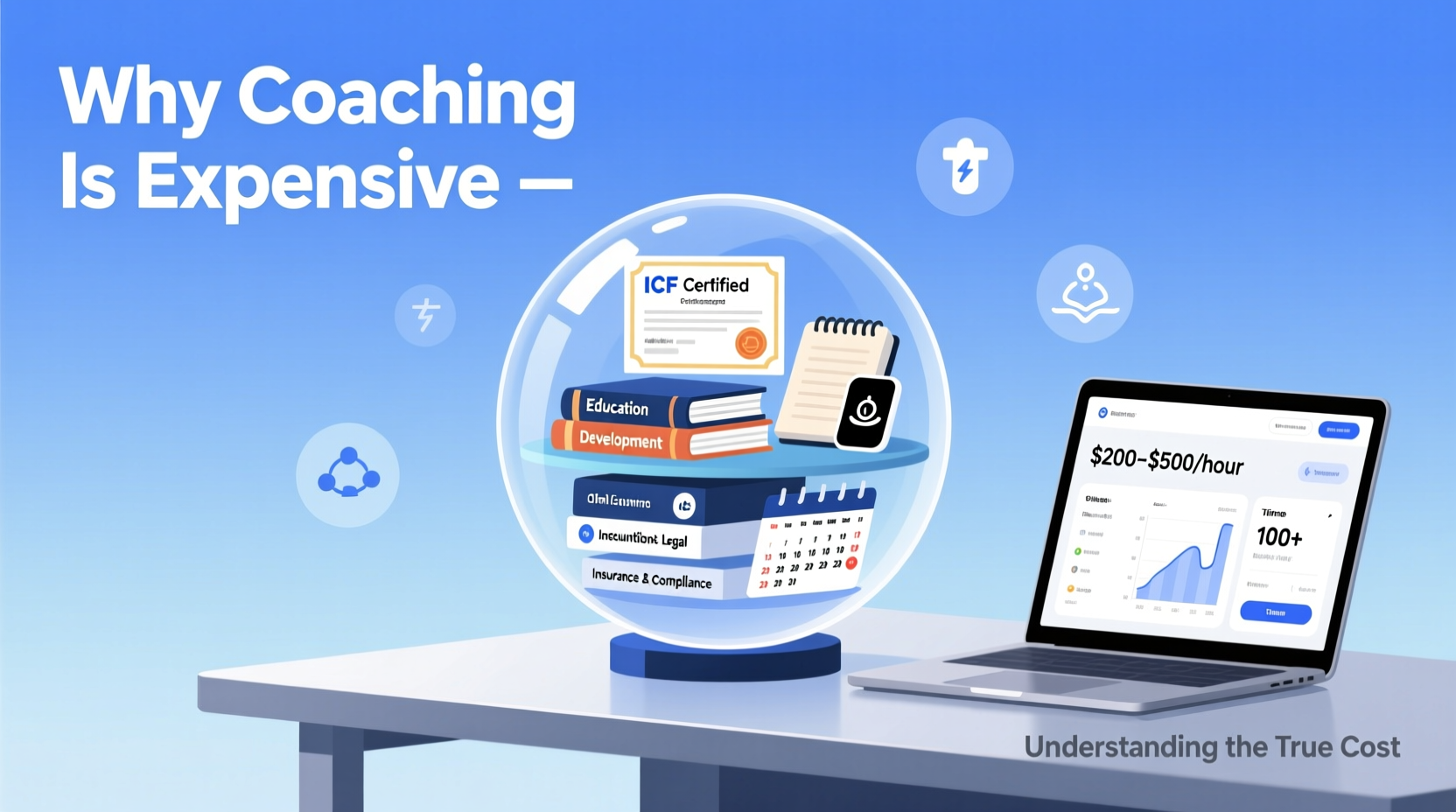
Coaching may appear to be just conversation, but it’s far more than casual advice. Professional coaching is a structured, goal-oriented process that requires active listening, strategic questioning, emotional intelligence, and accountability systems—all delivered in real time. Each hour spent with a client is supported by extensive preparation, reflection, and continuous skill refinement.
Consider this: a 60-minute session often includes:
- 15–30 minutes of pre-session review (goals, progress, challenges)
- 60 minutes of live, undivided attention and engagement
- 15–20 minutes of post-session note-taking and action planning
- Ongoing tracking of client progress across weeks or months
That’s at least two hours of dedicated work per session—most of which happens off the clock and unseen by the client. Coaches don’t charge only for face time; they charge for presence, preparation, and professionalism.
Training and Certification: The Foundation of Expertise
Becoming a certified coach isn’t a weekend workshop. Reputable programs require hundreds of training hours, mentor coaching, assessments, and practical experience. Organizations like the International Coach Federation (ICF) set rigorous standards: Associate Certified Coach (ACC) requires 60+ hours of training and 100 client hours, while Master Certified Coach (MCC) demands 200+ training hours and 2,500 client hours.
These certifications aren’t optional extras—they’re essential for credibility and competence. The average cost to become ICF-certified ranges from $5,000 to $15,000, covering tuition, mentorship, exams, and continuing education. Unlike self-taught influencers, professional coaches invest heavily in their craft before ever charging a client.
“Certification ensures coaches have mastered core competencies like active listening, powerful questioning, and ethical boundaries. That rigor protects both clients and the profession.” — Dr. Laura Thompson, Faculty Member at Columbia University’s Coaching Program
Overhead and Business Sustainability
Coaches operate as independent business owners. They don’t have employers covering health insurance, retirement plans, or office space. Their fees must cover all operational costs, including:
| Expense Category | Monthly Cost Range | Notes |
|---|---|---|
| Coaching School & Certification | $200–$600 | Amortized over years of practice |
| Software (CRM, Scheduling, Video) | $50–$150 | Necessary for seamless client management |
| Marketing & Website | $100–$300 | Essential for visibility and lead generation |
| Taxes & Accounting | $300–$800 | Self-employed pay double in taxes without employer contributions |
| Insurance & Legal Fees | $50–$100 | Professional liability and contracts |
| Continuing Education | $100–$250 | Maintaining skills and credentials |
After overhead, many coaches earn significantly less than their hourly rate suggests. A $200/hour coach working 20 client hours per month generates $4,000—but after expenses and taxes, net income may be closer to $2,200. This reality underscores why low pricing models often compromise quality or sustainability.
A Real-World Example: Sarah’s Leadership Coaching Journey
Sarah, a mid-level manager in tech, invested $3,000 in a 12-week leadership coaching program at $250 per session. Her initial hesitation faded when she reflected on the outcomes:
- Improved communication with her team, reducing conflict by 60%
- Negotiated a promotion with a 28% salary increase
- Developed a clear leadership philosophy and delegation strategy
“I thought $250 an hour was steep,” Sarah admitted. “But when I calculated my raise alone—over $20,000 extra annually—the ROI was undeniable. The coach didn’t just give advice; she helped me see blind spots and build confidence I couldn’t get from books or webinars.”
This case illustrates a broader truth: coaching isn’t a cost—it’s an investment with measurable returns in career growth, emotional resilience, and decision-making clarity.
What You’re Actually Paying For
When you hire a coach, you’re not paying for time. You’re paying for:
- Specialized Expertise: Deep knowledge in behavioral change, mindset shifts, and goal attainment.
- Accountability Systems: Structures that keep you moving forward, even when motivation fades.
- Uninterrupted Focus: A safe space where your goals are the sole priority.
- Pattern Recognition: Coaches identify recurring behaviors that hold clients back—often before the client notices them.
- Customization: No templates or scripts. Each session adapts to your evolving needs.
This level of personalization is rare in group courses or generic online content. Coaching delivers tailored guidance at a human scale, which inherently limits scalability and keeps prices higher than mass-market alternatives.
Checklist: Is Coaching Worth the Investment?
Ask yourself these questions before committing:
- Do I have a specific goal that requires consistent support and accountability?
- Have I tried self-help resources without lasting results?
- Am I willing to reflect honestly and take uncomfortable actions?
- Can I afford this without financial strain—or can I find a payment plan?
- Does the coach have verifiable credentials and client testimonials?
Frequently Asked Questions
Isn’t coaching just therapy or mentoring?
No. While coaching shares elements with both, it’s distinct. Therapy focuses on healing past trauma; coaching focuses on achieving future goals. Mentoring offers advice based on personal experience; coaching draws out your own solutions through guided inquiry. Coaches don’t tell you what to do—they help you discover what you already know.
Can’t I get the same results from a free podcast or book?
Books and podcasts provide valuable insights, but they lack interaction and accountability. Coaching creates momentum through real-time feedback, personalized challenges, and emotional support. Knowledge is power, but application is transformation—and coaching bridges that gap.
Are there affordable coaching options?
Yes. Many coaches offer sliding scales, group programs, or shorter introductory packages. Emerging coaches with strong training may charge lower rates to build experience. However, extremely low prices (e.g., $20/hour) often signal lack of training or unsustainable business models, which can impact quality.
Final Thoughts: Reframing the Value of Coaching
The price of coaching reflects its depth, not its exclusivity. Like hiring a personal trainer for your mind and career, coaching accelerates growth by combining expertise, consistency, and human connection. The costs—training, time, infrastructure—are real and necessary to maintain a high standard of service.
Instead of asking “Why is coaching so expensive?” consider reframing the question: “What is it worth to gain clarity, confidence, and measurable progress in the areas that matter most?” For countless professionals, entrepreneurs, and individuals navigating life transitions, the answer justifies the investment.




 浙公网安备
33010002000092号
浙公网安备
33010002000092号 浙B2-20120091-4
Comments
No comments yet. Why don't you start the discussion?