
Communication is the foundation of human interaction. From personal relationships to professional environments, the ability to convey thoughts, emotions, and information clearly shapes outcomes. Poor communication leads to misunderstandings, conflict, and missed opportunities, while strong communication fosters trust, collaboration, and progress. Understanding why communication is important—and applying it effectively—can transform how we connect with others and achieve our goals.
The Core Importance of Communication
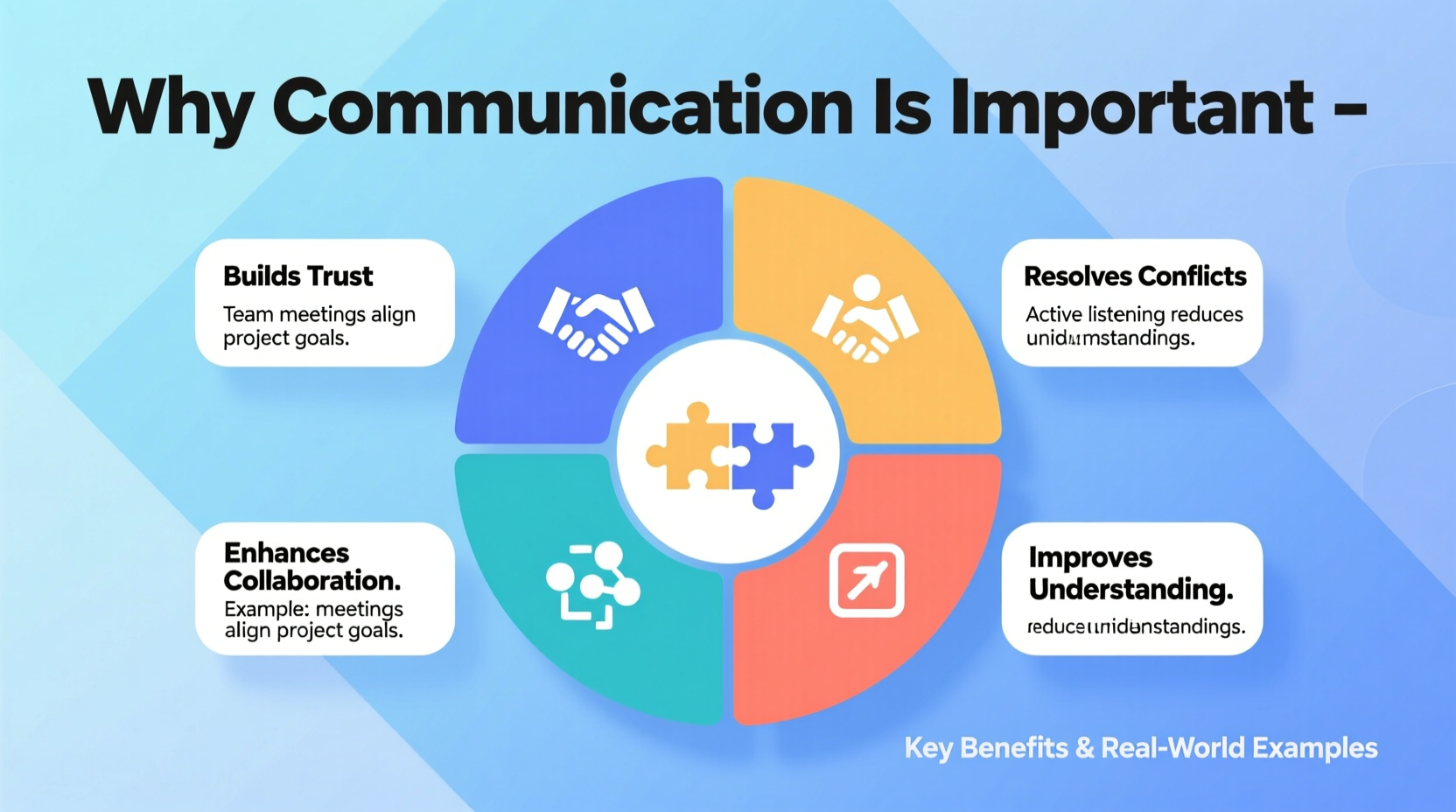
At its essence, communication is how people share meaning. Whether through spoken words, written text, body language, or tone of voice, every interaction carries information. In both personal and professional settings, the quality of communication determines the strength of relationships and the efficiency of operations.
In the workplace, miscommunication can result in project delays, errors, and low morale. A study by The Economist Intelligence Unit found that poor communication leads to project failure nearly half the time. On the other hand, teams with clear communication report higher engagement, faster problem resolution, and better innovation.
In personal life, communication builds emotional intimacy. Couples who communicate openly experience greater relationship satisfaction. Parents who listen actively raise children with higher self-esteem. Even in casual interactions, expressing oneself clearly helps avoid confusion and strengthens social bonds.
Key Benefits of Effective Communication
Strong communication skills offer tangible advantages across all areas of life. Here are five major benefits:
- Improved Relationships: Open dialogue fosters empathy and mutual respect, reducing conflicts and increasing connection.
- Increased Productivity: Clear instructions and feedback minimize errors and rework, keeping teams aligned and efficient.
- Better Decision-Making: When information flows freely, individuals and groups make informed choices based on shared insights.
- Enhanced Leadership: Leaders who communicate vision and expectations inspire confidence and motivate action.
- Stronger Problem-Solving: Collaborative communication encourages diverse perspectives, leading to creative solutions.
These benefits aren’t abstract—they translate into real-world results. A manager who listens to team concerns can adjust workflows to prevent burnout. A teacher who explains concepts clearly improves student comprehension. A friend who validates emotions deepens trust.
Real-World Examples of Communication in Action
Consider a software development team launching a new app. The project lead holds daily stand-up meetings where each member shares progress and roadblocks. By encouraging open communication, the team identifies a critical bug early, avoids a delayed launch, and delivers on time. This isn’t luck—it’s the result of consistent, transparent dialogue.
In healthcare, communication saves lives. A nurse notices subtle changes in a patient’s condition and promptly informs the doctor using the SBAR (Situation, Background, Assessment, Recommendation) protocol. Because the message is structured and urgent, the medical team intervenes quickly, preventing complications.
On a personal level, imagine a couple navigating financial stress. Instead of avoiding the topic, they schedule a weekly money check-in. They discuss income, expenses, and goals without blame. Over time, their honest communication reduces anxiety and strengthens their partnership.
“Communication works for those who work at it.” — John Powell, theologian and author
Essential Communication Skills and How to Apply Them
Effective communication isn’t just about talking—it’s about connecting. Key skills include active listening, clarity, empathy, nonverbal awareness, and adaptability.
- Active Listening: Focus fully on the speaker, avoid interrupting, and reflect back what you hear.
- Clarity and Brevity: Use simple language and get to the point without unnecessary details.
- Empathy: Acknowledge emotions and show understanding, even when you disagree.
- Nonverbal Cues: Maintain eye contact, use open body language, and match your tone to your message.
- Adaptability: Adjust your style based on your audience—whether speaking to a colleague, child, or client.
| Skill | Do | Avoid |
|---|---|---|
| Listening | Nod, paraphrase, ask follow-up questions | Interrupting, multitasking, finishing sentences |
| Speaking | Use “I” statements, stay calm, be specific | Raising voice, blaming, generalizing (“You always…”) |
| Writing | Proofread, structure logically, define purpose | Using jargon, writing emotionally in the moment |
Step-by-Step Guide to Improving Daily Communication
- Start with intention: Before speaking or sending a message, clarify your goal. Are you informing, persuading, or connecting?
- Observe your audience: Consider their background, mood, and preferred communication style.
- Choose the right channel: Sensitive topics often require face-to-face or video calls; quick updates can be emails or texts.
- Deliver clearly: Structure your message with a beginning (purpose), middle (details), and end (next steps).
- Seek feedback: Ask, “Does that make sense?” or “What are your thoughts?” to ensure alignment.
- Reflect and adjust: After important conversations, assess what worked and what could improve.
Common Communication Pitfalls and How to Avoid Them
Even well-intentioned people fall into communication traps. One of the most common is assuming others understand without verification. Another is reacting emotionally instead of responding thoughtfully.
Passive communication—avoiding conflict or withholding opinions—erodes trust over time. Conversely, aggressive communication, marked by blame and raised voices, shuts down dialogue. The healthiest approach is assertive communication: expressing needs respectfully while acknowledging others’ rights.
To avoid misinterpretation in written messages, especially emails or texts, read them aloud before sending. Tone is easily lost in digital formats. If a message feels ambiguous or tense, consider a call instead.
Checklist: Building Better Communication Habits
- Practice active listening in every conversation
- Use “I feel” statements instead of “You made me” accusations
- Confirm understanding by summarizing key points
- Limit distractions during important discussions
- Give constructive feedback regularly, not just during reviews
- Ask open-ended questions to encourage dialogue
- Be mindful of body language and facial expressions
Frequently Asked Questions
Why is communication important in leadership?
Leaders set direction and inspire action. Without clear communication, vision becomes unclear, priorities blur, and teams lose motivation. Effective leaders communicate goals consistently, provide timely feedback, and create an environment where employees feel heard and valued.
Can poor communication affect mental health?
Yes. Chronic miscommunication or lack of expression can lead to frustration, isolation, and anxiety. In relationships, unmet emotional needs due to poor dialogue contribute to resentment and depression. Healthy communication acts as a release valve for stress and a bridge to support.
How can I improve communication with someone who doesn’t listen?
Start by examining your own delivery. Are you being concise and respectful? Choose calm moments to talk. Use phrases like “I’d appreciate it if you could hear me out” to set the tone. If the pattern persists, address the behavior directly: “I notice I’m having trouble getting my point across. Can we find a better way to talk?”
Conclusion
Communication is not a soft skill—it’s a core life competency. Whether building a career, nurturing relationships, or resolving conflict, the ability to express and understand is fundamental. The benefits are clear: stronger connections, better decisions, and greater personal and professional success.
Improving communication doesn’t require dramatic changes. Small, consistent actions—listening more, speaking with clarity, checking for understanding—compound over time. Start today by choosing one habit from the checklist and practicing it deliberately. The impact will ripple through every area of your life.




 浙公网安备
33010002000092号
浙公网安备
33010002000092号 浙B2-20120091-4
Comments
No comments yet. Why don't you start the discussion?