
Human beings are inherently social creatures. From the moment we are born, our survival and development depend on relationships—with caregivers, peers, family, and community. Yet in an age of digital overload and increasing isolation, many people feel more alone than ever. The science is clear: meaningful social connections are not just nice to have—they are essential for physical health, emotional well-being, and long-term resilience.
Loneliness has been linked to higher risks of heart disease, depression, and even early mortality. In contrast, individuals with strong social networks tend to live longer, recover faster from illness, and report greater life satisfaction. This article explores why connection matters, the tangible benefits of healthy social bonds, and practical ways to nurture them in everyday life.
The Biological Need for Belonging
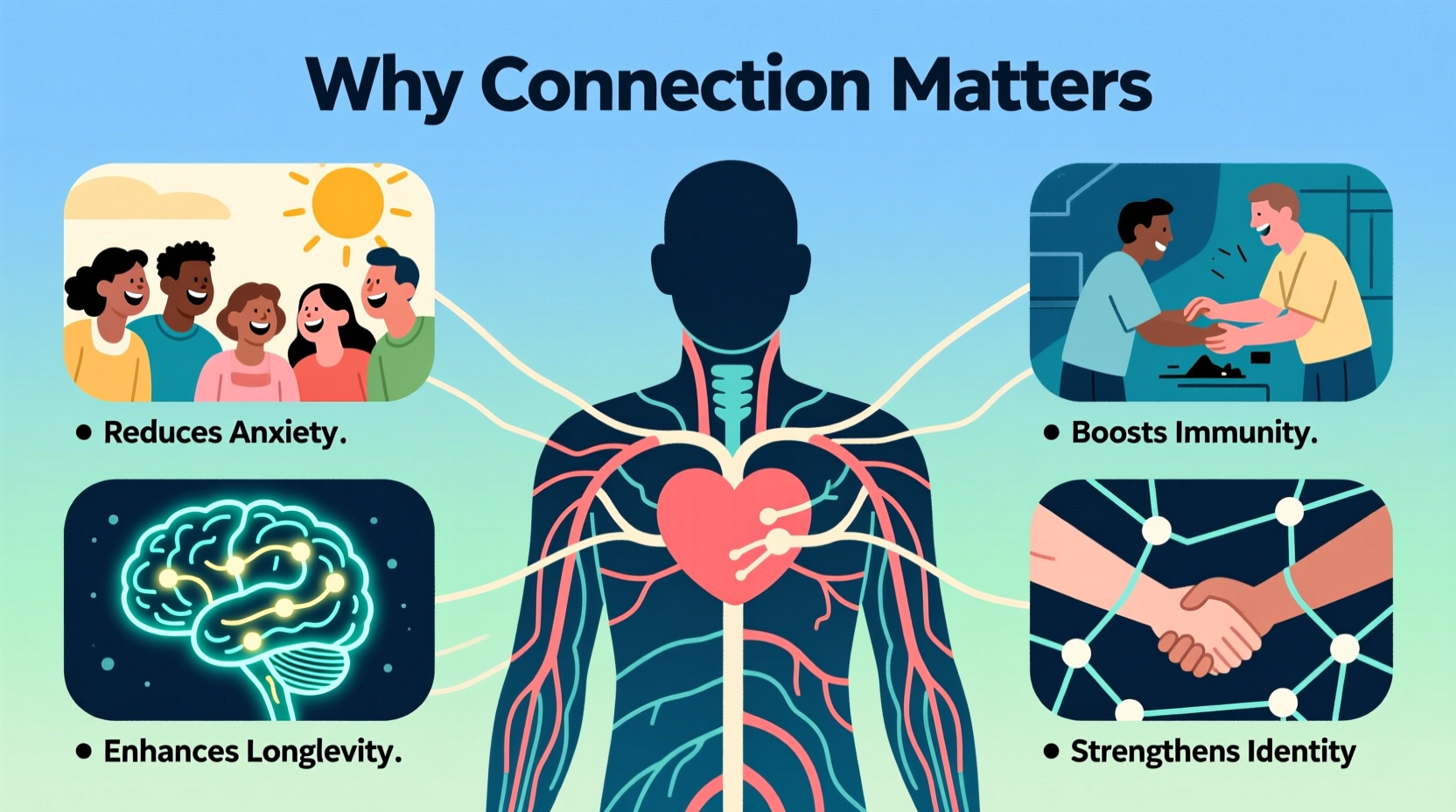
Connection isn’t just a psychological desire—it’s wired into our biology. Evolutionary psychologists argue that humans developed in tribal groups where cooperation ensured survival. Being excluded from the group once meant certain death; today, social rejection activates the same regions of the brain as physical pain.
Oxytocin, often called the \"bonding hormone,\" plays a crucial role in attachment and trust. It surges during positive social interactions—like hugging a loved one or sharing a laugh with a friend—reducing stress and promoting feelings of safety. Similarly, cortisol, the stress hormone, tends to decrease when we feel supported by others.
“Social connection is a fundamental human need, as critical to survival as food and water.” — Dr. Matthew Lieberman, Professor of Psychology, UCLA
When we lack connection, our bodies remain in a state of low-grade alert, increasing inflammation and weakening immune function. Conversely, feeling seen, heard, and valued signals to the nervous system that we are safe, allowing us to relax, heal, and thrive.
Mental and Emotional Benefits of Strong Social Bonds
Robust relationships act as a buffer against life’s challenges. Whether facing job loss, grief, or anxiety, having someone to talk to makes a measurable difference in coping ability.
- Reduced risk of depression and anxiety: People with close confidants are significantly less likely to develop mood disorders.
- Greater emotional regulation: Sharing emotions with trusted individuals helps process difficult experiences and gain perspective.
- Increased self-worth: Healthy relationships reinforce identity and provide affirming feedback.
- Improved resilience: Knowing you’re not alone strengthens your capacity to endure hardship.
Physical Health Advantages of Social Connection
The impact of social bonds extends far beyond mood. Numerous studies show that people embedded in supportive networks experience better physical outcomes across the lifespan.
| Health Outcome | With Strong Social Ties | With Weak or No Ties |
|---|---|---|
| Life Expectancy | Up to 50% higher survival rate | Comparable risk to smoking 15 cigarettes/day |
| Heart Disease Risk | Lower blood pressure and reduced inflammation | Higher incidence of hypertension and cardiac events |
| Immune Function | Stronger response to vaccines and infections | Slower recovery times and increased vulnerability |
| Cognitive Decline | Slower progression of dementia symptoms | Earlier onset and faster deterioration |
A landmark study published in PLOS Medicine analyzed data from over 300,000 participants and found that individuals with active social lives had a 50% greater likelihood of surviving over the study period compared to those who were isolated. The researchers concluded that social integration is as influential on longevity as exercise, diet, and avoiding smoking.
Real-Life Example: A Community That Heals
In the wake of a natural disaster, a small coastal town faced widespread damage and trauma. While some residents withdrew, a local church organizer initiated weekly community dinners. At first, only a few attended. But over time, these gatherings became a space to share stories, offer help, and simply be together.
Within six months, local clinics reported fewer cases of acute stress disorder. Residents described feeling “less burdened” and “more hopeful.” Emergency responders noted that neighbors were checking on each other, organizing cleanups, and supporting vulnerable elders. The informal network didn’t replace professional aid—but it accelerated healing in ways medicine alone could not.
This case illustrates how shared presence, even without formal structure, fosters collective resilience. Connection doesn’t require grand gestures; consistency and authenticity matter most.
How to Strengthen Your Social Bonds: A Practical Checklist
Building and maintaining relationships takes intention. Use this checklist to cultivate deeper, more fulfilling connections.
- Reach out to one person per week just to check in—no agenda required.
- Practice active listening: put away distractions and focus fully during conversations.
- Express appreciation regularly—say “thank you” or write a brief note of gratitude.
- Join a group or class aligned with your interests (book club, fitness group, volunteer org).
- Set boundaries to protect relationship quality—avoid overcommitting or engaging in toxic dynamics.
- Be vulnerable: share something personal to deepen trust gradually.
- Schedule recurring meetups (e.g., monthly coffee, weekly call) to maintain continuity.
Frequently Asked Questions
Can online friendships be as beneficial as in-person ones?
Yes—when they involve authentic interaction, mutual support, and emotional depth. Video calls and meaningful messaging can sustain bonds, especially when physical proximity isn't possible. However, face-to-face contact offers unique nonverbal cues and oxytocin release, making it slightly more potent for bonding.
I’m introverted. Do I still need strong social ties?
Absolutely. Introversion relates to energy source—solitude recharges you—but it doesn’t eliminate the need for connection. Introverts often thrive with fewer but deeper relationships. Prioritize one-on-one time or small gatherings that align with your temperament.
What if I’ve lost touch with people or feel too isolated to start?
Begin small. Reconnect with an old acquaintance via a simple message. Attend a low-pressure event like a library talk or community garden meeting. Consider speaking with a therapist to explore barriers to connection. Progress builds momentum—one step at a time.
Conclusion: Make Connection a Daily Practice
In a world that often prioritizes productivity over presence, nurturing social bonds may seem secondary. But the truth is, connection is foundational. It shapes how we think, feel, heal, and grow. Whether through a daily text to a sibling, a lunch date with a colleague, or volunteering alongside neighbors, every act of reaching out strengthens the fabric of well-being.
You don’t need to become the most social person to benefit. Start where you are. Choose one relationship to invest in this week. Listen deeply. Show up consistently. The rewards—longer life, better health, greater joy—are not theoretical. They are real, measurable, and within reach.




 浙公网安备
33010002000092号
浙公网安备
33010002000092号 浙B2-20120091-4
Comments
No comments yet. Why don't you start the discussion?