
Devils Lake, located in northeastern North Dakota, is the largest natural body of water in the state. Despite its scenic beauty and popularity for fishing, boating, and recreation, the name “Devils Lake” evokes curiosity—and sometimes confusion. Why would such a picturesque place carry a name associated with evil or danger? The answer lies in a blend of linguistic misunderstanding, cultural interpretation, and historical context that spans centuries.
The story of how Devils Lake got its name is not rooted in malevolence but in translation errors, indigenous oral traditions, and European exploration. Unpacking this history reveals more than just etymology—it offers insight into the complex interactions between Native peoples and early explorers, as well as the lasting impact of language on geography.
The Indigenous Roots: Spirit Water and Sacred Land
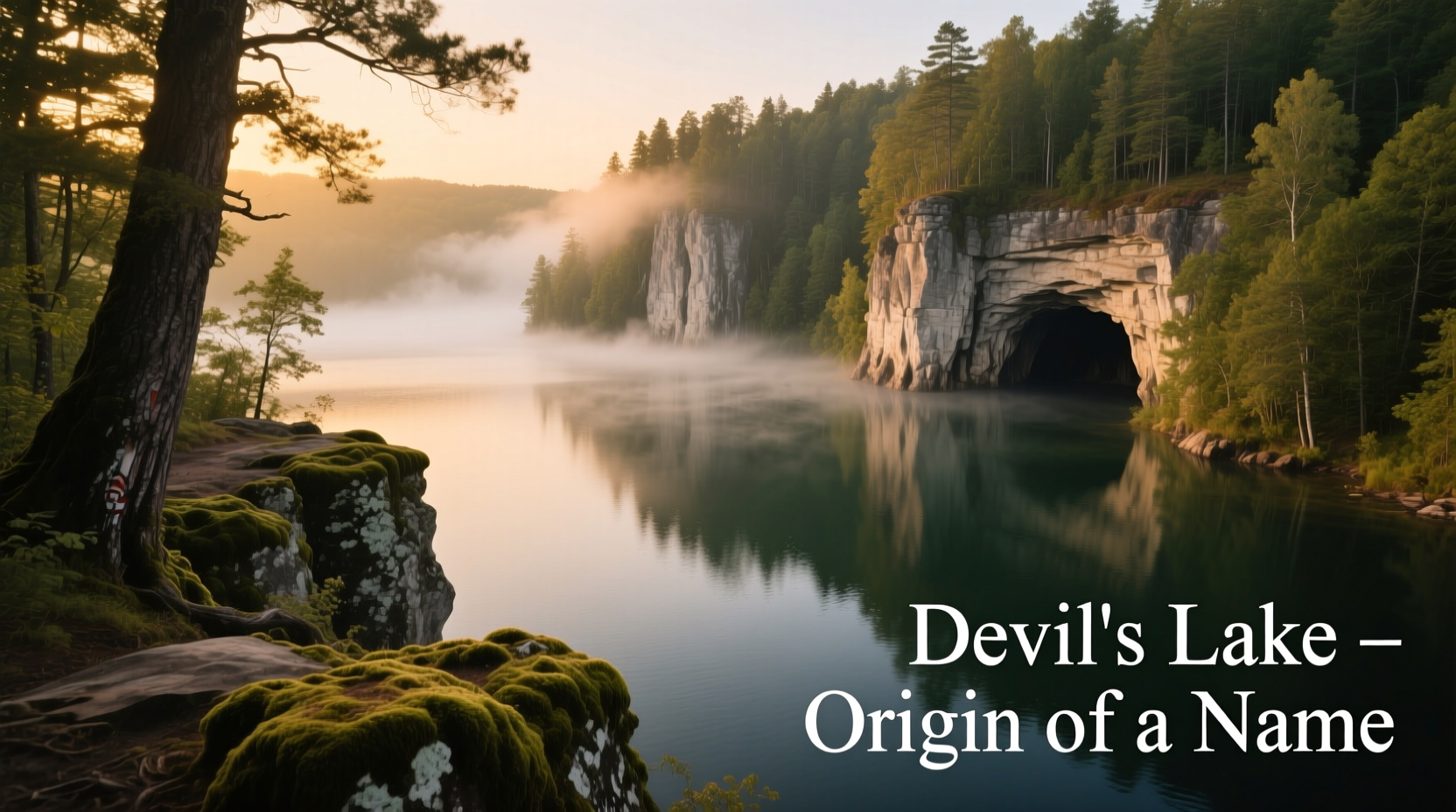
Long before European contact, the area around modern-day Devils Lake was inhabited by various Indigenous groups, primarily the Dakota and Lakota Sioux. To these communities, the lake was not seen as sinister but rather as spiritually significant. Known in the Dakota language as *Mni Wakan*—meaning “Spirit Water” or “Sacred Water”—the lake held ceremonial importance and featured prominently in tribal stories and cosmology.
According to oral tradition, the region was believed to be home to powerful underwater spirits. These beings were neither good nor evil in the Western sense but were instead forces of nature to be respected. Some legends describe creatures beneath the surface capable of causing storms or swallowing people whole if proper reverence wasn’t shown. Such narratives were common among many Plains tribes when describing large, unpredictable bodies of water.
Importantly, the concept of a singular “devil” as understood in Christian theology did not exist in traditional Dakota belief systems. Instead, spiritual entities were part of a balanced, interconnected world. The idea of labeling the lake after a demonic figure came later, through foreign interpretation.
French Explorers and the Misinterpretation of ‘Mni Wakan’
The transformation of *Mni Wakan* into “Devils Lake” likely began with French fur traders and missionaries who traveled through the region in the 18th and early 19th centuries. Fluent in Latin-based languages and steeped in Catholic doctrine, these explorers interpreted unfamiliar spiritual concepts through their own religious lens.
When told about *Mni Wakan*, they may have heard “wakan” (sacred) and associated it with supernatural power—often linked to evil forces in European thought. Without a direct equivalent for the nuanced Dakota spirituality, some interpreters translated *Wakan Tanka* (Great Spirit) or *Mni Wakan* as “demon,” “evil spirit,” or “devil.” This led to early maps referring to the body of water as *Lac du Diable*—French for “Lake of the Devil.”
This mistranslation was not unique to Devils Lake. Across North America, European mapmakers frequently labeled geographic features with ominous names based on misunderstood Indigenous terms. For example, nearby “Spirit Lake” in Iowa retained a closer translation of the original concept, while others became “Devil’s” or “Demon” landmarks due to similar interpretive biases.
“Names are never neutral—they reflect power, perspective, and worldview. When colonizers renamed sacred spaces, they often erased the original meaning.” — Dr. Linda White, Ethnohistorian and Professor of Native American Studies
Official Naming and Settler Influence
The name “Devils Lake” gained official traction during U.S. government surveys in the mid-to-late 1800s. As westward expansion accelerated, federal surveyors relied on existing French and English maps, many of which already used variations of “Devil’s Lake.” In 1867, the Northern Pacific Railroad expedition recorded the name as “Devil’s Lake,” cementing it in public records.
By the time settlers arrived in the late 19th century, the name had become standard. Townsites were established, including what is now the city of Devils Lake, incorporated in 1883. With no widespread effort to correct the misnomer or restore the original Dakota name, the label persisted—even as local tribes continued to refer to it as *Mni Wakan*.
Interestingly, the apostrophe was eventually dropped, changing “Devil’s Lake” to “Devils Lake,” possibly due to bureaucratic simplification or typographical error. Today, both the lake and the surrounding city bear the name without possessive punctuation, though older documents often include it.
Timeline of Name Evolution
The naming journey of Devils Lake reflects broader patterns in American geographic history. Below is a simplified timeline showing key moments in the evolution of the name:
- Pre-1700s: Dakota and Lakota peoples refer to the lake as *Mni Wakan*, emphasizing its spiritual significance.
- Early 1700s–1800s: French explorers translate “wakan” as “diable,” leading to the use of *Lac du Diable* on maps.
- Mid-1800s: American surveyors adopt the anglicized version “Devil’s Lake” in official reports.
- 1867: The Northern Pacific Railroad expedition uses “Devil’s Lake” in published surveys.
- 1883: The town of Devils Lake is founded and incorporated, formalizing the name.
- 20th Century–Present: “Devils Lake” becomes standard; efforts to recognize the original name grow among Indigenous advocates.
Modern Perspectives and Cultural Reclamation
In recent decades, there has been increasing awareness of the inaccuracies embedded in colonial-era place names. Tribes such as the Spirit Lake Nation (formerly known as the Fort Totten Reservation), located near the lake, have advocated for greater recognition of the original Dakota name, *Mni Wakan*. Educational programs, signage, and cultural events now often reference both names to honor the full history of the region.
Some geographers and historians argue that renaming—or dual-naming—geographic features can serve as a form of reconciliation. Canada, for instance, has restored Indigenous names to numerous lakes and rivers. While no official change has occurred at Devils Lake, discussions continue about how best to acknowledge its true heritage.
| Era | Name Used | Origin/Context |
|---|---|---|
| Pre-colonial | Mni Wakan | Dakota term meaning “Spirit Water,” reflecting sacred status |
| 1700s–1800s | Lac du Diable | French misinterpretation of “wakan” as “devil” |
| Mid-1800s | Devil’s Lake | Anglicized version adopted by U.S. surveyors |
| Late 1800s–Present | Devils Lake | Official spelling without apostrophe; used for lake and city |
Frequently Asked Questions
Is Devils Lake actually haunted or dangerous?
No, despite its name, Devils Lake is not inherently dangerous or haunted. The name stems from a historical mistranslation, not real peril. It is a popular destination for recreation, though like any large lake, it requires standard water safety precautions.
Do the local Indigenous communities still call it Mni Wakan?
Yes, many members of the Spirit Lake Nation and other Dakota speakers continue to use *Mni Wakan* in cultural and educational contexts. There is ongoing advocacy to increase public recognition of this original name.
Has there been any effort to rename Devils Lake officially?
There have been informal discussions and educational campaigns, but no formal legislative effort to rename the lake. Dual naming—using both \"Devils Lake\" and \"Mni Wakan\"—has been suggested as a compromise to honor both histories.
Conclusion
The name “Devils Lake” is a product of cross-cultural misunderstanding, linguistic approximation, and historical inertia. Far from being a place of evil, it was once—and still is to many—considered sacred water. Understanding the true origin of the name challenges us to look beyond surface-level interpretations and appreciate the rich, layered histories embedded in the landscapes we inhabit.
Whether you're a resident, visitor, or student of history, recognizing the journey from *Mni Wakan* to Devils Lake invites reflection on how language shapes perception. By acknowledging both the past and present meanings of this North Dakota landmark, we move toward a more accurate and respectful relationship with place.




 浙公网安备
33010002000092号
浙公网安备
33010002000092号 浙B2-20120091-4
Comments
No comments yet. Why don't you start the discussion?