
When Donnie Darko premiered in 2001, it quickly gained a reputation as a thought-provoking, surreal psychological thriller. Over time, it evolved into a cult classic, admired for its complex narrative, haunting atmosphere, and philosophical undertones. However, one consistent point of curiosity among viewers—especially parents or younger audiences—is why the film carries an R rating from the Motion Picture Association (MPA). Unlike many R-rated films that rely heavily on graphic violence or explicit content, Donnie Darko earns its rating through a combination of mature themes, disturbing imagery, strong language, and emotional intensity. Understanding the full context behind this classification reveals how content ratings go beyond surface-level triggers.
Understanding the MPAA Rating System
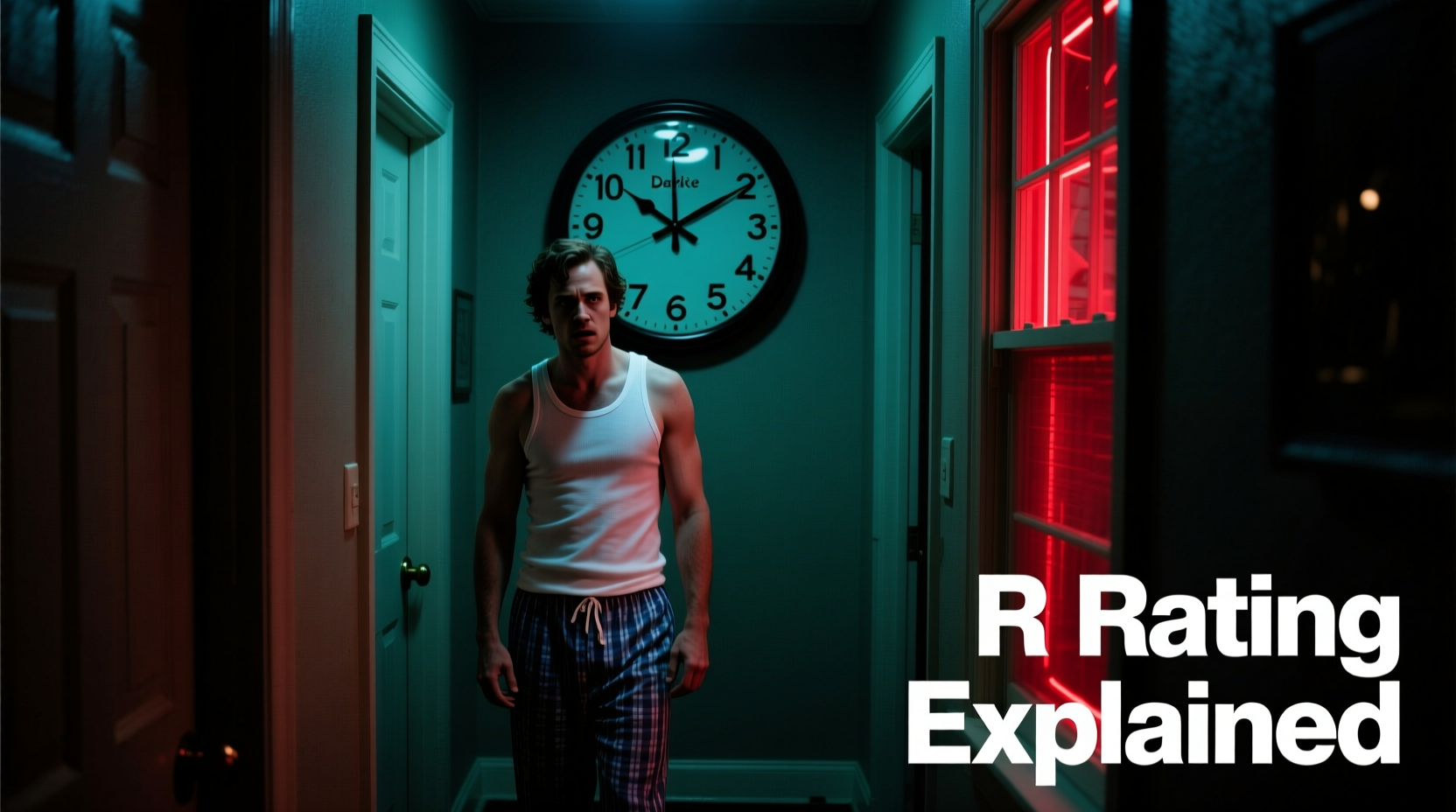
The Motion Picture Association of America (MPAA) assigns film ratings to guide audiences on content suitability. The “R” rating stands for “Restricted,” meaning viewers under 17 require accompanying parent or guardian. This designation isn’t arbitrary; it reflects specific criteria including language, violence, sexual content, drug use, and thematic elements.
According to the MPAA, Donnie Darko was rated R “for language, some violent images, and brief sex/nudity.” While these descriptors may seem mild compared to action or horror films, they represent cumulative impact rather than isolated extremes. The film’s tone, pacing, and psychological depth amplify the weight of each element, contributing to an overall experience deemed inappropriate for younger teens without supervision.
Key Factors Behind the R Rating
Several interwoven components justify the R classification. These are not just checkboxes but integral aspects of the film’s storytelling and emotional resonance.
1. Mature and Disturbing Themes
Donnie Darko delves into existential dread, mental illness, predestination, and the fragility of reality. The protagonist, Donnie, suffers from hallucinations and sleepwalking episodes, guided by a nightmarish figure in a rabbit suit named Frank, who claims to know the end of the world is near. These elements aren't presented as fantasy escapism—they’re grounded in psychological unease and ambiguity.
The film explores schizophrenia, suicidal ideation, and manipulation of time and identity. It raises questions about free will versus fate, often leaving viewers unsettled. As noted by Dr. Sarah Chen, clinical psychologist and media analyst:
“Films like Donnie Darko challenge young minds with abstract concepts tied to trauma and dissociation. Without proper context, they can be misinterpreted or emotionally overwhelming for adolescents still developing coping mechanisms.” — Dr. Sarah Chen, Clinical Psychologist
2. Violent and Intense Imagery
While Donnie Darko avoids gratuitous gore, it includes scenes of psychological and physical violence that linger due to their symbolic weight. One pivotal moment involves a jet engine crashing into Donnie’s bedroom while he’s absent—an event that sets the entire narrative in motion. Later, characters meet tragic ends, including a public shooting and self-sacrifice.
The portrayal of Frank—the six-foot-tall rabbit apparition—is particularly unnerving. His distorted voice and cryptic messages create a persistent sense of dread. For younger viewers, especially those sensitive to horror-adjacent visuals, these elements can provoke anxiety or nightmares.
3. Strong Language and Substance Use
The film features frequent use of strong profanity, including multiple uses of slurs and sexually charged language. Characters smoke cigarettes, and there are references to prescription medication misuse. In one subplot, a teacher faces professional consequences after students discover she wrote a sexually suggestive novel under a pseudonym—a storyline involving moral judgment and adult relationships.
These moments contribute to the film’s realistic depiction of high school life in the early 1980s, but also reinforce its mature tone. The language isn’t used for shock value alone; it reflects character development and social dynamics, yet remains unsuitable for general audiences.
4. Sexual Content and Nudity
A brief scene shows partial nudity during a school therapy session where students write essays about their first sexual experiences. Another sequence includes kissing and implied intimacy between teenage characters. Though not explicit, these scenes are candid and discussed openly within the narrative, placing them outside the boundaries of PG-13 appropriateness according to MPAA standards.
Comparison: R vs. PG-13 Boundaries
| Content Type | PG-13 Guidelines | Donnie Darko’s Content | Rating Impact |
|---|---|---|---|
| Language | Limited strong profanity (one F-word typically allowed) | Multiple uses of strong language, including slurs | Contributes to R rating |
| Violence | Moderate, non-graphic depictions | Psychologically intense, fatal events with emotional weight | Elevates maturity level |
| Sexual Content | Brief nudity or innuendo usually acceptable | Discussions of sex, partial nudity in therapeutic context | Tips scale toward restriction |
| Themes | Generally accessible to teens | Existential crisis, mental illness, time paradoxes | Major factor in R classification |
Real-World Example: A Parent’s Dilemma
Jamie Rivera, a high school counselor in Portland, Oregon, shared a real scenario illustrating the importance of understanding film ratings. She recalled advising a concerned parent whose 14-year-old son became anxious after watching Donnie Darko at a friend’s house. The boy began questioning reality, worrying he might be hallucinating like Donnie.
“He wasn’t clinically unstable,” Rivera explained, “but the film triggered existing insecurities about fitting in and feeling different. That’s the risk when mature themes aren’t contextualized.”
This case highlights how even intelligent, emotionally stable teens can be affected by content that blurs the line between imagination and psychosis—especially when viewed without guidance.
Is the R Rating Still Justified Today?
In today’s media landscape, where teens regularly access mature content online, some argue that Donnie Darko’s R rating feels outdated. After all, the film lacks explicit sex scenes, prolonged violence, or drug binges. Yet the rating persists because it reflects cumulative impact, not isolated incidents.
Films like Everything Everywhere All At Once and Hereditary have recently received R ratings for similar reasons: emotional intensity, surreal horror, and philosophical darkness. The MPA continues to prioritize psychological safety, recognizing that tone and implication matter as much as literal content.
Checklist: Is Donnie Darko Appropriate for Your Teen?
- ✅ Has your teen shown interest in philosophical or psychological topics?
- ✅ Are they comfortable discussing mental health and alternate realities?
- ✅ Can they distinguish between fiction and reality when exposed to disturbing imagery?
- ✅ Have you watched the film together or discussed its themes afterward?
- ✅ Are they sensitive to themes of death, isolation, or loss?
If most answers are yes, viewing with supervision may be appropriate. If several are no, consider waiting or choosing alternative films with similar depth but milder presentation.
Frequently Asked Questions
Can a 15-year-old watch Donnie Darko?
Legally, no—unless accompanied by a parent or guardian. More importantly, maturity matters more than age. Some 15-year-olds can process the film’s complexity; others may find it distressing. Parental discretion is strongly advised.
What would make Donnie Darko PG-13?
Reducing profanity, removing the brief nudity, and softening the psychological horror elements could potentially shift it to PG-13. However, doing so would fundamentally alter the film’s artistic integrity and intended impact.
Is the director’s cut more intense?
Yes. The Director’s Cut includes additional scenes that heighten the apocalyptic tone and expand on Frank’s role, making it even more intense and surreal than the theatrical version. It is less suitable for younger audiences.
Final Thoughts: Respecting the Rating, Understanding the Message
The R rating for Donnie Darko isn’t a flaw—it’s a safeguard. The film challenges viewers to confront difficult questions about identity, time, and human connection. Its power lies in ambiguity and emotional depth, not spectacle. That same strength makes it inappropriate for casual teen viewing.
Great cinema often pushes boundaries, but with that comes responsibility. Whether you're a parent, educator, or young viewer, take the rating seriously—not as a barrier, but as a signal to engage thoughtfully. Watch with awareness, discuss openly, and appreciate the film for what it is: a daring, intelligent exploration of the human psyche that demands emotional readiness.




 浙公网安备
33010002000092号
浙公网安备
33010002000092号 浙B2-20120091-4
Comments
No comments yet. Why don't you start the discussion?