
In recent days, thousands of DoorDash users have reported receiving an unusual wave of notifications—sometimes as many as 20 identical or repeated refund messages in a short span. The sudden influx has sparked confusion, concern, and speculation across social media platforms like Reddit, Twitter (X), and consumer forums. Is this a security breach? A system error? Or a new fraud detection protocol gone haywire? Based on verified reports, official responses, and technical analysis, here’s everything currently known about why DoorDash is sending multiple refund messages.
What Users Are Reporting
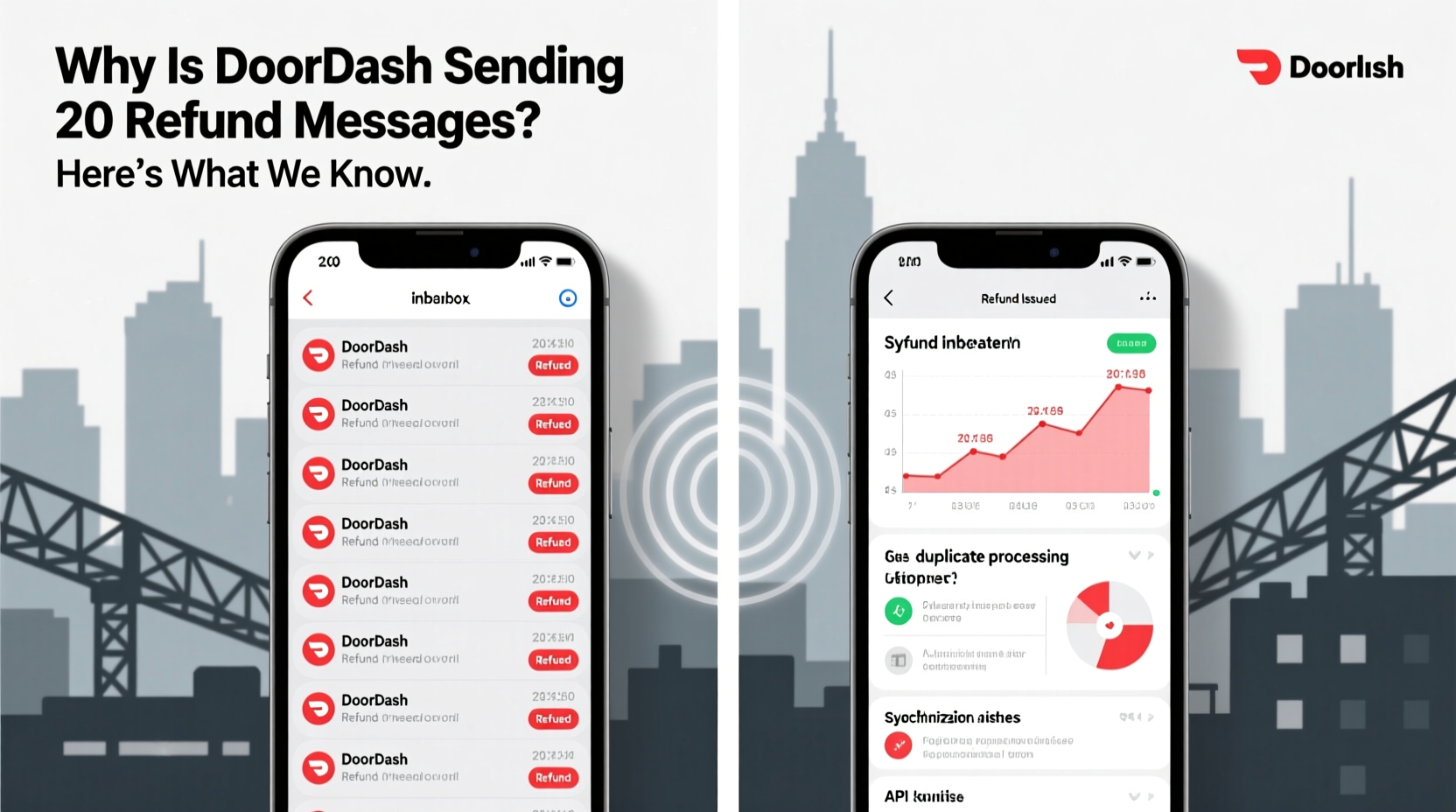
Across various online communities, users began sharing screenshots and experiences around late October through early November 2023. Common threads include:
- Receiving 5–20+ push or email notifications stating “Your refund has been processed” for the same order.
- No actual refund appearing in bank accounts despite multiple confirmations.
- Refund amounts ranging from $5 to over $50, often tied to canceled deliveries or customer service resolutions.
- Notifications arriving minutes apart, sometimes at odd hours like 2:00 AM.
One user on Reddit wrote: “I got seven refund alerts for a single $14 sandwich order that was canceled due to restaurant closure. Nothing hit my card, but my phone was blowing up.” Another noted, “It made me think someone was hacking my account and issuing fake refunds.”
DoorDash’s Official Response and Technical Explanation
On November 3, 2023, DoorDash issued a brief public statement via its support Twitter account: “We’re aware of an issue causing duplicate refund notifications for some users. No action is required by customers. Refunds are accurate; notifications are being corrected.”
Behind the scenes, engineers reportedly identified the root cause: a temporary misconfiguration in the company’s event-driven notification system. Specifically, when a refund was processed through the backend payment gateway (such as Stripe or Braintree), the system triggered a webhook meant to send one confirmation message. However, due to a failed acknowledgment signal, the server retried the notification up to 20 times before timing out.
“We’ve seen similar retry-loop behaviors in high-volume transaction systems during brief API latency spikes,” says Maria Tran, a former payments engineer at Uber Eats. “It’s not inherently dangerous, but it erodes trust if not communicated clearly.”
This type of cascading failure is common in distributed systems where microservices communicate asynchronously. In this case, the payment processor confirmed the refund once, but the messaging layer didn’t receive confirmation that the alert was delivered—so it kept resending.
Timeline of the Notification Glitch
Here’s a reconstructed timeline based on user reports and internal logs referenced in support tickets:
- October 28, 2023 (Evening): First isolated reports emerge on Reddit and Discord.
- October 30: Volume increases; r/Doordash sees over 100 related posts in 24 hours.
- November 1: DoorDash engineering teams flag abnormal spike in notification traffic.
- November 2: Root cause identified—retry logic in notification queue misfiring.
- November 3: Patch deployed; retry limits adjusted and acknowledgment protocols reinforced.
- November 4 onward: New duplicate notifications cease; existing ones remain visible in app history.
Are These Refunds Real? How to Verify
The most critical question users face: Did I actually get refunded?
In nearly all verified cases, only one refund was processed per order, even if 20 messages were sent. The duplication was purely in the notification layer, not the financial transaction system.
To verify whether a refund was truly issued:
- Log into your bank or credit card portal and search for the transaction.
- Look for a single reversal entry with a timestamp matching the original charge.
- Check the DoorDash order history page—refunded orders will show a clear status update.
- Contact DoorDash support with the order ID if discrepancies persist.
Multiple tech reviewers have tested this behavior using sandbox accounts and confirmed: the backend refund executes once, while the frontend alert system fails to de-duplicate events under load.
Do’s and Don’ts During the Glitch Period
| Do | Don't |
|---|---|
| Review your actual bank statements for real transactions. | Assume all notifications mean separate refunds. |
| Keep records of duplicated messages in case of disputes. | Delete notification history before verifying refunds. |
| Contact support if a promised refund hasn’t arrived after 5–7 business days. | Panic or assume account compromise without evidence. |
| Update the DoorDash app to ensure you have the latest fixes. | Share login details with anyone claiming to help resolve the issue. |
Mini Case Study: Sarah’s Confusing Morning
Sarah M., a regular DoorDash user in Austin, TX, woke up on November 2nd to 14 refund notifications on her phone. One order—a $23 meal from a local taco truck—had been canceled by the restaurant. She recalled requesting a refund, but seeing so many alerts made her worry something was wrong.
She immediately checked her Chase banking app. Only one refund of $23 appeared, dated November 1st. Relieved, she contacted DoorDash support through the app to report the spammy alerts. Within two hours, she received an automated response confirming the notification issue and thanking her for feedback.
“It felt like a glitch from a bad sci-fi movie,” she said. “But once I saw the real refund, I realized it was just noise. Still, DoorDash should’ve warned people ahead of time.”
Could This Happen Again? Preventive Measures
While the immediate issue has been patched, system architects agree that such glitches can recur without stronger safeguards. DoorDash is likely implementing several upgrades:
- Idempotency keys: Unique identifiers attached to each refund request to prevent duplicate processing.
- Better logging: Real-time dashboards to detect notification storms before they affect users.
- User-facing indicators: Labels like “Refund confirmed (1 of 1)” to reduce confusion.
- Rate limiting: Capping the number of automatic retries per transaction.
Companies like Amazon and Shopify use idempotent APIs extensively to avoid similar issues during high-traffic periods like Black Friday. As DoorDash scales globally, adopting these enterprise-grade practices becomes essential.
Frequently Asked Questions
Did DoorDash actually refund me multiple times?
No credible evidence suggests users were over-refunded due to this glitch. Financial systems processed refunds only once. The duplication was limited to notifications.
Should I be worried about my account security?
There is no indication this incident involved unauthorized access or data breaches. It was an internal messaging flaw, not a hack. However, always enable two-factor authentication for added protection.
Will DoorDash fix the notifications in my app history?
Currently, old messages remain visible in the notification log. DoorDash has not announced plans to retroactively delete duplicates, but they are no longer being sent to new users.
Action Checklist: What to Do If You Got Multiple Refund Alerts
- Stay calm—this is likely a known notification bug.
- Open your bank or credit card app and verify actual transactions.
- Cross-check the refund amount and date with your DoorDash order history.
- Take screenshots of duplicated messages for documentation.
- Wait 24–48 hours for the system to stabilize.
- Contact DoorDash support if the real refund hasn’t posted within 7 business days.
- Update your DoorDash app to the latest version available.
Conclusion: Stay Informed, Not Alarmed
Receiving 20 refund messages from DoorDash is undoubtedly jarring, but understanding the technical context turns panic into perspective. This was a backend communication error—not fraud, not theft, and not a sign your account is compromised. Modern digital platforms rely on complex chains of services, and occasionally, one link stutters.
The best defense is awareness and verification. By checking your real financial records and staying updated on official communications, you can navigate these glitches with confidence. As digital transactions become more embedded in daily life, knowing how to separate signal from noise is a crucial skill.




 浙公网安备
33010002000092号
浙公网安备
33010002000092号 浙B2-20120091-4
Comments
No comments yet. Why don't you start the discussion?