
The title of Frank Herbert’s landmark 1965 science fiction novel, Dune, may seem simple at first glance—just one word, evocative and stark. Yet that single word carries immense weight, shaping the entire narrative, world-building, and thematic depth of what would become one of the most influential works in speculative fiction. The choice of “Dune” as a title was neither arbitrary nor merely descriptive. It reflects the planet’s physical reality, ecological urgency, spiritual symbolism, and the fragile balance between man and environment.
Beyond being a setting, Arrakis—the desert planet known colloquially as Dune—is a character in its own right. Its name, often used interchangeably with \"Dune,\" speaks to the omnipresence of sand, scarcity, and survival. To understand why the story bears this title, one must look beyond surface geography into the layers of meaning Herbert wove throughout his universe.
The Literal Landscape: A Planet of Sand
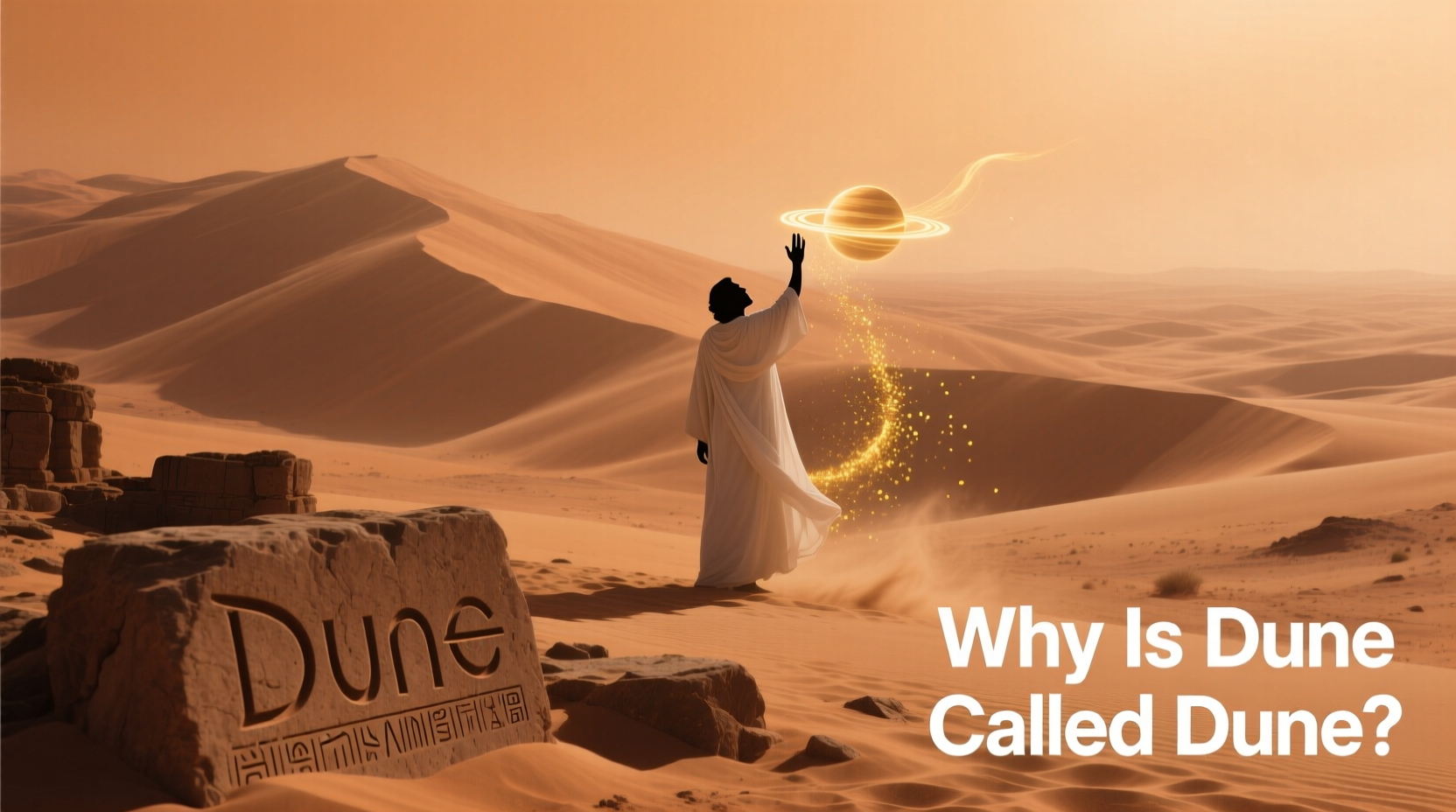
At its most basic level, “dune” refers to a mound of sand formed by wind, typically found in deserts. Arrakis, the primary setting of the novel, is a near-uninhabitable desert world covered almost entirely in vast seas of sand. Towering dunes shift constantly under relentless winds, creating an ever-changing terrain. These formations are not just background scenery—they dictate movement, warfare, architecture, and even religion.
The Fremen, the native people of Arrakis, live in harmony with the dunes. Their survival depends on understanding sand patterns, conserving water, and navigating without leaving traces. The very instability of the dunes mirrors the precariousness of life on the planet. Unlike Earth-based stories where nature is lush and forgiving, Dune presents nature as both adversary and ally—a force to be respected, studied, and ultimately transformed.
Ecological Consciousness: The Message Beneath the Sand
Frank Herbert wrote Dune during a time when environmental awareness was beginning to emerge globally. He had a deep interest in ecology, having researched sand dune stabilization projects for a magazine article before writing the novel. That real-world experience directly inspired the transformation efforts led by Liet-Kynes and later continued by Paul Atreides.
The concept of terraforming—turning Arrakis from a desert wasteland into a habitable, green world—is central to the series' long-term arc. But Herbert doesn’t present this process as purely heroic. He questions whether altering an entire ecosystem, no matter how harsh, is morally justifiable. The sandworms, sacred to the Fremen and essential to spice production, cannot survive in water-rich environments. Thus, changing the planet means destroying part of its natural order.
“Deep in the human unconscious there is an apocalyptic zero—the zero return, the end of all things. This is the essence of the myth of Dune.” — Frank Herbert
In this context, calling the book Dune emphasizes the fragility and sanctity of ecosystems. The title becomes a warning: ignore the balance of nature, and you risk collapse. The dune is not just a pile of sand—it’s a system, a cycle, a living entity shaped by forces larger than any individual.
Spiritual and Symbolic Dimensions of 'Dune'
The word “dune” also resonates on a metaphysical level. In many spiritual traditions, deserts represent places of trial, revelation, and purification. Moses wandered the desert for forty years. Jesus fasted in the wilderness. Muhammad received revelations in solitude. Similarly, Paul Atreides undergoes exile, hardship, and transformation on Arrakis, emerging not just as a leader but as a messianic figure.
The dune, then, symbolizes the crucible through which greatness—or destruction—is forged. It strips away comfort, exposes truth, and demands adaptation. The stillness of the desert allows introspection, while its dangers demand constant vigilance. This duality makes the dune a powerful metaphor for personal and societal evolution.
Moreover, the cyclical nature of dunes—formed by wind, eroded, rebuilt—mirrors the themes of renewal and recurrence in the novel. History repeats itself. Power shifts. Prophecies unfold. The sands bury empires only to reveal them again centuries later. By naming the novel after this geological feature, Herbert suggests that civilizations, like dunes, are temporary formations shaped by invisible currents—political, religious, and ecological.
A Timeline of Transformation: From Desert to Destiny
To fully appreciate the significance of the title, consider the evolving role of the dune across the series:
- 1965 – Dune (Book 1): Introduction of Arrakis as a hostile yet vital world. The dune represents survival and scarcity.
- 1969 – Dune Messiah: Paul rules from the desert throne, but the cost of prophecy and power begins to erode his vision. The dune becomes a prison of fate.
- 1976 – Children of Dune: Leto II embraces the sandworm, merging with the planet’s essence. The dune evolves into a divine construct.
- Later Books: Terraforming progresses, challenging the purity of the desert. The meaning of “Dune” shifts—from preservation to memory.
This progression shows how the title gains deeper resonance over time. What starts as a geographical descriptor becomes a philosophical anchor.
Why Not Call It 'Arrakis'? A Comparative Insight
One might wonder: if the planet has a name—Arrakis—why call the book Dune? The answer lies in accessibility and universality. “Arrakis” sounds alien, distant, technical. “Dune” is immediate, visual, tactile. Anyone can picture a dune. Fewer can imagine a fictional planet without context.
| Aspect | \"Arrakis\" | \"Dune\" |
|---|---|---|
| Tone | Clinical, political | Poetic, primal |
| Association | Imperial control, spice economy | Nature, survival, spirituality |
| Emotional Impact | Distance, bureaucracy | Intimacy, awe |
| Memorability | Moderate | High (simple, evocative) |
By choosing “Dune,” Herbert grounded a complex interstellar narrative in something elemental. The title invites readers not just to observe a faraway world, but to *feel* its heat, taste its dust, and fear its silence.
Frequently Asked Questions
Is 'Dune' the official name of the planet?
No. The planet’s formal name is Arrakis. “Dune” is a nickname derived from its dominant landscape and popularized by off-worlders and media. Within the story, some characters use “Dune” casually, while others—especially the Fremen—prefer Arrakis or refer to it as “the desert.”
Do other planets in the Dune universe have similar names?
Not exactly. Most planets are named after noble houses (e.g., Caladan, Giedi Prime) or historical references. Arrakis stands out because its nickname reflects its environment rather than politics. This reinforces its uniqueness in the cosmos—and in the reader’s mind.
Was the title ever changed or debated?
Yes. Early drafts were titled *Dune World* and serialized under that name in *Analog* magazine. Publishers initially doubted the commercial viability of a novel so focused on ecology and religion. But Herbert insisted on simplicity. He believed “Dune” captured the soul of the story better than any elaborate alternative.
Practical Takeaways: How to Read 'Dune' with Deeper Understanding
To truly grasp why the novel is called Dune, approach it with these habits:
- Notice how weather and terrain affect every major plot point.
- Reflect on how scarcity shapes culture, language, and belief systems.
- Track references to sand, wind, and erosion—they’re rarely incidental.
- Consider the moral implications of terraforming. Is progress always good?
- Compare Paul’s journey to classical hero myths set in deserts or wildlands.
Conclusion: More Than Just a Name
The title Dune is deceptively simple, yet profoundly layered. It encapsulates the planet’s physical reality, ecological message, spiritual undertones, and narrative trajectory. More than a label, it’s a lens through which to view the entire saga. Frank Herbert didn’t just write a story about a desert planet—he crafted a meditation on humanity’s relationship with nature, power, and time, all anchored in the quiet majesty of a single shifting dune.
Every grain of sand tells a story. Now that you know why it’s called Dune, you’ll never see those grains the same way again.




 浙公网安备
33010002000092号
浙公网安备
33010002000092号 浙B2-20120091-4
Comments
No comments yet. Why don't you start the discussion?