
Elden Ring isn’t just a challenging action RPG—it’s a labyrinth of myth, symbolism, and fragmented storytelling. For many players, the real difficulty doesn’t come from boss fights, but from understanding what’s actually happening in the world of the Lands Between. The lore is deep, poetic, and deliberately obscure, leaving newcomers wondering: Why is it so hard to follow? Unlike traditional games with linear narratives and exposition-heavy cutscenes, Elden Ring trusts players to piece together its story through environmental clues, cryptic dialogue, and item descriptions. This approach rewards curiosity but can feel overwhelming at first.
The confusion isn't a flaw—it's by design. FromSoftware, the studio behind Dark Souls and Bloodborne, has long favored environmental storytelling over hand-holding. In collaboration with fantasy novelist George R.R. Martin, who helped shape the foundational myths of the world, Elden Ring builds a universe that feels ancient, lived-in, and deeply mysterious. But without knowing where to look or how to interpret what you find, it’s easy to feel lost. This guide breaks down why the lore is so complex and offers practical ways to make sense of it—without needing a PhD in Tarnished theology.
The Nature of Elden Ring’s Storytelling
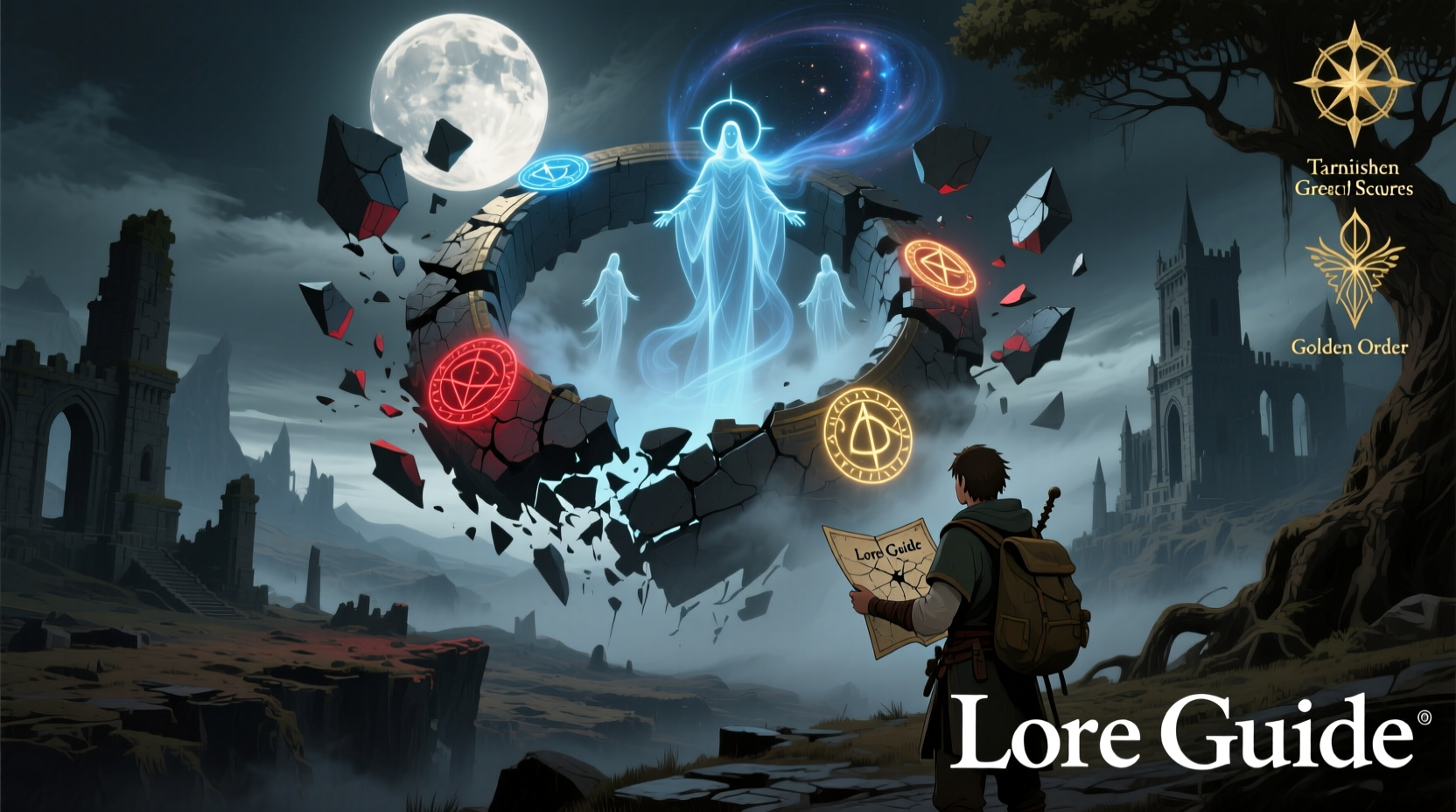
Elden Ring doesn’t tell its story like most video games. There are no lengthy cutscenes explaining political shifts, no narrators guiding you through centuries of history. Instead, the narrative unfolds indirectly. You learn about the Shattering—the civil war among demigod children of Queen Marika—not by watching a documentary, but by reading a single line on a weapon description: “Dropped by a soldier who fought in the War of the Three Towers.”
This method, known as environmental storytelling, relies on implication rather than direct communication. Ruined castles, abandoned temples, and NPC monologues filled with metaphor all contribute to the larger picture. The game assumes you’re paying attention. It rewards exploration and rereading item texts. But for someone expecting a straightforward plot, this can feel like trying to assemble a puzzle with half the pieces missing—and no image on the box.
“Players should feel like archaeologists uncovering a dead civilization.” — Hidetaka Miyazaki, Director of Elden Ring
Miyazaki has often stated that he wants players to experience a sense of discovery. The mystery is part of the atmosphere. But that same mystery becomes a barrier when key characters have multiple names (Radahn is also Starscourge Radahn, Redmane, General of the Red), factions overlap, timelines blur, and gods speak in riddles. The game doesn’t explain who the Two Fingers are, what the Outer Gods want, or why the Erdtree burns gold—but these details matter.
Why the Lore Feels Overwhelming
Several interconnected factors make Elden Ring’s lore especially difficult for beginners:
- Non-linear narrative structure: Events are not presented chronologically. You might encounter a character’s corpse before meeting them alive in a flashback-like vision.
- Dense terminology: Words like “Incantations,” “Sacred Tears,” “Great Runes,” and “Numen” aren’t explained in-game and require external context.
- Mythological depth: The backstory involves divine wars, broken oaths, time loops, and metaphysical concepts borrowed from real-world religions and philosophy.
- Multiple perspectives: NPCs lie, misremember, or interpret events through bias. What one priest says about Queen Marika may contradict another’s account.
- No central protagonist voice: As a Tarnished, you don’t speak or react. Your silence means no internal monologue to guide interpretation.
Key Concepts Every Beginner Should Know
To navigate the chaos, start by grounding yourself in core ideas. These aren’t spoilers—they’re tools for comprehension.
The Golden Order and the Erdtree
The Golden Order is the dominant religion in the Lands Between, centered around the Erdtree—a massive golden tree that symbolizes order, light, and divine authority. It was established by Queen Marika the Eternal after the death of the previous god, the Greater Will. But Marika later shattered the Elden Ring itself, triggering the Shattering and plunging the realm into chaos.
The Tarnished and the Call
You play as a Tarnished—one of many exiled humans blessed with the ability to perceive grace. When the Elden Ring breaks, the call returns, summoning Tarnished back to the Lands Between to seek the Great Runes and become Elden Lord. But there’s no map to victory. No one tells you who to trust.
The Demigod Children
Marika had several children, each ruling a region of the Lands Between. Their conflict during the Shattering forms the backbone of the current state of the world:
- Malenia, Blade of Miquella – Unconquered warrior afflicted with the Scarlet Rot.
- Morgott, the Omen King – Last king of the Lothric bloodline, despised for his appearance yet loyal to Marika.
- Radahn – Stopped the stars to defeat a rival, now mad and feeding an army in the desert.
- Godrick the Grafted – Weak ruler who uses stolen power to maintain control.
The Outer Gods and the Greater Will
Beyond the Erdtree are forces even Marika defied. The Greater Will sent the Finger Maidens and Fingers to enforce divine law. When Marika rebelled, she was imprisoned in the Land of Shadow. The Two Fingers whisper guidance—but are they helping you, or manipulating you toward another form of control?
A Step-by-Step Guide to Understanding the Story
You don’t need to read dozens of wiki pages to grasp the essentials. Follow this process to build your understanding organically while playing.
- Start with the opening cinematic. It shows the shattering of the Elden Ring and the scattering of the Great Runes. This is the inciting incident.
- Pay attention to early NPCs. Melina introduces the goal: reach the Erdtree summit and become Elden Lord. Ranni the Witch offers an alternative path rooted in the moon and fate.
- Explore regions in any order—but note themes. Caelid represents decay (Scarlet Rot). Liurnia is academia and rebellion. Mountaintops of the Giants ties to fire and ancient enemies of the Erdtree.
- Collect Great Runes and observe changes. Each demigod boss defeated advances the story. After Radahn, stars fall. After Morgott, the capital opens.
- Revisit key NPCs after major milestones. Some, like Roderika or Alexander, evolve and reveal deeper layers of lore.
- Read every message on the ground. Though often humorous, player messages sometimes highlight important lore locations (e.g., “Jump here for secret” near hidden tombs).
- Finish the game once—then replay with lore focus. On a second playthrough, you’ll notice foreshadowing and symbolism you missed before.
Lore-Friendly Playthrough Checklist
If you want to experience the story more fully, use this checklist during your next run:
- ✅ Talk to every NPC at least once—and revisit them after major boss kills.
- ✅ Read all item descriptions for key artifacts (Elden Ring, Rune of Death, Miquella’s Needle).
- ✅ Explore optional areas (Ainsel River, Nokron, Deeproot Depths) for hidden backstory.
- ✅ Collect all six Great Runes and interact with their spirits.
- ✅ Pursue at least one ending path (Age of Fracture, Age of Stars, etc.) to see different conclusions.
- ✅ Use fan-made timeline summaries or lore videos *after* forming your own impressions.
Common Misunderstandings and Clarifications
Even seasoned players get tripped up by common misconceptions. Here’s a table clarifying frequent points of confusion:
| Myth / Confusion | Reality |
|---|---|
| The player character is special from the start. | No—you’re one of countless Tarnished. Your significance comes from choices, not birthright. |
| The Elden Ring must be repaired. | Not necessarily. Some endings involve rejecting or replacing it. |
| Queen Marika is evil. | She’s complex—both tyrannical and tragic. She broke the Ring to defy external control. |
| All demigods are enemies. | Some, like Ranni or even Radahn, are victims of circumstance or manipulation. |
| The Golden Order is the true religion. | It’s dominant, but alternatives exist—like the Way of Nito (death), Mohg’s blood cult, or Ranni’s moon faith. |
Mini Case Study: Following Ranni’s Path
Consider the journey of a new player named Jordan. Initially focused on combat, Jordan skipped most NPC dialogues. After defeating Godrick, they found a strange doll and met a ghostly woman named Renna. Curious, Jordan looked up her name online and discovered she was murdered by her lover, Blaidd, under orders from Ranni’s uncle.
Intrigued, Jordan backtracked, found Ranni in a hidden tower, and began her questline. Over 10 hours, they collected Moonshadestone keys, awakened sleeping figures, and learned that Ranni sought to replace the Golden Order with an Age of Stars—freeing the world from the control of the Outer Gods.
By engaging with one storyline, Jordan unlocked a coherent narrative thread that made sense of previously confusing elements: the black moon, the puppets, the emphasis on fate and autonomy. This didn’t require reading wikis—just patience and attention.
Ranni’s quest exemplifies how focusing on a single arc can clarify the broader tapestry. Her story touches on betrayal, free will, and cosmic rebellion—all themes echoed across the game.
Frequently Asked Questions
Do I need to read George R.R. Martin’s contributions to understand the lore?
No. While Martin helped create the world’s mythology and the concept of the Shattering, all necessary information is embedded in the game. His involvement shaped the foundation, but the details were expanded by FromSoftware’s team.
Is there a correct ending?
The game does not endorse one \"true\" ending. Each ending reflects a different philosophy: order (Golden Order), rebirth (Frenzied Flame), solitude (Age of Stars), or collapse (Age of Fracture). Your choice defines the new era.
How do I know which NPCs are important?
Important NPCs usually have unique voice acting, repeat appearances, or trigger major quest markers. If a character gives you a special item (like a Seal or Map), they’re likely part of a significant arc. Also, characters who comment on Marika, the Erdtree, or the Outer Gods tend to be lore-critical.
Conclusion: Embrace the Mystery
The confusion surrounding Elden Ring’s lore isn’t a bug—it’s a feature. The game invites you to become an active participant in meaning-making, not just a passive consumer. Yes, the story is complex. Yes, some answers remain ambiguous. But that ambiguity is what makes the world feel vast, ancient, and real.
You don’t need to master every detail to appreciate the narrative. Start small: follow one character’s journey, read five item descriptions per session, explore one hidden cave. Over time, patterns emerge. Connections form. The fog lifts—not all at once, but steadily.




 浙公网安备
33010002000092号
浙公网安备
33010002000092号 浙B2-20120091-4
Comments
No comments yet. Why don't you start the discussion?