
In today’s fast-moving business environment, organizations across industries face growing pressure to streamline operations, reduce costs, and respond quickly to market changes. One of the most effective tools enabling this transformation is Enterprise Resource Planning (ERP). More than just software, ERP systems integrate core business functions—finance, HR, supply chain, manufacturing, sales, and more—into a unified platform. This integration creates a single source of truth, improves decision-making, and drives operational efficiency. But beyond the technical definition, why is ERP important? What tangible benefits do businesses gain from implementing such systems?
The answer lies in how modern ERP solutions eliminate data silos, automate repetitive tasks, enhance visibility, and support scalability. Whether you're managing a small enterprise or a multinational corporation, understanding the strategic value of ERP is essential for sustainable growth.
Breaking Down Data Silos Across Departments
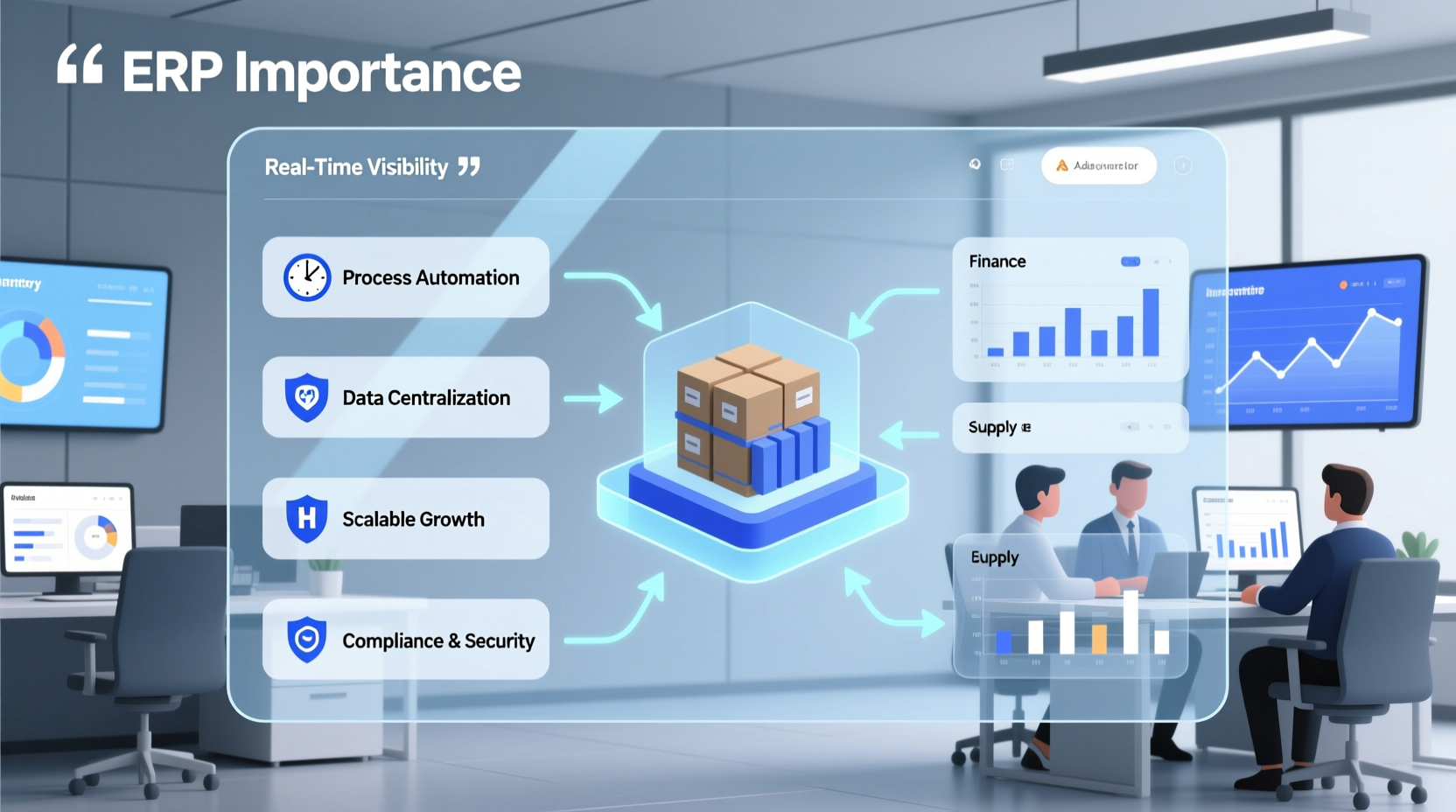
One of the biggest challenges in traditional business models is fragmented information. Sales teams use one system, finance another, and inventory tracking might rely on spreadsheets. This disconnect leads to delays, errors, and miscommunication. ERP addresses this by centralizing data across departments into a cohesive digital ecosystem.
With real-time access to shared data, employees no longer waste time reconciling reports or waiting for updates. For example, when a customer places an order, the sales team records it, the warehouse receives automatic notification to fulfill it, accounting processes the invoice, and procurement checks inventory levels—all within the same system.
Key Benefits of ERP Systems
The importance of ERP becomes evident when examining its impact on day-to-day operations and long-term strategy. Below are seven core benefits that make ERP indispensable in modern business.
- Improved Operational Efficiency: Automation of routine tasks like invoicing, payroll, and purchase orders reduces manual work and minimizes human error.
- Real-Time Business Insights: Dashboards and analytics provide up-to-the-minute views of KPIs, helping leaders make informed decisions faster.
- Enhanced Compliance and Risk Management: Built-in controls and audit trails help meet regulatory requirements in industries like healthcare, finance, and manufacturing.
- Scalability for Growth: As your business expands, ERP systems can adapt—supporting new locations, products, or business models without requiring complete overhauls.
- Better Customer Service: Integrated CRM modules allow teams to track interactions, manage service tickets, and deliver personalized experiences based on accurate customer history.
- Optimized Inventory and Supply Chain: Real-time stock tracking prevents overstocking or shortages, while demand forecasting tools improve procurement planning.
- Cost Reduction Over Time: While initial investment may be significant, long-term savings come from reduced redundancies, lower IT maintenance, and improved resource allocation.
Mini Case Study: How a Mid-Sized Manufacturer Transformed Operations
A mid-sized industrial equipment manufacturer struggled with delayed shipments, inconsistent financial reporting, and poor inventory visibility. Each department used standalone systems, leading to frequent discrepancies. After implementing an integrated ERP solution, they achieved:
- 30% reduction in order fulfillment time
- 25% decrease in excess inventory
- Weekly financial close instead of monthly
- Improved on-time delivery rate from 78% to 96%
The company’s COO noted: “We finally have clarity. We know what’s selling, what’s stuck in production, and where our margins stand—every single day.”
ERP Implementation: A Step-by-Step Timeline
Successful ERP adoption requires careful planning. Rushed deployments often lead to user resistance and project failure. Follow this realistic 6-month timeline for a smooth rollout:
- Month 1: Assessment & Goal Setting
Identify pain points, define objectives (e.g., reduce invoice processing time), and select stakeholders from each department. - Month 2: Vendor Selection & System Design
Evaluate cloud vs. on-premise options, choose a vendor aligned with your industry needs, and map out workflows. - Months 3–4: Configuration & Data Migration
Customize modules, clean legacy data, and migrate information securely into the new system. - Month 5: Testing & Training
Run simulations, fix bugs, and conduct hands-on training sessions tailored to different roles (accountants, warehouse staff, etc.). - Month 6: Go-Live & Post-Implementation Review
Launch the system in phases if possible, monitor performance, gather feedback, and adjust as needed.
“ERP isn’t just about technology—it’s a business transformation. The companies that succeed treat it as a change management initiative, not just an IT project.” — Dr. Linda Chen, Organizational Strategy Consultant
Do’s and Don’ts of ERP Adoption
| Do’s | Don’ts |
|---|---|
| Involve end-users early in the selection process | Assume the IT team alone should decide on the system |
| Start with clear, measurable goals | Implement ERP without defining success criteria |
| Invest in comprehensive employee training | Expect immediate productivity post-launch |
| Choose scalable solutions that grow with your business | Select outdated or unsupported platforms to save money |
| Regularly review system performance and usage | Deploy and forget—neglect ongoing optimization |
Expert Insight: The Strategic Role of ERP in Digital Transformation
Modern ERP systems go beyond basic automation. They serve as the backbone of digital transformation strategies, integrating with AI, machine learning, IoT devices, and advanced analytics platforms. Cloud-based ERPs, in particular, offer remote accessibility, automatic updates, and lower infrastructure costs—making them ideal for agile, distributed teams.
According to Gartner, over 70% of organizations now view ERP as a strategic enabler rather than a back-office necessity. This shift reflects a broader trend: businesses leveraging ERP not just to maintain operations, but to innovate and gain competitive advantage.
Frequently Asked Questions
What types of businesses benefit most from ERP?
While ERP is valuable across sectors, manufacturers, distributors, retailers, and service providers with complex operations see the highest returns. Even small businesses with high transaction volumes can benefit from streamlined processes and better reporting.
Is cloud ERP secure?
Yes—reputable cloud ERP providers invest heavily in cybersecurity, including encryption, multi-factor authentication, and regular audits. In many cases, cloud systems are more secure than on-premise setups managed internally by smaller IT teams.
How long does it take to see ROI after ERP implementation?
Most organizations begin seeing measurable improvements within 6 to 9 months. Full return on investment typically occurs within 18 to 24 months, depending on scope, customization level, and user adoption rates.
Final Thoughts: Why ERP Is Not Optional Anymore
Gone are the days when ERP was considered a luxury for large corporations. In an era defined by speed, transparency, and data-driven decisions, ERP has become a foundational requirement for any serious business. It empowers leaders with real-time insights, enables seamless collaboration, and lays the groundwork for innovation.
More importantly, ERP fosters resilience. Companies equipped with integrated systems respond faster to disruptions—be it supply chain issues, economic shifts, or global crises. They’re not just surviving; they’re adapting and thriving.




 浙公网安备
33010002000092号
浙公网安备
33010002000092号 浙B2-20120091-4
Comments
No comments yet. Why don't you start the discussion?