
Moving from the United States to Europe involves more than just adjusting to a new time zone or learning local customs—it extends into everyday household items, including something as fundamental as your bed. Many Americans are surprised to discover that European bedding doesn’t align with U.S. standards. From mattress sizes to sheet dimensions and even thread count expectations, the differences can disrupt your comfort if unprepared. Understanding these distinctions isn’t just about convenience; it’s about ensuring restful sleep in your new home.
The root of the mismatch lies in regional manufacturing standards, cultural preferences, and historical measurement systems. While the U.S. relies on imperial units, most of Europe uses the metric system, leading to variations in bed dimensions. Additionally, European design often prioritizes sleeker, firmer mattresses and deeper-pocketed sheets to accommodate them. If you’re relocating, this raises a critical question: Do you need to replace your entire linen collection?
Key Differences Between U.S. and European Bedding Standards
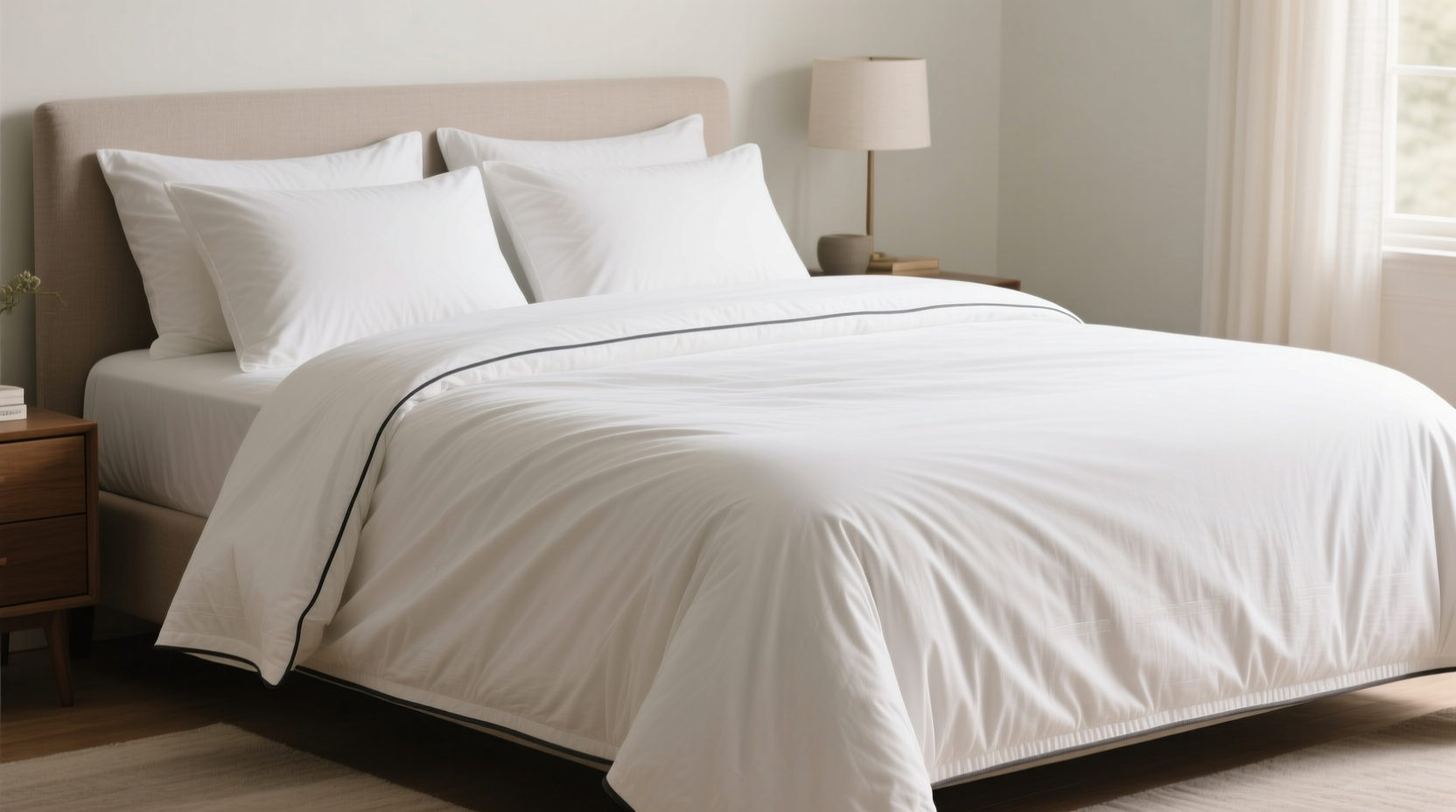
The most immediate challenge expats face is size incompatibility. A standard U.S. queen mattress measures 60 inches by 80 inches (152 x 203 cm), but in many European countries, a \"queen\" or its equivalent varies significantly. For example:
- In Germany, a “double bed” (Doppelbett) is commonly 160 x 200 cm—wider but shorter than a U.S. queen.
- In France, a “grand lit” typically measures 140 x 190 cm, narrower and shorter than its American counterpart.
- In Scandinavia, beds often come in non-standard sizes unique to each country, such as Sweden’s 160 x 200 cm or Norway’s 150 x 200 cm.
Beyond mattress dimensions, fitted sheet construction differs. European sheets are frequently designed with deeper elasticized corners—often 30–40 cm deep—to fit thicker mattresses and layered bedding setups common in Europe. In contrast, U.S. fitted sheets usually accommodate mattresses up to 15–20 cm deep. Attempting to stretch an American sheet over a European mattress may result in torn seams or constant slipping.
| Bed Size | U.S. Dimensions (inches) | European Equivalent (cm) | Approx. Conversion |
|---|---|---|---|
| Twin | 39 x 75 | 90 x 200 | Close match |
| Full/Double | 54 x 75 | 140 x 200 | Narrower and longer in Europe |
| Queen | 60 x 80 | 160 x 200 | Wider but shorter |
| King | 76 x 80 | 180 x 200 | Slightly narrower, same length |
Do You Need New Sheets After Moving to Europe?
The short answer: Yes, in most cases, you will need new sheets. While some sizes like twin may have near-equivalents, queen and king sizes rarely align. Even if your mattress width seems compatible, the length discrepancy—U.S. beds being 5–10 cm longer—can leave your feet exposed or cause duvet discomfort.
Additionally, European bedding emphasizes fabric quality and breathability. Cotton percale and sateen weaves dominate the market, with higher average thread counts (typically 200–400) compared to mass-market U.S. options. Europeans also favor flat sheets less than Americans; instead, duvets tucked into covers are standard, reducing reliance on top sheets.
How to Transition Your Bedding Smoothly: A Step-by-Step Guide
Moving internationally requires planning beyond shipping boxes. Here’s how to ensure your sleep environment stays comfortable:
- Measure your mattress in centimeters—width, length, and depth—before purchasing any bedding.
- Check local sizing labels: Terms like “double” or “king” vary by country. Don’t assume terminology matches U.S. standards.
- Buy locally upon arrival: Visit department stores like IKEA, JYSK, or local linen shops that stock region-specific sizes.
- Consider semi-custom options: Some European brands offer made-to-measure sheets for non-standard beds.
- Keep one U.S. set temporarily: Use it while sourcing replacements, especially if importing takes time.
“Expatriates often underestimate how much bedding affects daily well-being. A poorly fitting sheet can disrupt sleep hygiene faster than jet lag.” — Dr. Lena Weber, Sleep Environment Researcher, Charité Hospital, Berlin
Real-Life Example: Sarah’s Move from Chicago to Lisbon
Sarah Thompson, a digital marketer, relocated from Chicago to Lisbon for a remote role. She shipped her queen-sized mattress, assuming she could reuse her favorite bamboo sheets. Upon delivery, she discovered her Portuguese bed frame was 160 x 190 cm—10 cm shorter than her U.S. mattress. Her fitted sheet wouldn’t stay on, and the flat sheet left her feet hanging off the end.
After two uncomfortable weeks, she visited a local home store and purchased Portuguese-sized sheets. She opted for cotton sateen with 38 cm deep pockets, which hugged her mattress perfectly. “I didn’t realize how much better I’d sleep once everything fit,” she said. “The fabric felt softer too—lighter weight, better airflow.”
Checklist: Preparing Your Bedding for a Transatlantic Move
- ✅ Measure your mattress in centimeters (L x W x H)
- ✅ Research local bed sizes in your destination country
- ✅ Decide whether to ship or buy new linens
- ✅ Pack one set of U.S. sheets as backup
- ✅ Note preferred weave (percale, sateen, linen) for local shopping
- ✅ Confirm pillow and duvet sizes—these differ too!
Frequently Asked Questions
Can I use U.S. sheets on a European bed with a mattress topper?
No—if the combined depth exceeds 20 cm, standard U.S. sheets likely won’t fit. Use deep-pocketed or European-sized sheets instead.
Are European duvet covers the same size as U.S. comforters?
No. European duvets are often slightly smaller in width but standardized in length at 200 or 220 cm. Always check insert dimensions before buying a cover.
Is bedding more expensive in Europe?
It varies. High-quality cotton sets may cost more upfront, but durability and craftsmanship often justify the price. Budget options exist at retailers like IKEA or Tchibo.
Final Thoughts and Action Plan
Adapting to European bedding isn’t just a logistical detail—it’s part of settling into a new lifestyle. The differences reflect broader cultural attitudes toward sleep, design, and material quality. While you may need to replace your sheets, this transition offers an opportunity to upgrade your sleep experience with breathable fabrics, precise fits, and elegant minimalism common in European homes.
Start by measuring your mattress, researching local standards, and planning your bedding purchase strategy. Whether you buy before arrival or shop locally, preparation ensures comfort from day one. Don’t overlook small details like pillow sizes or duvet encasements—they complete the system.




 浙公网安备
33010002000092号
浙公网安备
33010002000092号 浙B2-20120091-4
Comments
No comments yet. Why don't you start the discussion?