
Pickleball isn’t just a passing trend—it’s a cultural phenomenon sweeping across neighborhoods, retirement communities, and urban recreation centers nationwide. Once dismissed as a backyard pastime for retirees, it has exploded into one of the fastest-growing sports in North America. Participation grew by over 40% between 2022 and 2023 alone, according to the Sports & Fitness Industry Association. Courts are packed, leagues are full, and tournaments now draw thousands. But what exactly sparked this surge? The answer lies in a rare convergence of accessibility, social dynamics, health benefits, and generational shifts.
A Sport Designed for Inclusivity
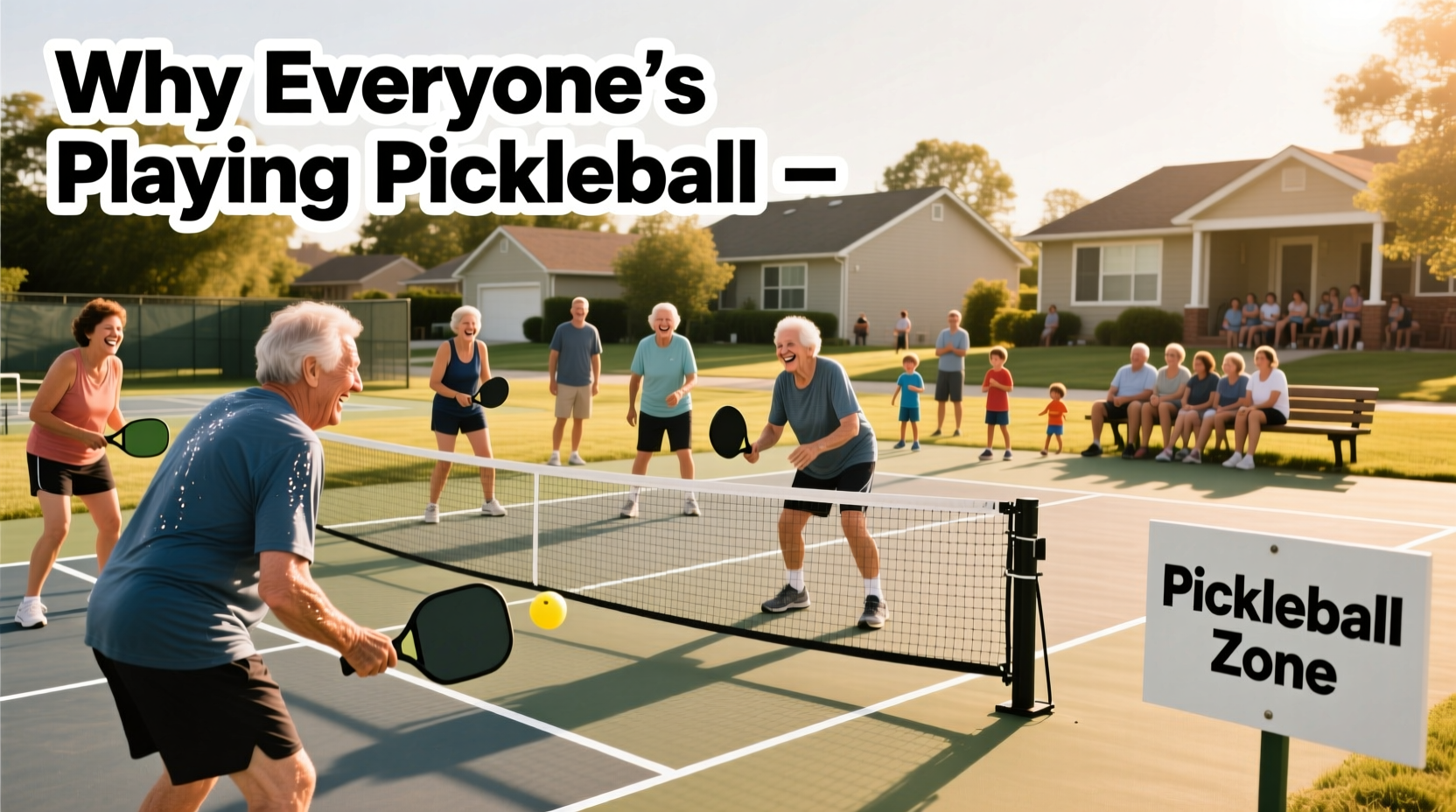
Unlike many traditional racquet or court sports that demand high physical exertion or years of training, pickleball was built with inclusivity in mind. Created in 1965 on Bainbridge Island, Washington, by three fathers looking for a way to entertain their kids during summer break, the game combines elements of tennis, badminton, and ping-pong. Its smaller court (20 x 44 feet—about a third the size of a tennis court), lower net, and underhand serve make it far more approachable for beginners, older adults, and those recovering from injury.
The rules are simple enough to learn in under 15 minutes, yet the game offers strategic depth that keeps players engaged. This balance of ease and complexity allows people of vastly different fitness levels and athletic backgrounds to compete together fairly. A 70-year-old can hold their own against someone half their age, which is rare in most competitive sports.
Social Connection in a Digitally Isolated World
In an era where screen time dominates daily life and loneliness rates are rising, pickleball offers something increasingly rare: real human connection. Games are typically played in doubles, fostering conversation, teamwork, and camaraderie. Many courts have become informal community hubs where players gather before or after matches for coffee, conversation, or even group dinners.
“Pickleball saved my social life,” says Linda Thompson, a 68-year-old retiree from Sarasota, Florida. “After my husband passed, I didn’t know how to meet people. Now I have a whole circle of friends who text me when they’re heading to the courts.” Her experience is not unique. Local Facebook groups, Meetup events, and dedicated pickleball apps have turned casual interest into tight-knit communities.
“Pickleball is less about competition and more about connection. It’s the sport equivalent of a neighborhood block party.” — Dr. Mark Reynolds, Sociologist at the University of Oregon
Health and Wellness Benefits That Fit Modern Lifestyles
With rising awareness around longevity and functional fitness, pickleball delivers measurable health advantages without feeling like a workout. A typical match involves short bursts of movement—lateral shuffling, quick pivots, and controlled lunges—that improve cardiovascular endurance, balance, and joint mobility. According to a study published in the *Journal of Aging and Physical Activity*, regular pickleball players showed significant improvements in agility, coordination, and lower-body strength after just eight weeks.
Because the game is low-impact compared to running or basketball, it’s ideal for older adults or those managing chronic conditions like arthritis. Yet it still burns between 300–500 calories per hour, making it appealing to younger players seeking fun alternatives to the gym.
| Benefit | How Pickleball Delivers |
|---|---|
| Cardiovascular Health | Constant movement elevates heart rate in a sustainable way |
| Mental Sharpness | Strategic shot placement and anticipation enhance cognitive function |
| Social Wellbeing | Doubles format encourages communication and bonding |
| Muscle Tone & Balance | Lateral movements strengthen glutes, quads, and core stabilizers |
| Stress Reduction | Outdoor play combined with laughter lowers cortisol levels |
The Role of Infrastructure and Institutional Support
The growth of pickleball hasn’t been spontaneous—it’s been enabled by infrastructure. Cities and parks departments across the U.S. and Canada are converting underused tennis courts, basketball courts, and parking lots into dedicated pickleball surfaces. Some municipalities have even prioritized pickleball in their capital improvement plans. For example, Austin, Texas, allocated $2 million in 2023 to build 36 new pickleball courts across public parks.
Schools and universities are introducing pickleball into PE curricula, while senior centers and YMCAs report record enrollment in clinics. Equipment manufacturers have responded with affordable paddles, balls, and nets, making entry costs minimal—often under $100 for a complete starter kit.
This institutional embrace reflects a broader shift toward active aging and community wellness. Unlike niche sports that require specialized facilities, pickleball thrives in multipurpose spaces, reducing barriers to adoption.
Media Exposure and Celebrity Endorsement
Celebrity influence has amplified pickleball’s visibility. Major figures like LeBron James, Paul Rudd, and Jennifer Garner have publicly played the sport, often sharing clips on social media. In 2022, James invested in the Professional Pickleball Association (PPA), lending credibility and drawing mainstream attention.
Streaming platforms now broadcast professional tournaments, and YouTube tutorials on dinking, third-shot drops, and kitchen rules have millions of views. Even late-night TV hosts have joked about the \"pickleball takeover,\" further embedding it into pop culture.
But perhaps the most effective marketing has been grassroots. When one person picks up a paddle, they rarely stay alone. They invite spouses, neighbors, coworkers. The game spreads through word of mouth—organic, authentic, and hard to ignore.
Mini Case Study: How One Town Transformed Its Recreation Culture
Consider the town of Bozeman, Montana. In 2019, it had two public pickleball courts and little organized play. By 2023, it hosted a regional tournament with over 300 participants and converted four tennis courts into six dedicated pickleball courts. The catalyst? A retired teacher named Greg Alvarez started hosting weekly drop-in games at the local park. Word spread. Within months, the city council approved funding for lighting and shade structures. Today, the Bozeman Pickleball Club has 450 members and partners with physical therapists to offer adaptive clinics for seniors with mobility challenges.
This story mirrors hundreds of others across the country. The sport doesn’t require top-down investment to begin—it starts with one enthusiastic player and grows through shared enjoyment.
Who Is Playing—and Why Now?
The demographic reach of pickleball is unusually broad. While early adopters were largely Baby Boomers seeking low-impact exercise, Millennials and Gen Z are now joining in droves. For younger players, it’s a refreshing break from digital overload—a chance to engage in face-to-face competition that’s competitive but not cutthroat.
Many young professionals cite pickleball as a networking tool. Casual matches at corporate retreats or post-work gatherings foster team building without the pressure of high-stakes environments. Universities report increased student interest, with intramural leagues forming organically on campuses from UCLA to the University of Vermont.
Meanwhile, boomers appreciate the sport’s ability to maintain independence and physical confidence. As life expectancy increases, staying mobile becomes a priority. Pickleball offers a sustainable way to remain active well into later years.
Checklist: How to Get Started in Pickleball
- Find a local court using resources like PicklePlay or USA Pickleball’s court locator
- Attend a beginner clinic or open play session
- Invest in a beginner-friendly paddle (look for composite faces and lightweight cores)
- Wear non-marking court shoes with lateral support
- Learn the double-bounce rule and kitchen (non-volley zone) boundaries
- Bring water and arrive early to warm up
- Play doubles first to ease into rhythm and strategy
Common Misconceptions About Pickleball
Despite its popularity, misunderstandings persist. Some dismiss it as “tennis for old people” or assume it lacks athleticism. These views underestimate the game’s physical and mental demands. At competitive levels, rallies involve rapid reflexes, precise touch, and tactical deception. Top players cover ground quickly and execute split-second decisions under pressure.
Another myth is that pickleball damages tennis courts. While early conflicts arose over shared space, solutions like temporary line tape and designated hours have eased tensions. Many dual-sport facilities now operate harmoniously, with scheduled times for each activity.
Finally, some believe the sport won’t last. But its sustained growth—backed by data, investment, and passionate players—suggests otherwise. This isn’t a fad; it’s a redefinition of what community-based recreation can look like in the 21st century.
Frequently Asked Questions
Is pickleball only for older adults?
No. While it gained early traction among retirees due to its low-impact nature, pickleball now attracts players of all ages. Youth programs, college clubs, and pro tours feature athletes in their 20s and 30s. The sport’s adaptability makes it accessible regardless of age or fitness level.
Do I need expensive equipment to start?
Not at all. Entry-level paddles range from $40–$80, and plastic balls cost under $10 per dozen. Many community centers provide loaner gear for beginners. Focus on comfort and control rather than high-end specs when starting out.
Can I play pickleball if I’ve never played racquet sports?
Absolutely. Most new players have no prior experience. The fundamentals are easy to grasp, and the learning curve is gentle. Friendly players at open sessions usually welcome newcomers and offer tips.
Conclusion: Join the Movement
The rise of pickleball isn’t just about a game—it’s about reclaiming play, connection, and vitality in everyday life. In a world that often feels fragmented and fast-paced, pickleball offers a return to simplicity: a net, a few friends, and the satisfying pop of a paddle hitting a ball. Its sudden popularity isn’t accidental. It’s a response to deep human needs: movement, laughter, and belonging.
If you’ve been curious, don’t wait. Find a court near you, borrow a paddle, and step onto the line. You might just discover more than a new hobby—you might find a community waiting to welcome you.




 浙公网安备
33010002000092号
浙公网安备
33010002000092号 浙B2-20120091-4
Comments
No comments yet. Why don't you start the discussion?