
In recent years, a quiet revolution has swept through living rooms and basements: vintage game consoles from the 1980s and '90s are making a surprising comeback. From NES and Sega Genesis to PlayStation 1 and Nintendo 64, these once-discarded machines are now prized possessions. Meanwhile, emulator software—capable of running hundreds of classic games on smartphones, PCs, or Raspberry Pis—has never been more advanced. So why are so many people returning to original hardware when emulators offer superior convenience, save states, and graphical enhancements?
The answer lies in a blend of nostalgia, authenticity, tactile experience, and subtle technical nuances that even the most polished emulator can’t fully replicate. This isn’t just about reliving childhood memories—it’s about how we define what makes a game feel “real.”
The Emotional Pull of Original Hardware
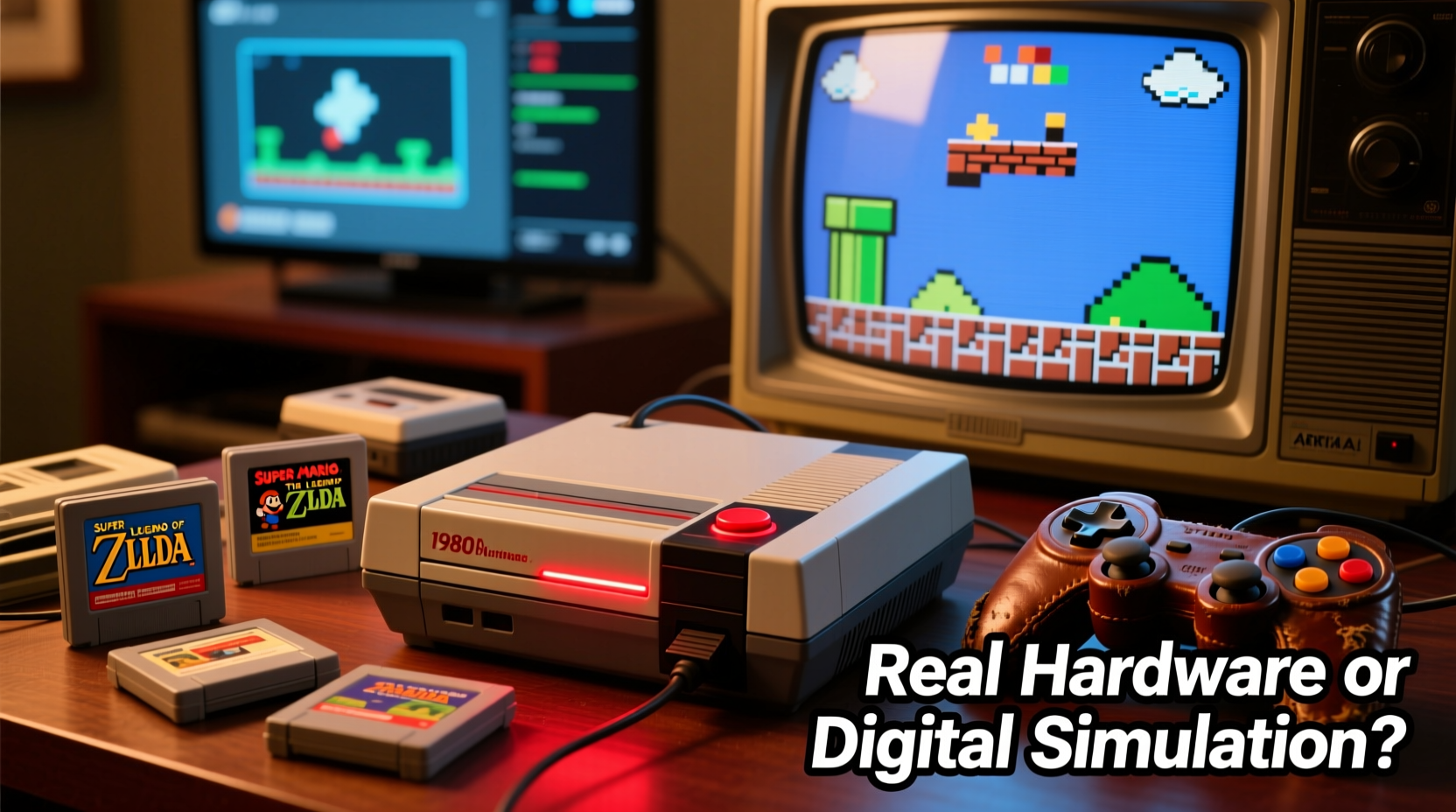
For many gamers, retro consoles represent more than entertainment—they’re time capsules. The act of blowing into an NES cartridge, hearing the satisfying click of inserting a Game Boy Advance into its slot, or adjusting RF switch settings on a CRT TV evokes sensory memories no emulator can trigger. These physical interactions form part of the ritual of play, creating emotional resonance that transcends gameplay.
Psychologists refer to this as “embodied memory”—the idea that our brains store experiences not just cognitively but physically. Holding a controller with worn-down D-pads or navigating a system menu without a mouse engages muscle memory and emotional familiarity. That’s something emulators, for all their precision, often fail to deliver.
Emulators: Power, Precision, and Practicality
On paper, emulators win hands down. Modern emulation projects like RetroArch, DuckStation (PlayStation), or Project64 offer features that far surpass original hardware:
- Save states at any point in a game
- HD upscaling and anti-aliasing
- Customizable controls and hotkeys
- Fast-forward through cutscenes or grinding sections
- Integrated cheats and debugging tools
And let’s not forget accessibility. Emulators allow players to enjoy rare or region-locked titles without hunting eBay for expensive imports. They also reduce wear and tear on fragile cartridges and discs—a major concern given that many original components are now over three decades old.
But here's the catch: perfection isn't always desirable. Some purists argue that removing challenge—like infinite continues via save states—alters the intended experience. As game designer Shigeru Miyamoto once noted:
“Difficulty teaches patience. When you beat a level after ten tries, you remember it forever.” — Shigeru Miyamoto, Creator of Super Mario Bros.
Authenticity vs. Enhancement: A Critical Trade-Off
One of the central debates in retro gaming circles is whether visual and performance improvements actually improve the experience—or dilute it.
Consider Super Nintendo’s *Chrono Trigger*. On original hardware, the pixel art was designed around CRT blur and color bleed. When emulated with sharp bilinear filtering on a 4K monitor, characters can appear unnaturally crisp, losing the soft glow that gave sprites depth. Conversely, some fans prefer this clarity, arguing it reveals details hidden by outdated display technology.
This leads to a broader philosophical question: What defines authenticity? Is it fidelity to how a game looked on original hardware, or how it was meant to be seen by developers?
A growing movement called “CRT accuracy” attempts to bridge this gap. Projects like higan (now bsnes) prioritize cycle-perfect emulation—mimicking the exact timing of CPU and PPU operations—to reproduce bugs, glitches, and audio quirks present only on real systems. For historians and preservationists, this level of detail matters deeply.
Hardware vs. Emulator Comparison Table
| Feature | Retro Console (Original) | High-End Emulator |
|---|---|---|
| Input Lag | Low (optimized for CRT TVs) | Variable (can introduce delay) |
| Visual Fidelity | Scanlines, bloom, composite artifacts | Upscaled, filtered, clean |
| Audio Quality | Analog warmth, minor distortion | Digital precision, optional filters |
| Convenience | Requires physical media & setup | Instant access to entire libraries |
| Preservation Value | At risk due to aging components | Long-term archival potential |
| User Experience | Tactile, nostalgic, immersive | Efficient, customizable, modern |
The Hidden Challenges of Retro Hardware
Despite their appeal, original consoles come with significant drawbacks:
- Component Degradation: Capacitors dry out, batteries leak, and laser lenses wear down. Many SNES and N64 units today require repair just to function.
- Regional Lockouts: PAL vs. NTSC differences affect speed and resolution. European Mega Drive games run 17% slower than North American ones. Cable Limitations: Most retro systems output composite video, which looks muddy on modern HDTVs unless converted properly.
To counter these issues, enthusiasts often modify their consoles—a practice known as \"modding.\" Common upgrades include installing HDMI converters (like the RetroTINK), replacing power supplies, or adding RGB output boards. While effective, these modifications alter the machine from its factory state, raising questions about purity.
Meanwhile, emulators sidestep most of these problems entirely. With proper configuration, they can simulate different regions, apply shader-based CRT effects, and maintain perfect signal integrity indefinitely.
Mini Case Study: Jason’s Dual Setup
Jason, a 35-year-old IT consultant from Portland, owns both a modded Sega Genesis with RGB output and a full RetroArch setup on a Steam Deck. He uses each differently.
“When I want to relax and blast through old favorites quickly, I fire up the Steam Deck,” he says. “I use save states in *Sonic 3* so I don’t have to redo whole zones after dying. But when I’m showing my kids how I played as a kid? We hook up the Genesis to the CRT in the basement. They love the ‘old-timey’ look, and I love seeing them struggle with the same impossible boss fights I did.”
His approach reflects a growing trend: hybrid retro gaming. Instead of choosing one method, players use both depending on mood, audience, and purpose.
Are Retro Consoles Better Than Emulators?
“Better” depends entirely on context.
If your goal is efficiency, variety, and comfort, emulators are objectively superior. You can play dozens of games in a single session, customize controls, and avoid the hassle of maintaining fragile electronics.
But if you value historical accuracy, sensory immersion, or the meditative rhythm of playing under original constraints, then retro consoles offer something irreplaceable. There’s a reason museums preserve original artifacts rather than displaying digital replicas—even when the copy looks “cleaner.”
Moreover, original hardware fosters community. Online forums like AtariAge or r/retrogaming thrive on discussions about restoration techniques, cartridge cleaning, and regional variants—topics that deepen engagement beyond mere gameplay.
Checklist: Choosing Your Retro Gaming Path
Use this checklist to decide whether original hardware, emulators, or a mix suits your needs:
- ✅ Do you want to preserve gaming history accurately? → Lean toward original hardware or cycle-accurate emulators.
- ✅ Are you frustrated by limited lives or no save points? → Emulators with save states will enhance enjoyment.
- ✅ Do you own a CRT TV or plan to buy one? → Original consoles shine in this environment.
- ✅ Do you travel frequently or play in short bursts? → Emulators on portable devices (e.g., Analogue Pocket, Steam Deck) are ideal.
- ✅ Are you concerned about long-term preservation? → Digital backups via emulation provide durability.
- ✅ Do you enjoy tinkering with electronics? → Modding retro consoles can be rewarding.
- ✅ Is budget a concern? → Emulators are free; authentic hardware with mods can cost hundreds.
Frequently Asked Questions
Is using emulators legal?
Emulators themselves are legal software. However, downloading copyrighted ROMs without owning the original game is a legal gray area and typically violates copyright law. The safest path is to create your own ROMs from games you already own.
Can emulators perfectly mimic original hardware?
The best emulators (like bsnes/higan) achieve near-perfect accuracy by simulating every processor cycle. However, reproducing analog behaviors—such as RF interference or composite video bleed—requires additional shader support and may still differ slightly from real-world output.
Why do some people dislike upscaling retro games?
Upscaling can disrupt the artistic intent of pixel art. Artists designed sprites with specific dithering, transparency tricks, and palette limitations assuming CRT display characteristics. On modern screens, these elements can look jagged or misaligned, leading to what some call “digital ugliness.”
Conclusion: A Balanced Future for Retro Gaming
The resurgence of retro gaming consoles isn’t a rejection of progress—it’s a reclamation of context. In an age where everything is fast, disposable, and cloud-based, there’s profound value in slowing down, connecting with tangible objects, and experiencing games as they were first encountered.
Yet emulators remain essential tools for accessibility, education, and preservation. They ensure that future generations won’t lose access to foundational titles simply because plastic casings cracked or disc rot set in.
The smartest path forward isn’t choosing between hardware and emulation—it’s embracing both. Use emulators to explore and experiment. Keep original consoles for moments of reflection and connection. Let each medium serve its strength.




 浙公网安备
33010002000092号
浙公网安备
33010002000092号 浙B2-20120091-4
Comments
No comments yet. Why don't you start the discussion?