
In recent years, public discourse around prominent figures in science and government has intensified, often blurring the line between verified information and online speculation. One recurring claim circulating across social media platforms and alternative news outlets is that Dr. Anthony Fauci, former chief medical advisor to the U.S. President, was “pardoned” by President Joe Biden. This assertion has sparked confusion, debate, and widespread misinformation. To understand what actually happened—or didn’t happen—it’s essential to examine the legal, political, and media landscape surrounding this claim.
Dr. Fauci served as director of the National Institute of Allergy and Infectious Diseases (NIAID) for over five decades and became a household name during the COVID-19 pandemic. As a leading voice in public health, he faced both praise and criticism, making him a frequent target of political scrutiny and conspiracy theories. The idea that he needed or received a presidential pardon suggests wrongdoing, but no such legal action exists in public records. Let’s unpack the origins of this claim, assess its validity, and explore why it persists despite lack of evidence.
The Origin of the Pardon Claim
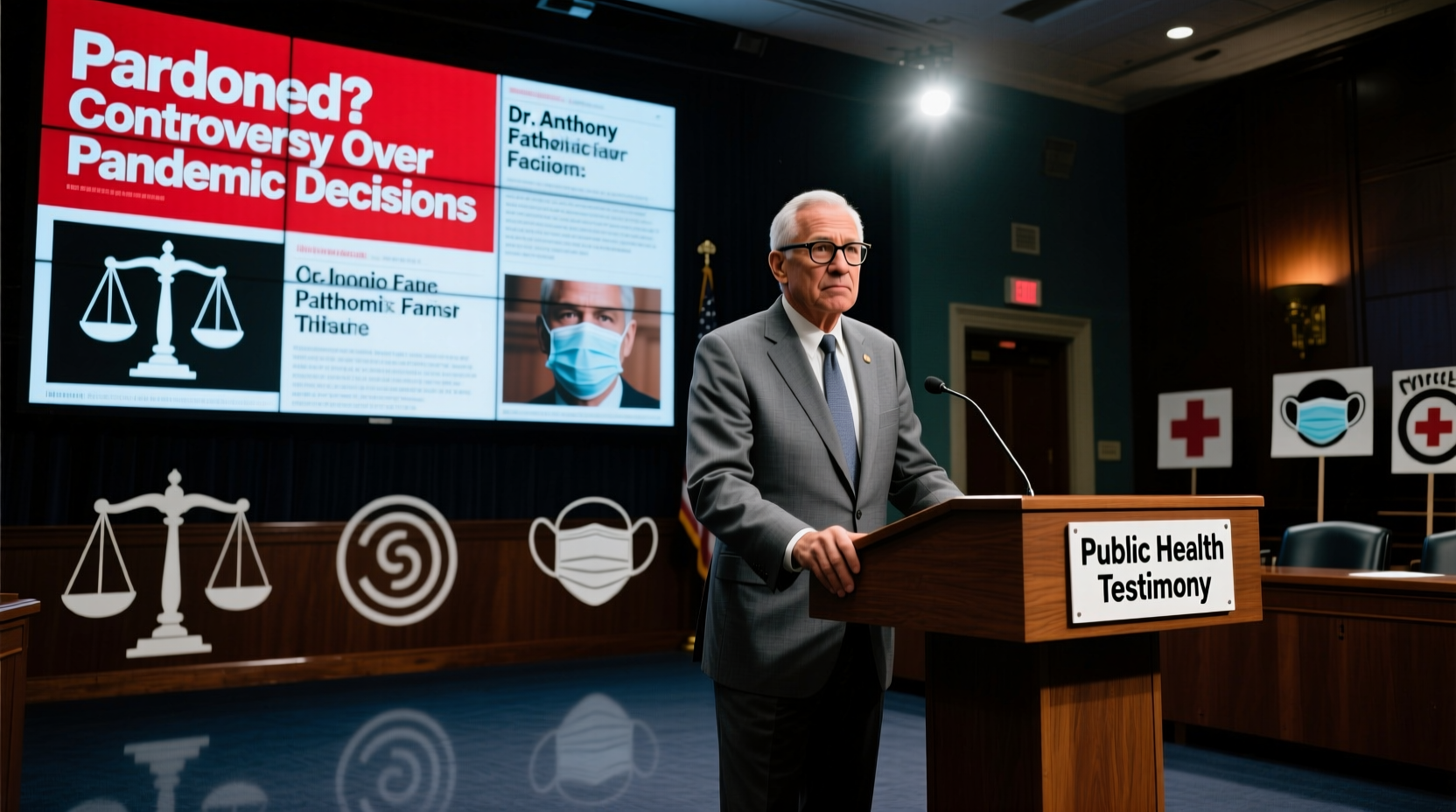
The narrative that Dr. Fauci was pardoned appears to stem from a combination of misinterpretation, satire, and deliberate disinformation. In late 2022 and early 2023, several fringe websites and social media accounts began sharing posts suggesting that President Biden had issued an executive order granting Fauci immunity from prosecution related to his role in pandemic policy decisions. These claims often cited non-existent documents or misrepresented official statements.
Notably, no credible news organization reported on such a pardon, nor is there any record of it in the Federal Register or official White House archives. Presidential pardons are formal legal acts that must be published and justified under Article II, Section 2 of the U.S. Constitution. They typically apply to individuals convicted or charged with federal crimes. Dr. Fauci has never been charged with any criminal offense, rendering a pardon legally unnecessary.
“Presidential pardons require a legal basis—usually an indictment or conviction. Without either, a pardon has no standing.” — Professor Linda Greenhouse, Yale Law School
The absence of charges against Fauci undermines the foundation of the pardon theory. Yet, the myth endures, fueled by distrust in institutions and amplified through algorithm-driven content ecosystems where sensationalism often outweighs accuracy.
Why the Idea Gained Traction
The persistence of the “Fauci pardon” myth reflects deeper societal trends: polarization, declining trust in expertise, and the rapid spread of unverified claims online. During the pandemic, public health recommendations evolved with emerging data, leading some to accuse officials like Fauci of inconsistency. Critics seized on minor shifts in guidance—such as mask-wearing recommendations—as evidence of deception, despite scientific norms allowing for adaptive responses based on new evidence.
This environment created fertile ground for narratives portraying Fauci as a central figure in alleged government overreach. Claims about biolabs, vaccine mandates, and pandemic origins were frequently tied to him, regardless of factual support. When combined with broader anti-establishment sentiment, these ideas made the notion of a secret pardon seem plausible to certain audiences.
Moreover, satirical content played a role. Some parody articles jokingly claimed Biden had “shielded” Fauci from accountability. Over time, these fictional pieces were shared out of context, mistaken for real news by unsuspecting users. The line between irony and misinformation blurred, contributing to the perception that something illicit had occurred.
Fact vs. Fiction: What We Know
To clarify the record: there is no evidence that Dr. Anthony Fauci was ever charged with a crime, investigated by the Department of Justice, or granted a presidential pardon. His departure from federal service in December 2022 was announced publicly as a retirement decision, not a result of disciplinary action.
Multiple independent investigations—including congressional reviews and audits of NIH funding—have examined aspects of pandemic response and research practices. While some reports raised questions about transparency in grant oversight (particularly regarding gain-of-function research), none concluded that Fauci committed misconduct or violated laws.
In fact, the Office of Government Ethics confirmed in 2023 that no ethics violations were found in Fauci’s conduct during his tenure. Any suggestion otherwise remains unsubstantiated.
Timeline of Key Events
- March 2020: Fauci becomes a regular participant in White House coronavirus briefings.
- August 2021: Emails released via FOIA requests show internal debates among scientists about pandemic origins; Fauci’s messages reflect scientific caution, not concealment.
- December 2022: Fauci announces retirement after 54 years at NIAID.
- January 2023: Conspiracy theories about a “secret pardon” begin trending on alternative platforms.
- April 2023: PolitiFact and AP News debunk the pardon claim as false.
Expert Perspectives on Misinformation
Public health experts warn that baseless attacks on scientists erode trust in medicine and governance. Dr. Leana Wen, emergency physician and public health professor, emphasized the danger of conflating policy disagreements with criminal behavior.
“We may disagree on specific measures during a crisis, but labeling experts as criminals because we dislike their advice sets a dangerous precedent.” — Dr. Leana Wen, Public Health Analyst
Legal scholars also stress that misuse of terms like “pardon” distorts public understanding of justice mechanisms. A pardon implies guilt avoided through executive power; applying it to someone never accused of wrongdoing trivializes the process and spreads confusion.
Frequently Asked Questions
Was Dr. Fauci ever charged with a crime?
No. There are no public records indicating that Dr. Fauci has ever been charged with any criminal offense at the federal or state level.
Can a president issue a preemptive pardon?
Theoretically, yes—presidents can pardon individuals before charges are filed, though this is rare and controversial. However, no such pardon was issued for Dr. Fauci, according to official sources.
Are there ongoing investigations involving Dr. Fauci?
As of 2024, there are no known active federal investigations targeting Dr. Fauci personally. Congressional inquiries into pandemic policies have included testimony from various officials, but none allege personal wrongdoing by Fauci.
How to Navigate Health-Related Information Online
In an era of information overload, distinguishing reliable content from falsehoods requires vigilance. Here’s a checklist to help evaluate claims about public figures and health policy:
- Check the source: Is it a recognized news outlet or peer-reviewed journal?
- Look for citations: Are claims backed by documents, data, or expert consensus?
- Cross-reference with fact-checkers: Sites like Snopes, Reuters Fact Check, and AFP Global Verify routinely investigate viral claims.
- Avoid emotional headlines: Sensational language often signals bias or fabrication.
- Consult official channels: Government websites (.gov) and academic institutions (.edu) provide authoritative updates.
Do’s and Don’ts When Evaluating Viral Claims
| Do | Don’t |
|---|---|
| Verify using multiple trusted sources | Share unconfirmed stories for shock value |
| Consider the motive behind the message | Assume all government actions are secretive or corrupt |
| Accept that science evolves with new data | Dismiss expert consensus due to isolated uncertainties |
| Report harmful misinformation to platforms | Engage in personal attacks against public figures |
Conclusion: Upholding Truth in Public Discourse
The claim that Dr. Fauci was pardoned is not supported by facts. It exemplifies how misinformation spreads when complex issues meet digital echo chambers. While legitimate debate about pandemic policies is healthy and necessary, fabricating legal events undermines democratic dialogue and distracts from meaningful reform.
Understanding the difference between criticism and conspiracy is vital. Holding leaders accountable does not require inventing scandals. Instead, it demands access to transparent information, responsible journalism, and civic engagement grounded in evidence.




 浙公网安备
33010002000092号
浙公网安备
33010002000092号 浙B2-20120091-4
Comments
No comments yet. Why don't you start the discussion?