
FedEx remains one of the largest shipping carriers in the world, handling millions of packages daily across the globe. Despite its scale and technological infrastructure, a growing number of customers—both individual consumers and businesses—report persistent dissatisfaction with its service. From delayed deliveries to lost packages and poor communication, complaints about FedEx have become increasingly common. While occasional hiccups are expected in logistics, the frequency and consistency of these issues raise legitimate concerns. This article examines the most frequently reported problems, explores their underlying causes, and offers practical advice for navigating FedEx’s shortcomings.
Common Customer Complaints About FedEx
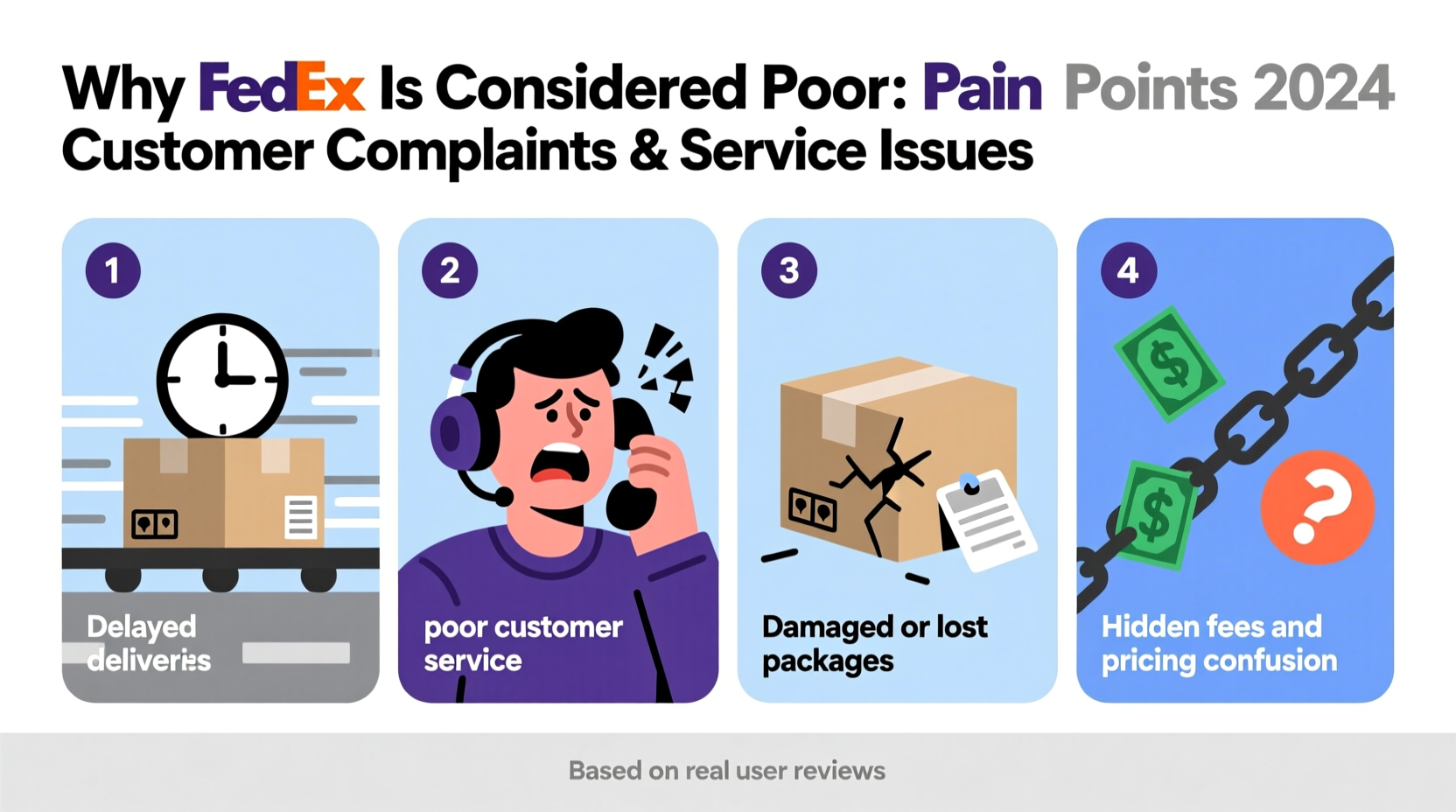
The frustration surrounding FedEx isn’t isolated to a few disgruntled users—it reflects broader systemic challenges. Based on consumer reports, Better Business Bureau (BBB) data, and online reviews, several recurring themes emerge:
- Delayed Deliveries: Packages arriving days late, even with guaranteed overnight or two-day services.
- Poor Tracking Updates: Inconsistent or missing scan updates, leaving customers in the dark.
- Misdelivered or Lost Packages: Items left at incorrect addresses, dropped in unsafe locations, or marked as delivered when not received.
- Lack of Communication: No proactive notifications about delays or changes in delivery status.
- Damaged Goods: Insufficient packaging handling leading to broken or compromised items.
- Courier Behavior: Reports of rude drivers, refusal to obtain signatures, or failure to follow delivery instructions.
- Difficult Customer Service: Long hold times, unhelpful representatives, and complex claims processes.
These issues aren’t limited to rural areas or peak seasons—they occur regularly across urban centers and standard shipping periods, suggesting deeper operational flaws.
Root Causes Behind FedEx Service Failures
To understand why FedEx struggles with reliability, it’s essential to look beyond individual incidents and examine structural factors within the company’s operations.
Overreliance on Contractors and Third Parties
In many regions, especially suburban and rural areas, FedEx outsources last-mile delivery to independent contractors. Unlike full-time employees, these contractors operate under variable standards and may lack proper training or accountability. This decentralized model can lead to inconsistent service quality, reduced oversight, and diminished brand control.
Operational Overload During Peak Seasons
Holidays and e-commerce sales events like Black Friday place immense strain on FedEx’s network. While capacity planning exists, demand often exceeds preparedness. The result is backlogged hubs, overwhelmed sorting facilities, and delivery drivers facing unrealistic daily routes.
“Carriers like FedEx face a scalability paradox: they invest heavily in automation, but human bottlenecks in last-mile delivery remain unresolved.” — Dr. Lena Torres, Logistics Analyst at MIT Center for Transportation & Logistics
Technology Gaps and System Errors
FedEx’s tracking system, while functional, often fails to reflect real-time package movement. Scans may be missed due to driver oversights or technical glitches, creating false impressions of delays. Additionally, automated emails sometimes miscommunicate delivery windows or fail to send alerts altogether.
Internal Labor Challenges
Reports from current and former employees highlight issues such as understaffing, high turnover, and inadequate pay—especially among ground service workers. These factors contribute to low morale and reduced attention to detail, which can manifest in mishandled packages or skipped deliveries.
Real-World Example: A Small Business Owner’s Experience
Sarah Kim runs an online boutique selling handmade jewelry from Portland, Oregon. She relies on FedEx Express for urgent orders and returns. Last holiday season, 17% of her shipments were delayed by more than two business days despite paying for two-day shipping. One customer reported that their package was “delivered” according to tracking, but no item appeared at their doorstep. After filing a claim, Sarah waited 14 days for reimbursement—and lost a five-star review in the process.
She switched to using UPS and USPS for non-urgent shipments and now uses third-party fulfillment software to compare carrier performance weekly. “I love supporting big companies,” she said, “but when your reputation depends on timely delivery, you can’t afford repeated failures.”
How to Protect Yourself When Using FedEx
While avoiding FedEx entirely may not be feasible, especially for international or time-sensitive shipments, there are steps you can take to minimize risk and improve outcomes.
Step-by-Step Guide: Maximizing FedEx Reliability
- Select the Right Service Level: Don’t assume “FedEx Ground” is sufficient for urgent needs. Use Express Saver, 2Day, or Overnight services when deadlines matter.
- Require Signature Confirmation: For valuable items, always select this option during checkout or label creation.
- Use Delivery Instructions Wisely: Specify safe drop-off locations (e.g., side door, front porch) but avoid vague directions.
- Enable Proactive Notifications: Sign up for text/email alerts through FedEx.com or use third-party tools like ParcelPanel or AfterShip.
- File Claims Promptly: If a package is lost or damaged, initiate a claim within 21 days. Keep all documentation, including photos and receipts.
- Monitor Transit Times: Track historical delivery performance for your region using tools like ShipMatrix or第三方 analytics platforms.
Carrier Comparison: FedEx vs. Competitors
| Factor | FedEx | UPS | USPS |
|---|---|---|---|
| On-Time Delivery Rate (2023) | 87% | 92% | 85% |
| Customer Satisfaction (J.D. Power) | 3.2/5 | 3.6/5 | 3.1/5 |
| Lost Package Rate | 0.6% | 0.4% | 0.8% |
| Claims Processing Time | 10–14 days | 7–10 days | 14+ days |
| Best For | International, Express Freight | B2B, Heavy Packages | Small Parcels, PO Boxes |
Note: Data sourced from J.D. Power 2023 U.S. Shipping Satisfaction Study and Pitney Bowes Parcel Shipping Index.
Frequently Asked Questions
Why does my FedEx package show \"in transit\" for days without updates?
This usually means the package hasn't been scanned at a facility or by a driver. It may still be moving between hubs, but lack of scanning creates uncertainty. Contact FedEx with the tracking number to request a manual check.
Can I get a refund if FedEx delivers late?
Yes. FedEx offers a money-back guarantee for U.S. domestic Express services. If your package is late, you can request a refund online via the FedEx Billing Adjustment Portal within 90 days of shipment.
What should I do if FedEx marks my package as delivered but I never received it?
First, check with neighbors and building management. Then, contact FedEx within 5 days to open a trace investigation. If the package isn’t located within 7–10 days, file a claim with proof of value and shipping details.
Action Checklist: Minimizing FedEx Risks
- ✅ Use signature confirmation for packages over $100
- ✅ Enable delivery alerts via email and SMS
- ✅ Purchase additional shipping insurance when needed
- ✅ Verify recipient address accuracy before printing labels
- ✅ Monitor delivery progress daily after shipment
- ✅ File claims immediately upon discovering loss or damage
- ✅ Maintain records of all communications with FedEx
Conclusion: Navigating FedEx Realistically
FedEx is not inherently “bad,” but its service inconsistencies make it a risky choice for time-sensitive or high-value shipments. Structural challenges—from contractor reliance to outdated communication systems—undermine customer trust. However, by understanding common pitfalls and taking proactive steps, shippers can mitigate many of the risks associated with using FedEx.
For businesses, diversifying carriers based on destination, urgency, and cost can significantly improve reliability. For individuals, staying informed and assertive when issues arise makes a critical difference. As e-commerce continues to grow, pressure will mount on FedEx to modernize its operations and restore confidence. Until then, informed usage—not blind reliance—is the best strategy.




 浙公网安备
33010002000092号
浙公网安备
33010002000092号 浙B2-20120091-4
Comments
No comments yet. Why don't you start the discussion?