
Video games have evolved from simple pixelated distractions into immersive digital worlds that captivate millions. While gaming can be a healthy form of entertainment, for some, it crosses the line into compulsion. Understanding why gaming is addictive requires more than acknowledging its entertainment value—it demands insight into the brain’s reward system, behavioral psychology, and modern social dynamics. This article explores the science, triggers, and consequences of video game addiction, offering practical guidance for recognizing and managing problematic use.
The Neuroscience Behind Gaming Addiction
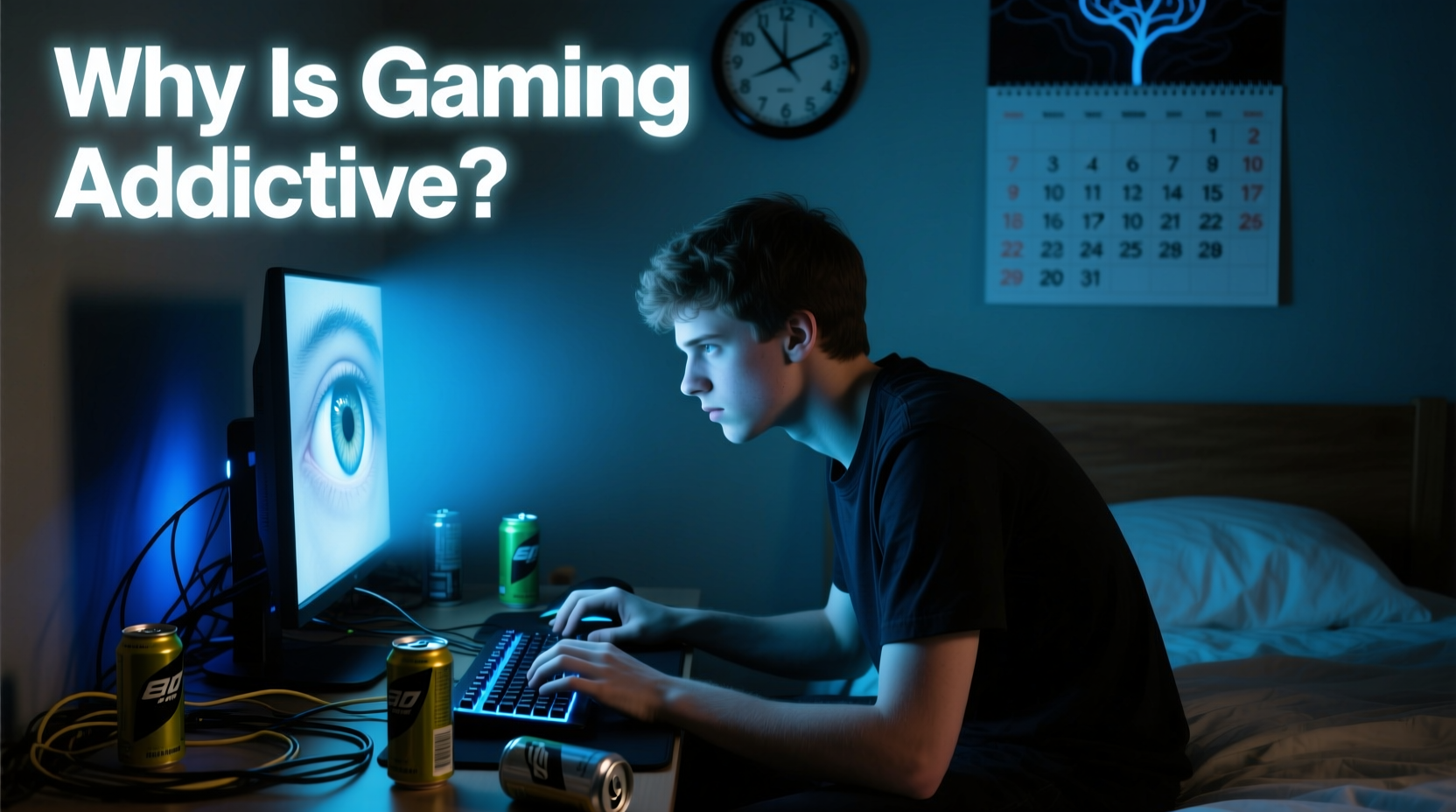
At the core of gaming addiction lies the brain's dopamine system. Dopamine is a neurotransmitter associated with pleasure, motivation, and reinforcement of behavior. Every time a player completes a quest, levels up, or wins a match, the brain releases dopamine—creating a sense of achievement and satisfaction. Over time, this creates a feedback loop: the more rewarding the experience, the more the brain seeks repetition.
Modern games are designed to exploit this mechanism. Features like loot boxes, daily login rewards, and progression systems operate on variable reinforcement schedules—similar to slot machines. These unpredictable rewards keep players engaged longer because the brain anticipates the next \"win,\" even during periods of loss or failure.
“Game developers use psychological principles to maximize engagement. The same mechanisms that make games fun can also make them dangerously habit-forming.” — Dr. Sarah Chen, Cognitive Psychologist and Behavioral Researcher
This neurochemical response mirrors patterns seen in substance addiction. Brain imaging studies show that individuals with gaming disorder exhibit changes in regions related to impulse control, decision-making, and emotional regulation—similar to those observed in gambling or drug addiction.
Psychological and Emotional Triggers
Beyond biology, emotional needs play a significant role in why gaming becomes compulsive. For many, games offer an escape from stress, anxiety, loneliness, or real-world challenges. In virtual environments, players can assume powerful identities, achieve measurable success, and receive social validation—all elements that may be missing in their offline lives.
For example, a teenager struggling with social anxiety might find confidence in leading a raid team in an online multiplayer game. A working adult facing burnout may turn to gaming as a way to regain a sense of control and accomplishment. These emotional benefits, while initially positive, can become dependencies when gaming replaces healthier coping strategies.
Design Tactics That Increase Engagement
Game developers employ sophisticated design techniques to keep players engaged. These are not accidental—they are carefully engineered to maximize time spent in-game. Key features include:
- Progression Systems: Experience bars, skill trees, and level-ups create a constant sense of forward momentum.
- Social Integration: Guilds, teams, and chat functions foster community and obligation to log in.
- Fear of Missing Out (FOMO): Limited-time events and seasonal content pressure players to stay active.
- Autoplay & Seamless Transitions: Games often eliminate natural stopping points, making it hard to quit after “just one more round.”
Mobile games, in particular, are optimized for short, frequent sessions that fit into daily routines—turning gameplay into a habitual behavior, much like checking social media.
Common Game Design Elements That Encourage Addictive Behavior
| Feature | Purpose | Risk |
|---|---|---|
| Loot Boxes | Provide randomized rewards | Triggers gambling-like anticipation |
| Daily Login Bonuses | Encourage consistent play | Creates streak dependency |
| Energy Systems | Limits playtime but encourages return | Promotes obsessive scheduling |
| Player vs. Player (PvP) Ladders | Drives competition and status | Leads to overinvestment in rankings |
Recognizing Problematic Gaming Behavior
Not all frequent gaming is addiction. The World Health Organization (WHO) defines Gaming Disorder as a pattern of persistent or recurrent gaming behavior—digital or video—so severe that it takes precedence over other life interests and leads to significant impairment in personal, family, social, educational, or occupational functioning.
Signs of problematic gaming include:
- Neglecting responsibilities (work, school, hygiene)
- Continuing to play despite negative consequences
- Lying about time spent gaming
- Using gaming to escape negative moods
- Experiencing irritability or anxiety when unable to play
- Failed attempts to cut back
Mini Case Study: Alex’s Story
Alex, a 22-year-old college student, began playing an online RPG during his first semester. Initially, it was a way to unwind after classes. But within months, he was skipping lectures to complete in-game quests, staying up until 4 a.m., and neglecting assignments. His grades dropped, friendships faded, and he stopped attending social events. When confronted by his parents, he insisted he could stop anytime—but each attempt ended in relapse. Only after a mental health evaluation did he recognize his behavior as addictive and begin cognitive behavioral therapy focused on digital habits.
Alex’s story reflects a growing trend: gaming that starts as recreation gradually overtakes daily functioning, often without immediate awareness.
Strategies for Healthy Gaming Habits
Just as not all drinking leads to alcoholism, not all gaming leads to addiction. The goal isn’t elimination—it’s balance. Establishing boundaries and self-awareness can prevent casual play from becoming compulsive.
Step-by-Step Guide to Regaining Control
- Track Your Playtime: Use screen time tools or apps to monitor daily usage for one week.
- Set Clear Limits: Define a maximum number of hours per day or week, and stick to it.
- Create Offline Routines: Replace gaming time with physical activity, hobbies, or social interactions.
- Establish Tech-Free Zones: Ban devices from bedrooms or mealtimes to reduce accessibility.
- Use Alarms or Timers: Set a loud alert to signal the end of a session—don’t rely on willpower alone.
- Engage in Accountability: Share your goals with a friend or family member who can check in regularly.
Gaming Habit Checklist
- ☐ I can stop playing when I plan to.
- ☐ My gaming hasn’t affected my job, school, or relationships.
- ☐ I don’t feel irritable when I can’t play.
- ☐ I engage in non-digital activities regularly.
- ☐ I’m honest with others about how much I play.
If most of these statements are false, it may be time to reassess your relationship with gaming.
Frequently Asked Questions
Is video game addiction officially recognized?
Yes. In 2018, the World Health Organization included Gaming Disorder in the 11th Revision of the International Classification of Diseases (ICD-11). It is classified under \"Disorders due to addictive behaviors,\" alongside gambling disorder.
Can children outgrow gaming addiction?
Some children reduce gaming naturally as they mature and develop other interests. However, untreated addiction can persist into adulthood. Early intervention—such as setting limits, encouraging diverse activities, and open communication—is critical to preventing long-term issues.
Are certain games more addictive than others?
Games with high social interaction, progression systems, and variable rewards (e.g., MMORPGs, battle royales, mobile gacha games) tend to carry higher addiction risk. However, individual susceptibility matters more than genre—mental health, environment, and coping skills influence outcomes.
Conclusion: Reclaiming Balance in a Digital Age
Understanding why gaming is addictive isn’t about vilifying technology—it’s about empowering users with knowledge. Video games are neither inherently good nor bad; their impact depends on how they’re used. By recognizing the psychological hooks, monitoring personal habits, and prioritizing real-world well-being, players can enjoy gaming without losing themselves to it.
If you or someone you care about shows signs of gaming addiction, seek support. Therapists specializing in behavioral addictions, digital wellness coaches, and support groups like Online Gamers Anonymous offer structured help. Awareness is the first step toward change.




 浙公网安备
33010002000092号
浙公网安备
33010002000092号 浙B2-20120091-4
Comments
No comments yet. Why don't you start the discussion?