
General Dynamics (GD), a cornerstone of the U.S. defense industrial base, has experienced notable stock volatility in recent months. Once considered a stable blue-chip stock with reliable dividends and long-term government contracts, GD shares have trended downward amid shifting macroeconomic conditions and sector-specific challenges. Investors are asking: Why is General Dynamics stock falling? The answer lies in a confluence of financial, geopolitical, and operational factors that have collectively eroded investor confidence and impacted valuation.
This article examines the primary drivers behind the decline in GD’s stock price, offering a clear, data-backed analysis for shareholders and potential investors. From contract delays to margin pressures and broader defense spending uncertainty, we break down the real forces shaping GD’s market performance.
Defense Budget Uncertainty and Political Gridlock
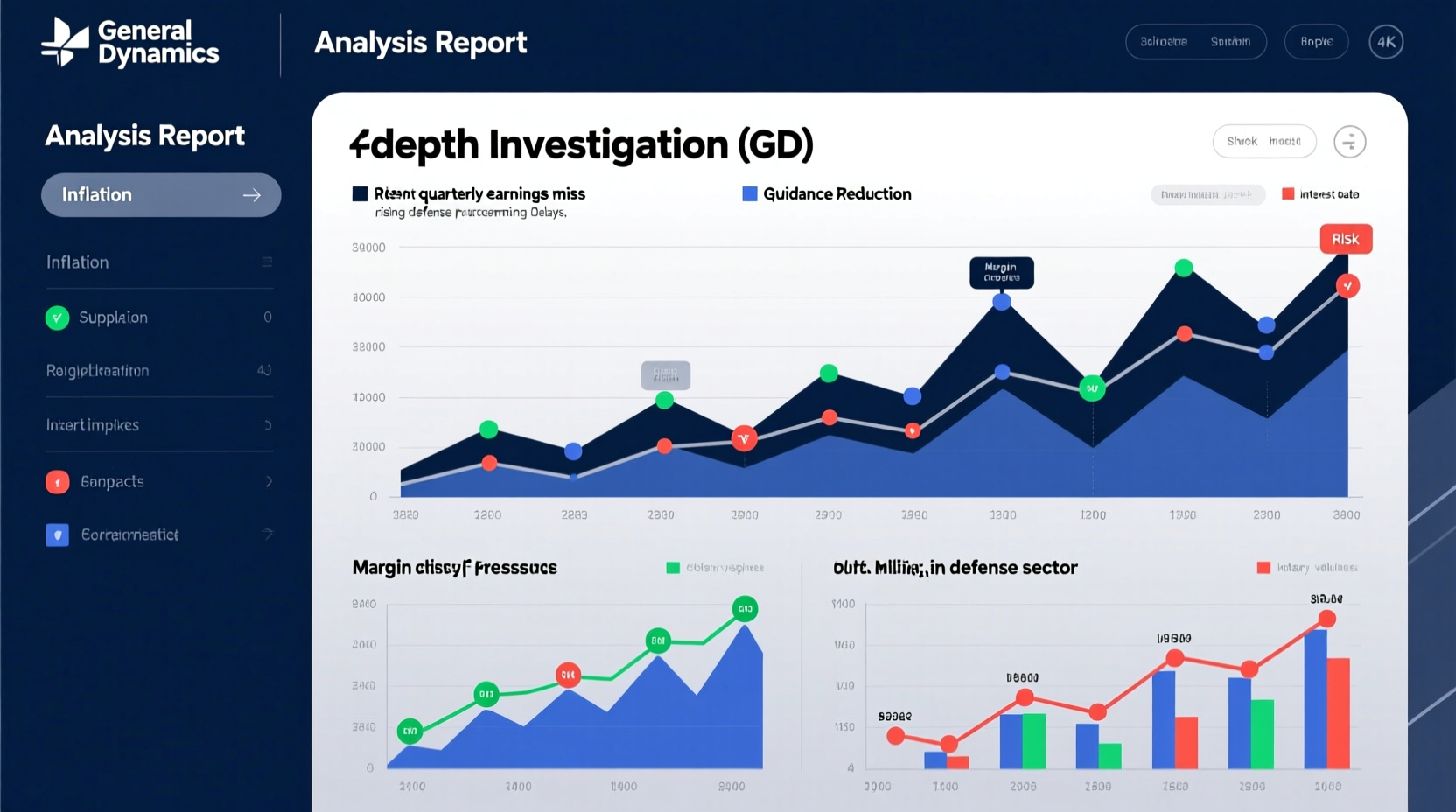
One of the most significant headwinds facing General Dynamics is the growing uncertainty around U.S. defense spending. While defense budgets have historically been insulated from political brinkmanship, recent congressional gridlock over appropriations has introduced new risk. The delay in passing full-year defense funding bills has created hesitation among defense contractors, including GD.
The FY2024 National Defense Authorization Act (NDAA) faced prolonged negotiations, leading to a series of continuing resolutions (CRs). These stopgap measures freeze spending at prior-year levels, preventing new program starts and delaying major procurement decisions. For a company like General Dynamics—whose shipbuilding and combat systems divisions depend on multi-year contracts—this stagnation directly impacts revenue forecasting and growth projections.
“Continuing resolutions are a silent killer for defense primes. They delay modernization, stall innovation, and make long-term planning nearly impossible.” — Dr. Todd Harrison, Defense Budget Analyst, Center for Strategic and International Studies (CSIS)
Investors interpret this uncertainty as a signal of reduced near-term earnings visibility, contributing to downward pressure on GD’s stock.
Margin Pressures in Key Business Segments
General Dynamics operates across four main segments: Aerospace, Marine Systems, Combat Systems, and Technologies. While each contributes differently to overall profitability, two—Marine Systems and Combat Systems—have recently reported declining margins due to cost overruns and supply chain inefficiencies.
The Marine Systems division, responsible for building nuclear submarines and surface combatants, continues to face labor shortages and material inflation. Shipyard backlogs at Electric Boat (a GD subsidiary) remain high, but productivity gains have not kept pace. In its Q1 2024 earnings call, GD acknowledged “ongoing challenges in workforce scalability,” which have led to increased labor costs and schedule slippage on Virginia-class submarine deliveries.
Likewise, the Combat Systems segment has seen lower-than-expected margins on Abrams tank production. Rising steel and component prices, combined with international delivery complexities in Eastern Europe, have squeezed profitability. These margin contractions reduce overall earnings per share (EPS), a key metric that drives stock valuation.
Contract Delays and Cancellations
Aerospace, particularly Gulfstream business jets, remains GD’s most profitable segment. However, even here, signs of softening demand have emerged. In early 2024, General Dynamics disclosed delays in several large Gulfstream orders, citing customer financing challenges and economic caution among corporate buyers.
More concerning was the U.S. Navy’s decision to pause the DDG(X) next-generation destroyer program, a future cornerstone of GD’s shipbuilding pipeline. While not canceled, the delay pushes major contract awards into 2026 or beyond, removing a near-term growth catalyst. Similarly, competition from rival shipbuilders like HII (Huntington Ingalls) has intensified, threatening GD’s market share in naval construction.
Each delayed or contested contract reduces forward revenue visibility. In equity markets, uncertainty equals risk—and risk demands a lower valuation multiple.
Recent Major Contract Developments Affecting GD
| Program | Status | Impact on GD |
|---|---|---|
| Virginia-Class Submarine | Ongoing, but delayed | Revenue push-out; margin pressure |
| DDG(X) Destroyer | Paused until 2025 review | Loss of near-term growth narrative |
| Gulfstream G700 Deliveries | Slower than expected | Reduced high-margin revenue |
| Army Stryker Vehicle Upgrades | Competitive bid ongoing | Risk of losing to Rheinmetall or others |
Macroeconomic and Market Sentiment Factors
Beyond company-specific issues, broader market forces have contributed to GD’s underperformance. As interest rates remain elevated, high-dividend-yielding defense stocks like General Dynamics face increased competition from risk-free Treasury yields. With the 10-year Treasury yielding over 4.5% in 2024, some income-focused investors have rotated out of equities into bonds.
Additionally, the S&P 500’s strong rally—driven by tech megacaps—has left value-oriented industrial and defense stocks behind. GD trades at a P/E ratio of approximately 15x, below its five-year average of 17.5x, reflecting both lower earnings expectations and reduced investor appetite for slower-growth sectors.
Analyst sentiment has also shifted. Out of 18 analysts covering GD, seven downgraded their ratings between Q4 2023 and Q2 2024, citing “execution risk” and “limited upside in current budget environment.” Price targets have been revised downward by an average of 12%, further dampening market enthusiasm.
Real-World Investor Scenario: Reacting to Earnings Disappointment
In April 2024, General Dynamics reported Q1 earnings that missed consensus EPS estimates by $0.38. Revenue grew just 2.1% year-over-year, well below the anticipated 4.5%. The company cited higher pension expenses and supply chain disruptions as key culprits.
Immediately following the report, GD stock dropped 6.8% in a single day—the largest one-day decline in over two years. Long-term holders were caught off guard; many had viewed GD as a defensive play during market turbulence. Instead, the stock behaved more like a cyclical industrial, reacting sharply to operational hiccups.
Jenny M., a retail investor with a 500-share position acquired in 2021, shared her experience: “I held GD for the dividend and stability. When it dropped below $200, I started questioning whether the defense sector is still insulated like it used to be. I ended up selling half my position to rebalance into tech.” Her story reflects a broader trend: erosion of the “safe haven” perception once associated with defense stocks.
Actionable Checklist for GD Investors
If you hold or are considering investing in General Dynamics stock, use this checklist to assess risk and opportunity:
- ✅ Review the latest segment-level earnings reports, especially margin trends in Marine and Combat Systems
- ✅ Track federal budget developments—look for passage of full defense appropriations (not CRs)
- ✅ Monitor upcoming contract awards, particularly DDG(X) and foreign Gulfstream sales
- ✅ Assess analyst revisions—consensus estimate changes often precede price movements
- ✅ Compare GD’s P/E and dividend yield against peers like Lockheed Martin (LMT) and Northrop Grumman (NOC)
- ✅ Evaluate your portfolio’s sensitivity to interest rate changes—higher yields may reduce appeal of dividend stocks
Frequently Asked Questions
Is General Dynamics a good long-term investment?
Yes, for conservative investors seeking steady dividends and exposure to essential defense programs. However, long-term returns depend on improved execution, resolution of shipbuilding bottlenecks, and favorable budget outcomes. The company’s diversified model provides resilience, but growth will likely remain moderate.
Why did GD stock drop despite strong defense spending overall?
While total defense spending remains high, the timing and allocation of funds matter. Continuing resolutions prevent new starts, and GD has faced disproportionate challenges in labor-intensive shipbuilding. Additionally, rising costs have offset top-line growth, hurting profitability.
Does General Dynamics pay a dividend?
Yes. GD offers a quarterly dividend of $1.36 per share, representing a current yield of approximately 2.6%. The dividend has been increased annually for over 30 years, making it attractive to income investors, provided earnings support continued payouts.
Conclusion: Navigating the Downturn with Clarity
The decline in General Dynamics stock is not the result of a single event, but rather a combination of operational hurdles, budgetary uncertainty, and shifting market dynamics. While the company remains a critical player in national defense and maintains a strong backlog, near-term challenges have weighed on investor sentiment.
Understanding these factors empowers investors to make informed decisions—whether that means holding through volatility, adjusting position size, or waiting for clearer catalysts. The defense sector will always face political and fiscal cycles, but companies with deep government integration like GD tend to recover when clarity returns.




 浙公网安备
33010002000092号
浙公网安备
33010002000092号 浙B2-20120091-4
Comments
No comments yet. Why don't you start the discussion?