
Genshin Impact, developed by miHoYo, has become a cultural phenomenon since its 2020 release. With over 100 million downloads in its first year and sustained engagement across platforms, it stands out in a crowded gaming market. But beyond its striking visuals and expansive open world, what makes players return daily, invest time, and even money? The answer lies not just in design but in psychology. Genshin Impact masterfully leverages cognitive and emotional triggers—what behavioral scientists call \"psychological hooks\"—to create deep, lasting engagement. These mechanisms are not accidental; they are engineered with precision to keep players invested long-term.
The Power of Variable Rewards
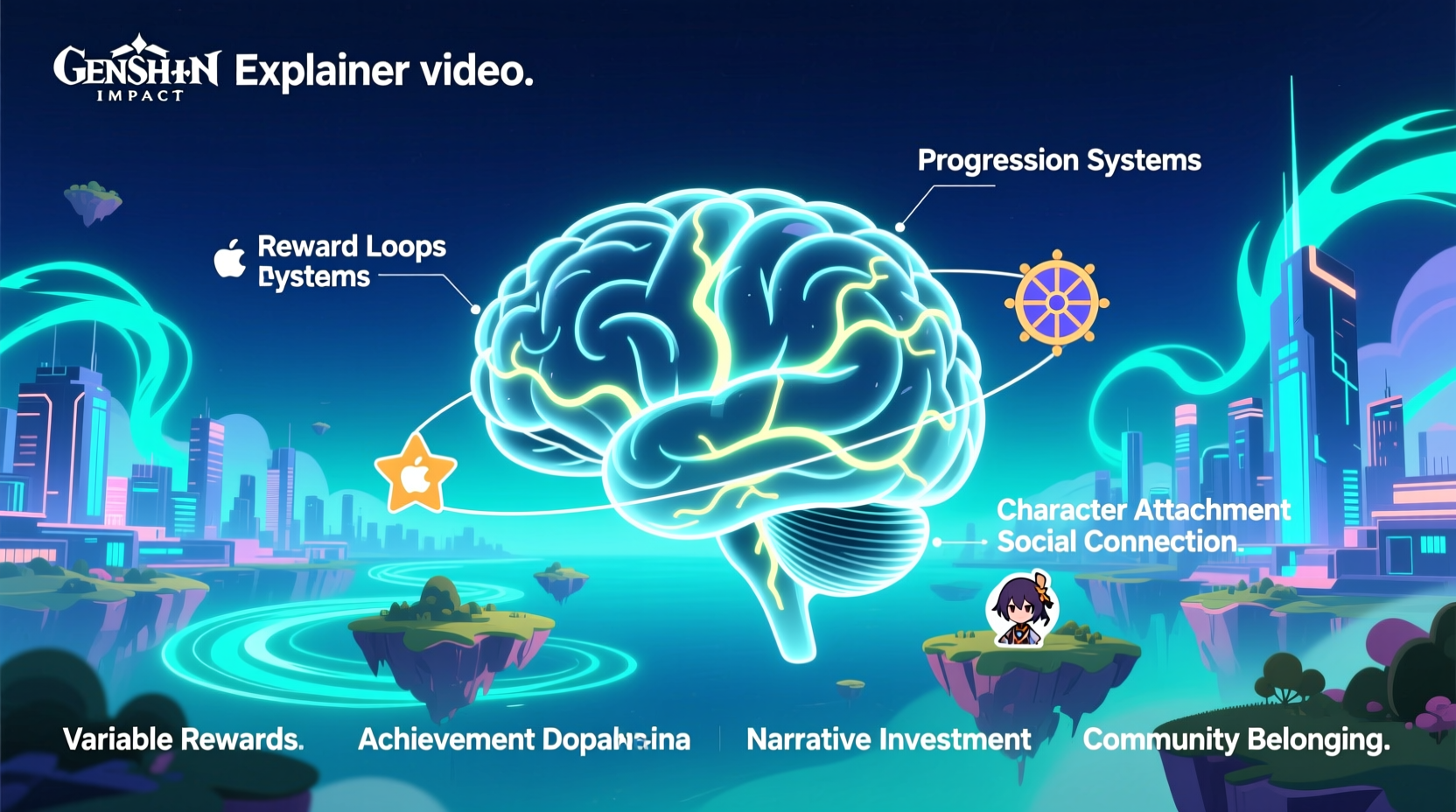
One of the most potent psychological drivers in Genshin Impact is the use of variable rewards—a concept rooted in B.F. Skinner’s operant conditioning experiments. When rewards are delivered unpredictably, the brain releases dopamine more intensely than when outcomes are certain. This principle underpins slot machines, social media feeds, and yes, gacha systems.
In Genshin Impact, the gacha mechanic (called “Wishes”) allows players to spend in-game currency or real money for a chance to obtain rare characters and weapons. The odds are low—typically around 0.6% for a five-star character—but the system includes a pity counter that guarantees a high-tier reward after a set number of failed attempts (usually 90 pulls). This creates a powerful anticipation loop: players know a reward is inevitable, but not *when*, which keeps them pulling.
This blend of randomness and guaranteed payoff exploits the brain’s craving for novelty and resolution. Players don’t just chase characters—they chase the emotional high of finally unlocking them after dozens of attempts. It’s not gambling in the legal sense, but it activates the same neural pathways.
Daily Engagement Through Loss Aversion
Genshin Impact structures its gameplay around time-limited resources: resin for dungeon runs, daily commissions, weekly bosses, and event-exclusive currencies. These systems rely heavily on loss aversion—the psychological tendency to prefer avoiding losses over acquiring equivalent gains.
For example, resin regenerates slowly (one unit every eight minutes, capped at 160). If unused, it maxes out and stops accumulating. Players feel compelled to log in regularly because letting resin cap without using it feels like wasting progress. Similarly, missing a day of commissions means losing free primogems (the premium currency), which could delay character acquisition.
This design doesn’t force play—it invites it through subtle pressure. Skipping a day isn’t catastrophic, but it creates a small psychological cost. Over time, this nudges players toward consistent engagement, turning casual interest into routine.
“Games like Genshin Impact don’t just entertain—they form habits by aligning game mechanics with human cognitive biases.” — Dr. Sarah Thompson, Cognitive Psychologist & Game Design Consultant
Social Validation and Identity Investment
While Genshin Impact is primarily single-player, it fosters strong social dynamics through indirect competition and community participation. Players share team compositions, showcase rare characters, and compare progress on forums like Reddit and Hoyolab. Even without direct multiplayer progression, the desire for social validation drives investment.
Obtaining a coveted five-star character like Zhongli or Yae Miko becomes a status symbol. Screenshots of successful pulls circulate widely, reinforcing the idea that ownership equals achievement. This taps into identity reinforcement—players begin to see themselves as “a Xiangling main” or “a Venti collector,” deepening emotional attachment to both characters and the game itself.
Moreover, limited-time banners create artificial scarcity. Knowing a character may not return for months—or ever—intensifies FOMO (fear of missing out). Players don’t just want the character; they fear regretting their absence later. This emotional pressure often overrides rational budgeting, leading to unexpected spending.
How Genshin Builds Player Identity
- Character Ownership: Rare characters become personal achievements.
- Team Synergy: Investing in gear and builds increases sunk cost.
- Community Recognition: Sharing teams online validates effort.
- Narrative Bonds: Deep backstories make characters feel like companions.
The Illusion of Progress and Autonomy
Genshin Impact excels at creating the illusion of meaningful progress. Every action yields feedback: XP orbs, resource drops, quest updates, and visual effects. Even grinding enemy spawns feels productive because the game constantly signals advancement.
The Adventure Rank system exemplifies this. Leveling up unlocks new quests, regions, and features, giving players a clear sense of growth. However, the experience curve is deliberately steepened—each level requires significantly more effort than the last. This delays burnout by spacing out major milestones while maintaining the perception of forward motion.
Additionally, the game offers an illusion of autonomy. Players choose exploration paths, team builds, and playstyles. Yet, many choices are funneled toward optimal strategies promoted by the meta. Still, the feeling of control enhances intrinsic motivation. People are more engaged when they believe they’re making decisions—even if those options are carefully curated.
Step-by-Step: How Genshin Keeps You Coming Back
- Day 1: Experience a cinematic opening and free early rewards, creating instant gratification.
- Day 3: Encounter your first hard boss; you’re encouraged to pull a banner for help.
- Day 7: Daily login rewards end, but you’ve built a habit. Resin caps out if not used.
- Week 2: A limited-time event starts, offering exclusive rewards. Missing it feels costly.
- Month 1: You’ve invested time and possibly money. Leaving feels like losing progress.
- Ongoing: New banners, events, and story chapters reset the engagement cycle.
Emotional Storytelling and Narrative Hooks
Beyond mechanics, Genshin Impact uses narrative to deepen attachment. Each region—from Mondstadt to Inazuma—features rich lore, political intrigue, and character-driven arcs. The writing blends mythic tone with relatable emotions: loneliness, duty, betrayal, and hope.
Characters aren’t just combat tools—they have birthdays, voice lines, and personal quests. When a player celebrates a character’s birthday in-game, they receive a gift and special dialogue. This mimics real-world relationship rituals, triggering parasocial bonding—a one-sided emotional connection where players feel personally tied to fictional figures.
Consider Hu Tao, the flamboyant director of the Wangsheng Funeral Parlor. Her humor, vulnerability, and philosophical take on death resonate deeply. Players don’t just like her kit—they care about her well-being. This emotional layer makes pulling for her feel less like a transaction and more like reuniting with a friend.
“We bond with characters not because they’re powerful, but because they feel alive. That’s where true retention begins.” — Kenji Sato, Narrative Designer at a AAA studio
Comparison: Genshin vs. Traditional RPGs
| Mechanic | Genshin Impact | Traditional RPG (e.g., Skyrim) |
|---|---|---|
| Reward Frequency | Constant micro-rewards (orbs, drops, animations) | Infrequent, milestone-based rewards |
| Progression System | Adventure Rank with gated content | Open-ended skill-based leveling |
| Social Pressure | Indirect (FOMO, community trends) | Minimal |
| Monetization | Gacha-based, optional but psychologically persuasive | One-time purchase or DLC |
| Time Investment | Daily login culture, resin limits | No enforced schedules |
This table highlights how Genshin Impact differs from traditional RPGs not in quality, but in behavioral design. It’s engineered for sustained attention, not just immersion.
Mini Case Study: The Rise of \"Pity Count\" Culture
Alice, a 24-year-old student, downloaded Genshin Impact during lockdown. Initially, she played casually. But after saving for weeks to pull on a Keqing banner, she missed the five-star. She was close—she got four-stars, but not the character she wanted. The game displayed: “90 pulls remaining until guaranteed character.”
She didn’t plan to spend more, but the pity counter haunted her. “I already put in 70 pulls,” she thought. “It feels stupid to stop now.” Two months later, she had spent $120 across multiple banners, chasing the satisfaction of finally winning. She eventually got Raiden Shogun—but by then, she was hooked on the rhythm of saving, waiting, and hoping.
Alice’s story is common. The pity system transforms randomness into a commitment device. Once players invest, quitting feels like failure. The game never says “keep going”—it lets the psychology do the talking.
Checklist: How to Enjoy Genshin Impact Mindfully
- ✅ Set a monthly spending limit before logging in.
- ✅ Track your resin usage—don’t let it cap unless you truly need a break.
- ✅ Ask: “Am I playing because I enjoy it, or because I feel obligated?”
- ✅ Take breaks during events to avoid burnout.
- ✅ Celebrate progress without tying self-worth to rare drops.
- ✅ Use community guides, but don’t feel pressured to match others’ teams.
Frequently Asked Questions
Is Genshin Impact designed to be addictive?
While not clinically addictive, Genshin Impact uses proven behavioral techniques to encourage habitual play. Its reward schedules, loss aversion mechanics, and social incentives are intentionally crafted to maximize engagement. For most players, this results in enjoyable routines. For some, especially younger users, it can lead to excessive play or spending. Awareness is key to maintaining healthy boundaries.
Can you succeed without spending money?
Absolutely. The game is balanced for free-to-play users. Primogems (premium currency) can be earned through daily tasks, events, and exploration. While paying speeds up access to certain characters, all current five-stars eventually return in banners. Patience and planning allow full enjoyment without financial investment.
Why do I feel guilty when I skip a day?
This guilt stems from loss aversion and sunk cost fallacy. The game conditions you to view unused resin or missed commissions as wasted opportunity. Remind yourself that rest is part of sustainable play. Logging off doesn’t erase progress—it preserves your long-term enjoyment.
Conclusion: Understanding the Hook to Regain Control
Genshin Impact’s popularity isn’t accidental. It combines breathtaking artistry with sophisticated psychological engineering. From variable rewards to identity formation, every system is optimized to capture attention and sustain engagement. Recognizing these mechanisms doesn’t diminish the game’s value—it empowers players to enjoy it more consciously.
Whether you’re a devoted traveler of Teyvat or a curious observer, understanding the psychology behind the screen helps separate genuine enjoyment from compulsive behavior. Play because the world inspires you, not because the system demands it. The best adventures are chosen freely.




 浙公网安备
33010002000092号
浙公网安备
33010002000092号 浙B2-20120091-4
Comments
No comments yet. Why don't you start the discussion?