
Geometry is far more than a subject confined to math classrooms. It shapes the physical world around us—literally. From the design of smartphones to the construction of skyscrapers, geometric principles are embedded in countless aspects of daily life. Understanding geometry isn't just about memorizing formulas for angles and areas; it's about interpreting spatial relationships, solving practical problems, and making informed decisions across industries. Whether you're navigating city streets, designing furniture, or launching satellites, geometry provides the foundational logic that makes modern life possible.
The Role of Geometry in Architecture and Construction
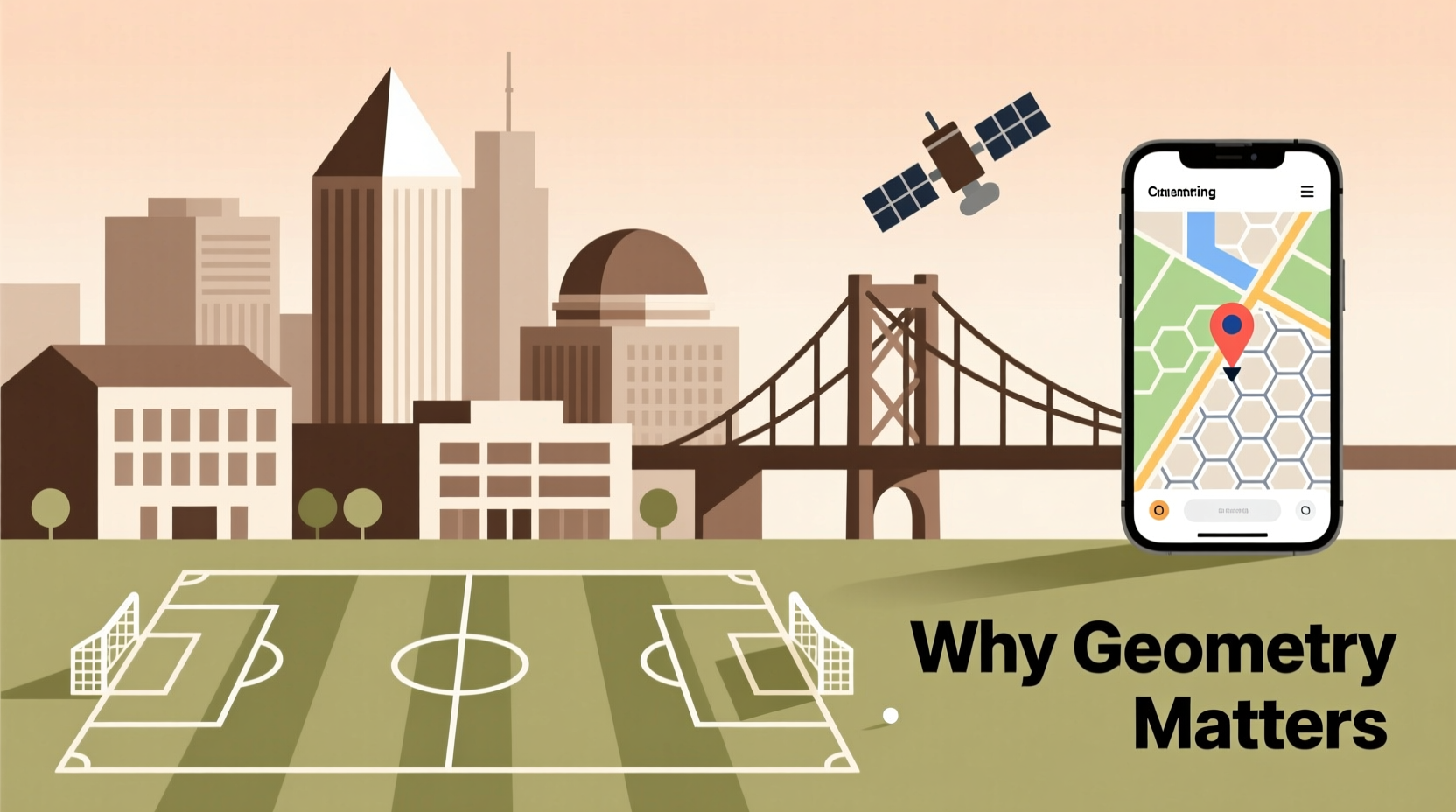
One of the most visible applications of geometry lies in architecture and construction. Architects use geometric shapes and calculations to create structurally sound and aesthetically pleasing buildings. The stability of a roof depends on triangular trusses, while circular columns distribute weight evenly. Floor plans rely on precise measurements, symmetry, and proportion—all rooted in geometry.
Consider the Burj Khalifa in Dubai, the tallest building in the world. Its design incorporates a Y-shaped floor plan, which reduces wind forces and increases structural efficiency. This shape was derived through extensive geometric modeling. Similarly, domes like those seen in the Pantheon in Rome use spherical geometry to evenly disperse compressive forces, allowing massive structures to stand for centuries.
Key Geometric Concepts in Building Design
- Angles and Triangulation: Essential for roof framing and bridge supports.
- Symmetry: Used for visual balance and load distribution.
- Area and Volume Calculations: Critical for estimating materials like concrete, paint, or flooring.
- Scale Drawings: Blueprints are geometric representations at reduced sizes.
“Every great structure begins not with steel or concrete, but with lines, angles, and ratios.” — Dr. Lena Torres, Structural Engineer and Professor of Civil Engineering
Geometry in Technology and Computer Graphics
In the digital age, geometry powers everything from video games to GPS navigation. Computer-aided design (CAD) software relies on geometric algorithms to model 3D objects. These models are used in manufacturing, animation, and virtual reality environments.
For example, when animators create a character in a film, they begin with basic geometric shapes—spheres for heads, cylinders for limbs—and refine them into complex forms. Each movement is calculated using transformational geometry: rotation, translation, and scaling. Without these mathematical foundations, realistic motion would be impossible.
Similarly, GPS systems calculate your location using trilateration—a geometric method involving distances from multiple satellites. Your smartphone doesn’t just track where you are; it uses spherical geometry to interpret signals from orbiting satellites and determine position within meters.
Real-World Example: Mapping an Urban Bike Route
A city planner tasked with designing a new bike lane must consider shortest paths, elevation changes, and intersection angles. Using geographic information systems (GIS), they overlay geometric grids onto maps to analyze routes. By calculating angles at turns and ensuring smooth curves based on radius standards, they minimize accident risks and improve cyclist comfort. This blend of Euclidean and coordinate geometry directly enhances urban mobility.
Applications in Science and Engineering
Engineering disciplines—from aerospace to robotics—depend heavily on geometric reasoning. Engineers use conic sections to design satellite dishes that focus signals efficiently. In robotics, inverse kinematics—a branch of geometry—determines how robotic arms move to reach specific points in space.
Astronomers apply spherical geometry to chart celestial bodies. When NASA plans a Mars rover landing, trajectory paths are computed using three-dimensional geometric models that account for planetary motion, gravity wells, and atmospheric entry angles. Even something as simple as aligning solar panels on a spacecraft involves calculating optimal tilt angles relative to the sun’s position.
| Field | Geometric Application | Impact |
|---|---|---|
| Mechanical Engineering | Gear tooth profiles (involute curves) | Efficient power transmission |
| Aerospace | Wing airfoil design (elliptical shapes) | Improved lift-to-drag ratio |
| Medical Imaging | CT scans use cross-sectional geometry | Precise tumor detection |
| Civil Engineering | Bridge arch curvature | Weight distribution and durability |
Everyday Uses of Geometry You Might Overlook
Even outside professional fields, people use geometry intuitively every day. Packing a suitcase efficiently requires understanding volume and spatial arrangement. Cooking involves measuring cylindrical containers or dividing pies into equal angular slices. Driving includes judging distances, angles when merging, and estimating turning radii.
Furniture assembly instructions are essentially geometric guides. IKEA diagrams don’t use words—they rely on perspective drawings, alignment markers, and proportional layouts so users can visualize how pieces fit together in 3D space.
Checklist: Practical Ways to Apply Geometry Daily
- Measure room dimensions before buying furniture to avoid spatial mismatches.
- Use symmetry when arranging photos or decor for visual harmony.
- Calculate paint coverage by finding wall surface area.
- Estimate garden layout using perimeter and area formulas.
- Apply angle awareness when parking or reversing safely.
Geometry in Art, Design, and Nature
Artists and designers have long used geometry to create compelling compositions. The golden ratio—a geometric proportion (~1.618)—appears in classical paintings, modern logos, and even facial aesthetics. Graphic designers use grids and alignment tools grounded in coordinate geometry to ensure clean, readable layouts.
Nature itself follows geometric patterns. Honeycombs form hexagonal cells because this shape maximizes storage with minimal wax. Snowflakes exhibit six-fold radial symmetry due to molecular crystallization. Pinecones and sunflowers display Fibonacci spirals—another expression of natural geometry optimizing growth and seed placement.
“The universe cannot be read until we have learned the language… It is written in mathematical terms, and the letters are triangles, circles, and other geometrical figures.” — Galileo Galilei
FAQ
Why is geometry important in education?
Geometry develops logical thinking, spatial reasoning, and problem-solving skills. It bridges abstract math with tangible reality, helping students understand how numbers relate to physical space. These cognitive tools benefit learners in STEM fields and beyond.
Can I use geometry without realizing it?
Absolutely. People constantly estimate distances, judge proportions, and navigate spaces using informal geometric intuition. Recognizing these moments helps reinforce learning and encourages mindful application of concepts.
Is geometry still relevant in a digital world?
More than ever. Digital modeling, AI-driven design, augmented reality, and autonomous vehicles all depend on advanced geometric computations. As technology evolves, so does the demand for geometric literacy.
Conclusion: Embrace the Shapes Around You
Geometry is not a relic of ancient mathematics—it’s a living, evolving discipline woven into the fabric of human progress. Whether you’re a student, designer, engineer, or simply someone navigating daily life, recognizing the role of geometry empowers better decision-making and deeper appreciation of the world. From the curve of a coffee mug to the algorithm behind your favorite app, shapes and spatial logic are everywhere.




 浙公网安备
33010002000092号
浙公网安备
33010002000092号 浙B2-20120091-4
Comments
No comments yet. Why don't you start the discussion?