
In the vast landscape of ancient literature, few figures stand as tall or cast as long a shadow as Herodotus. Often hailed as the “Father of History,” he was not merely a chronicler of events but a visionary who transformed how human experiences were recorded and interpreted. Born around 484 BCE in Halicarnassus, a Greek city in what is now modern-day Turkey, Herodotus lived during a time of profound cultural and political transformation—the rise of the Persian Empire, the Peloponnesian conflicts, and the golden age of Athenian democracy. His magnum opus, *The Histories*, remains one of the most influential works in Western historiography. But why is Herodotus still important today? His legacy endures not only because he documented pivotal moments like the Greco-Persian Wars but because he introduced a new way of thinking: inquiry, observation, and narrative structure fused with cultural curiosity.
The Birth of Historical Inquiry
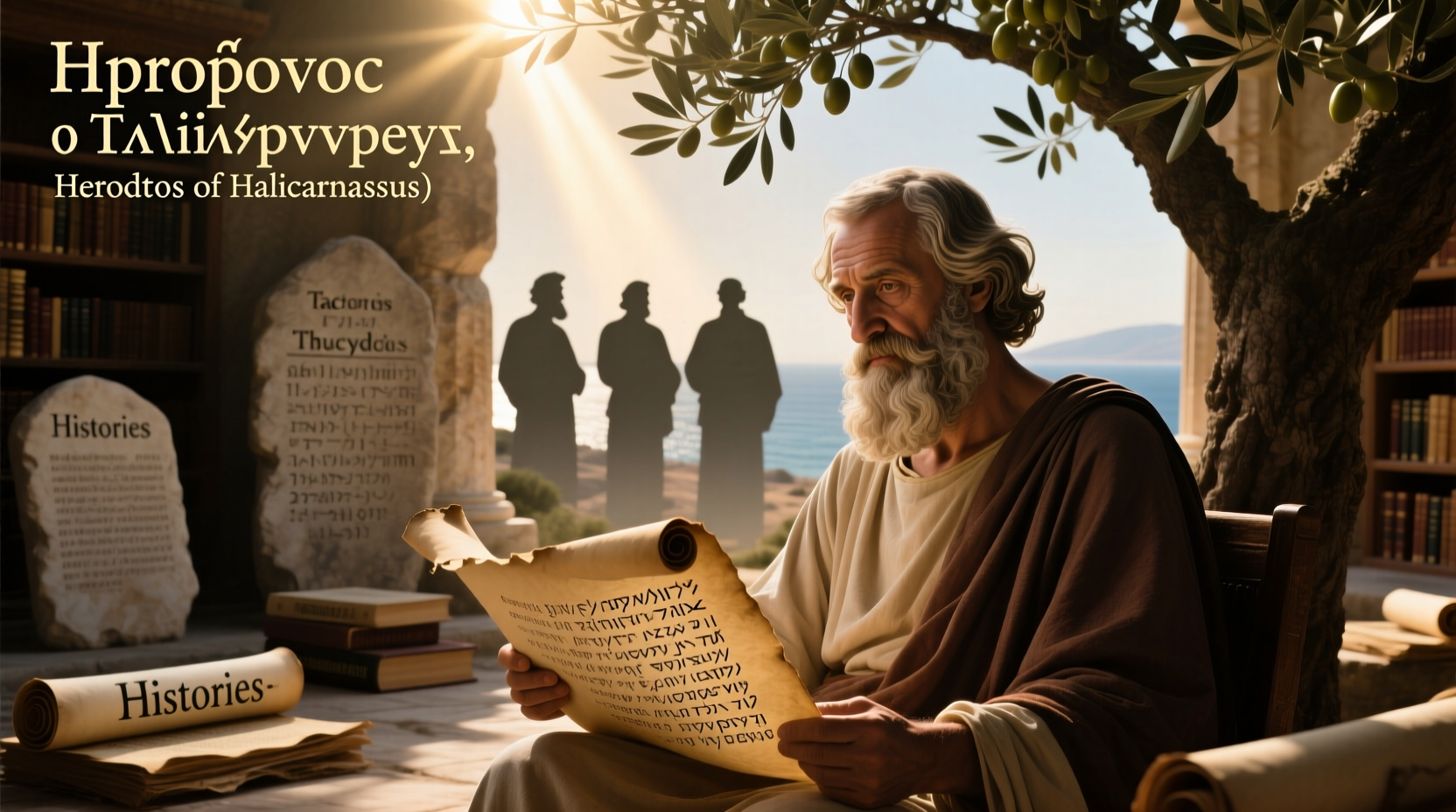
Prior to Herodotus, accounts of the past were largely mythological or poetic—epics like Homer’s *Iliad* and *Odyssey* blended fact with divine intervention and heroic exaggeration. Herodotus broke from this tradition by seeking out eyewitnesses, traveling extensively across the Mediterranean and Near East, and recording stories with a critical eye. He coined the term *historia*, meaning “inquiry” or “research,” which laid the foundation for what we now recognize as historical methodology.
His approach was revolutionary. Rather than attributing wars solely to fate or gods, he explored causes—political tensions, economic motives, cultural misunderstandings. In *The Histories*, he examines the conflict between Greece and Persia not just as a military struggle but as a clash of civilizations. This broader perspective allowed readers to understand not only what happened but why it mattered.
“Of all gifts that heaven bestows on men, none is so divine as curiosity.” — Adapted from Herodotus, reflecting his lifelong pursuit of knowledge
Methodology and Narrative Genius
Herodotus did not write a dry chronicle. His work is rich with digressions, anecdotes, and ethnographic descriptions of peoples from Egypt to Scythia. While some later critics, such as Thucydides, accused him of being too credulous—accepting myths and legends as possible truths—this very inclusiveness reveals his anthropological instinct. He understood that to tell the story of a war, one must also tell the story of the people involved.
He traveled through Egypt and described the Nile’s flooding patterns, mummification rituals, and temple architecture. He wrote about Persian customs, Scythian burial practices, and Libyan tribes with a level of detail unmatched in earlier writings. Though not always accurate by modern standards, his commitment to gathering information from multiple sources set a precedent for field research.
Enduring Influence on Historians and Thinkers
Herodotus’ impact stretches far beyond antiquity. Renaissance scholars rediscovered his work during the revival of classical learning, and Enlightenment thinkers admired his emphasis on human agency and cross-cultural comparison. Modern historians continue to draw inspiration from his narrative techniques and global outlook.
Edward Gibbon, author of *The Decline and Fall of the Roman Empire*, echoed Herodotus’ panoramic vision in tracing the interplay of institutions, beliefs, and individuals over centuries. Even contemporary documentary filmmakers and podcasters owe a debt to Herodotus’ storytelling model—blending personal journeys with broader historical themes.
| Era | Figure Influenced by Herodotus | Contribution Inspired by His Work |
|---|---|---|
| Classical | Thucydides | Developed more analytical history but built on Herodotus’ framework |
| Renaissance | Leonardo Bruni | Revived historical writing with civic and narrative focus |
| Enlightenment | Montesquieu | Explored laws and customs across cultures, much like Herodotus |
| Modern | Natalie Haynes (author) | Reimagined ancient narratives with empathy and depth |
A Case Study in Cultural Understanding: The Persian Debate on Government
One of the most striking passages in *The Histories* is the “Constitutional Debate” among Persian nobles after the death of King Cambyses (Book III). Three officials argue for democracy, oligarchy, and monarchy, each presenting reasoned arguments. Remarkably, monarchy wins—not because it’s inherently superior, but because the speaker, Otanes, fears the mob’s ignorance. This fictionalized debate offers insight into Greek perceptions of governance and reflects Athenian democratic ideals projected onto their rivals.
This episode illustrates Herodotus’ skill in using storytelling to explore complex political ideas. It wasn’t just propaganda; it was an invitation to think critically about power, freedom, and justice—themes still relevant in today’s democracies.
Why Herodotus Matters Today
In an age of information overload and polarized narratives, Herodotus’ example is more vital than ever. He reminds us that history is not a collection of dates and battles but a tapestry woven from voices, traditions, and choices. His openness to different cultures challenges ethnocentrism. His willingness to admit uncertainty (“I cannot say for certain”) models intellectual humility.
Moreover, his interdisciplinary approach—merging geography, anthropology, politics, and religion—prefigures modern fields like cultural studies and world history. Educators today use his work to teach students how to evaluate sources, detect bias, and appreciate diverse perspectives.
- He pioneered source criticism by comparing versions of the same event.
- He emphasized context over judgment, portraying even enemies with nuance.
- He believed that understanding the “other” was essential to self-understanding.
Expert Insight: A Modern Historian’s View
“Herodotus didn’t invent truth, but he invented the search for it through dialogue and evidence. That quest is the heartbeat of history.” — Dr. Ada Cohen, Professor of Ancient Mediterranean Art and History, Dartmouth College
Practical Applications: Learning from Herodotus
While we may not all write epic histories, we can adopt Herodotus’ mindset in everyday life—especially in how we consume news, engage with other cultures, and pass on stories. Below is a checklist inspired by his methods:
Herodotus-Inspired Critical Thinking Checklist
- Ask “Why?” relentlessly. Don’t accept surface explanations for events.
- Seek multiple perspectives. Talk to people with different backgrounds and beliefs.
- Verify when possible. Cross-check claims, especially dramatic ones.
- Embrace uncertainty. It’s okay to say, “I don’t know”—and keep investigating.
- Tell stories with empathy. Even opponents have motivations worth understanding.
Frequently Asked Questions
Was Herodotus accurate in his historical accounts?
Some of Herodotus’ claims—like gold-digging ants in India or spontaneous human combustion—are clearly exaggerated or based on hearsay. However, many of his descriptions (e.g., Egyptian pyramids, Persian administration) have been confirmed by archaeology. His value lies less in perfect accuracy and more in his method of inquiry and cultural documentation.
Why do some scholars criticize Herodotus?
Critics, starting with Thucydides, argue that Herodotus included myths, miracles, and gossip without sufficient skepticism. While valid, these critiques often overlook his purpose: to preserve the full range of human belief, not just verifiable facts. His inclusivity makes his work a richer cultural record.
Can Herodotus be considered the first journalist?
In many ways, yes. He traveled to gather firsthand accounts, interviewed witnesses, and reported on distant events for a public audience. His blend of fact, narrative, and moral reflection mirrors modern long-form journalism and documentary storytelling.
Conclusion: Embracing the Legacy of Curiosity
Herodotus’ importance transcends his era. He taught humanity how to ask questions about its past—and, by extension, about itself. In a world where misinformation spreads faster than truth, his insistence on inquiry, pluralism, and narrative integrity offers a timeless model. We honor his legacy not by memorizing ancient battles but by cultivating the same restless curiosity that drove him from Halicarnassus to Babylon, from the Nile Delta to the Aegean islands.
Let Herodotus inspire you to listen deeply, travel widely (even if only through books), and question boldly. The past is not a fixed monument—it is a conversation. And like Herodotus, you have a voice in it.




 浙公网安备
33010002000092号
浙公网安备
33010002000092号 浙B2-20120091-4
Comments
No comments yet. Why don't you start the discussion?