
The ice plant (scientifically known as *Carpobrotus edulis* and related species) was once widely praised for its drought tolerance, fast growth, and vibrant flowers. Introduced across coastal regions in North America, Europe, and Australia primarily for erosion control and landscaping, it has since revealed a far more destructive side. What began as a solution to environmental challenges has evolved into a serious ecological problem. Today, ice plant is recognized as a highly invasive species that threatens native plant communities, alters soil chemistry, and disrupts habitat integrity. Understanding why this seemingly attractive groundcover is now considered harmful is essential for land managers, gardeners, and conservationists alike.
Ecological Displacement of Native Species
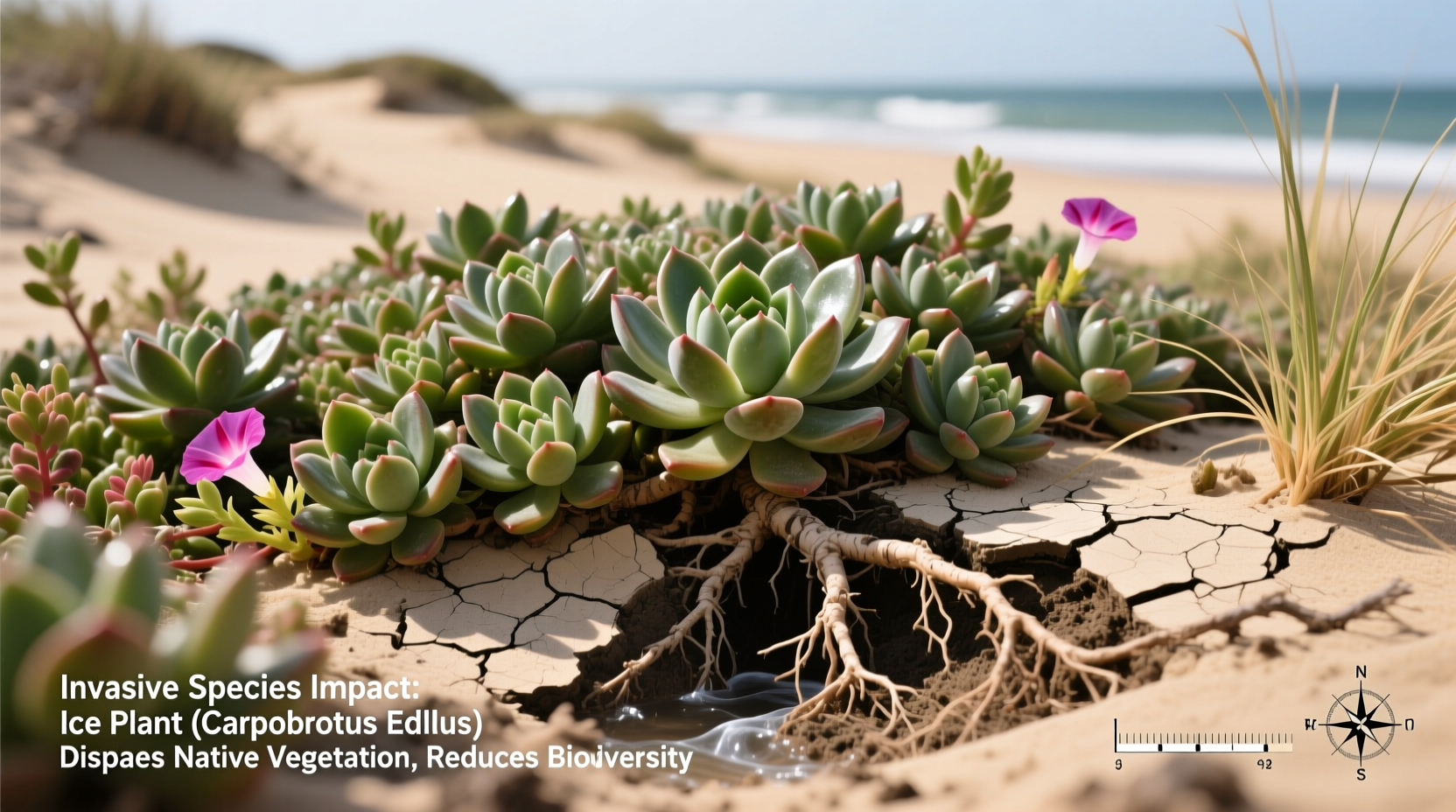
One of the most significant reasons ice plant is deemed problematic is its ability to outcompete and displace native vegetation. Its rapid growth and dense mat-forming habit allow it to spread quickly across coastal bluffs, dunes, and scrublands—ecosystems already under pressure from urban development and climate change. Once established, ice plant forms thick carpets that block sunlight and prevent native seeds from germinating.
In California, where coastal sage scrub and dune ecosystems are particularly vulnerable, species like the endangered beach spectacle pod (*Dithyrea maritima*) and the threatened western snowy plover have seen their habitats severely degraded by ice plant invasion. The plant’s aggressive colonization reduces plant diversity and eliminates food sources and shelter for native insects, birds, and small mammals.
Alteration of Soil Chemistry and Nutrient Cycling
Beyond physical competition, ice plant fundamentally changes the soil environment in ways that favor its own persistence while disadvantaging native flora. Research has shown that ice plant increases soil nitrogen levels through microbial activity associated with its roots. While nitrogen is a vital nutrient, many native coastal plants are adapted to low-nutrient soils. Elevated nitrogen levels can shift competitive balances, allowing other non-native weeds to invade and further degrade ecosystem function.
Additionally, ice plant exudes salts through its leaves, which accumulate in the soil as the plant sheds foliage. This process, called salt leaching, creates saline conditions that many native plants cannot tolerate. Over time, these chemical alterations make it increasingly difficult for native species to reestablish even after ice plant removal.
“Once ice plant takes over, it doesn’t just occupy space—it rewires the ecosystem. Restoring native plants requires not just removing the invader, but rehabilitating the soil itself.” — Dr. Laura Hink, Coastal Ecologist, University of California Santa Cruz
Invasion Mechanisms and Spread Patterns
Ice plant spreads both vegetatively and through seed dispersal, making it exceptionally difficult to control. Each plant produces fleshy fruits containing hundreds of seeds, which are readily dispersed by animals, water runoff, and human activity. Feral pigs, deer, and even hikers can unknowingly carry seeds on fur, hooves, or shoes to new locations.
Vegetative propagation occurs when stem fragments break off and take root in new areas—a common occurrence during trail maintenance, road construction, or storm events. Because even small pieces can regenerate into full plants, mechanical removal without proper disposal often exacerbates the problem.
The plant thrives in disturbed soils, making roadsides, fire-damaged areas, and reclaimed lands especially susceptible. Its succulent leaves store water efficiently, allowing it to survive prolonged droughts and resist herbicides that target actively growing tissues.
Common Pathways of Ice Plant Spread
- Seed dispersal via wildlife and domestic animals
- Human-assisted transport through gardening waste or equipment
- Fragmentation during landscaping or erosion control projects
- Water runoff carrying seeds downslope or into drainage systems
Impact on Fire Regimes and Ecosystem Resilience
Although ice plant is succulent and retains moisture, large stands can create unexpected fire hazards. During dry seasons, older portions of the plant die back and accumulate as dry biomass beneath the living canopy. This litter layer can act as fuel, increasing fire intensity in ecosystems not naturally adapted to frequent burning.
Worse, post-fire environments are ideal for ice plant expansion. After a wildfire clears native vegetation, ice plant—either surviving underground fragments or newly introduced seeds—can rapidly colonize the open ground before native species recover. This gives it a competitive edge and perpetuates cycles of invasion and dominance.
Ecosystem resilience suffers as a result. Native plants that rely on specific pollinators, seed dispersers, or mycorrhizal fungi lose their partners when biodiversity declines. The homogenization of landscapes dominated by ice plant reduces habitat complexity and weakens ecological networks critical for long-term stability.
Case Study: Restoration Efforts at Point Reyes National Seashore
At Point Reyes National Seashore in Northern California, resource managers have been battling ice plant infestations for over two decades. In one targeted area along the Kehoe Beach dunes, a multi-phase restoration project began in 2005. Initial surveys showed ice plant cover exceeding 80% of the dune system, with native species nearly absent.
The strategy involved manual removal using hand tools to minimize soil disturbance, followed by immediate replanting with native dune grasses and wildflowers. Volunteers monitored the site monthly, removing any regrowth or new seedlings. By 2018, native plant cover had increased to 65%, and bird and insect diversity showed measurable improvement.
However, the effort required sustained funding, volunteer labor, and adaptive management. In some sections, reinvasion occurred due to nearby untreated populations. This real-world example underscores that eradication is possible—but only with long-term commitment and integrated planning.
Do’s and Don’ts of Managing Ice Plant
| Do | Don’t |
|---|---|
| Remove plants before they fruit to prevent seed spread | Leave plant fragments on-site after removal |
| Dispose of removed material in sealed bags at landfill sites | Compost ice plant material—even small pieces can regrow |
| Replant with native species immediately after clearing | Use herbicides indiscriminately; they may harm non-target plants |
| Monitor cleared areas quarterly for regrowth | Assume one-time removal is sufficient |
| Report large infestations to local land management agencies | Purchase or plant ice plant for landscaping purposes |
Frequently Asked Questions
Can ice plant be controlled organically?
Yes, but it requires diligence. Manual removal using shovels or weed wrenches is effective for small infestations, provided all plant fragments are collected and disposed of properly. Smothering with cardboard and mulch can work in garden settings, though results take months and require monitoring.
Is all ice plant invasive?
Not all species labeled “ice plant” are equally invasive. *Carpobrotus edulis* is the most aggressive, but other genera like *Delosperma* are less problematic and sometimes suitable for xeriscaping in controlled environments. Always verify the scientific name before planting.
Are there legal restrictions on growing ice plant?
In several U.S. states—including California—local municipalities prohibit the planting of *Carpobrotus edulis* in public spaces. Some nurseries have voluntarily stopped selling it. While private use isn’t always illegal, many conservation programs offer incentives to replace it with native alternatives.
Step-by-Step Guide to Removing Ice Plant Safely
- Identify the species: Confirm it’s *Carpobrotus edulis* or another invasive type using field guides or extension services.
- Plan timing: Remove before flowering (late winter/early spring) to reduce seed production.
- Gather tools: Use shovels, gloves, buckets, and heavy-duty bags for debris.
- Excavate carefully: Dig under the mat to lift roots and stems intact, minimizing fragmentation.
- Collect all debris: Place every piece in sealed bags; never leave cuttings behind.
- Dispose properly: Take material to a landfill or designated green waste facility that accepts invasive species.
- Revegetate: Plant native species within weeks to occupy the space and prevent reinvasion.
- Monitor regularly: Return every 3–4 months to check for sprouts or new seedlings.
Conclusion: Taking Action Against an Invisible Threat
The story of ice plant is a cautionary tale about unintended consequences in ecological management. What was once hailed as a miracle plant for stabilizing soil has become a symbol of how poorly assessed introductions can lead to lasting environmental damage. Its impacts extend beyond aesthetics—altering soil, suppressing natives, and weakening entire ecosystems.
The good news is that informed choices and proactive stewardship can reverse this trend. Whether you're a homeowner, gardener, or land manager, you play a role in preventing further spread. Replace ice plant with resilient native species, participate in local restoration projects, and advocate for responsible landscaping practices.




 浙公网安备
33010002000092号
浙公网安备
33010002000092号 浙B2-20120091-4
Comments
No comments yet. Why don't you start the discussion?