
Tech careers are often seen as prestigious, high-paying, and intellectually demanding. Yet behind the screens of developers, engineers, and data scientists lies a quiet struggle shared by many: imposter syndrome. Despite measurable success, individuals in tech frequently report feeling like frauds—convinced they’ve somehow fooled their employers into hiring them and that their shortcomings will soon be exposed. This phenomenon isn’t rare; it’s widespread. In fact, studies suggest that up to 70% of people experience imposter syndrome at some point in their professional lives, with tech workers being among the most affected. The question isn’t whether imposter syndrome exists in tech—it does—but why it’s so pervasive, and what can be done to manage it effectively.
The Roots of Imposter Syndrome in Tech
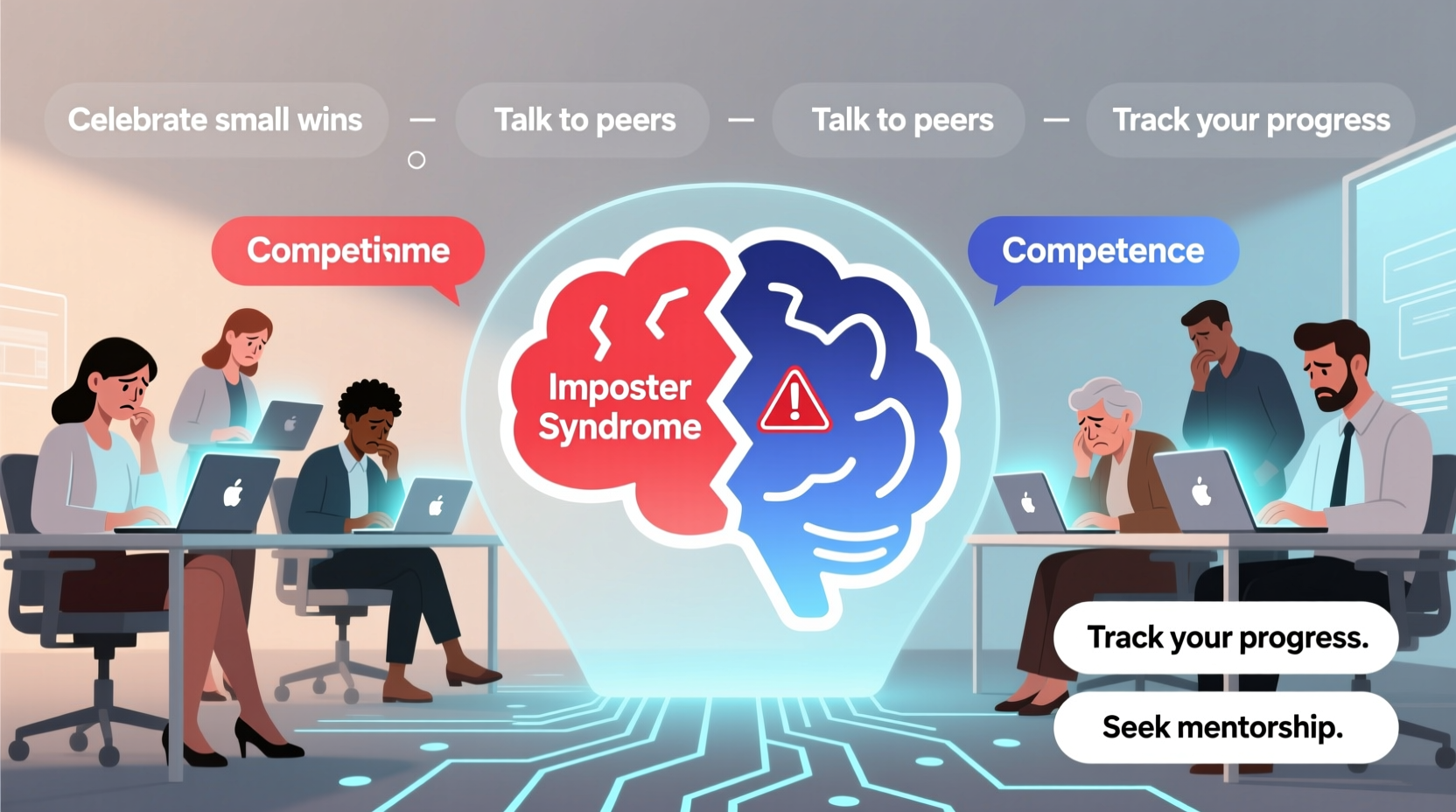
Tech environments are uniquely fertile ground for self-doubt. The industry moves fast. New frameworks, languages, tools, and methodologies emerge constantly. What was cutting-edge six months ago may already be obsolete. In such a landscape, even highly skilled professionals can feel perpetually behind. The expectation to \"know everything\" or to learn new technologies overnight creates immense pressure. Add to this the culture of meritocracy—where talent and output are supposedly the only metrics that matter—and the result is an environment where anyone who pauses to catch their breath risks feeling inadequate.
Another contributing factor is the recruitment process itself. Many tech companies emphasize whiteboard coding challenges, algorithmic puzzles, and rapid problem-solving under pressure. These assessments often favor certain types of thinkers and test skills that don’t reflect day-to-day job performance. When employees join a team after surviving such gauntlets, they may internalize the belief that they were selected not for their real-world abilities but for their ability to perform under artificial conditions. This disconnect can lay the foundation for long-term self-doubt.
“Even after leading engineering teams at major tech firms, I still wake up wondering if today’s the day someone realizes I don’t belong.” — Maya Tran, Senior Software Architect
Why Tech Culture Amplifies the Feeling
Beyond individual psychology, organizational culture plays a significant role. Many tech workplaces promote a “hustle” mentality—working late, shipping fast, iterating constantly. While productivity is valued, emotional vulnerability is often discouraged. Employees learn early that admitting uncertainty or asking for help might be perceived as weakness. This silence normalizes the idea that everyone else has it figured out—except you.
Open-source contributions, public portfolios, and social media presence further intensify comparison. A developer scrolling through GitHub might see peers with dozens of starred repositories, speaking at conferences, or publishing technical blogs weekly. What’s invisible in these highlight reels are the hours of trial, error, and frustration behind each post. But without context, it’s easy to assume others are simply smarter, faster, more competent.
Recognizing the Patterns: Five Types of Imposter Experiences
Psychologists Pauline Clance and Suzanne Imes first identified imposter syndrome in the 1970s and later categorized its manifestations. In tech, these patterns often appear in recognizable forms:
- The Perfectionist: Sets unrealistically high standards and feels like a failure when they fall short—even slightly.
- The Natural Genius: Believes competence should come effortlessly. If learning a new framework takes time, they interpret it as proof of inadequacy.
- The Soloist: Feels they must accomplish everything independently. Asking for help triggers shame.
- The Expert: Obsessively seeks certifications and knowledge, never feeling “ready” despite years of experience.
- The Superhero: Compensates for insecurity by overworking, often at the expense of health and relationships.
Understanding which pattern resonates with you is the first step toward addressing it. For example, a mid-level engineer who avoids applying for senior roles because they haven’t mastered every cloud architecture is likely experiencing the Expert type. Recognizing this allows them to reframe growth as a continuous process, not a finish line.
Proven Coping Strategies for Tech Professionals
Imposter syndrome doesn’t disappear overnight, but it can be managed with deliberate practice and mindset shifts. Below are actionable strategies grounded in cognitive behavioral techniques and workplace psychology.
1. Normalize the Conversation
One of the most powerful antidotes to imposter feelings is talking about them. When leaders openly share their own doubts, it signals psychological safety. Teams that normalize discussions about failure, learning curves, and uncertainty create space for authenticity. Consider starting team retrospectives with a “struggle share”—a brief moment where members admit something they found difficult that week.
2. Reframe Competence as a Spectrum
Tech work is collaborative and multifaceted. No one knows everything. Instead of measuring yourself against an imaginary ideal of omniscience, adopt a “T-shaped” model of expertise: deep in one area, broadly aware in others. You don’t need to master Kubernetes, React, machine learning, and DevOps to be valuable. Focus on your core strengths while acknowledging that learning gaps are natural.
3. Keep a “Win Log”
Doubt thrives on selective memory. We recall every bug we introduced but forget the critical system outage we resolved. Maintain a private document where you log accomplishments, positive feedback, and moments of growth. Review it before performance reviews or when self-doubt creeps in.
4. Seek Specific Feedback
Vague praise like “Great job!” does little to combat imposter thoughts. Instead, ask for detailed, behavior-based feedback: “What part of my pull request stood out?” or “How could I improve the clarity of my technical presentation?” Concrete input provides evidence of competence and direction for growth.
5. Limit Social Comparison
It’s natural to compare yourself to others, but in tech, comparisons are often skewed. Someone publishing a popular blog post may have spent 80 hours on it—or had professional editing help. Focus on your own trajectory. Ask: *Am I progressing relative to where I was last month?* That’s the only metric that truly matters.
Case Study: From Doubt to Leadership
Jamal, a backend developer at a fintech startup, joined his team with a computer science degree but minimal real-world experience. Within weeks, he was surrounded by colleagues who had contributed to open-source projects and spoke confidently about distributed systems. He avoided speaking in meetings, fearing his questions would expose his ignorance. After missing a promotion cycle, he confided in his manager.
His manager responded with empathy and structure. They co-created a 90-day development plan focused on incremental goals: lead one sprint planning session, mentor a junior intern, ship a documented API endpoint. Each milestone came with scheduled feedback. Over time, Jamal began to see his progress objectively. He started volunteering in meetings and eventually led a cross-functional migration project. Today, he mentors new hires—and always begins the conversation by sharing his early struggles.
This case illustrates how structured support, clear expectations, and regular reinforcement can dismantle imposter beliefs. Growth didn’t come from eliminating doubt but from building evidence that countered it.
Actionable Checklist: Managing Imposter Syndrome
Use this checklist to build resilience and reframe your mindset over time:
- ✅ Identify which imposter type resonates with you (Perfectionist, Expert, etc.)
- ✅ Start a win log and update it weekly
- ✅ Schedule monthly check-ins to review progress with a mentor or manager
- ✅ Replace “I should know this” with “I’m learning this now”
- ✅ Limit time spent comparing yourself to others on LinkedIn or GitHub
- ✅ Practice asking one clarifying question in meetings per week
- ✅ Share an honest struggle with a trusted colleague
Do’s and Don’ts in the Workplace
| Do | Don't |
|---|---|
| Ask for clarification when you don’t understand | Stay silent to avoid appearing uninformed |
| Seek feedback regularly and specifically | Rely solely on self-assessment |
| Celebrate small, measurable progress | Measure yourself against unrealistic ideals |
| Share your learning journey with peers | Pretend you’ve mastered something you’re still learning |
| Advocate for psychological safety in your team | Assume everyone else feels confident |
“Technical skill is important, but emotional intelligence and humility are what make great engineers. Admitting what you don’t know is the first step to solving hard problems.” — Dr. Lena Patel, Organizational Psychologist specializing in tech teams
Frequently Asked Questions
Can imposter syndrome ever completely go away?
For most people, imposter feelings don’t vanish entirely—they become less disruptive. With practice, you learn to recognize the voice of self-doubt without letting it dictate your actions. The goal isn’t elimination but management. Even seasoned CTOs and award-winning developers report occasional waves of insecurity, especially during transitions like promotions or new projects.
Is imposter syndrome a sign of low competence?
No—research consistently shows the opposite. High achievers are more prone to imposter syndrome because they’re acutely aware of complexity and their own limitations. True incompetence often involves overconfidence (known as the Dunning-Kruger effect). Those who feel like imposters are usually the ones paying close attention to quality and impact.
Should I talk to my manager about imposter syndrome?
If you have a supportive manager, yes. Frame the conversation around growth: “I want to continue developing, and sometimes I hesitate to take on stretch assignments because I worry I’m not ready. Can we discuss ways to build confidence through guided challenges?” This positions the discussion as proactive, not self-critical.
Conclusion: Rethinking Success in Tech
Imposter syndrome persists in tech not because people are unqualified, but because the environment amplifies self-doubt. The solution isn’t to try harder to “feel confident,” but to change how we define competence and success. Mastery isn’t a destination—it’s a practice. Every expert was once a beginner. Every elegant codebase started as a messy prototype. The most resilient tech professionals aren’t those who never doubt, but those who keep building anyway.
Start today. Write down one thing you did well this week. Share it with someone. Then repeat. Over time, these small acts of acknowledgment accumulate into a stronger, more accurate self-image. You belong in tech—not despite your questions, but because of them.




 浙公网安备
33010002000092号
浙公网安备
33010002000092号 浙B2-20120091-4
Comments
No comments yet. Why don't you start the discussion?