
The name \"Invincible\" carries weight—evoking images of strength, resilience, and untouchability. When applied to a superhero, it sets high expectations. But why is the protagonist of Robert Kirkman’s acclaimed comic series—and later the Amazon Prime animated adaptation—named Invincible? The answer lies not just in marketing or branding, but in layered storytelling, thematic depth, and intentional irony.
At first glance, “Invincible” suggests an unbeatable hero. Yet the narrative arc of Mark Grayson challenges that assumption, transforming the name from a declaration into a question: Can anyone truly be invincible? This article explores the linguistic roots, creative intentions, character development, and cultural resonance behind the name, offering insight into one of modern comics’ most compelling titles.
Linguistic and Cultural Roots of “Invincible”
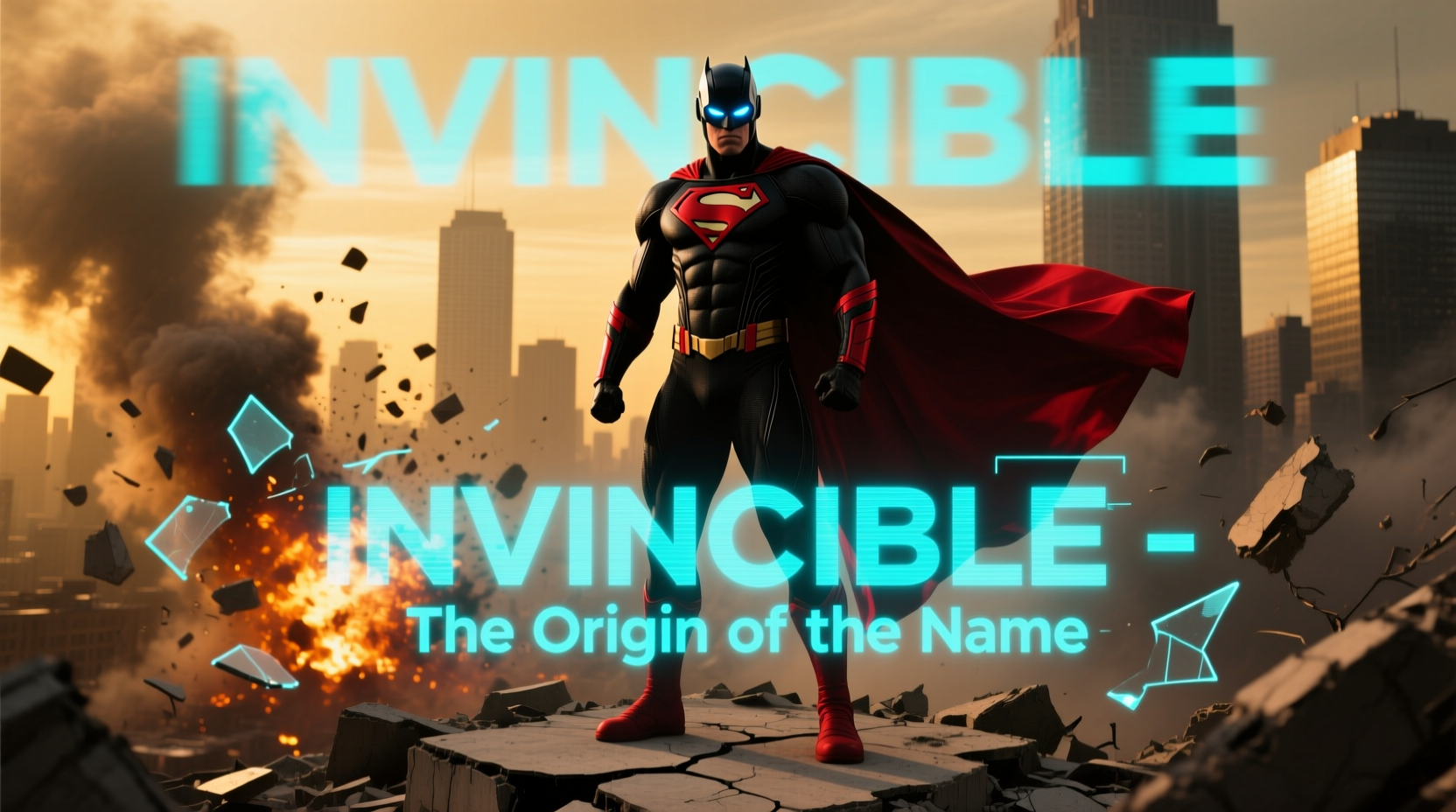
The word “invincible” comes from the Latin *invincibilis*, meaning “not able to be conquered.” It combines the prefix *in-* (not) with *vincere* (to conquer). Historically, the term has been used to describe empires, warriors, and mythological figures believed to be beyond defeat—Alexander the Great, Achilles, or even divine beings like Zeus.
In pop culture, naming a superhero “Invincible” immediately places them in this lineage. It signals power, confidence, and near-omnipotence. However, unlike traditional superheroes who inherit their names through feats (e.g., Superman, Batman), Mark Grayson earns his title before proving himself worthy of it—a deliberate narrative choice by creator Robert Kirkman.
“Giving him the name ‘Invincible’ at the start was ironic. He wasn’t invincible yet. He had to become it.” — Robert Kirkman, Creator of *Invincible*
This irony forms the backbone of the story. The name acts as both promise and burden, setting up a coming-of-age journey where physical invulnerability must be matched by moral strength, emotional maturity, and personal sacrifice.
Creator Intent: Why Kirkman Chose the Name
Robert Kirkman, best known for *The Walking Dead*, launched *Invincible* in 2003 under Image Comics. His goal was to deconstruct the superhero genre—not through cynicism, but through realism. He wanted to explore what would happen if a teenager suddenly gained superpowers in a world where those powers came with real consequences.
Kirkman has stated in interviews that the name “Invincible” was chosen deliberately for its boldness. Unlike more cryptic or metaphorical superhero names (*Shadowhawk*, *Atom Eve*), “Invincible” is direct and unapologetic. It reflects the kind of name a young fan might dream up for themselves—one that sounds powerful, memorable, and larger than life.
But more importantly, the name serves as a thematic anchor. Every time Mark fails, suffers loss, or faces moral compromise, the audience is reminded: he is not yet invincible. Not in spirit, not in wisdom, not in heart. The title becomes a benchmark against which his growth is measured.
The Evolution of the Title: From Irony to Earned Identity
Mark Grayson begins the series as an ordinary high school student. His transformation into Invincible starts with the activation of dormant Viltrumite DNA inherited from his father, Nolan (also known as Omni-Man). Unlike many heroes who adopt masks and personas after trauma, Mark chooses the name “Invincible” early—before facing any major threats.
This premature adoption underscores the theme of inherited legacy versus earned identity. The suit, the name, the powers—they’re all handed to him. What he must earn is the right to bear them.
Over time, the name shifts from aspirational to authentic. Key turning points include:
- His brutal fight with Omni-Man, where he survives near-fatal injuries.
- Leading the Guardians of the Globe after their massacre.
- Confronting alternate versions of himself across the multiverse.
- Becoming a father and mentor to new heroes.
Each event chips away at his naivety and builds his resilience—not just physically, but ethically. By the final issues of the comic, when Mark assumes leadership of Earth’s defense and brokers peace among alien civilizations, the name finally fits. He isn’t just surviving; he’s enduring. He is, in every sense, invincible.
Symbolism vs. Literal Power: Is Anyone Truly Invincible?
One of the most powerful aspects of the series is its refusal to treat “invincibility” as absolute. Characters die. Alliances collapse. Even Mark suffers permanent scars—both visible and psychological. The show and comic repeatedly ask: What does it mean to be invincible in a universe full of pain, loss, and moral ambiguity?
The answer emerges gradually: true invincibility isn’t about being unbreakable. It’s about breaking—and continuing anyway.
This philosophical layer elevates the title beyond mere branding. It transforms “Invincible” from a description into a mission statement—one rooted in perseverance, responsibility, and hope.
“To me, being invincible means getting back up every single time you’re knocked down. Not because you can’t feel pain, but because you choose to keep going.” — Steven Yeun (voice of Mark Grayson), Interview with IGN
Timeline: How the Meaning of “Invincible” Evolves
The perception of the name changes dramatically over the course of the series. Below is a timeline illustrating key moments that redefine what “Invincible” means:
- Issue #1 / Season 1, Episode 1: Mark gains powers and adopts the name “Invincible.” The tone is lighthearted; the name feels like a teenage fantasy.
- Issue #7 / Season 1, Episode 3: First major battle with the Flaxan invaders. Mark succeeds but is overwhelmed—hinting at limits.
- Issue #14 / Season 1, Episode 8: Omni-Man reveals his true mission and nearly kills Mark. The illusion of safety shatters. The name now feels tragic.
- Issue #50–60: Mark rebuilds his life, trains harder, and begins leading teams. The name regains credibility.
- Issue #100+: Mark faces multiversal threats, makes diplomatic decisions, and mentors younger heroes. The title becomes synonymous with leadership and integrity.
Comparison: Superhero Names and Their Symbolic Weight
| Superhero | Name Origin | Is the Name Earned? | Thematic Role |
|---|---|---|---|
| Invincible | Self-chosen, based on idealism | Yes—after years of struggle | Growth from weakness to true strength |
| Superman | Media-given nickname | Assumed from debut | Paragon of virtue and power |
| Batman | Fear-based persona | Gradually proven | Vigilantism shaped by trauma |
| Iron Man | Descriptive (armor) | Immediate, then deepened | Tech genius overcoming self-destruction |
Unlike Superman, who embodies perfection from the start, Invincible grows into his name. That progression is central to the story’s emotional impact.
Mini Case Study: The Battle With Conquest
A pivotal moment occurs when Mark fights Conquest, a genetically engineered Viltrumite warrior designed to surpass all others. Despite using every weapon, strategy, and ally available, Mark loses—brutally. He is captured, tortured, and left broken.
Yet he escapes. Not through superior strength, but through willpower, cunning, and help from allies. When he returns, scarred and changed, he doesn’t abandon the name “Invincible.” Instead, he redefines it. His victory isn’t in winning the fight—it’s in surviving it.
This arc exemplifies the core message: invincibility isn’t immunity to harm. It’s the refusal to stay defeated.
Checklist: What It Takes to Be Truly “Invincible”
Based on Mark Grayson’s journey, here are the traits that transform the name from label to legacy:
- ✅ Surviving physical and emotional trauma
- ✅ Making ethical choices under pressure
- ✅ Accepting responsibility, not just power
- ✅ Learning from failure and adapting
- ✅ Inspiring others without demanding loyalty
- ✅ Protecting life—even when vengeance feels justified
FAQ
Was “Invincible” always the intended title?
Yes. Robert Kirkman confirmed in multiple interviews that the series was conceived around the idea of a hero named Invincible whose journey would question the meaning of that word.
Do other characters use the name “Invincible” in the comics?
Yes. After Mark’s apparent death during the Viltrumite War, others take up the mantle—including his son, Atom Eve’s clone, and alternate-universe variants. This reinforces the idea that “Invincible” is less a person and more a role or ideal.
Does the name have significance in the Viltrumite language?
Not directly. “Invincible” is an English name chosen by Mark. However, within Viltrumite culture, strength and dominance are highly valued, so the concept aligns—though their interpretation is often tyrannical rather than heroic.
Conclusion: A Name Forged in Fire
The name “Invincible” is not a boast. It’s a challenge. From its Latin roots to its modern reinterpretation in Kirkman’s visionary series, the word evolves alongside its bearer. What begins as a hopeful alias becomes a testament to endurance, leadership, and humanity.
More than any punch or flight sequence, it’s Mark Grayson’s capacity to rise after falling that makes him truly invincible. The name, once ironic, becomes earned—not through invulnerability, but through vulnerability faced and overcome.




 浙公网安备
33010002000092号
浙公网安备
33010002000092号 浙B2-20120091-4
Comments
No comments yet. Why don't you start the discussion?