
The inclusion of Israel in the Olympic Games often sparks intense debate across global forums, media outlets, and diplomatic circles. At first glance, the question may seem straightforward: nations compete in the Olympics based on athletic merit and recognition by international sports bodies. Yet beneath the surface lies a layered geopolitical, historical, and ethical discussion that makes Israel’s participation far from simple. While the International Olympic Committee (IOC) operates under principles of neutrality and inclusivity, the broader context of Middle Eastern politics, ongoing conflict, and international perceptions complicates public understanding of why Israel remains part of the Olympic movement.
This article unpacks the multifaceted nature of Israel's presence in the Olympics, examining the legal foundations of Olympic eligibility, the role of international recognition, historical precedents, and the growing calls for boycotts or exclusions based on human rights concerns. It also considers how sports and politics intersect—and whether they can ever truly be separated.
How Countries Qualify for Olympic Participation
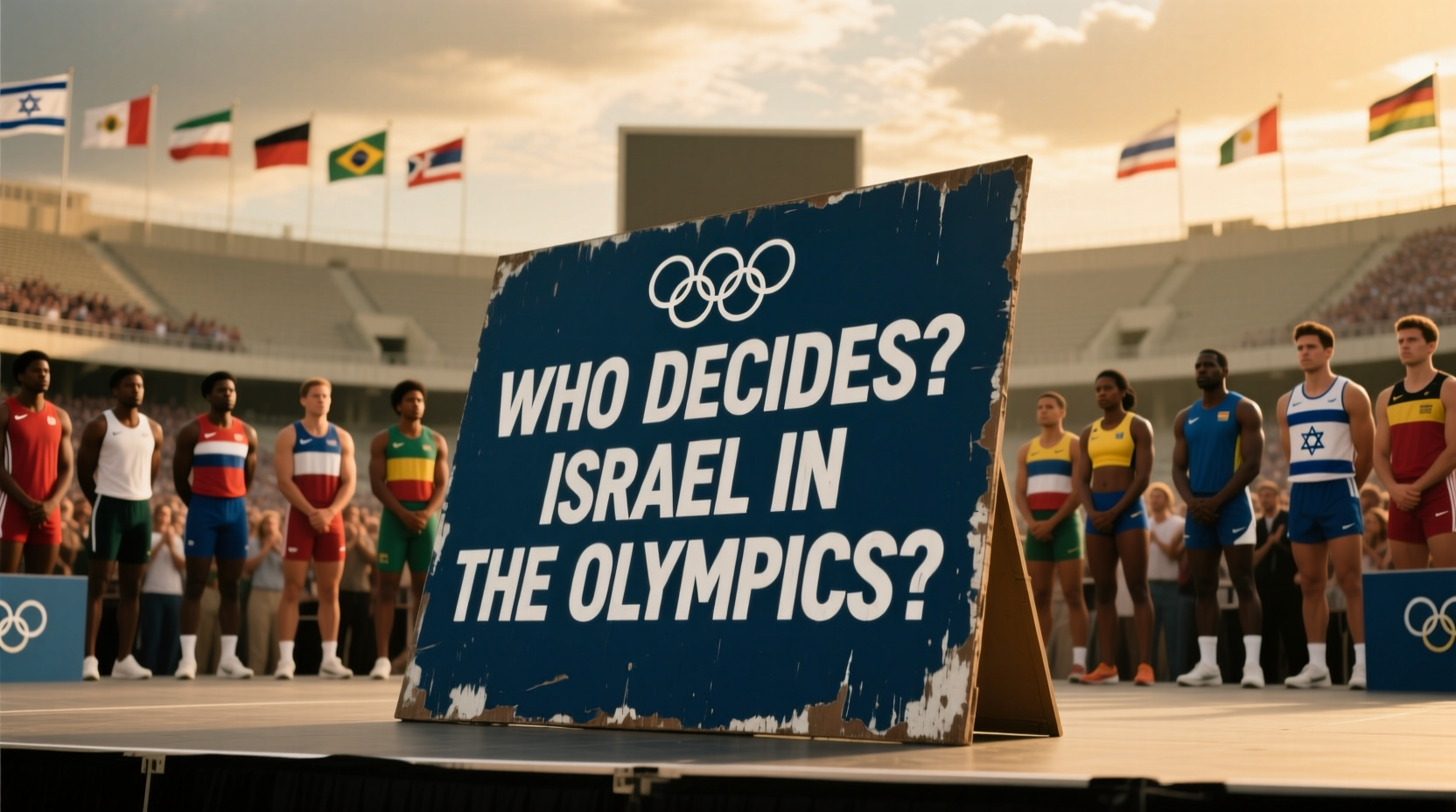
Olympic eligibility is determined not by popularity, moral standing, or geopolitical approval, but by formal recognition from the International Olympic Committee (IOC). To field athletes in the Games, a country must have a National Olympic Committee (NOC) recognized by the IOC. Recognition hinges on several criteria:
- Existence of a sovereign state or territory with defined borders
- Membership in the United Nations or broad international recognition
- An established national sports infrastructure
- Commitment to the Olympic Charter, including anti-discrimination policies
Israel meets all these requirements. The Israeli Olympic Committee was founded in 1933 during the British Mandate period and officially recognized by the IOC in 1951. Since then, Israel has participated in every Summer Olympics except the 1980 Moscow Games, which it boycotted along with the U.S. and several allies. Its athletes compete under the Israeli flag, and its NOC operates independently within the Olympic framework.
“Olympic participation is not a reward or punishment—it’s a function of institutional recognition and compliance with the Olympic Charter.” — Dr. Sarah Langford, International Sports Policy Analyst
Historical Context: From Exclusion to Integration
Israel’s journey in the Olympic movement reflects broader shifts in global politics. In its early decades, the nation faced widespread exclusion from Arab and Muslim-majority countries in regional competitions. This isolation extended into international arenas where political tensions spilled into sport. For example, during the 1972 Munich Olympics, Palestinian militants attacked the Israeli team, killing 11 athletes and coaches—an event that forever marked the intersection of sport and geopolitical violence.
In response, the IOC strengthened security protocols and reaffirmed its commitment to protecting athletes regardless of nationality. Over time, Israel became more integrated into European sports federations after being excluded from Asian ones due to political pressure. Today, Israeli athletes primarily compete under European associations in qualifying events, allowing them access to Olympic pathways.
Political Controversy and Calls for Exclusion
Despite procedural legitimacy, Israel’s Olympic participation draws criticism, particularly amid escalations in the Israeli-Palestinian conflict. Advocacy groups such as Boycott, Divestment, Sanctions (BDS) have called for Israel’s suspension from international sports bodies, citing alleged violations of human rights and international law. These campaigns argue that state-sponsored violence and occupation should disqualify a nation from representing “peaceful unity” through sport.
Conversely, supporters emphasize that excluding Israel would set a precedent potentially affecting other nations with contested human rights records. They caution against politicizing sports bodies, warning that doing so could fracture the universality the Olympics strive to uphold.
The IOC maintains a strict policy of political neutrality. According to Rule 50 of the Olympic Charter, “No kind of demonstration or political, religious or racial propaganda is permitted in any Olympic sites, venues or other areas.” However, this rule applies to behavior during the Games—not membership itself.
Precedents of Suspension and Inclusion
The IOC has suspended countries before—but only under specific conditions:
| Country | Year Suspended | Reason |
|---|---|---|
| Afghanistan | 1999, 2021 | Government interference in NOC operations |
| South Africa | 1970–1992 | Apartheid regime violating non-discrimination principles |
| Russia/Belarus | 2022–present* | Military aggression violating Olympic Truce |
| None | N/A | Contested sovereignty or foreign policy alone |
Notably, no country has been barred solely due to foreign policy disputes or unresolved territorial conflicts. Even nations involved in active wars have competed when their NOCs remain independent and compliant with IOC standards.
Public Perception vs. Institutional Reality
One of the central tensions surrounding Israel’s Olympic presence is the gap between public perception and institutional procedure. Many view the Games as a platform for moral symbolism, expecting participants to reflect universal values of peace and justice. When real-world actions contradict those ideals, audiences demand accountability—even if mechanisms don’t exist within the IOC to enforce it.
For instance, during the 2024 Paris Olympics, protests emerged calling for Israel’s removal following the Gaza conflict. Athletes from various nations expressed solidarity with Palestine, while others defended Israel’s right to compete. These debates highlight how sports events become stages for broader ideological confrontations.
Yet the IOC continues to resist using membership as a tool of geopolitical leverage. As former IOC President Thomas Bach stated: “We are not a world government. We cannot resolve conflicts, but we can offer a platform where athletes meet as equals.”
“The Olympics were never meant to be a court of justice. They’re a sanctuary for competition beyond borders.” — Maria Chen, Global Sports Ethicist
Frequently Asked Questions
Does Israel compete under its own flag at the Olympics?
Yes. Israeli athletes compete under the Israeli national flag and anthem. Their uniforms display the Star of David, and medals won are credited to Israel in official standings.
Has Israel ever been banned from the Olympics?
No. Israel has never been suspended or banned by the IOC. It missed the 1980 Games due to a voluntary boycott aligned with Western nations protesting the Soviet invasion of Afghanistan.
Could Israel be removed from future Olympics?
Only if the IOC determines that the Israeli Olympic Committee violates the Olympic Charter—such as through government interference or failure to uphold non-discrimination. Political pressure alone does not constitute grounds for expulsion.
Actionable Checklist: Understanding Olympic Inclusion
To critically assess claims about Olympic eligibility, consider the following steps:
- Verify whether a country has an IOC-recognized National Olympic Committee
- Check if the NOC operates independently from government control
- Review past IOC decisions on suspensions for comparative context
- Distinguish between political advocacy and formal Olympic regulations
- Consult official IOC statements rather than media interpretations
Conclusion: Navigating Complexity with Clarity
The question of why Israel is allowed in the Olympics reveals a deeper struggle between idealism and institutionalism. On one hand, many wish for global platforms like the Olympics to reflect ethical leadership and human rights adherence. On the other, the IOC’s mandate prioritizes continuity, neutrality, and procedural fairness over political judgment.
While emotions run high and moral arguments carry weight, the current system allows Israel to participate because it meets the technical and administrative criteria set by the Olympic movement. Changing that would require either reforming the IOC’s foundational principles or proving a direct violation of its charter—neither of which has occurred.
As global citizens and observers, we can advocate for change, support humanitarian causes, and call for accountability. But we must also recognize the limits of sports institutions in resolving geopolitical crises. True progress lies not in exclusion, but in dialogue, diplomacy, and sustained efforts toward peace beyond the stadium.




 浙公网安备
33010002000092号
浙公网安备
33010002000092号 浙B2-20120091-4
Comments
No comments yet. Why don't you start the discussion?