
The lemon shark (Negaprion brevirostris) glides through warm coastal waters with an unmistakable presence—olive-yellow skin, a robust frame, and a calm demeanor that belies its apex predator status. But among all sharks, it stands out for one peculiar reason: its name. Why \"lemon\"? It doesn’t produce citrus juice, nor does it grow on trees. The answer lies in a blend of visual characteristics, historical observation, and marine biology lore.
This name has sparked curiosity for decades. Was it coined by a whimsical fisherman? A scientist with a taste for fruit metaphors? Or is there something more biologically grounded behind this sunny moniker? Let’s explore the origins, dispel myths, and uncover the real reasons why this shark carries the name of a tart yellow fruit.
The Visual Clue: Coloration as the Primary Reason
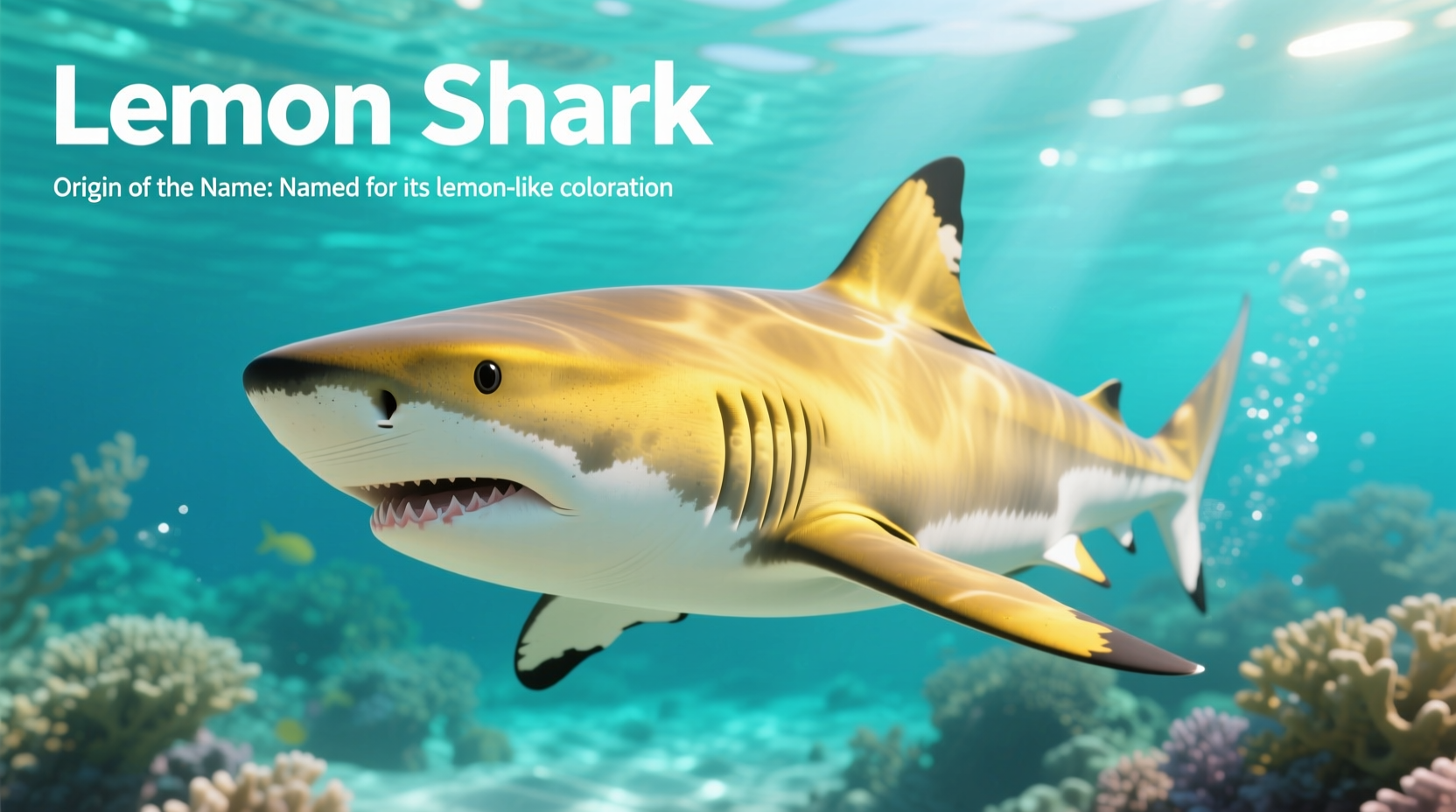
The most widely accepted explanation for the lemon shark’s name is its distinctive skin tone. Unlike the steel-gray hues common among many shark species, the lemon shark exhibits a pale yellow to olive-brown dorsal surface. This pigmentation fades to a lighter cream or white on its underside—a classic example of countershading in marine predators.
This yellowish tint becomes especially noticeable under certain lighting conditions, particularly in shallow, sunlit waters where these sharks often hunt. When viewed from above, their backs blend with the sandy seafloor; from below, they merge with the bright surface. But when seen from the side in clear water, the golden hue stands out.
Early naturalists and fishermen likely drew immediate comparisons between this shade and the familiar yellow of a ripe lemon. In an era before standardized scientific nomenclature, descriptive naming based on appearance was common. Thus, “lemon shark” emerged not from taxonomy, but from everyday observation.
Scientific Classification and Naming History
The lemon shark belongs to the family Carcharhinidae, commonly known as requiem sharks. Its genus, Negaprion, comes from Greek roots: *nega* meaning “young” or “small,” and *prion* meaning “saw,” possibly referring to tooth structure. However, the species name *brevirostris*—Latin for “short snout”—refers to its blunt, rounded nose, which distinguishes it from other carcharhinids.
Despite its formal binomial name, the common name “lemon shark” predates modern classification systems. Historical records suggest the term was used informally along the southeastern U.S. coast and Caribbean islands as early as the 18th century. Fishermen would describe catches using relatable terms, and “lemon-colored shark” eventually shortened to “lemon shark.”
“Common names often arise from what people see first—the flash of color, the shape, the behavior. In the case of the lemon shark, the hue was simply too striking to ignore.” — Dr. Elena Torres, Marine Biologist, Smithsonian Tropical Research Institute
It wasn’t until the 19th century that scientists formally adopted the name in literature. The first documented use of *lemon shark* in a scientific context appears in Spencer Fullerton Baird and Charles Girard’s 1855 work on North American fishes, where they described *Prionodon brevirostris* (later reclassified).
Behavioral Traits That Reinforce the Name
While color is the primary factor, some behavioral traits may have subtly reinforced the name over time. Lemon sharks are known for their relatively docile nature compared to other coastal predators like bull or tiger sharks. They move slowly, patrol predictable routes, and often rest motionless on the seabed—behaviors that allow observers extended viewing time, increasing the chance of noticing their yellow tint.
Interestingly, this calmness might have made them easier targets for early coastal communities who encountered them regularly. A less aggressive shark swimming near shore with a distinct color would naturally become a named entity in local vernacular.
In contrast, faster, darker sharks like the great hammerhead were often feared and described in ominous terms—“devil fish,” “sea demon”—while the lemon shark earned a milder, almost friendly nickname. The association with a common fruit may reflect both its appearance and its temperament.
Geographic Distribution and Habitat Influence
Lemon sharks inhabit tropical and subtropical waters of the western Atlantic and eastern Pacific Oceans. Their range includes the coasts of the southeastern United States, the Gulf of Mexico, the Caribbean, parts of Central and South America, and West Africa. These regions are also home to abundant citrus agriculture—especially lemons and limes—which could have strengthened cultural associations between the fruit and the animal.
In places like Florida and the Bahamas, where both lemon trees and lemon sharks thrive, the linguistic overlap may have felt natural. Locals seeing a yellowish shark near mangrove nurseries might have casually said, “Looks like a lemon,” and the name stuck.
| Feature | Lemon Shark | Other Common Sharks |
|---|---|---|
| Back Color | Pale yellow to olive | Steel gray, blue-black |
| Snout Shape | Short, broad, rounded | Pointed or elongated |
| Temperament | Generally calm | Often aggressive |
| Habitat | Shallow coastal waters, estuaries | Open ocean, deep reefs |
| Max Length | Up to 10 feet (3 meters) | Varies widely |
Debunking Myths About the Name
Over the years, several myths have circulated about the origin of the name “lemon shark.” While imaginative, they lack scientific basis.
- Myth 1: It eats lemons. There is no evidence that lemon sharks consume citrus fruits. Their diet consists mainly of fish, crustaceans, and small rays.
- Myth 2: It smells like lemon. Despite anecdotal claims, no study has detected a citrus-like odor in lemon shark tissue or secretions.
- Myth 3: Scientists named it after a researcher named Lemon. No record exists of a Dr. Lemon or similar figure associated with its discovery.
The truth remains simpler: the name arose from observable physical traits combined with colloquial language patterns. As marine biologist Dr. Marcus Lin once noted, “Nature doesn’t need metaphors—we do. We name things to make sense of them. The lemon shark got its name because someone looked at it and thought, ‘That looks just like the fruit I had for breakfast.’”
Mini Case Study: Naming Patterns in Coastal Communities
In Bimini, Bahamas, local fishermen have referred to the lemon shark as “yellow jack” or “lemon fish” for generations. A 2017 ethnographic survey conducted by the Bimini Biological Field Station found that 78% of long-time residents associated the name directly with color, while only 12% believed it related to behavior or habitat.
One elder fisherman, José Mendez, recalled: “When I was a boy, my father pointed to one resting in the shallows and said, ‘See that yellow back? Like a lemon you squeeze for your tea.’ I never forgot it.” This oral tradition highlights how everyday language shapes scientific common names long before formal adoption.
Checklist: How to Identify a Lemon Shark in the Wild
For divers, researchers, or curious beachgoers, here’s a practical checklist to distinguish a lemon shark from similar species:
- Observe the dorsal color—look for a yellowish or olive tint, especially in clear, shallow water.
- Check the snout—it should be short, wide, and blunt, not pointed or hammer-shaped.
- Note the second dorsal fin, which is nearly as large as the first, a key identifying feature.
- Watch its movement—lemon sharks often swim slowly and may rest on the bottom.
- Look for young individuals in mangrove zones or nursery areas, common habitats for juveniles.
Frequently Asked Questions
Are lemon sharks dangerous to humans?
Lemon sharks are generally not considered a threat. There are very few documented unprovoked attacks. They tend to be curious rather than aggressive and often retreat when approached.
Do all lemon sharks look exactly like lemons?
No. Color can vary depending on age, water clarity, and region. Juveniles may appear brighter yellow, while older adults can look more brownish. Lighting and depth also affect perceived color.
Is the lemon shark endangered?
The International Union for Conservation of Nature (IUCN) lists the lemon shark as “Vulnerable” due to habitat loss, overfishing, and slow reproductive rates. Conservation efforts focus on protecting nursery areas and regulating catch limits.
Conclusion: A Name Rooted in Observation and Simplicity
The lemon shark’s name is a testament to the power of simple observation. Long before DNA analysis or satellite tagging, people relied on sight, memory, and analogy to understand the natural world. Calling a yellowish shark a “lemon shark” wasn’t poetic license—it was practical identification.
Today, as we learn more about their complex social behaviors, migratory patterns, and ecological importance, the name still holds. It reminds us that science and culture are intertwined, and that even the most precise fields begin with human perception.




 浙公网安备
33010002000092号
浙公网安备
33010002000092号 浙B2-20120091-4
Comments
No comments yet. Why don't you start the discussion?