
The modern marathon, a grueling 26.2-mile race that tests human endurance, has a name rooted in ancient legend and military history. Today, millions run marathons annually, from Boston to Berlin, yet few consider why this race is called a “marathon” at all. The answer lies not in athletic tradition but in war, sacrifice, and one legendary run that may never have happened—yet changed the world.
The Battle of Marathon: A Turning Point in History
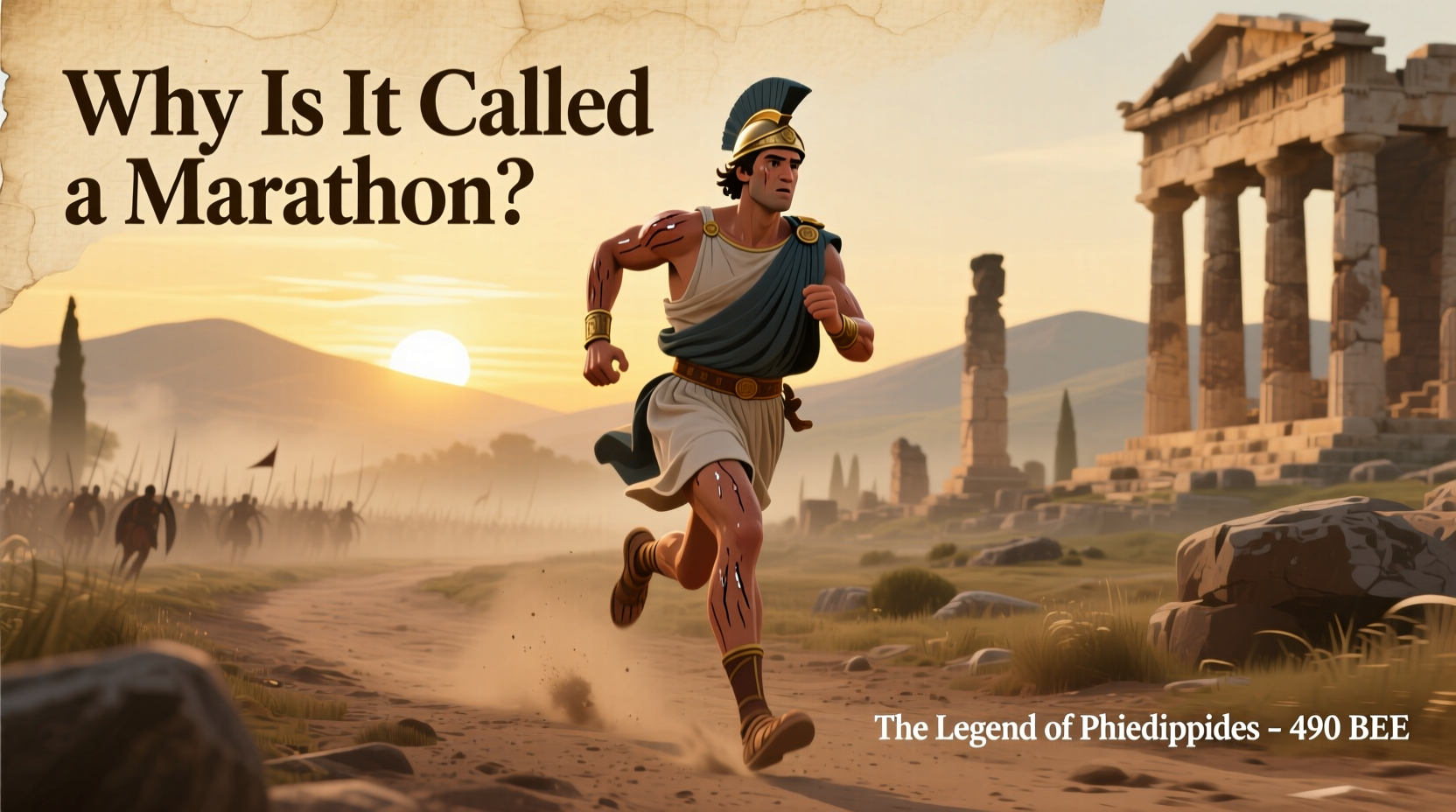
In 490 BCE, during the first Persian invasion of Greece, a pivotal clash occurred on the coastal plains northeast of Athens—the Battle of Marathon. The Athenians, vastly outnumbered by the forces of King Darius I of Persia, formed an alliance with the small city-state of Plataea and faced the invaders with remarkable tactical discipline. Against overwhelming odds, they achieved a stunning victory, repelling the Persian army and preserving Greek independence—at least for a time.
This battle was more than a military triumph; it was symbolic of democratic resilience against imperial aggression. The Athenians needed to deliver urgent news of their victory to the city before Persian sympathizers could seize control. According to legend, a messenger named Pheidippides was dispatched to run the approximately 26 miles from Marathon to Athens to announce the win.
“With dust-covered feet and lungs burning, he ran not for glory, but for survival of a city.” — Dr. Elena Markopoulos, Classical Historian, University of Athens
Upon reaching Athens, the story goes, he gasped “Νενικήκαμεν!” (Nenikēkamen!), meaning “We have won!”, before collapsing and dying from exhaustion. This dramatic tale became the foundation of the modern marathon’s origin myth.
From Myth to Modern Sport: The Birth of the Marathon Race
While the story of Pheidippides captured imaginations, it wasn’t until over two millennia later that the marathon became a formal athletic event. The credit for its revival belongs largely to French linguist and historian Michel Bréal, who proposed including a long-distance race in the first modern Olympic Games in 1896, inspired by the legend of the Athenian runner.
Bréal suggested a route from Marathon to Athens, mirroring the mythical journey. His idea was embraced by Pierre de Coubertin, founder of the International Olympic Committee, as a way to honor ancient Greek heritage while showcasing physical endurance. Thus, the first official marathon took place on April 10, 1896, covering about 40 kilometers (24.85 miles).
The winner was Greek water carrier Spyridon Louis, who completed the course in 2 hours, 58 minutes, and 50 seconds. His victory ignited national pride and turned the marathon into a centerpiece of the Olympic program. The emotional resonance of the race—linking past heroism with present effort—was immediate and powerful.
Why 26.2 Miles? The Evolution of the Marathon Distance
Despite its ancient inspiration, the modern marathon’s exact length—26.2 miles or 42.195 kilometers—is surprisingly arbitrary. In the early Olympics, distances varied: 1896 was ~24.8 miles, 1900 in Paris was ~25.3 miles, and 1904 in St. Louis stretched to ~24.85 miles again.
The now-standard distance originated at the 1908 London Olympics. The course was extended to 26.2 miles so the race could start at Windsor Castle (for royal children to view the departure) and finish in front of the royal box at White City Stadium. Though inconvenient for record-setting consistency, the distance stuck after being adopted officially by the International Association of Athletics Federations (IAAF) in 1921.
This means the iconic 26.2-mile marathon exists not due to historical accuracy, but because of British royal protocol and stadium logistics—a fascinating blend of tradition and practicality.
Timeline of Key Marathon Milestones
- 490 BCE: Battle of Marathon; legend of Pheidippides’ run emerges.
- 1896: First modern Olympic marathon held from Marathon to Athens (~24.8 miles).
- 1908: London Olympics sets marathon distance at 26.2 miles for royal viewing.
- 1921: IAAF standardizes marathon distance at 42.195 km (26.2 miles).
- 1970s–present: Marathons become mass-participation events worldwide.
Debunking the Legend: Did Pheidippides Actually Run?
Historical scrutiny reveals complications in the traditional narrative. The primary source for the run from Marathon to Athens is the Roman historian Plutarch, writing nearly 600 years after the event. Even earlier, Herodotus, the “Father of History,” describes Pheidippides—but not running from Marathon to Athens. Instead, he recounts a pre-battle run of about 140 miles from Athens to Sparta to request military aid, where Pheidippides reportedly encountered the god Pan along the way.
So where did the Marathon-to-Athens story come from? Likely from a conflation of two separate tales: the Spartan relay mission and the post-battle messenger tradition. Over centuries, the narratives merged into a single heroic sprint that never actually occurred as described.
Yet the power of the story transcends factual accuracy. It embodies the spirit of perseverance, urgency, and civic duty—values that continue to define the marathon experience today.
Do’s and Don’ts: Understanding Historical Myths in Sports
| Do | Don't |
|---|---|
| Celebrate the cultural significance of origin stories | Treat legends as verified historical fact |
| Use myths to inspire motivation and identity | Dismiss myths simply because they’re inaccurate |
| Research multiple sources when tracing origins | Rely solely on popular retellings without questioning them |
Marathons Today: From Elite Race to Global Movement
What began as a tribute to an ancient messenger has evolved into a global phenomenon. Major cities host annual marathons drawing tens of thousands of participants. Events like the New York City Marathon, Tokyo Marathon, and Berlin Marathon are not just races—they are celebrations of personal achievement, community, and international unity.
The marathon has also democratized endurance sports. While elite runners compete for podium finishes, countless others participate to conquer personal goals, raise funds for charity, or mark life milestones. The average finish time hovers around 4 to 5 hours, a far cry from Spyridon Louis’s near-3-hour run, yet no less meaningful.
Training for a marathon today involves structured plans, nutrition science, injury prevention, and mental resilience. But at its core, the act of running 26.2 miles still echoes that original question: What will you endure to reach your destination?
Mini Case Study: Sarah’s First Marathon
Sarah Thompson, a teacher from Portland, Oregon, had never run more than five miles before signing up for the Seattle Marathon. Inspired by her grandmother’s stories of watching the Boston Marathon on TV in the 1970s, she committed to training for 18 months. She followed a balanced plan, incorporated strength training, and volunteered at local races to stay motivated.
On race day, she hit “the wall” at mile 20. Remembering the story of Pheidippides—not as literal truth, but as a symbol of pushing forward—she walked briefly, then resumed running. She finished in 4 hours and 37 minutes, tears streaming down her face. “I didn’t run for records,” she said later. “I ran because someone once ran for something bigger than himself. That matters.”
Frequently Asked Questions
Was the original marathon 26.2 miles?
No. The original 1896 Olympic marathon was approximately 24.8 miles (40 km). The 26.2-mile distance was established at the 1908 London Olympics and standardized in 1921.
Did Pheidippides really die after running from Marathon to Athens?
There is no contemporary evidence that this run occurred. The story comes from much later writings, particularly Plutarch. Herodotus mentions Pheidippides running to Sparta before the battle, but not the fatal post-battle sprint.
Why do we still call it a marathon if the story might be false?
The name endures because it carries symbolic weight. Whether fact or fiction, the legend represents courage, endurance, and communication under pressure—values central to the sport.
Conclusion: More Than Just a Name
The term “marathon” is far more than a label for a long-distance race. It is a bridge between antiquity and modernity, myth and reality, individual effort and collective memory. Whether or not a lone runner collapsed at the gates of Athens declaring victory, the idea persists—and inspires.
Every footfall in today’s marathons echoes that ancient path, not because history demands it, but because the human spirit recognizes a powerful story when it sees one. Now that you know the real origin of the name, you can appreciate each stride not just as physical exertion, but as participation in a legacy that spans over two thousand years.




 浙公网安备
33010002000092号
浙公网安备
33010002000092号 浙B2-20120091-4
Comments
No comments yet. Why don't you start the discussion?