
In the early hours of October 15, 1996, a seven-year-old girl named Amber Hagerman was abducted while riding her bicycle in Arlington, Texas. Her kidnapping shocked the community and ultimately led to one of the most effective child recovery systems in modern history—the AMBER Alert. Today, when a child goes missing under suspicious circumstances, electronic signs flash across highways, phone alerts buzz in pockets, and news stations interrupt programming—all triggered by a system bearing Amber’s name. But why is it called an “Amber Alert”? The answer lies in a tragic story of loss, public outrage, and collaborative determination to protect children.
The Tragic Incident That Sparked a Movement
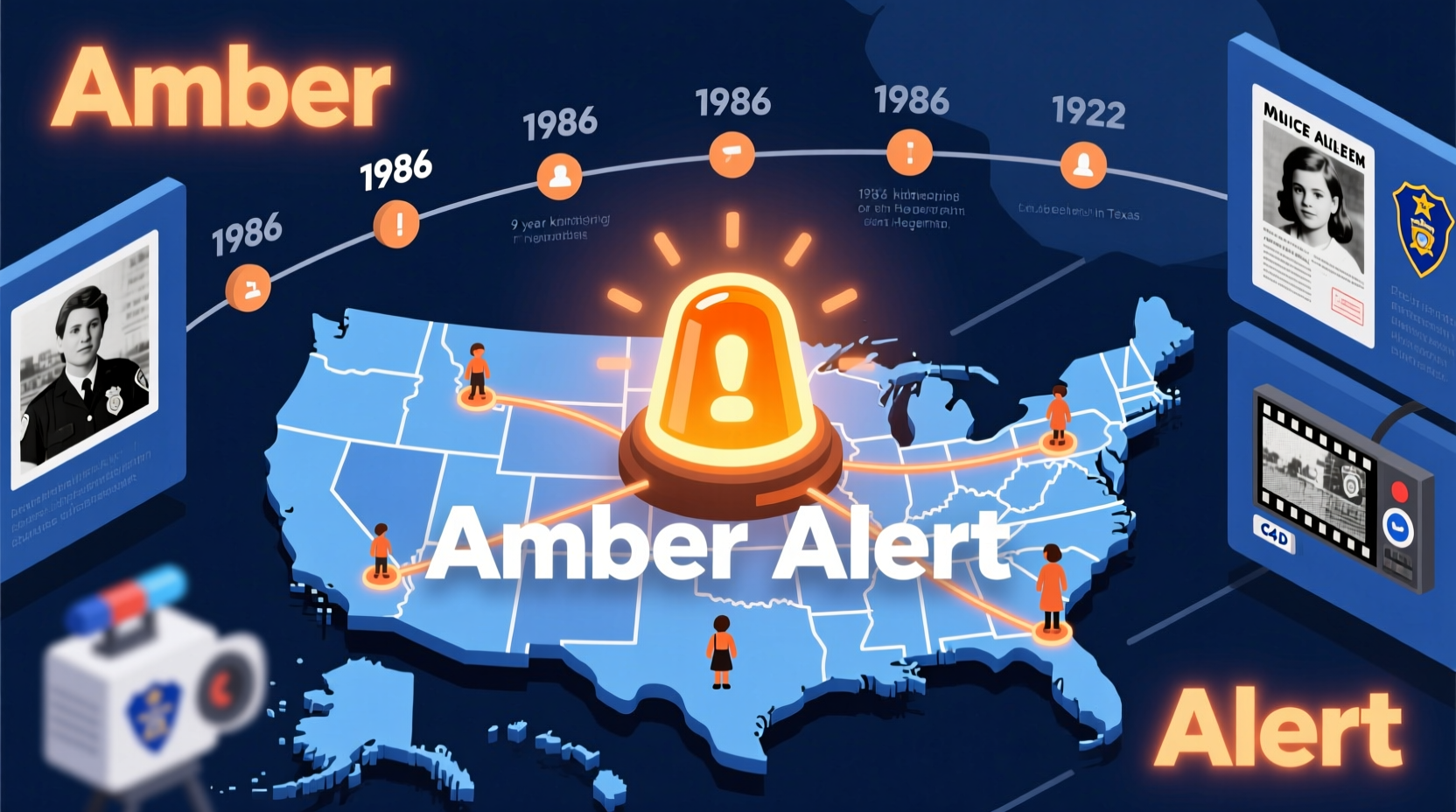
Amber Renee Hagerman was born on June 25, 1989. On that fateful day in 1996, she was biking near her grandmother’s home when a man in a pickup truck grabbed her. Neighbors heard her screams and called 911, but by the time police arrived, both Amber and the suspect were gone. Four days later, Amber’s body was found in a creek less than two miles from where she was taken. She had been brutally murdered.
The crime remained unsolved for years, deepening the grief of her family and the Arlington community. However, the horror of what happened galvanized local activists, law enforcement, and media professionals to find a way to prevent similar tragedies. They realized that the first few hours after a child’s abduction are the most critical—yet there was no formal system to rapidly disseminate information about missing children to the public.
“Every minute counts when a child is taken. We needed a way to turn the entire community into eyes and ears.” — Rick Miller, Dallas-Fort Worth Radio Executive and AMBER Alert Advocate
From Grief to Action: The Birth of the AMBER Plan
In the wake of Amber’s murder, Dallas-Fort Worth broadcasters partnered with local police to create a coordinated emergency response system for child abductions. The goal was simple: use media networks to quickly alert the public when a child is believed to be in imminent danger.
The acronym “AMBER” stands for America’s Missing: Broadcasting Emergency Response. However, the name was also a tribute to Amber Hagerman. While some mistakenly believe AMBER is a backronym created after the fact, the initials were intentionally chosen to honor her memory while forming a meaningful, actionable phrase.
The first official AMBER Alert was issued in 1997 in the Dallas-Fort Worth area. It wasn’t until 2003, however, that the program became a national initiative. Prompted by growing public support and several high-profile child abductions, President George W. Bush endorsed the expansion of the AMBER Alert system across all 50 states.
How the AMBER Alert System Works Today
The modern AMBER Alert system operates through a partnership between law enforcement agencies, transportation departments, broadcasters, and wireless providers. When a child abduction meets specific criteria, authorities activate the alert, which then spreads across multiple platforms:
- Emergency text messages (Wireless Emergency Alerts)
- Electronic highway message boards
- Television and radio broadcasts
- Social media and news websites
- Digital billboards and transit displays
To qualify for an AMBER Alert, the following conditions must generally be met:
- The victim is under 18 years old.
- Law enforcement confirms the child has been abducted and is in danger of serious harm or death.
- There is sufficient descriptive information about the child, abductor, or suspect vehicle to issue a public alert.
- The alert is issued within 48 hours of the abduction.
Key Criteria for Issuing an AMBER Alert
| Critera | Description |
|---|---|
| Age of Victim | Must be under 18 years old. |
| Abduction Confirmed | Law enforcement must verify the child was unlawfully taken. |
| Imminent Danger | Belief that the child is at risk of serious harm or death. |
| Sufficient Information | Enough details available to help the public identify suspects or vehicles. |
| Timeframe | Alerts typically issued within 48 hours of disappearance. |
Impact and Success Stories
Since its national rollout, the AMBER Alert system has played a role in the safe recovery of hundreds of children. According to the U.S. Department of Justice, over 1,100 children have been rescued with the help of AMBER Alerts as of 2023.
One notable case occurred in 2006, when 9-year-old Elizabeth Smart was abducted from her home in Salt Lake City. Although no AMBER Alert was issued immediately due to initial misclassification of the case, the public outcry that followed helped refine protocols nationwide. In contrast, in 2013, an AMBER Alert in Georgia led to the rapid identification and arrest of a kidnapper after a citizen recognized the suspect’s vehicle from a highway sign—resulting in the safe return of a 13-month-old infant.
“The AMBER Alert turned ordinary citizens into a force for good. It’s proof that when communities unite around a cause, lives can be saved.” — John Walsh, Host of *America’s Most Wanted* and Child Safety Advocate
Mini Case Study: The Rescue of Jaycee Dugard
In 1991, 11-year-old Jaycee Dugard was kidnapped outside her South Lake Tahoe home. She was held captive for 18 years before being discovered in 2009. While no AMBER Alert existed at the time of her abduction, her case highlighted the urgent need for faster public notification systems. By the time AMBER Alerts became widespread, many law enforcement agencies had adopted stricter timelines and better inter-agency coordination. Though Jaycee’s rescue did not involve an alert, her story remains a sobering reminder of why such systems are vital.
Global Expansion and Variations
The success of the AMBER Alert model has inspired similar programs around the world. Canada launched its own AMBER Alert system in 2002, followed by the United Kingdom (2002), Mexico (2006), the Netherlands (2008), and Australia (2011). Each country adapts the system to its legal framework and communication infrastructure, but the core principle remains: rapid public engagement saves lives.
Some nations use different names—such as the “Silver Alert” for missing seniors or “Blue Alerts” for threats to law enforcement—but the AMBER Alert remains the most widely recognized brand in child protection alerts.
Frequently Asked Questions
Is AMBER an acronym or just a name?
It’s both. Officially, AMBER stands for America’s Missing: Broadcasting Emergency Response. However, the name was deliberately chosen to honor Amber Hagerman, making it a meaningful tribute as well as a functional acronym.
Can anyone trigger an AMBER Alert?
No. Only authorized law enforcement agencies can issue an AMBER Alert after confirming that all eligibility criteria are met. False or premature alerts can cause public alarm and reduce system effectiveness.
How effective are AMBER Alerts?
While only a small percentage of missing children cases meet the strict criteria for an AMBER Alert, those that do are far more likely to result in safe recovery. According to the DOJ, approximately 80% of AMBER Alert cases end with the child being found alive—often due to tips from the public.
Practical Checklist: What to Do When You See an AMBER Alert
- Stop and read carefully: Note the child’s description, suspect details, and vehicle information.
- Share responsibly: Forward the alert through social media or messaging apps, but avoid speculation.
- Stay observant: Be aware of your surroundings, especially in parking lots, rest areas, or gas stations.
- Report immediately: If you see something matching the alert, call 911 or the number provided.
- Teach your family: Explain AMBER Alerts to children so they understand the importance of paying attention.
Conclusion: A Legacy That Saves Lives
The name “Amber Alert” carries profound weight—it is both a memorial and a mission. Born from tragedy, it has evolved into a powerful tool that harnesses technology, media, and civic responsibility to protect society’s most vulnerable. Every time a driver slows down to read a highway sign or a parent checks their phone for an emergency notification, they are participating in Amber Hagerman’s legacy.
Her story reminds us that even in the face of unimaginable loss, change is possible. The AMBER Alert system stands as a testament to what can happen when communities, law enforcement, and media work together with purpose. By understanding its origins and respecting its function, we honor not only Amber but every child whose life has been saved because someone saw an alert—and took action.




 浙公网安备
33010002000092号
浙公网安备
33010002000092号 浙B2-20120091-4
Comments
No comments yet. Why don't you start the discussion?