
The sizzle of meat over open flames, the rich aroma of smoke and spices—it’s no wonder barbecue holds a sacred place in culinary traditions around the world. But have you ever paused mid-bite and wondered: why is it called \"barbecue\"? The word itself rolls off the tongue with a certain rhythm, evoking images of backyard cookouts and regional pride. Yet its origins are far older—and more complex—than most realize. Tracing the journey of the word \"barbecue\" reveals a story of cultural exchange, linguistic evolution, and centuries of cooking tradition.
The Caribbean Roots of \"Barbecue\"
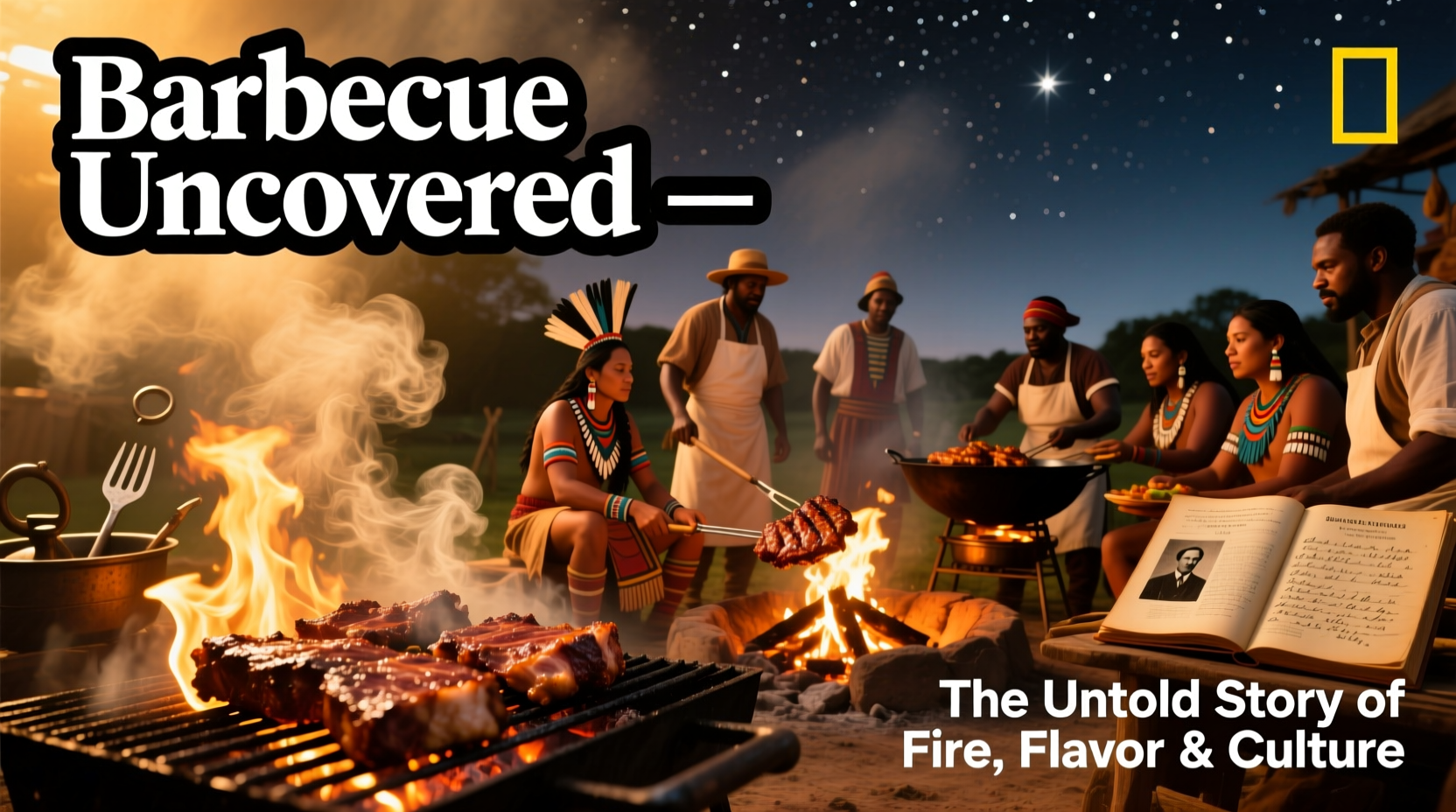
The term \"barbecue\" finds its earliest roots not in American backyards or Texas smokehouses, but in the tropical islands of the Caribbean. When Spanish explorers arrived in the 15th century, they encountered the Taino people, an indigenous group of the Greater Antilles. The Taino used a wooden framework called a *barbacoa* to smoke and dry meats, fish, and even cassava bread over slow fires. This method preserved food in the humid climate and enhanced flavor through low-and-slow cooking.
The Spanish adopted both the technique and the word, transcribing it as *barbacoa*. Over time, as European colonizers moved across the Americas, the concept traveled with them. English-speaking settlers in Virginia and the Carolinas began using the term \"barbecue\" by the late 17th century, though often referring to the entire event—a social gathering centered around roasted meat—rather than just the cooking method.
“Barbecue was never just about food. It was a communal ritual long before it became a national pastime.” — Dr. Jessica Welburn, Cultural Historian
From Barbacoa to BBQ: A Linguistic Evolution
The transformation from *barbacoa* to \"barbecue\" is a classic example of linguistic adaptation. As languages collide, words morph to fit new phonetic patterns. In this case, English speakers reshaped the Taino-Spanish hybrid into something familiar. By the 18th century, \"barbecue\" appeared in print, often spelled variously as \"barbacue,\" \"borbecue,\" or even \"barbaque.\"
The shortened form \"BBQ\" emerged in the 20th century, fueled by marketing, restaurant signage, and the rise of convenience culture. Today, \"BBQ\" functions as both an abbreviation and a cultural shorthand, representing everything from backyard grilling to competitive smoking circuits.
A Timeline of Barbecue's Global Expansion
Barbecue, as we know it today, is the result of centuries of migration, innovation, and cultural blending. Below is a chronological look at key moments in its evolution:
- Pre-1500s: Indigenous peoples in the Caribbean use raised wooden frameworks (barbacoas) for drying and cooking food.
- 1490s: Spanish explorers adopt the term and technique, introducing it to Europe and colonial territories.
- 1600s: English colonists in North America begin using \"barbecue\" to describe outdoor meat roasts, often pig-based.
- 1800s: Barbecue becomes a centerpiece of Southern U.S. culture, especially during political rallies and community events.
- Early 1900s: Regional styles emerge—Texas (beef and smoke), Carolina (pork and vinegar), Kansas City (sweet tomato sauce).
- Mid-1900s: Gas grills become popular, democratizing access to backyard barbecuing.
- 2000s–Present: Competitive BBQ grows into a global phenomenon, with strict categories and international competitions.
Regional Variations and Culinary Identity
One reason barbecue remains so deeply cherished is its adaptability. Across the United States alone, distinct regional styles reflect local ingredients, histories, and cultural influences. These differences aren't just about taste—they’re markers of identity.
| Region | Protein | Sauce Base | Cooking Method |
|---|---|---|---|
| Texas | Beef (especially brisket) | Tomato or spice rub only | Low-and-slow smoking with post oak |
| Carolina (Eastern) | Pulled pork (whole hog) | Vinegar and pepper | Wood-fired pit, often hickory |
| Kansas City | Mixed meats (ribs, brisket, sausage) | Tomato-molasses sweet sauce | Smoked then sauced |
| Memphis | Pork ribs (dry or wet) | Tomato-based or dry rub | Smoked over hickory, often finished on grill |
Each style tells a story. Texas barbecue reflects cattle ranching heritage. Eastern Carolina’s vinegar-based sauce speaks to preservation needs in a hot climate. Kansas City’s sweet glaze evolved alongside its rail hub status, where diverse ingredients converged.
The Social Fabric of Barbecue
Barbecue has always been more than sustenance. In the American South, it was central to church gatherings, political campaigns, and family reunions. Enslaved African Americans played a crucial role in shaping Southern barbecue, bringing expertise in seasoning, smoking, and animal butchery. Their influence persists in techniques still used today.
In many cultures beyond the U.S., similar traditions exist under different names: yakitori in Japan, churrasco in Brazil, tandoor cooking in India. While not called \"barbecue,\" these methods share core principles—fire, patience, and community.
Mini Case Study: The Lexington Barbecue Festival
Every October, the small town of Lexington, North Carolina, hosts one of the largest barbecue festivals in the country. What began as a local celebration in 1984 now draws over 200,000 visitors annually. The festival features pork cooked in traditional wood-fired pits, live music, and a parade. More importantly, it serves as a living museum of regional identity. Local pitmasters pass down recipes through generations, and schools close for the day so families can attend. The event underscores how barbecue transcends food—it’s a cultural anchor.
Common Misconceptions About Barbecue
Despite its popularity, several myths persist about what barbecue truly is:
- Myth: Grilling quickly over high heat is barbecue.
Reality: True barbecue involves slow cooking with indirect heat and smoke, often taking 8–16 hours. - Myth: The term originated from \"barrel barbecue.\"
Reality: No historical evidence supports this folk etymology. The Caribbean root is well-documented. - Myth: BBQ sauce defines the quality.
Reality: In many traditions, like Central Texas, sauce is optional—the meat and smoke stand on their own.
Frequently Asked Questions
Is \"barbecue\" the same as \"grilling\"?
No. Grilling involves cooking food quickly over direct, high heat. Barbecue refers to slow-cooking meat using indirect heat and smoke, typically at lower temperatures for several hours. The result is tender, flavorful meat that falls apart easily.
Why do some places spell it \"barbeque\"?
\"Barbeque\" is a common variant, likely an attempt to make the pronunciation clearer. However, \"barbecue\" is the original and most widely accepted spelling. Both are considered correct, though \"barbecue\" dominates in formal writing.
Can you barbecue indoors?
Traditional barbecue requires outdoor pits or smokers due to smoke and fire safety. However, modern electric smokers and indoor grills with smokeless technology allow for similar results in apartments or urban settings—though purists may argue it's not the real deal.
Bringing It All Together: A Checklist for BBQ Enthusiasts
Whether you're exploring barbecue history or planning your next cookout, use this checklist to deepen your experience:
- ✅ Learn the regional styles of American barbecue
- ✅ Try cooking with different wood types to compare flavor profiles
- ✅ Visit a local smokehouse or BBQ joint known for traditional methods
- ✅ Attend a barbecue festival or competition
- ✅ Experiment with a dry rub instead of sauce for a more authentic taste
- ✅ Share a meal with others—remember, barbecue is inherently social
Conclusion: Fire, Flavor, and Heritage
The word \"barbecue\" carries within it centuries of human ingenuity, cultural fusion, and shared joy. From the Taino *barbacoa* to the smoky brisket of Austin, it’s a testament to how food evolves while preserving its soul. Knowing why it’s called barbecue doesn’t just satisfy curiosity—it deepens our connection to the meals we savor and the people who prepare them.




 浙公网安备
33010002000092号
浙公网安备
33010002000092号 浙B2-20120091-4
Comments
No comments yet. Why don't you start the discussion?