
In the ever-evolving landscape of generational labels—Baby Boomers, Millennials, Gen Z—the term \"Generation X\" stands out not only for its timing but also for its origin story. Unlike other generations named through demographic observation or political context, Generation X emerged from literature, uncertainty, and a sense of social invisibility. Understanding why it’s called Generation X requires delving into postwar demographics, shifting cultural tides, and a quiet rebellion against being overlooked.
The Birth of a Name: A Literary Origin
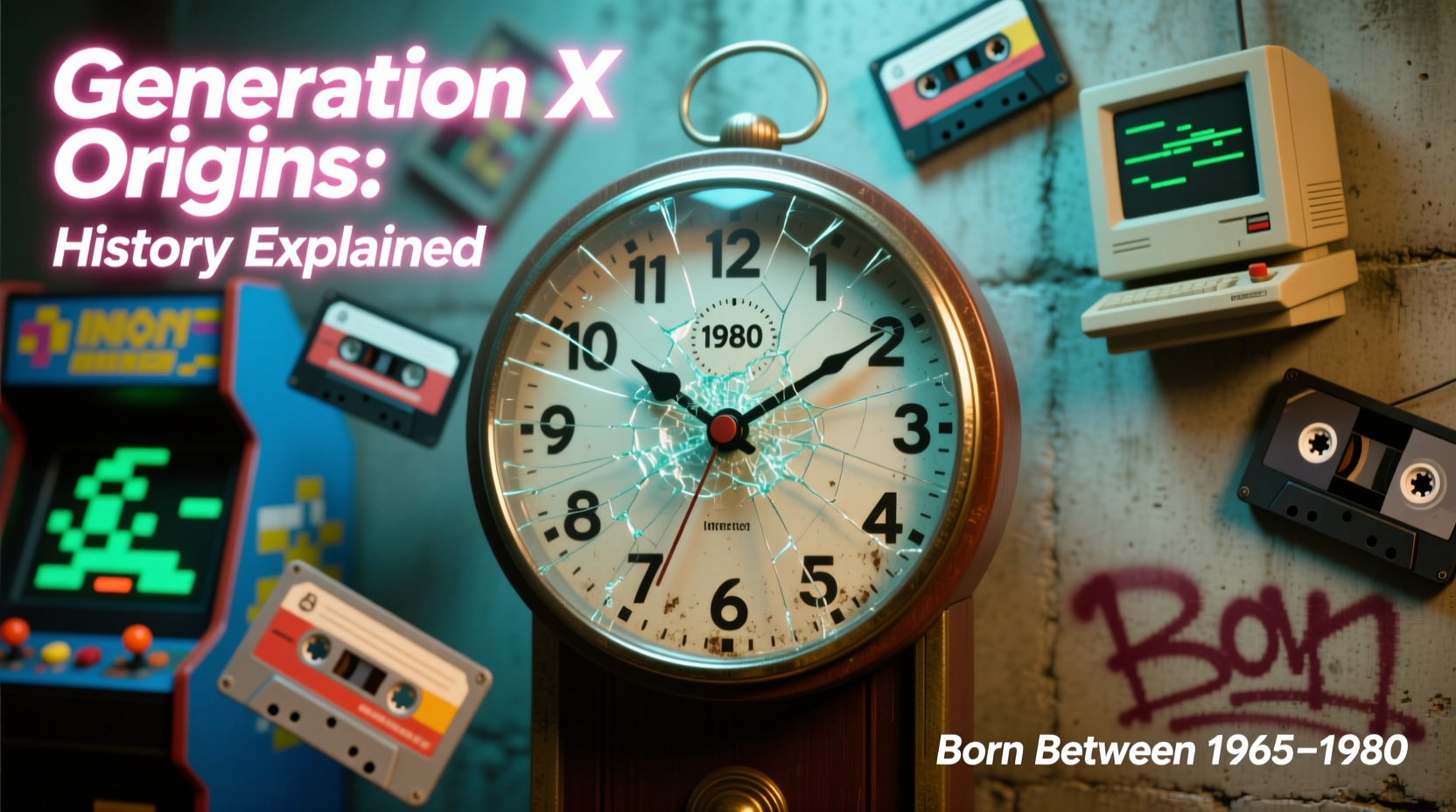
The term “Generation X” did not originate in a sociology lab or government report. Instead, it began as a title of a book. In 1964, Canadian author Paul Fussell published an essay titled “A Touch Too Much,” where he used “Generation X” to describe Americans born after World War II who were disillusioned with traditional success narratives. However, the label gained wider traction when Australian journalist Jane Deverson used it during a 1964 BBC project on youth culture, identifying a cohort marked by apathy, skepticism, and disengagement from mainstream values.
But the most influential use came from Douglas Coupland. In 1991, the Canadian writer released his debut novel, Generation X: Tales for an Accelerated Culture. The book portrayed young adults in their twenties grappling with economic instability, corporate disillusionment, and a fragmented sense of identity. Coupland didn’t invent the phrase, but he redefined it for a global audience, giving voice to a generation sandwiched between the idealism of the Boomers and the digital optimism of those who followed.
“Generation X is like a pause button between two very loud generations.” — Douglas Coupland
Defining the Timeline: When Was Generation X Born?
There is no universally agreed-upon start and end date for Generation X, but most researchers place their birth years between the mid-1960s and early 1980s. Key institutions offer slightly different ranges:
| Organization | Start Year | End Year | Notes |
|---|---|---|---|
| Pew Research Center | 1965 | 1980 | Most widely cited range; emphasizes post-Baby Boomer shift |
| U.S. Census Bureau | 1965 | 1981 | Aligns closely with federal data collection standards |
| McCrate Report / Marketing Firms | 1965 | 1979 | Often used in advertising and consumer behavior studies |
| Coupland’s Definition | 1960s | Early 1980s | Broad, cultural definition emphasizing shared experiences |
This ambiguity reflects the transitional nature of Generation X. They were too young to participate in the counterculture movements of the 1960s and too old to grow up with the internet. Their formative years spanned economic recessions, the Cold War, the rise of personal computing, and profound shifts in family structure.
Social and Cultural Context: Growing Up in the Shadows
Generation X came of age during a period of societal flux. Many were latchkey kids—children returning home to empty houses after school—due to rising divorce rates and the increasing number of dual-income households. This independence bred self-reliance but also a sense of emotional detachment from institutions.
Economically, they faced headwinds early on. The job market in the 1980s and 1990s was volatile. Deindustrialization led to factory closures, union decline, and a growing skepticism toward corporate loyalty. Unlike their parents, who often stayed at one company for decades, Gen Xers learned quickly that job security was an illusion.
Culturally, they were shaped by MTV, punk rock, grunge music, and the early internet. Bands like Nirvana and Pearl Jam voiced the angst and irony that defined much of Gen X’s worldview. Films such as Reality Bites, Slacker, and Fight Club captured their ambivalence toward ambition, consumerism, and conformity.
A Generation Misunderstood: From “The Baby Bust” to Silent Rebels
Demographically, Generation X is smaller than both the Baby Boomers before them and the Millennials after. This led to the nickname “the baby bust,” a direct contrast to the postwar boom. Their lower numbers meant less political influence and fewer targeted marketing campaigns during their youth, contributing to a feeling of being ignored.
While Millennials are often labeled as optimistic and tech-savvy, and Boomers as idealistic and driven, Gen X has frequently been stereotyped as cynical, disengaged, or apathetic. But this overlooks their resilience. They navigated the AIDS crisis, the fall of the Berlin Wall, the Gulf War, and the dawn of the digital age—all while being told they lacked direction.
Yet beneath the surface, Gen X pioneered many modern workplace norms. They were among the first to demand work-life balance, question hierarchical structures, and embrace casual office attire. Their skepticism laid the groundwork for later critiques of corporate culture and blind technological progress.
Mini Case Study: Sarah’s Journey Through the 90s
Sarah Kim was born in 1973 in suburban Detroit. Her parents divorced when she was ten, and she spent her teenage years managing homework and household chores alone. She graduated high school in 1991, just as the U.S. entered a recession. College was expensive, so she worked part-time jobs while attending community college.
In 1995, she landed a job at a startup that promised stock options and flexibility. It folded within two years. Undeterred, she moved into IT support, teaching herself web development through online forums and library books. By 2001, she was managing small teams remotely—a rarity at the time.
Sarah’s story is typical of many Gen Xers: adaptable, resourceful, and quietly innovative. She didn’t expect promotions or golden parachutes. She expected change—and learned to thrive in it.
From Obscurity to Influence: How Gen X Shaped the Modern World
Though often overlooked, Generation X has had an outsized impact on technology, leadership, and culture. Many of today’s CEOs, engineers, and entrepreneurs are Gen Xers who built companies during the dot-com era or rose through the ranks during organizational restructuring.
- Jeff Bezos (born 1964) and Elon Musk (born 1971) are Gen X founders who reshaped commerce and space exploration.
- Sheryl Sandberg (born 1969) brought data-driven leadership to Silicon Valley and authored influential works on workplace equality.
- Many open-source software pioneers and early internet adopters came from this generation.
Moreover, Gen X parents have played a crucial role in raising Millennials and Gen Z, instilling values of independence, critical thinking, and adaptability—often learned the hard way.
Checklist: Recognizing Gen X Traits in Leadership and Culture
- Values autonomy over hierarchy
- Prefers results over face time
- Skeptical of buzzwords and corporate jargon
- Adaptable to technological change without being dependent on it
- Pragmatic problem-solving approach
- Comfortable with ambiguity and decentralized systems
FAQ
Why is it called Generation X instead of something more descriptive?
The “X” symbolizes the unknown or undefined. At the time, this generation lacked a clear identity compared to the prominent Baby Boomers. The label reflected their status as an anonymous, overlooked cohort—much like an algebraic variable waiting to be solved.
Are all members of Generation X pessimistic or cynical?
No. While media often highlights cynicism, many Gen Xers are resilient realists. Their cautious outlook stems from lived experience rather than negativity. They tend to be loyal to small circles, value authenticity, and prioritize practical solutions.
Is Generation X still relevant today?
Absolutely. Though smaller in number, Gen X holds significant influence in leadership, education, and technology. As of 2024, they are entering peak earning and decision-making years, shaping policies, businesses, and family dynamics across the globe.
Conclusion
The name “Generation X” was never meant to be permanent—it was a placeholder for a generation caught between seismic cultural shifts. Yet what began as a label of obscurity evolved into a badge of resilience. Far from being forgotten, Gen X quietly built the infrastructure of the modern world, balancing skepticism with innovation, independence with responsibility.
Understanding why it’s called Generation X isn’t just about etymology—it’s about recognizing how societal forces shape identity, and how a generation defined by uncertainty became one of the most adaptable in modern history.




 浙公网安备
33010002000092号
浙公网安备
33010002000092号 浙B2-20120091-4
Comments
No comments yet. Why don't you start the discussion?