
Summer sausage is a staple in charcuterie boards, picnic baskets, and snack platters across America. Its tangy flavor, firm texture, and long shelf life make it a favorite for outdoor gatherings and emergency food supplies alike. But despite its popularity, few know why it’s called “summer” sausage—especially since most people enjoy it year-round. The name isn’t about when it’s eaten, but when it could be safely stored and consumed before modern refrigeration. To understand the origin of the term, we must look back at European curing traditions, American frontier life, and the science of food preservation.
The Historical Roots of Summer Sausage
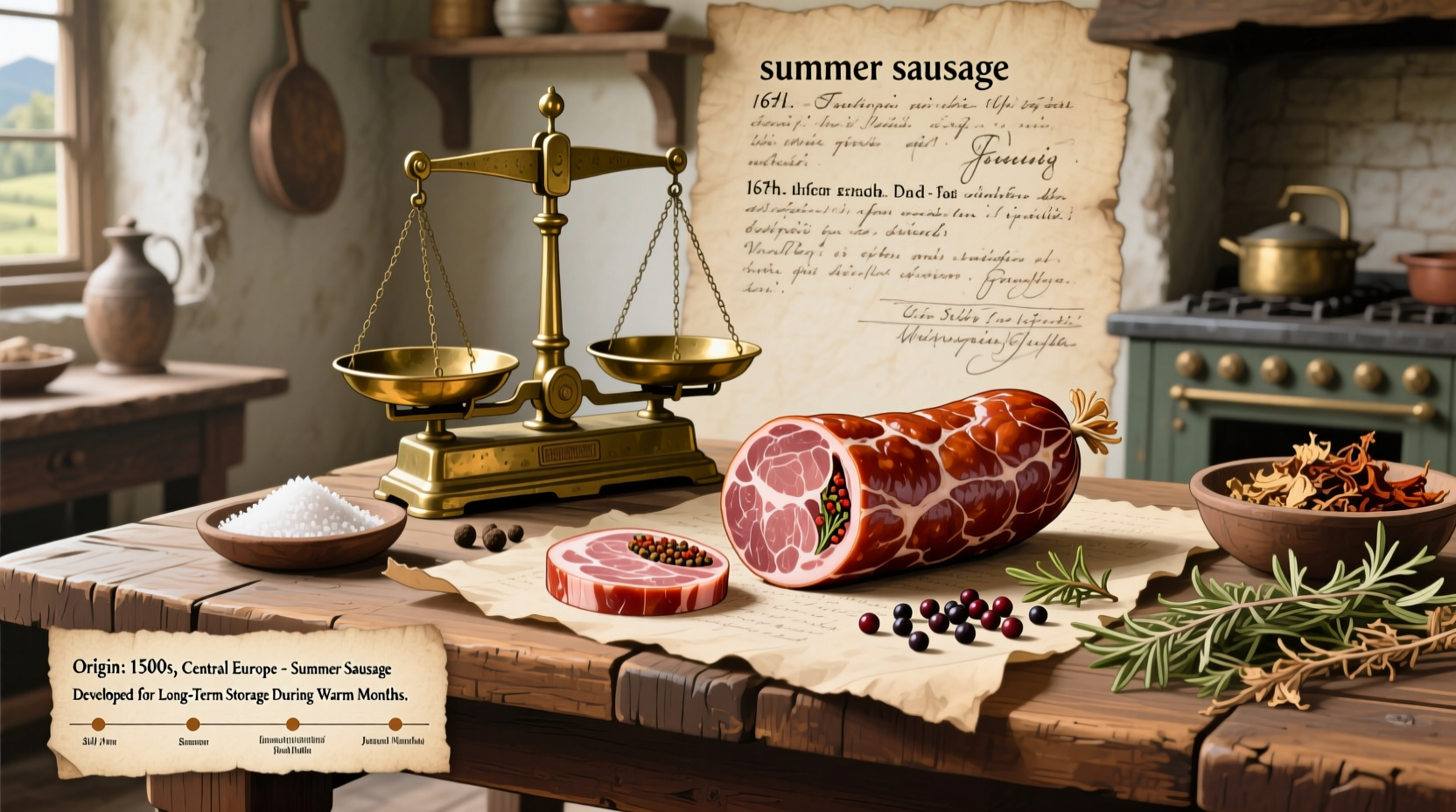
The concept of summer sausage traces back to Central and Eastern Europe, particularly Germany, Poland, and Hungary, where families developed methods to preserve meat without refrigeration. In these regions, farmers slaughtered animals in winter when temperatures were low, reducing the risk of spoilage during butchering. However, once spring arrived and temperatures climbed, fresh meat spoiled quickly. To extend the usability of their harvest, they turned to fermentation, curing, and smoking techniques that created stable, long-lasting sausages.
These early versions were often made from coarsely ground pork or beef, seasoned with garlic, mustard seed, and pepper, then stuffed into natural casings. The key innovation was combining salt, sugar, curing agents (like sodium nitrite), and lactic acid bacteria to lower the pH and inhibit dangerous microbes. Once dried, the sausage could last for months—even through the hot summer months—without spoiling.
When German and Eastern European immigrants arrived in the United States in the 19th century, they brought these traditions with them. On Midwestern farms, where refrigeration was scarce, these preserved sausages became essential provisions. American producers adapted the recipes, eventually branding them under the practical name: “summer sausage.”
“Summer sausage wasn’t named for taste or seasonality—it was named for function. It solved a real problem: how to eat meat safely when it was too warm to keep fresh.” — Dr. Rebecca Langston, Food Historian, University of Wisconsin-Madison
Why \"Summer\"? The Science Behind the Name
The term “summer sausage” directly references its ability to withstand warm temperatures. Unlike fresh sausages that require immediate cooking or refrigeration, summer sausage undergoes a controlled fermentation and drying process that reduces moisture content and creates an inhospitable environment for bacteria like *Clostridium botulinum* and *Listeria*.
Here’s how it works:
- Fermentation: Starter cultures convert sugars into lactic acid, lowering the pH and giving summer sausage its characteristic tang.
- Curing: Salt and sodium nitrite draw out moisture and prevent bacterial growth.
- Drying: The sausage is slowly dried over days or weeks, reducing water activity (aw) to levels below 0.90, which stops microbial proliferation.
- Smoking (optional): Adds flavor and further preserves the surface.
Because of these steps, traditional summer sausage can be stored unrefrigerated for weeks—long enough to survive the heat of summer. That reliability made it ideal for farmhands, hunters, and travelers who needed non-perishable protein sources during warmer months.
Evolution of the Recipe and Regional Variations
Over time, the definition of summer sausage has broadened. In the U.S., it now includes semi-dry sausages that may not be fully dried but are still shelf-stable for short periods. Some modern versions are even pasteurized and vacuum-sealed, relying more on processing than fermentation.
Regional adaptations have also emerged:
| Region | Style | Key Characteristics |
|---|---|---|
| Midwest (USA) | Beef & Pork Blend | Mildly tangy, smoked, often with mustard seeds |
| Wisconsin | Garlic-heavy | Robust seasoning, coarser grind |
| Texas | Peppered | Spicy kick, sometimes with jalapeños |
| Germany (Original) | Landjäger | Fully dried, smoked, square-shaped, eaten as trail food |
One notable ancestor is the Swiss-German *Landjäger*, a firmer, rectangular smoked sausage designed for alpine hunters. This precursor influenced American summer sausage production, especially in states with strong German heritage like Wisconsin, Minnesota, and Ohio.
Step-by-Step: How Traditional Summer Sausage Is Made
Understanding the process reveals why summer sausage lasts so long. Here’s a simplified version of traditional small-batch preparation:
- Select and grind meat: Typically a mix of pork and beef, chilled to prevent smearing during grinding.
- Mix with cure and culture: Add salt, sugar, sodium nitrite (often in “pink salt”), spices, and lactic acid starter culture.
- Stuff into casings: Use natural hog or fibrous collagen casings that allow moisture to escape during drying.
- Ferment: Hold at 85–95°F (29–35°C) for 24–48 hours to develop acidity.
- Smoke and dry: Apply light smoke at increasing temperatures (up to 140°F/60°C), then dry in a cool, humid-controlled environment for several days.
- Test and package: Check weight loss (ideally 15–25%) and internal moisture; vacuum seal if intended for longer storage.
This method ensures safety and longevity without artificial preservatives. Homemade versions require careful temperature control to avoid botulism risks—highlighting why commercial producers follow strict USDA guidelines.
Common Misconceptions About Summer Sausage
Despite its name, summer sausage is not meant only for summer consumption. Nor is it a single standardized product. Common myths include:
- Myth: It’s called “summer sausage” because it tastes best in warm weather.
Truth: The name refers to storage capability, not flavor preference. - Myth: All summer sausages are fermented.
Truth: Many store-bought versions skip fermentation and rely on vinegar or citric acid for tanginess. - Myth: It never needs refrigeration.
Truth: Once opened or sliced, it should be refrigerated to maintain quality and prevent mold.
Mini Case Study: The Johnson Family Farm, 1912
In rural Wisconsin, the Johnson family raised hogs each fall. In December 1912, after butchering two sows, they prepared 18 pounds of sausage using their grandmother’s recipe: coarse-ground pork, sea salt, crushed peppercorns, and a splash of wine vinegar. The sausages were stuffed into hog casings, hung in their smokehouse, and slowly dried over three weeks.
By June, with no icebox available, the family relied on these sausages for midday meals. They reported no spoilage, consistent flavor, and praised the sausage’s durability during hay harvest. Their ledger noted: “No waste. Good eating through July.” This real-world use case exemplifies why such sausages became known as “summer” sausage—they bridged the gap between winter slaughter and summer scarcity.
FAQ
Can I make summer sausage at home safely?
Yes, but only with proper equipment and knowledge. You’ll need a meat grinder, curing salts, starter culture, smoker or dehydrator, and accurate temperature/humidity control. Follow USDA guidelines and validated recipes to prevent foodborne illness.
Is summer sausage the same as salami?
They’re similar but not identical. Both are fermented and dried, but salami is typically drier (fully dry-cured), while summer sausage is semi-dry. Salami often uses different spice profiles and casing types.
Why does some summer sausage need refrigeration?
Modern mass-produced versions may have higher moisture content or lack full fermentation, making them less shelf-stable. Always follow label instructions—even if unopened, some brands require refrigeration.
Conclusion
The name “summer sausage” is a testament to ingenuity in food preservation. Born from necessity and refined through generations, it represents a clever solution to a timeless challenge: how to keep meat safe when the weather turns hot. Far more than just a snack, it’s a link to our agricultural past and a reminder of how traditional knowledge continues to feed us today.




 浙公网安备
33010002000092号
浙公网安备
33010002000092号 浙B2-20120091-4
Comments
No comments yet. Why don't you start the discussion?