
The nation’s capital stands apart—not just in power and influence, but in name and legal status. Officially known as the District of Columbia, Washington, D.C. is neither a state nor part of any state. Its designation carries historical weight, political intent, and symbolic meaning. To understand why it’s called the District of Columbia, one must trace back to the founding era of the United States, when questions of governance, geography, and national identity shaped the creation of a federal enclave designed to serve the entire country.
The Constitutional Foundation: A Capital for the Nation
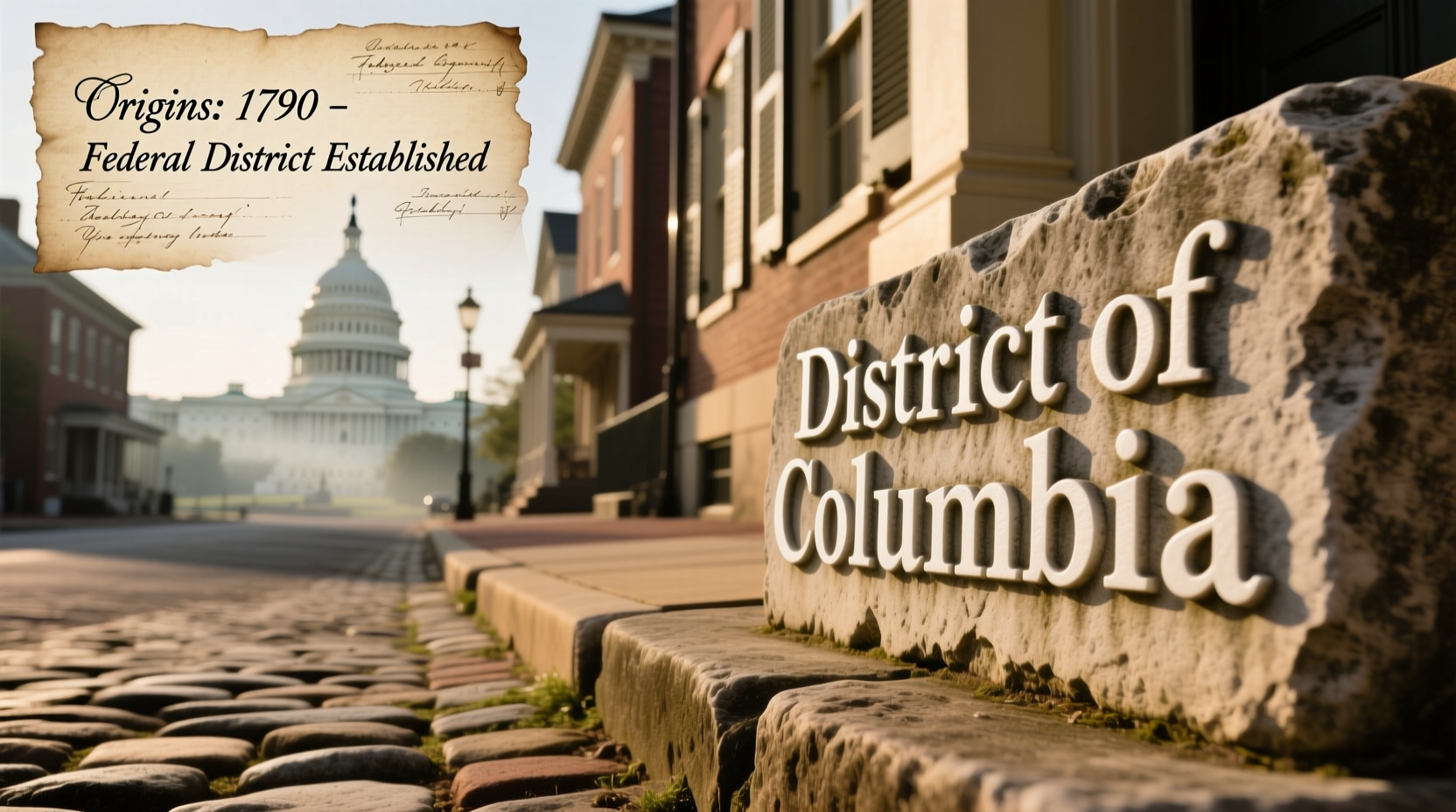
The idea of a federal district separate from the states emerged directly from the U.S. Constitution. Article I, Section 8, Clause 17 grants Congress the authority:
“To exercise exclusive Legislation in all Cases whatsoever, over such District (not exceeding ten Miles square) as may, by Cession of particular States, and the Acceptance of Congress, become the Seat of the Government of the United States.”
This clause was not an afterthought. The Founding Fathers were deeply concerned about placing the seat of government under the control of any single state. During the Revolutionary War, Congress had been forced to flee multiple times due to pressure from state governments or threats of violence. The inability of the central government to protect itself highlighted the need for a neutral territory—free from state jurisdiction.
The compromise that led to the creation of this district involved both regional balance and political negotiation. Northern and southern states disagreed on where the capital should be located. Ultimately, the Residence Act of 1790 resolved the dispute by authorizing President George Washington to select a site along the Potomac River—a location favorable to southern interests while still accessible to northern states.
Why “Columbia”? The Symbolic Name
The term “Columbia” may sound archaic today, but in the 18th century, it was a widely recognized poetic name for the United States. Derived from Christopher Columbus, “Columbia” became a female personification of the nation—similar to how “Britannia” represented Britain or “Marianne” symbolizes France.
By naming the new federal district the “District of Columbia,” the founders imbued it with national symbolism. It wasn’t just another city; it was the physical embodiment of the union. The name distanced the capital from any individual state pride and instead tied it to the broader American experiment in self-governance.
Interestingly, the city within the district was named separately. In 1791, the portion of the territory designated as the urban center was officially named “Washington” in honor of the first president. Thus, the full entity became known as Washington, District of Columbia—a dual identity reflecting both a man and an ideal.
A Timeline of Creation: From Vision to Reality
The formation of the District of Columbia was a deliberate, multi-step process rooted in political strategy and geographic planning.
- 1783: The Pennsylvania Mutiny prompts Congress to question the safety of housing the federal government within state boundaries.
- 1787: The Constitutional Convention includes the provision for a federal district.
- 1790: The Residence Act passes, allowing President Washington to choose a 10-mile-square site along the Potomac.
- 1791: The land—ceded by Maryland and Virginia—is formally accepted, and the district is named. Pierre Charles L’Enfant begins designing the city.
- 1800: The federal government officially moves from Philadelphia to Washington, D.C.
- 1846: The portion originally ceded by Virginia is retroceded, returning Arlington and parts of Alexandria to Virginia. This leaves the current boundaries of D.C., entirely within the former Maryland cession.
This timeline underscores the evolving nature of the district. Originally spanning 100 square miles, it was reduced in size due to local opposition and logistical concerns. Yet even in its smaller form, the District of Columbia remained a federally controlled space, distinct from the states.
Political Status and Modern Implications
The unique origin of the District of Columbia continues to shape its political reality. Because it is not a state, D.C. has no voting representation in Congress. While it elects a non-voting delegate to the House of Representatives and has no senators, its residents pay federal taxes and serve in the military—leading many to argue that the current arrangement violates democratic principles.
The lack of statehood stems directly from its original design as a federal enclave. But critics point out that the rationale no longer fully applies in the modern era. With a population larger than Wyoming and Vermont, D.C. functions like a city-state in practice, yet lacks the autonomy of either.
| Aspect | District of Columbia | Typical U.S. State |
|---|---|---|
| Voting Members in Congress | 0 Senators, 1 Non-Voting Delegate | 2 Senators, Multiple Voting Representatives |
| Federal Taxation | Yes | Yes |
| Statehood Status | No | Yes |
| Control Over Local Laws | Limited – Congress can override | Full autonomy |
The tension between D.C.’s symbolic role and its civic limitations remains unresolved. Efforts to grant statehood—most recently through the Washington, D.C. Admission Act—highlight the ongoing debate over whether the capital should remain a federal district or evolve into the 51st state.
“The District was created to serve the federal government, but its residents deserve the same rights as citizens in every other part of the country.” — Eleanor Norton, D.C. Delegate to the House of Representatives
Frequently Asked Questions
Is Washington, D.C. a state?
No, Washington, D.C. is not a state. It is a federal district established by the U.S. Constitution to serve as the seat of the federal government. It belongs to no state and operates under the direct authority of Congress.
Why isn’t D.C. part of Maryland or Virginia anymore?
The land was originally ceded by both states. However, in 1846, the portion from Virginia was returned (or “retroceded”) due to economic neglect and lack of congressional representation. The area now known as Arlington County and part of Alexandria reverted to Virginia. The remaining area, from Maryland, constitutes present-day D.C.
Can D.C. become a state?
Yes, it can—but only through an act of Congress. Several bills have been introduced to admit D.C. as a state, typically under the proposed name “Washington, Douglass Commonwealth,” honoring Frederick Douglass. Such legislation would require passage in both the House and Senate and signing by the President. Opponents often cite constitutional concerns, though supporters argue that Congress has the authority to admit new states and that D.C.’s case is consistent with democratic values.
Practical Checklist: Understanding D.C.’s Unique Status
To fully grasp why the capital is called the District of Columbia and what that means today, consider the following actions:
- Review the U.S. Constitution’s District Clause (Article I, Section 8, Clause 17).
- Study the historical context of the Residence Act of 1790.
- Explore maps showing the original 100-square-mile district versus today’s boundaries.
- Compare D.C.’s governance structure with that of U.S. territories like Puerto Rico.
- Follow current legislative efforts related to D.C. statehood.
Conclusion: More Than Just a Name
The name “District of Columbia” is more than a relic of 18th-century idealism—it reflects a foundational decision about the nature of American governance. By creating a capital outside the control of any state, the founders sought to protect the federal government from undue influence. Yet that same separation now raises pressing questions about representation and equity.
Understanding the origins of the District of Columbia is essential for anyone interested in American history, politics, or civic rights. The story behind the name reveals the tensions between unity and autonomy, symbolism and practicality, past intentions and present realities.




 浙公网安备
33010002000092号
浙公网安备
33010002000092号 浙B2-20120091-4
Comments
No comments yet. Why don't you start the discussion?