
In the global skincare market, few products command as much loyalty and admiration as Japanese sunscreens. While sun protection is universally essential, Japanese formulations stand apart—not just for their high SPF and PA ratings, but for an unparalleled balance of elegance, efficacy, and skin compatibility. From feather-light textures to invisible finishes, these sunscreens have redefined what daily UV defense should feel like. But why exactly are they so popular? The answer lies in a combination of advanced technology, cultural skincare values, and meticulous attention to sensory experience.
Japan’s approach to sun care is deeply rooted in prevention. Unlike regions where sunscreen is reserved for beach days, Japanese consumers apply it every morning as a non-negotiable step in their routine—regardless of weather or season. This cultural habit has driven innovation, pushing brands to create products that people actually *want* to wear daily. The result? Sunscreens that don’t just protect but enhance the user experience.
Superior UV Protection: Beyond SPF Numbers
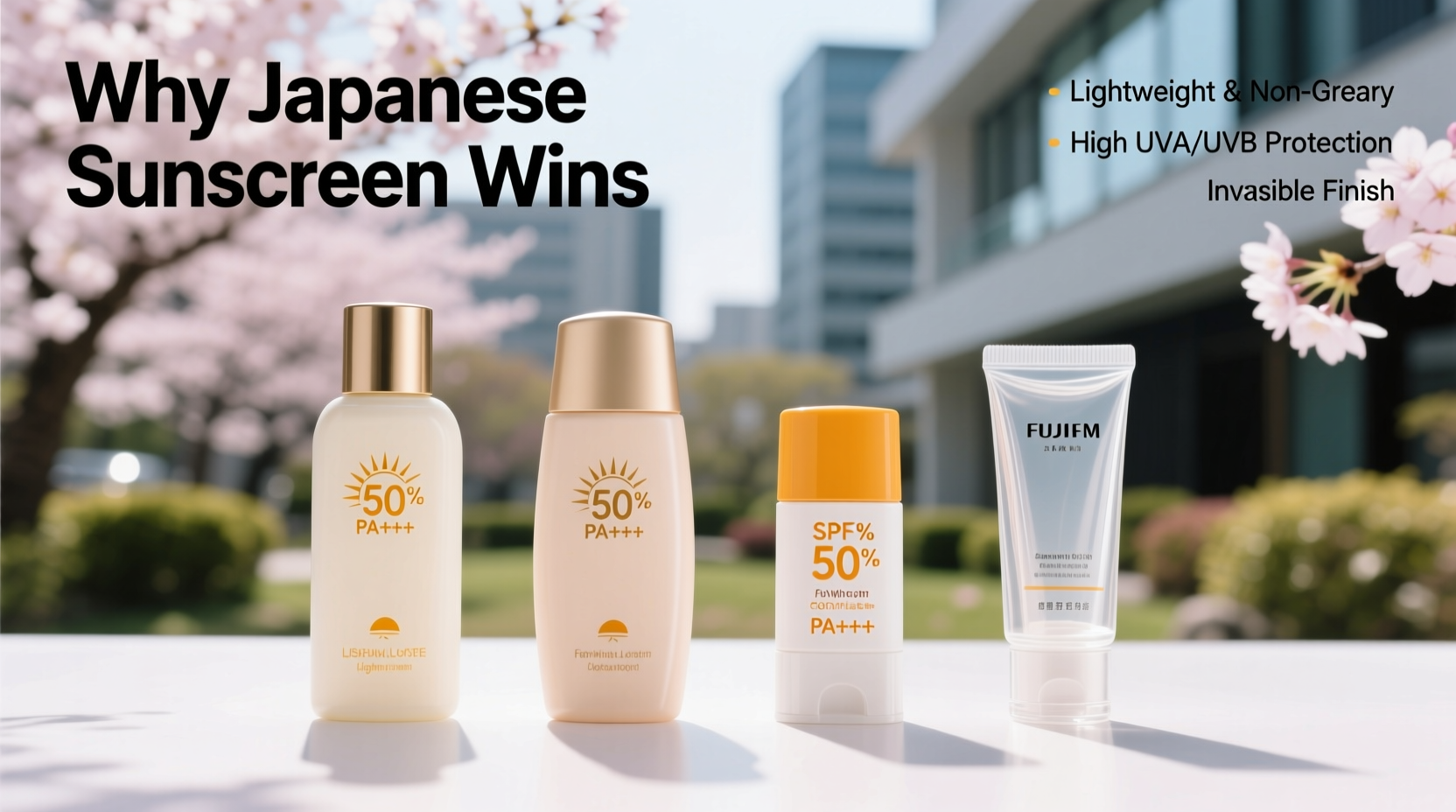
One of the primary reasons Japanese sunscreens dominate the skincare world is their rigorous standards for UV protection. While many Western countries focus heavily on SPF (Sun Protection Factor), which measures protection against UVB rays (the ones that cause sunburn), Japanese products also emphasize PA rating—a system developed in Japan to measure UVA protection.
UVA rays penetrate deeper into the skin than UVB, contributing significantly to premature aging, pigmentation, and long-term skin damage. The PA system uses plus signs (PA+, PA++, PA+++, PA++++), with PA++++ indicating the highest level of UVA protection available. Most premium Japanese sunscreens now carry PA++++, offering broad-spectrum defense that outperforms many international counterparts.
Additionally, Japanese regulatory bodies require stricter testing protocols for photostability and water resistance. Products must maintain their labeled SPF after 40 minutes of water immersion, ensuring reliable performance during humidity, sweat, or light rain—common conditions in Japan’s climate.
“Japanese sunscreens represent the gold standard in balanced photoprotection. They combine high UVA filters with elegant delivery systems, making consistent use far more likely.” — Dr. Reina Tanaka, Dermatological Researcher at Kyoto Skincare Institute
Texture Innovation: Why Feel Matters
If protection keeps dermatologists interested, texture keeps consumers loyal. Japanese sunscreen developers prioritize sensory aesthetics as much as functionality. The goal isn't just to shield the skin—it's to do so without compromising comfort, appearance, or makeup compatibility.
Many Japanese sunscreens feature lightweight, fast-absorbing formulas that leave no white cast, greasiness, or pilling. Whether milky lotions, gel-creams, or sprays, they’re engineered for seamless integration into multi-step skincare routines. Some even double as makeup primers, blurring pores and smoothing texture under foundation.
This focus stems from Japan’s beauty culture, where skincare and cosmetics are deeply intertwined. Consumers expect products to perform across categories—hydrating while protecting, mattifying while remaining non-drying. As a result, Japanese brands invest heavily in emulsification technology, film-forming agents, and micronized UV filters to achieve this harmony.
Common Texture Types in Japanese Sunscreens
| Texture Type | Best For | Key Benefits |
|---|---|---|
| Milky Lotions | All skin types, especially dry skin | Hydrating, spreads easily, absorbs quickly |
| Gel-Creams | Oily or combination skin | Matte finish, oil-free, cooling sensation |
| Serum-Like Fluids | Layering under actives or makeup | Ultra-light, non-pilling, invisible finish |
| Sprays & Mists | Reapplication over makeup | Convenient, portable, non-disruptive |
| Tinted Options | ||
| Light coverage seekers | Evens tone, reduces white cast, replaces CC cream |
Formulation Philosophy: Safety, Elegance, and Skin Health
Beyond texture and protection, Japanese sunscreens reflect a broader philosophy: skincare should be safe, intelligent, and pleasurable. This mindset influences ingredient selection, packaging design, and overall product development.
Many Japanese sunscreens avoid harsh chemical filters like oxybenzone, opting instead for newer-generation organic filters (e.g., Tinosorb S, Uvinul A Plus) or hybrid systems that blend chemical and physical blockers. These modern filters offer higher photostability and lower irritation potential, making them suitable for sensitive skin.
Moreover, most formulas include skincare benefits such as:
- Hyaluronic acid for hydration
- Collagen or ceramides for barrier support
- Botanical extracts (like green tea or licorice root) for antioxidant protection
- Vitamin E derivatives to neutralize free radicals
Packaging also plays a role. Air-tight pumps, opaque tubes, and UV-resistant materials help preserve formula integrity, preventing degradation from light and oxygen exposure—something often overlooked in cheaper alternatives.
Case Study: Midori’s Morning Routine Transformation
Midori, a 32-year-old office worker in Osaka, used to skip sunscreen because she disliked how most products felt—either too sticky, too drying, or incompatible with her moisturizer and makeup. After switching to a Japanese milky-texture sunscreen with PA++++ and hyaluronic acid, her habits changed completely.
She noticed immediate differences: no pilling when layering, no shine by midday, and zero breakouts despite daily use. Over six months, her skin appeared brighter, with fewer visible spots forming after prolonged commutes. Encouraged by the results, she began recommending the product to colleagues, sparking a small “sunscreen club” at her workplace.
Her experience highlights a key truth: compliance improves dramatically when sunscreen feels good. In Japan, this principle drives innovation—not as an afterthought, but as a core design requirement.
How to Choose the Right Japanese Sunscreen for Your Needs
With hundreds of options available—from drugstore staples to luxury lines—selecting the right Japanese sunscreen can feel overwhelming. Here’s a practical guide to help narrow down choices based on individual needs.
Step-by-Step Selection Process
- Assess your skin type: Oily? Look for gel or matte-finish formulas. Dry? Opt for milky or cream-based versions with hydrating ingredients.
- Determine your usage context: Will you wear makeup? Choose a primer-compatible fluid. Need reapplication? Consider a spray or cushion compact with SPF.
- Check the PA rating: Always aim for PA+++ or higher. For maximum anti-aging benefit, go for PA++++.
- Review filter types: If you prefer minimal chemical exposure, look for zinc oxide-heavy or hybrid formulas clearly labeled as gentle.
- Test the finish: Try samples if possible. A good Japanese sunscreen should disappear into the skin without residue or flashback.
Checklist: What to Look for in a Quality Japanese Sunscreen
- PA+++ or PA++++ rating
- SPF 50+ for daily urban use
- No strong fragrance or alcohol (especially for sensitive skin)
- Non-comedogenic and allergy-tested labeling
- Lightweight, quick-absorbing texture
- Inclusion of skincare-boosting ingredients (e.g., antioxidants, humectants)
- Water and sweat resistance (ideal for humid climates or outdoor activity)
Frequently Asked Questions
Do Japanese sunscreens work for darker skin tones?
Yes. Most modern Japanese sunscreens use finely dispersed UV filters that minimize white cast. Tinted versions are increasingly common and specifically designed to blend seamlessly across a range of complexions. Look for labels like “natural finish” or “no white residue.”
Are Japanese sunscreens safe for acne-prone skin?
Many are. Brands like Biore, Senka, and Anessa offer oil-free, non-comedogenic options tested for breakout-prone skin. Avoid products with heavy silicones or fragrances if you're prone to clogged pores. Patch testing is recommended when trying new formulas.
Can I use Japanese sunscreen with retinoids or vitamin C?
Absolutely—and it's essential. Actives like retinol and vitamin C increase photosensitivity, making robust morning sun protection critical. Japanese sunscreens are ideal for layering due to their lightweight textures and compatibility with other serums.
Conclusion: Elevate Your Sun Protection Habit
The popularity of Japanese sunscreen isn’t a trend—it’s the result of decades of refinement, cultural emphasis on prevention, and consumer-driven innovation. These products prove that effective sun protection doesn’t have to come at the cost of comfort or aesthetics. By combining cutting-edge UV filters with luxurious textures and skin-nourishing ingredients, they make daily defense not just necessary, but enjoyable.
Switching to a Japanese sunscreen might seem like a small change, but it can transform your entire skincare experience. Once you’ve worn a formula that absorbs instantly, leaves no trace, and shields your skin with PA++++ power, going back becomes unthinkable. That’s the real secret behind their global appeal: they don’t just protect your skin—they respect it.




 浙公网安备
33010002000092号
浙公网安备
33010002000092号 浙B2-20120091-4
Comments
No comments yet. Why don't you start the discussion?