
Jujutsu Kaisen Season 2 arrived with a wave of anticipation, but viewers quickly noticed something striking: the animation felt distinct from Season 1. While still visually impressive, the shift in style, pacing, and visual tone sparked widespread discussion. Some praised the evolution; others questioned whether it was an improvement. The truth lies not in subjective preference alone, but in the complex interplay of production logistics, creative direction, and narrative intent. Understanding why the animation diverges requires examining behind-the-scenes decisions, stylistic experimentation, and how storytelling priorities shape visual execution.
Production Studio and Staff Changes
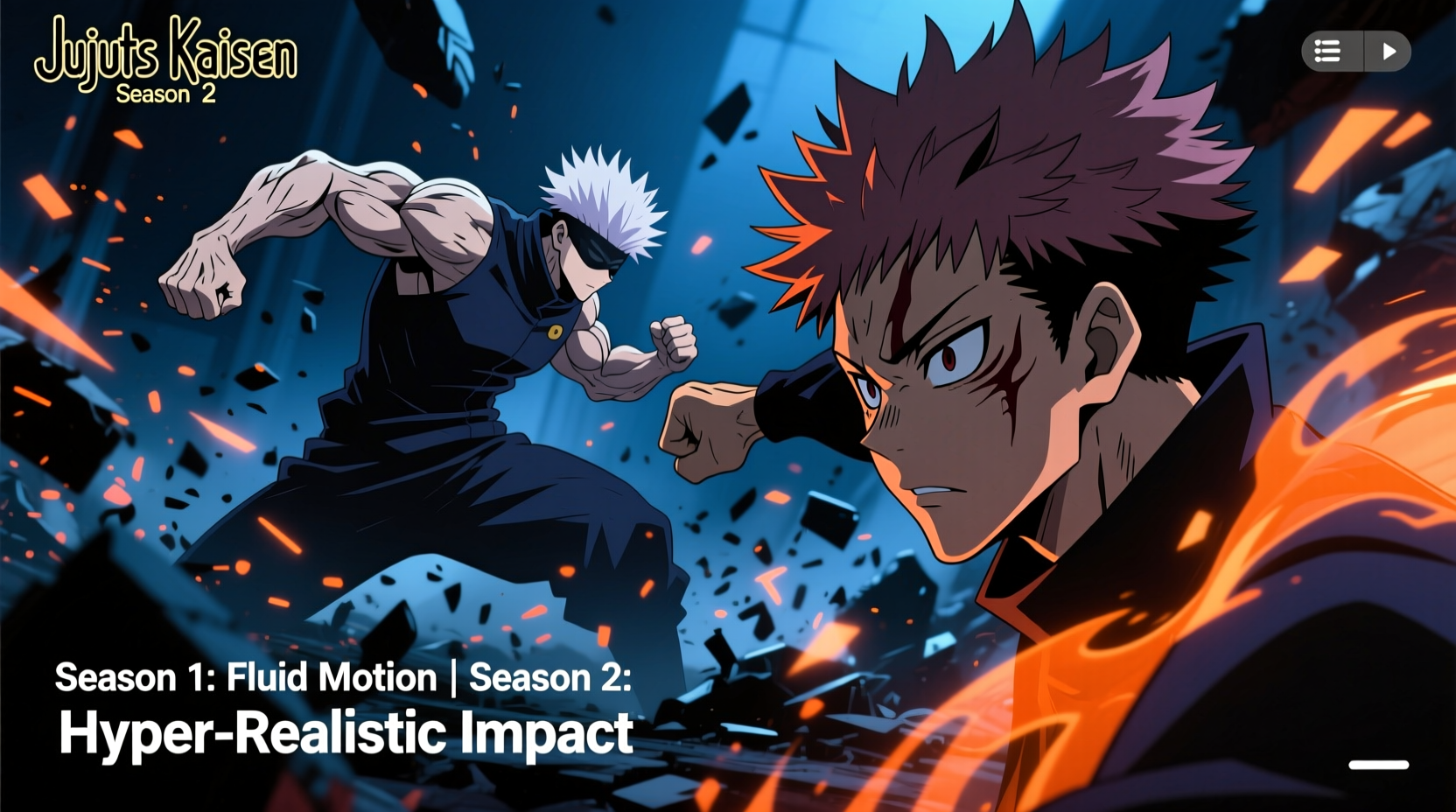
One of the most significant factors influencing the animation difference is the change in key personnel at MAPPA, the studio responsible for both seasons. While MAPPA remained the primary animation studio, Season 2 introduced new directors and animation supervisors who brought their own aesthetic philosophies to the project.
Tensai Okamura, known for his work on *Darker Than Black* and *Wolf’s Rain*, stepped in as chief director for Season 2, replacing Masato Matsune. This shift altered the overall vision for how scenes were paced and composed. Additionally, Shintarou Shimosawa took over as series director, bringing a more experimental approach to action choreography and emotional sequences.
These leadership changes naturally led to variations in storyboarding, shot composition, and timing. Season 1 emphasized fluid motion and cinematic clarity, particularly during battles like Satoru Gojo’s domain expansion. Season 2, however, leaned into stylized abstraction—especially in the \"Hidden Inventory / Premature Death\" arc—to mirror Yuji Itadori’s internal struggle and the surreal nature of Sukuna’s memories.
Artistic Direction: Embracing Stylization Over Realism
Season 2 made a deliberate departure from the hyper-polished realism of Season 1 in favor of expressive, sometimes fragmented visuals. This was especially evident in episodes covering Yuta Okkotsu’s flashback and the cursed womb arcs, where surreal imagery—distorted perspectives, abstract backgrounds, and symbolic color grading—was used to reflect psychological trauma.
This stylistic pivot wasn’t random. The narrative focus shifted from external battles to internal conflict. In Season 1, the emphasis was on physical combat and world-building. Season 2 delves into themes of identity, regret, and inherited sin—particularly through Yuji’s confrontation with Sukuna’s past and the tragic backstory of Megumi Fushiguro’s father.
To convey these introspective moments, the animation team employed techniques such as:
- Monochrome palettes during flashbacks to evoke memory and detachment.
- Heavy use of shadows and negative space to emphasize isolation.
- Non-linear editing with abrupt cuts and overlapping dialogue to simulate mental fragmentation.
- Simplified character designs in dream sequences to distinguish reality from subconscious projection.
“Animation isn’t just about movement—it’s about emotion. Sometimes breaking realism helps us feel closer to the character’s truth.” — Hiroshi Seko, Series Composition Writer (Jujutsu Kaisen)
Technical and Time Constraints Behind the Scenes
Beyond creative choices, practical production pressures played a role in the animation differences. MAPPA has faced ongoing scrutiny for tight deadlines across multiple high-profile projects, including *Chainsaw Man* and *Frieren: Beyond Journey’s End*. Jujutsu Kaisen Season 2 aired concurrently with other major titles, stretching resources thin.
This resulted in noticeable fluctuations in frame quality. Some episodes featured standout sequences animated by top-tier key animators—such as the fight between Toji Fushiguro and Suguru Geto—while others relied more heavily on static shots, limited animation, or digital effects to meet broadcast schedules.
Moreover, Season 2 covered dense, emotionally heavy material that required careful pacing. Instead of prioritizing constant action, the team allocated time and budget toward mood-setting and atmospheric storytelling. This meant fewer fully animated fight scenes per episode but deeper immersion in character psychology.
Animation Quality Comparison: Season 1 vs. Season 2
| Aspect | Season 1 | Season 2 |
|---|---|---|
| Action Sequences | Frequent, highly detailed, fluid motion | More selective, stylized, symbolic |
| Emotional Scenes | Subtle expressions, realistic lighting | Abstract visuals, color symbolism |
| Pacing | Faster, plot-driven momentum | Slower, introspective rhythm |
| Background Art | Detailed urban environments | Minimalist, surreal spaces in flashbacks |
| Animation Consistency | Highly consistent across episodes | Varied due to scheduling pressures |
Narrative Intent: Why Visual Shifts Serve the Story
The most compelling reason for the animation shift lies in the source material itself. Season 2 adapts two non-chronological arcs—the “Gojo’s Past” arc and the “Hidden Inventory / Premature Death” arc—both of which are inherently introspective and emotionally charged.
In the “Gojo’s Past” arc, the animation team used a colder color palette, tighter framing, and deliberate pacing to reflect the weight of betrayal and loss. The fight between Gojo and Geto wasn’t just a clash of powers—it was a collapse of friendship. The subdued animation during their final conversation underscored the tragedy more effectively than any flashy sequence could.
Likewise, Yuji’s journey in the second half of Season 2 is less about defeating enemies and more about confronting his own fate. The distorted visuals during his possession by Sukuna aren’t flaws—they’re intentional representations of losing control. The animation becomes unstable because Yuji is unstable.
This narrative-first approach explains why certain episodes feel “slower” or “less dynamic.” They aren’t aiming for spectacle; they’re aiming for resonance.
Mini Case Study: Episode 15 – “The First Student”
Episode 15, which centers on Yuta Okkotsu’s origin story, exemplifies how animation serves storytelling. Rather than using elaborate battle choreography, the episode relies on silence, lingering close-ups, and minimal background detail to highlight Yuta’s loneliness after Rika’s curse manifests.
The animation lingers on small gestures—a trembling hand, a tear falling slowly—and uses long takes without cuts to build emotional tension. When the action does occur, it’s chaotic and disorienting, mirroring Yuta’s panic and lack of control.
Critically, this episode received widespread acclaim despite having fewer traditionally “impressive” animation moments. It proved that effective animation isn’t just about movement—it’s about meaning.
Expert Insights and Industry Context
Industry veterans have noted that modern shonen anime are increasingly expected to balance commercial appeal with artistic ambition. With Jujutsu Kaisen, MAPPA had the challenge of following up a breakout success while adapting complex, tonally varied source material.
“When you adapt a manga with deep psychological layers, you can’t rely only on action. You need visual metaphors. That’s what Season 2 attempted—even if it divided fans.” — Rei Nakashima, Anime Production Analyst
Nakashima points out that studios like Ufotable (*Demon Slayer*) and Bones (*My Hero Academia*) have also shifted animation styles between seasons to match evolving narratives. What makes Jujutsu Kaisen notable is its willingness to embrace discomfort—both visually and thematically.
Furthermore, the involvement of Toshihiko Seki (Sukuna’s voice actor) in shaping the character’s presence added pressure to visualize Sukuna not just as a villain, but as a force of nature. This led to animation choices that prioritized aura and presence over conventional fight mechanics.
FAQ: Common Questions About the Animation Shift
Did the animation studio change between seasons?
No, MAPPA produced both seasons. However, key creative roles—including chief director and series director—were reassigned, leading to a shift in visual storytelling approach.
Was the animation quality downgraded in Season 2?
Not necessarily. While some episodes had reduced frame counts due to production timelines, others featured highly sophisticated and symbolic animation. The perception of lower quality often stems from the move away from constant action toward psychological depth.
Will Season 3 return to Season 1’s style?
It’s unlikely to revert completely. The creative team has established a new visual language that blends stylization with narrative depth. Future seasons may refine this approach, combining dynamic action with expressive abstraction.
Step-by-Step Guide: How to Appreciate the New Animation Style
If you found Season 2’s animation jarring at first, consider adjusting your viewing perspective with these steps:
- Watch with attention to mood, not just motion. Notice how lighting, color, and framing affect your emotional response.
- Revisit key scenes without sound. Observe how visuals alone convey tension, sorrow, or chaos.
- Compare storyboard drafts (if available). Many anime release early sketches that show intentional design choices before animation begins.
- Research the animators involved. Look up names in the credits—artists like Atsushi Nishigori or Masaru Sakamoto often bring distinct styles to specific episodes.
- Consider the manga panels. The original artwork by Gege Akutami uses heavy shading and abstract layouts, which the anime now mirrors more closely.
Checklist: Signs of Intentional Stylistic Choice (Not Decline)
- Consistent use of color symbolism across episodes
- Deliberate pacing in emotionally critical scenes
- Recurring visual motifs (e.g., chains, darkness, fractured screens)
- Strong alignment between animation style and character mental state
- Positive critical reception from animation analysts and industry insiders
Conclusion: A Bold Evolution, Not a Step Backward
The animation in Jujutsu Kaisen Season 2 isn’t worse—it’s different by design. Moving away from the polished, action-heavy formula of Season 1 allowed the series to explore darker, more introspective territory. The visual shifts reflect a maturing adaptation that treats its audience as capable of engaging with complexity, ambiguity, and emotional nuance.
While the change may have unsettled fans expecting another round of high-octane battles, it ultimately honors the depth of Gege Akutami’s storytelling. The animation became a tool for psychological exploration, not just entertainment. As the series progresses, this evolved visual language may become its defining strength.




 浙公网安备
33010002000092号
浙公网安备
33010002000092号 浙B2-20120091-4
Comments
No comments yet. Why don't you start the discussion?