
Kick Sauber, formerly known as Alfa Romeo F1 Team, has struggled for pace and consistency since rebranding in 2024. While the Swiss-based outfit carries a proud motorsport heritage, its recent on-track performances have placed it firmly at the back of the Formula 1 grid. Fans and analysts alike are asking: why is Kick Sauber so slow? The answer lies in a combination of technical, financial, and developmental factors that have created a perfect storm of underperformance.
Historical Context: From Competitive Contender to Backmarker
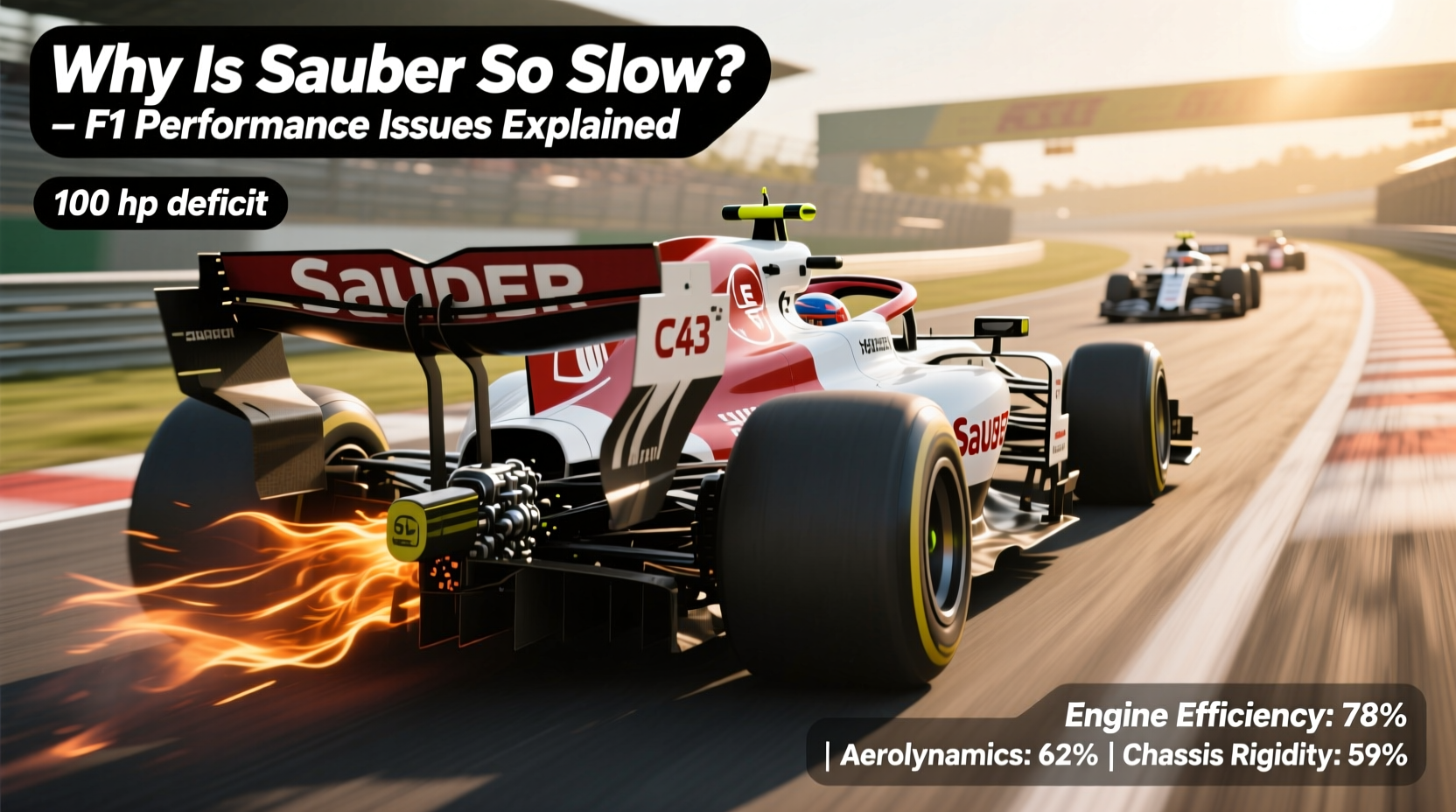
Sauber’s journey in Formula 1 dates back to 1993, with periods of strong midfield presence and even podium finishes when partnered with BMW (2006–2009). However, since returning to independent operation after the BMW split, the team has oscillated between mid-pack relevance and survival mode. The partnership with Alfa Romeo (2018–2023) provided marketing visibility but limited technical integration, leaving Sauber reliant on customer parts from Ferrari without meaningful co-development.
The rebrand to Kick Sauber in 2024 coincided with new ownership and sponsorship, but not with a sudden leap in competitiveness. Instead, the team entered the season with an outdated design philosophy, lagging behind the aerodynamic efficiency and mechanical refinement seen in even their closest rivals like Williams and Haas.
“Sauber hasn’t had the resources to keep up with the front-runners’ development cycles. They’re racing yesterday’s car while others evolve weekly.” — James Allen, F1 Analyst & Broadcaster
Technical Limitations Behind the Slow Pace
The core issue plaguing Kick Sauber is a lack of competitive edge in key technical areas:
- Aerodynamic inefficiency: Wind tunnel and CFD data suggest their 2024 chassis produces less downforce and more drag than rivals. This translates into poor cornering speeds and straight-line deficits.
- Underdeveloped suspension layout: The car struggles with ride height control and mechanical grip, particularly over kerbs and bumpy circuits like Monaco or Baku.
- Power unit integration: Although using a current-spec Ferrari engine, suboptimal cooling layouts and packaging reduce net power delivery and increase weight distribution imbalances.
- Lack of upgrade momentum: While top teams introduce major upgrades every second race, Kick Sauber has rolled out only minor tweaks—often reactive rather than progressive.
Financial and Resource Constraints
Formula 1 today is as much a battle of budgets as it is of driver skill. The Cost Cap introduced in 2021 ($135 million annually, excluding power units and driver salaries) was meant to level the playing field. But teams like Red Bull, Mercedes, and Ferrari still benefit from legacy infrastructure, larger R&D departments, and superior simulation tools.
Kick Sauber operates with one of the smallest technical staffs on the grid—fewer than 400 employees compared to over 700 at leading teams. Their wind tunnel time is limited, and computational fluid dynamics (CFD) capabilities lag behind competitors using AI-driven simulations.
| Team | Approx. Staff Size | Annual Budget (Est.) | Upgrade Frequency (2024) |
|---|---|---|---|
| Kick Sauber | ~380 | $100–110M | Minor updates every 4–5 races |
| Haas | ~500 | $120M | Major update per quarter |
| Mercedes | ~750 | $350M+ | Bi-weekly component changes |
| Red Bull | ~800 | $300M+ | Continuous innovation cycle |
This disparity means Sauber cannot respond quickly to track feedback or exploit weaknesses in competitors’ designs. Even small gains require months of analysis and testing, putting them perpetually behind.
Driver Lineup and Development Feedback Loop
In 2024, Kick Sauber fields rookie driver Oliver Bearman alongside experienced campaigner Valtteri Bottas. While Bottas brings valuable data and feedback, the team lacks the internal structure to rapidly translate that into performance improvements.
Bearman, though talented, is still adapting to full-time F1 duties. His learning curve limits his ability to push development boundaries, especially on unfamiliar tracks. In contrast, teams like McLaren and Aston Martin use driver simulators and real-time telemetry to refine setups within hours—not days.
“We can feel what’s wrong, but the fixes take too long to arrive. By the time we get a new floor, the rest of the field has moved on.” — Valtteri Bottas, post-race interview, Azerbaijan GP 2024
Strategic Challenges and Long-Term Outlook
One of the most critical hurdles for Kick Sauber is timing. The team is preparing for a future works partnership with Audi, set to begin in 2026 when new power unit regulations take effect. As a result, much of their engineering focus is diverted toward 2026 compliance rather than optimizing current performance.
This creates a dilemma: invest scarce resources into a car that will be obsolete in two years, or prioritize long-term goals at the expense of present results? So far, Sauber has chosen the latter—a decision that explains the lack of aggressive development on the 2024 C44 chassis.
Timeline: Key Milestones Affecting Performance
- Early 2023: Finalize deal with Kick.com; branding shift announced.
- Mid-2023: Begin wind tunnel testing for 2026 concept; divert 60% of aero team.
- December 2023: Launch C44 with minimal innovation; based heavily on 2023 platform.
- April 2024: First minor upgrade package introduced at Imola—no measurable gain.
- July 2024: Announce delay in second upgrade due to budget reallocation for Audi transition.
Mini Case Study: The Miami Grand Prix Struggle
The 2024 Miami Grand Prix highlighted Kick Sauber’s shortcomings. The circuit’s mix of slow corners and long straights exposed both low mechanical grip and poor top speed. Bottas qualified 19th, 2.3 seconds off the pace, while Bearman failed to make Q2.
Race day offered no improvement. Both drivers reported excessive tire degradation and difficulty following other cars due to dirty air sensitivity. Post-race telemetry showed the C44 was losing over 0.8 seconds per lap in Sector 2 alone—primarily due to inefficient airflow management around the rear wheel arches.
Meanwhile, Haas, using a similar Ferrari power unit and comparable budget, finished P10 and scored a point via penalty-assisted promotion. The difference? Haas maintained a consistent development path throughout winter and introduced a front wing update specifically tailored for high-drag circuits.
Checklist: What Kick Sauber Needs to Improve
- ✅ Rebalance R&D focus between 2026 project and current car upgrades
- ✅ Hire additional aerodynamics specialists to accelerate design iteration
- ✅ Strengthen data pipeline between drivers, simulator, and design office
- ✅ Secure mid-season sponsorship to fund targeted upgrade packages
- ✅ Optimize pit stop operations to maximize points-scoring opportunities
Frequently Asked Questions
Is Kick Sauber using a Ferrari engine?
Yes. Kick Sauber uses the same Ferrari 066/10 power unit as the factory Ferrari team, although they receive customer-spec versions with slightly delayed updates and reduced access to development data.
Will Audi ownership fix the performance issues?
Potentially—but not immediately. Audi’s full works entry begins in 2026, bringing increased funding and factory-level engineering support. However, until then, Sauber must operate independently with limited backing.
Are the drivers to blame for the poor results?
No. While neither Bottas nor Bearman has consistently outperformed the car’s limits, the vehicle lacks the fundamental pace to compete with the lower midfield. Blaming the drivers overlooks the deeper technical and structural deficiencies.
Conclusion: A Path Forward Through Patience and Planning
Kick Sauber’s current slowness isn’t due to one single failure—it’s the cumulative effect of underinvestment, misaligned priorities, and the immense complexity of modern Formula 1 engineering. While frustrating for fans, this phase may be necessary for long-term survival and growth.
The road to competitiveness won’t be fast. But with smart leadership, better resource allocation, and the promise of Audi’s arrival, there’s reason to believe Sauber can rebuild. For now, patience and realistic expectations are key. The true test will come in 2026—not on today’s timesheets, but in the foundation being laid behind the scenes.




 浙公网安备
33010002000092号
浙公网安备
33010002000092号 浙B2-20120091-4
Comments
No comments yet. Why don't you start the discussion?