
In an age of constant digital noise and cognitive overload, finding mental clarity has become a challenge. Many turn to silence, white noise, or classical music—but in recent years, a quiet revolution has emerged from YouTube livestreams and Spotify playlists: lofi hip hop. Characterized by mellow beats, soft vinyl crackles, and nostalgic jazz samples, this genre has become the unofficial soundtrack for studying, working, and winding down. But what makes it so uniquely effective for focus and sleep? The answer lies at the intersection of neuroscience, rhythm, emotional resonance, and minimalism.
The Science of Sound and Attention
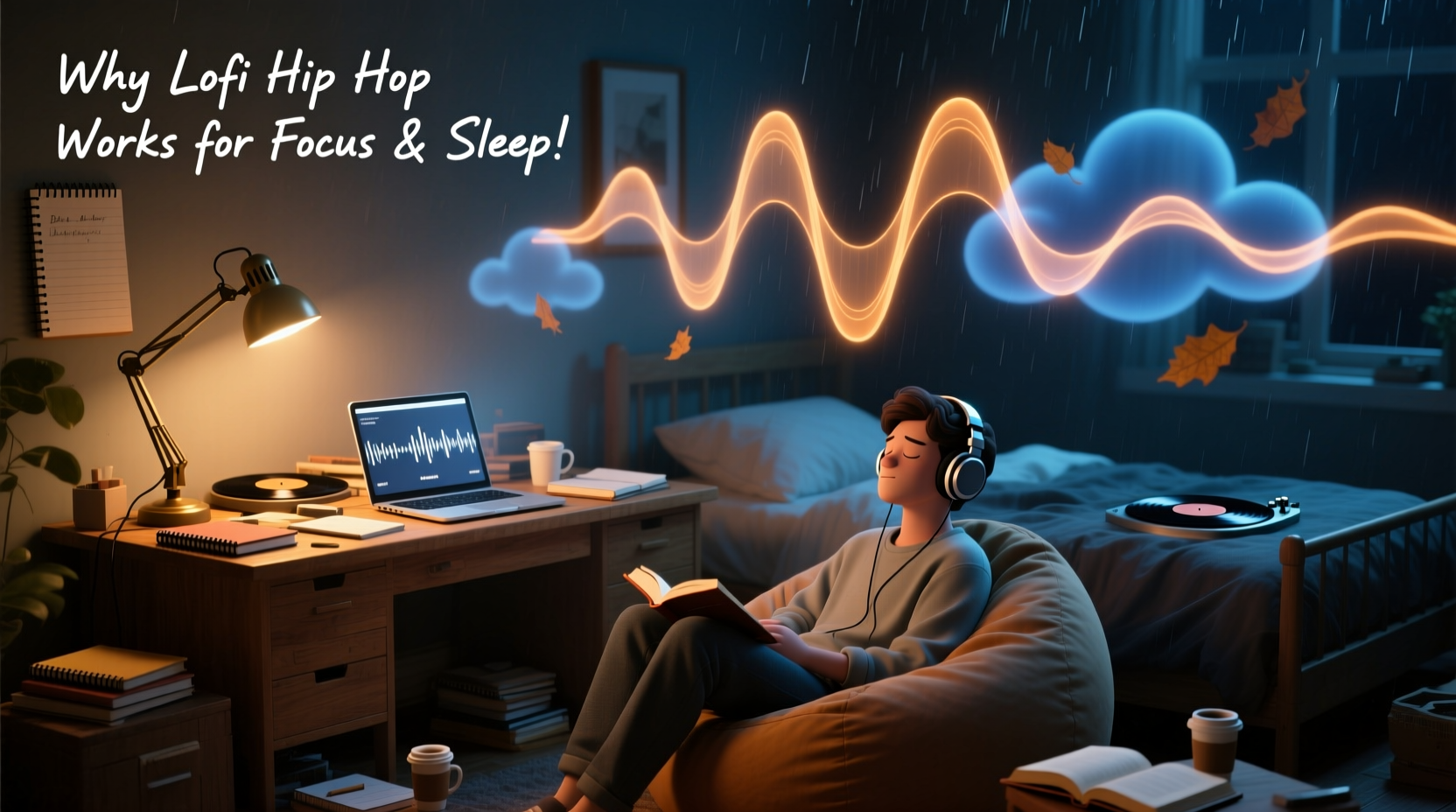
Human brains are wired to respond to sound. Certain frequencies and rhythms can influence brainwave activity, directly affecting alertness, relaxation, and concentration. Lofi hip hop operates within a “Goldilocks zone” of auditory stimulation—present enough to mask distractions, but not so complex that it demands attention.
Studies in cognitive psychology show that background music with lyrics can interfere with language processing, especially during reading or writing tasks. This phenomenon, known as the irrelevant speech effect, explains why pop songs or podcasts often disrupt concentration. Lofi hip hop typically avoids vocals or uses only fragmented, non-lyrical vocal samples, sidestepping this interference while still offering rhythmic structure.
Instead, it relies on repetitive 80–100 BPM (beats per minute) drum loops. This tempo range aligns closely with the human resting heart rate and naturally induces a calm yet alert state—ideal for sustained focus. Research from the University of Helsinki found that predictable musical patterns reduce cognitive load, allowing the brain to enter a flow state more easily.
“Music without demanding elements gives the mind space to process information without distraction. Lofi hip hop fits this perfectly.” — Dr. Elena Torres, Cognitive Neuroscientist, Aalto University
How Lofi Triggers Relaxation and Sleep Readiness
Sleep onset requires a drop in physiological arousal: slower breathing, lowered heart rate, and reduced mental chatter. Lofi hip hop supports this transition through several key features:
- Consistent rhythm: Steady, unchanging beats act as an auditory anchor, helping regulate breathing and heart rate.
- Low-frequency dominance: Basslines and kick drums are warm and deep but never jarring, promoting parasympathetic nervous system activation (the body’s rest-and-digest mode).
- Ambient textures: Vinyl static, rain sounds, and distant piano notes create a sense of environmental safety—similar to ASMR or nature recordings.
- No sudden changes: Unlike film scores or electronic dance music, lofi avoids dramatic shifts in volume or tempo that could trigger alertness.
A 2020 study published in *Nature Scientific Reports* found that participants who listened to instrumental, low-tempo music before bed fell asleep 30% faster than those in silence or exposed to ambient TV noise. The predictability of lofi tracks appears to signal the brain that no threats are present, easing the shift into drowsiness.
The Role of Nostalgia and Emotional Neutrality
One of lofi hip hop’s most subtle yet powerful traits is its emotional tone. It doesn’t aim to excite, sadden, or energize. Instead, it evokes a gentle sense of nostalgia—often through sampled jazz records, old anime clips, or field recordings from rainy city streets. This aesthetic creates a psychological “third space”: neither fully stimulating nor dull, but emotionally neutral and safe.
Nostalgia, when mild and abstract, can reduce anxiety. A study from the University of Southampton showed that nostalgic cues lower cortisol levels and increase feelings of social connectedness—even when experienced alone. Lofi hip hop taps into this by pairing familiar sonic textures (like tape hiss or analog warmth) with visual motifs (animated students at desks, cats typing on laptops) that suggest productivity and peaceful solitude.
This emotional backdrop allows listeners to project their own intentions onto the music—whether it’s finishing a report or letting go of the day’s stress—without being pulled into strong emotional arcs like joy or melancholy.
Structural Predictability vs. Sensory Variation
Effective focus music walks a tightrope between monotony and complexity. Too repetitive, and the brain zones out; too dynamic, and attention gets hijacked. Lofi hip hop strikes this balance through a technique called controlled variation.
Tracks typically follow a loop-based structure: a four- to eight-bar instrumental phrase repeats for minutes at a time. However, producers introduce micro-changes—slight filter sweeps, layered percussion, or delayed piano chords—that occur just subtly enough to remain subliminal. These variations prevent habituation (where the brain stops noticing background stimuli) without triggering conscious attention.
This design mirrors the principles of pink noise, a type of sound spectrum that contains equal energy per octave and has been shown to improve memory consolidation and deep sleep. While not identical to pink noise, lofi hip hop shares its balanced frequency distribution, avoiding harsh highs and overwhelming lows.
| Feature | Lofi Hip Hop | Classical Music | Pop Music |
|---|---|---|---|
| Tempo (BPM) | 80–100 | 60–180 (varies widely) | 100–140 |
| Vocals | Rare or fragmented | Often present (in operas, choral works) | Dominant |
| Dynamic Shifts | Minimal | Frequent (crescendos, key changes) | High (chorus hits, drops) |
| Cognitive Load | Low | Moderate to High | High |
| Sleep Suitability | High | Variable | Low |
Real-World Impact: A Student’s Journey
Consider Maya, a third-year computer science student at the University of Toronto. Struggling with ADHD and chronic insomnia, she found traditional study environments overwhelming. Libraries felt too quiet—making her hyper-aware of every rustle—and coffee shops were too chaotic. After a friend shared a “lofi hip hop radio - beats to relax/study to” YouTube stream, she decided to test it during a late-night coding session.
To her surprise, she worked for three uninterrupted hours, completing a project she’d stalled on for days. The next night, she played the same stream at low volume while preparing for bed. She fell asleep within 20 minutes—nearly half her usual time. Over the next month, she integrated lofi into both her study routine and sleep hygiene, tracking her progress in a journal.
Her results: a 40% reduction in perceived mental fatigue, improved task completion rates, and consistent sleep onset under 25 minutes. While not a cure-all, lofi became a reliable tool in her self-regulation toolkit. Her experience reflects thousands of testimonials across Reddit, Discord, and academic forums where users credit lofi with helping them manage anxiety, ADHD, and burnout.
How to Use Lofi Music Effectively: A Step-by-Step Guide
Not all listening habits yield the same results. To maximize the benefits of lofi hip hop for focus or sleep, follow this practical timeline:
- Choose the right context: Use lofi during repetitive or analytical tasks (writing, coding, reading), not creative brainstorming that may benefit from silence or varied stimuli.
- Select playlist length: For focus, opt for long, continuous streams (2+ hours) to avoid interruptions. For sleep, use shorter tracks (15–30 min) with auto-off timers.
- Control volume: Keep it low to moderate—just loud enough to mask background noise but not dominate your awareness.
- Minimize visual distractions: If using video streams, disable autoplay or switch to audio-only platforms like Spotify or dedicated apps.
- Pair with routines: Condition your brain by playing lofi at the same time daily—e.g., every evening at 9 PM for wind-down or during morning work blocks.
- Monitor effectiveness: Track focus duration, error rates, or sleep latency weekly to assess impact.
- Rotate sources occasionally: Prevent auditory fatigue by switching between different producers or subgenres (jazzy lofi, ambient lofi, nature-infused).
Common Mistakes to Avoid
- Playing it too loud: High volume activates the sympathetic nervous system, counteracting relaxation.
- Using lyric-heavy tracks: Even mumbled phrases can engage language centers and break concentration.
- Ignoring personal preference: Not everyone responds to lofi. Some may prefer binaural beats, nature sounds, or silence.
- Leaving it on all night: Continuous playback can fragment REM sleep. Use timers or smart speakers with fade-out functions.
Frequently Asked Questions
Can lofi hip hop help with anxiety?
Yes. Its steady rhythm and lack of lyrical urgency provide a grounding effect, reducing rumination and physiological arousal. Many therapists now recommend it as part of mindfulness or pre-sleep routines.
Is there a difference between lofi beats for study vs. sleep?
Subtly, yes. Study-focused tracks often include sharper snares and slightly higher tempos (90–100 BPM) to maintain alertness. Sleep-oriented versions emphasize softer pads, longer reverb, and tempos below 85 BPM to encourage drowsiness.
Does the visual component matter?
For some, yes. Animated visuals—like a looping scene of a rainy city or a character reading—can enhance immersion and signal to the brain that it’s time to settle. However, for pure focus, audio-only playback reduces screen strain and distraction.
Final Thoughts: Harnessing the Quiet Power of Lofi
Lofi hip hop isn’t magic—it’s a carefully crafted auditory environment designed to support modern cognitive needs. In a world that glorifies speed and stimulation, its power lies in doing less. By removing lyrical demands, minimizing dynamic extremes, and embracing repetition with nuance, it creates space for the mind to breathe, focus, and rest.
Its rise reflects a broader cultural shift toward intentional living—choosing tools that nurture rather than deplete attention. Whether you’re pulling an all-nighter, battling insomnia, or simply seeking a moment of calm, lofi offers a gentle, accessible path to mental clarity.




 浙公网安备
33010002000092号
浙公网安备
33010002000092号 浙B2-20120091-4
Comments
No comments yet. Why don't you start the discussion?