
Louisiana consistently ranks among the poorest states in the United States, with high poverty rates, low median household income, and persistent economic disparities. Despite its rich cultural heritage, abundant natural resources, and strategic location along the Gulf Coast, the state struggles to translate these advantages into broad-based prosperity. Understanding why Louisiana remains economically challenged requires a closer look at historical legacies, structural inequities, policy decisions, and environmental vulnerabilities that continue to shape its economy today.
Historical Roots of Economic Disparity
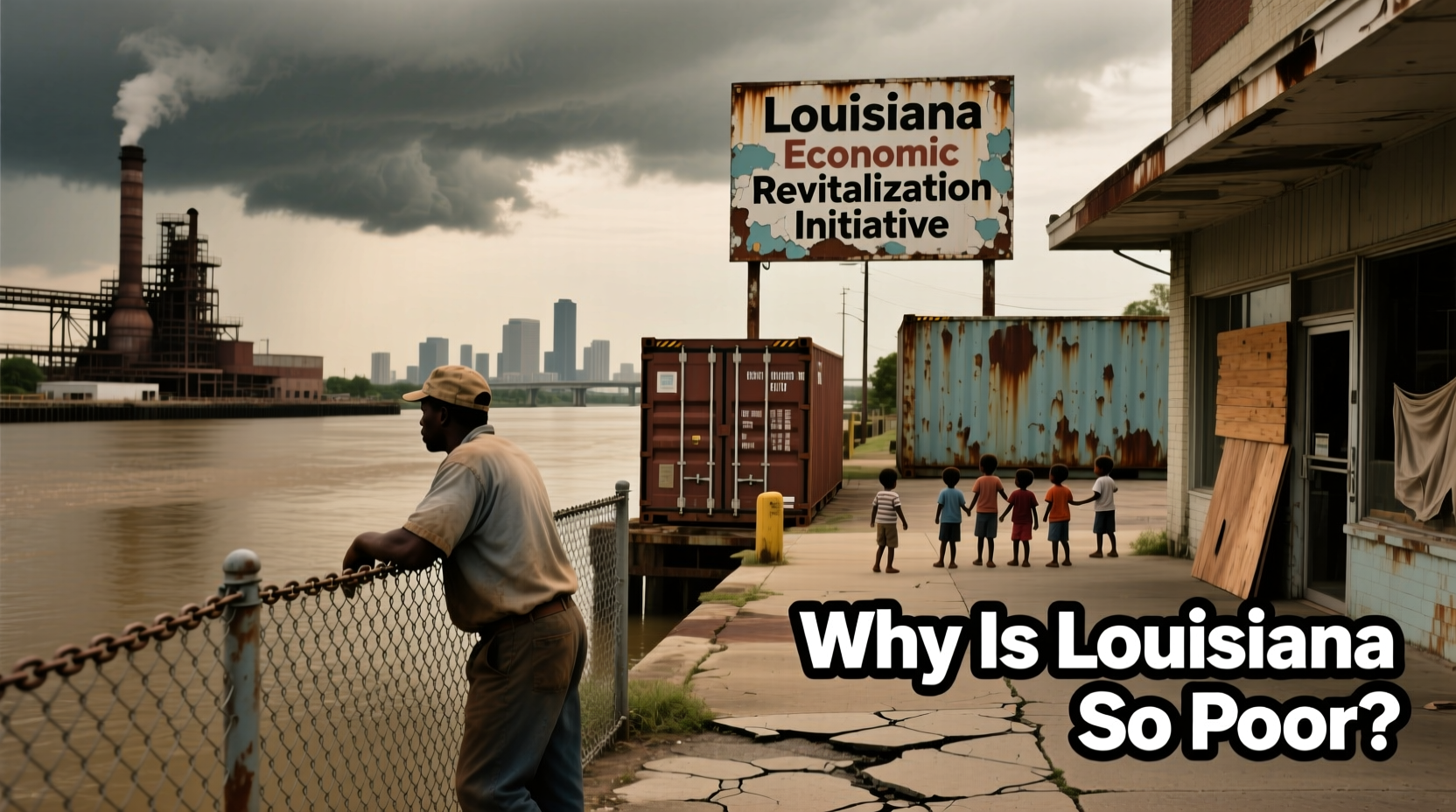
The economic trajectory of Louisiana has been deeply influenced by its colonial past and reliance on extractive industries. As a former French and Spanish colony, the state developed an economy centered around plantation agriculture—primarily sugar, cotton, and later rice—dependent on enslaved labor. After emancipation, sharecropping and tenant farming perpetuated cycles of poverty, particularly among Black communities.
Even as industrialization took hold in the 20th century, Louisiana’s economy remained tied to resource extraction: oil, gas, and petrochemicals. While these industries brought jobs and revenue, they also created a boom-and-bust cycle vulnerable to global market fluctuations. Moreover, wealth generated from these sectors often bypassed local communities, especially rural and minority populations.
The legacy of segregation and underfunded public institutions further entrenched inequality. Schools, healthcare systems, and infrastructure in predominantly Black and low-income areas were historically neglected, limiting upward mobility for generations.
“Louisiana’s poverty isn’t accidental—it’s the result of decades of policy choices that prioritized industry over people, especially marginalized communities.” — Dr. Angela Perkins, Southern Economic Equity Researcher
Structural Barriers to Economic Growth
Several interlocking factors prevent Louisiana from achieving sustained economic development:
- Underperforming education system: Louisiana ranks near the bottom in K–12 education quality. Low literacy rates and high dropout levels limit workforce readiness and deter high-value industries from investing in the state.
- Healthcare access gaps: With one of the highest uninsured rates in the nation, poor health outcomes reduce productivity and increase long-term costs for families and employers.
- Tax structure imbalances: The state relies heavily on regressive sales taxes, placing a disproportionate burden on low-income households while offering generous tax incentives to corporations—a model critics argue subsidizes profit without guaranteeing job creation.
- Corruption and weak governance: Louisiana has a long history of political corruption, which undermines trust in institutions and distorts public spending priorities.
Environmental Vulnerability and Climate Pressures
Louisiana faces unique environmental challenges that directly impact its economy. Coastal erosion, rising sea levels, and increasingly severe hurricanes threaten infrastructure, displace communities, and disrupt livelihoods—especially in fishing, tourism, and shipping sectors.
The state loses approximately a football field of land every 100 minutes due to subsidence, saltwater intrusion, and levee construction disrupting natural sediment flow. This land loss endangers homes, businesses, and critical energy infrastructure located along the coast.
Additionally, many low-income communities reside in flood-prone areas with inadequate insurance or evacuation resources. Repeated disasters create cycles of displacement and financial instability, making it harder for residents to build wealth or invest in their futures.
| Economic Sector | Climate Risk | Poverty Impact |
|---|---|---|
| Fishing & Seafood | Habitat loss, storm damage | Loss of livelihood for thousands |
| Oil & Gas | Refinery shutdowns during storms | Job instability, supply chain delays |
| Tourism (New Orleans, etc.) | Event cancellations, property damage | Seasonal workers lose income |
| Agriculture | Flooding, soil degradation | Reduced yields, higher costs |
Case Study: The Delta Parishes
In northeastern Louisiana’s Delta region—comprising parishes like East Carroll, Tensas, and Madison—poverty rates exceed 30%, far above the national average. Once fertile ground for cotton plantations, this area now suffers from depopulation, failing schools, and minimal broadband access.
Despite federal grants aimed at rural development, investment has been inconsistent. A 2021 initiative to attract light manufacturing collapsed when promised infrastructure upgrades failed to materialize. Local leaders cite bureaucratic delays and lack of coordination between state agencies as major obstacles.
Residents like 54-year-old Marlon Davis, a former sugarcane worker turned part-time mechanic, describe a sense of abandonment. “There’s no factory work anymore,” he says. “You either leave or survive on odd jobs and food stamps.” His daughter recently moved to Texas for nursing school, joining a growing trend of youth outmigration that further drains the local economy.
Policy Challenges and Missed Opportunities
Louisiana’s approach to economic development has long emphasized tax breaks for large corporations, particularly in the energy sector. The state spends over $1 billion annually on such incentives—more than any other Southern state—yet rankings in job quality and wage growth remain low.
Critics argue that these subsidies could be better spent on education, workforce training, or small business support. For example, expanding community college programs in advanced manufacturing or renewable energy could prepare Louisianans for emerging industries rather than relying solely on volatile fossil fuel markets.
Moreover, Medicaid expansion in 2016 improved healthcare access for over 400,000 residents, demonstrating how policy change can yield tangible benefits. However, similar bold reforms in education funding and criminal justice—key factors in economic inclusion—have stalled due to political resistance.
Actionable Steps Toward Economic Resilience
To address systemic poverty, Louisiana must adopt a multi-pronged strategy focused on equity, sustainability, and long-term planning. Here’s a checklist for policymakers and community leaders:
- Reform the tax code to reduce reliance on regressive sales taxes and close corporate loopholes.
- Invest in universal early childhood education and teacher retention programs.
- Expand broadband access in rural parishes to enable remote work and digital entrepreneurship.
- Redirect a portion of energy subsidies toward green job training and coastal restoration projects.
- Strengthen local governance through transparency initiatives and anti-corruption oversight.
- Promote inclusive economic development zones that prioritize minority-owned businesses.
Frequently Asked Questions
Is Louisiana really one of the poorest states?
Yes. According to U.S. Census data, Louisiana consistently ranks in the bottom five states for median household income and has a poverty rate above 18%, significantly higher than the national average of around 12.6%.
Does oil money help reduce poverty in Louisiana?
Not as much as expected. While oil and gas contribute to state revenues, the benefits are unevenly distributed. Many jobs in the sector require specialized skills, and profits often flow to out-of-state companies. Local communities bear environmental costs without proportional economic gains.
Can tourism offset Louisiana’s economic challenges?
Tourism generates billions annually, especially in New Orleans, but it largely supports low-wage service jobs with limited benefits. It cannot replace the need for diversified, high-quality employment across the state.
Conclusion: Building a More Equitable Future
Louisiana’s poverty is not inevitable. It is the outcome of historical patterns, policy trade-offs, and environmental pressures that can—and must—be addressed. By shifting focus from short-term corporate incentives to long-term human capital development, the state can begin closing the gap between its immense potential and current reality.
Real progress will require accountability, innovation, and community-driven solutions. Whether through education reform, climate adaptation, or equitable investment, the path forward demands courage and collaboration. The culture, resilience, and spirit of Louisiana’s people are undeniable strengths. Now is the time to ensure those strengths are matched by economic opportunity for all.




 浙公网安备
33010002000092号
浙公网安备
33010002000092号 浙B2-20120091-4
Comments
No comments yet. Why don't you start the discussion?