
In recent years, many Americans have noticed a troubling trend: their mail is arriving later than expected. Whether it’s a birthday card, an important bill, or a small business shipment, the once-reliable speed of the U.S. Postal Service (USPS) has declined for millions of recipients. What was once a predictable system now feels inconsistent, with delays stretching from days to weeks. This shift has sparked widespread concern among consumers, businesses, and policymakers alike. The reasons behind these slowdowns are complex, rooted in systemic changes, policy decisions, and evolving consumer habits.
The Shift in Delivery Standards
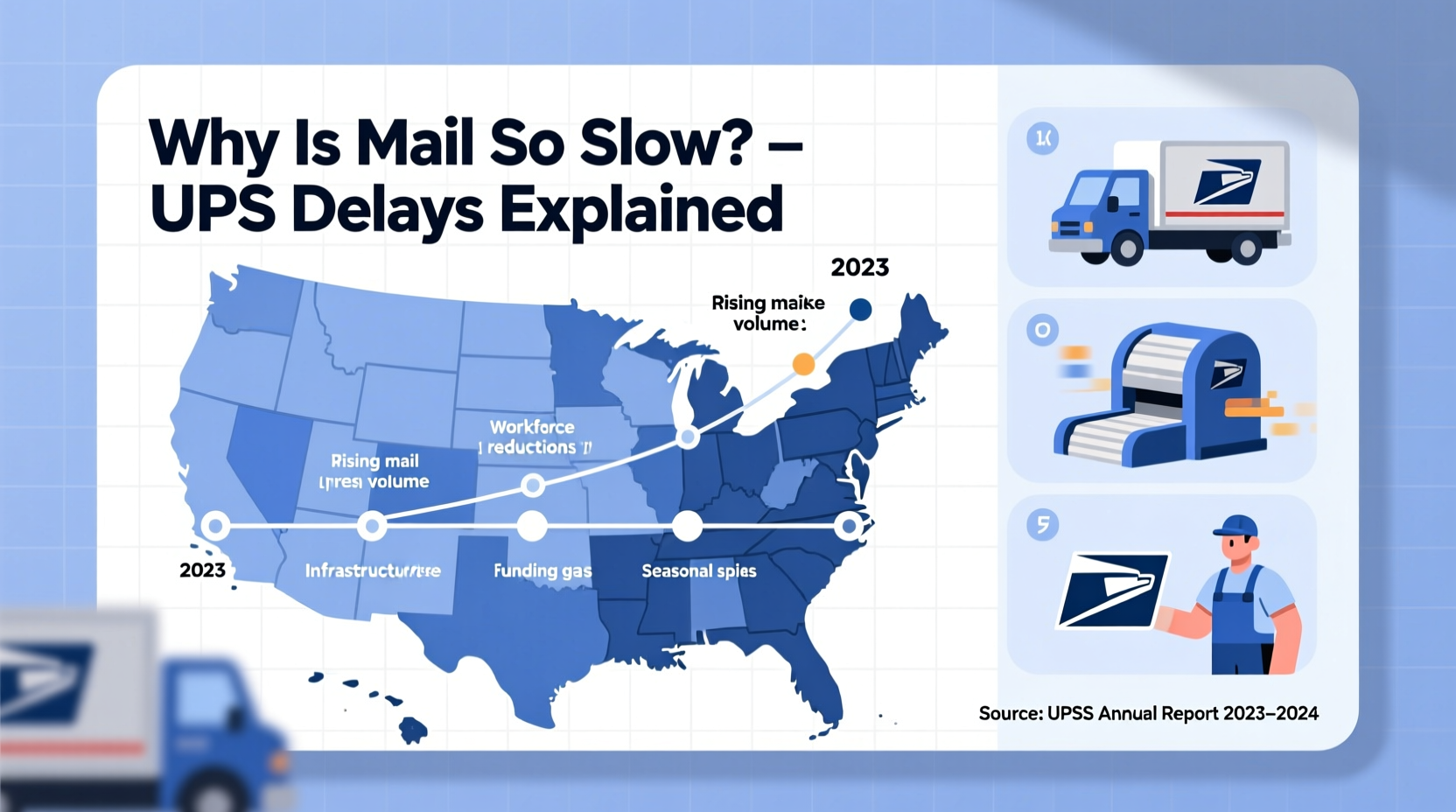
One of the most significant factors contributing to slower mail delivery is the change in USPS's official \"delivery standards.\" In 2021, under Postmaster General Louis DeJoy, the Postal Service implemented a nationwide restructuring that altered how quickly mail should be delivered. Previously, first-class mail was expected to arrive within one to three days across most of the country. Today, that standard has been extended in many areas to two to five days — effectively adding up to two extra days of transit time.
This change wasn’t accompanied by widespread public notification, leading many customers to believe their mail was being delayed due to inefficiency when, in fact, the service had simply redefined what \"on time\" means. According to USPS internal documents, the goal was to improve long-term sustainability by consolidating sorting operations and reducing transportation costs.
“Adjusting service standards allows USPS to balance network efficiency with customer expectations while managing financial challenges.” — USPS Office of Inspector General Report, 2022
Network Consolidation and Processing Delays
A key component of the USPS modernization plan involved consolidating mail processing facilities. Over 100 processing centers were either closed or merged into larger regional hubs. While this move aimed to cut operational costs, it also meant that letters and packages now travel farther before being sorted and dispatched.
For example, a letter mailed in rural Vermont might previously have been processed at a nearby facility in Albany, New York. Now, it may be routed hundreds of miles south to a centralized hub in Baltimore before being sent back north for final delivery. This detour adds both time and complexity to the delivery chain.
Rising Package Volume and Infrastructure Strain
The explosion of e-commerce has dramatically increased the volume of packages handled by USPS. During peak seasons like holidays, the Postal Service processes over 1 billion packages annually — more than double the volume from a decade ago. While this growth brings revenue, it also strains infrastructure designed primarily for letter mail.
Sorting machines, trucks, and delivery routes optimized for flat envelopes struggle to keep pace with bulky boxes. Many local post offices lack adequate space for package storage, leading to overflow and handling bottlenecks. Additionally, seasonal hiring often fails to fully compensate for the surge, leaving permanent staff overburdened.
| Metric | 2013 | 2023 | Change |
|---|---|---|---|
| Annual Packages Handled | 3.5 billion | 1.1 billion (peak season alone) | +214% |
| First-Class Mail Volume | 76 billion pieces | 52 billion pieces | -32% |
| Delivery Standard (Avg. Days) | 1–3 days | 2–5 days | +1–2 days |
Policy Changes and Political Context
The slowdowns cannot be fully understood without examining the leadership and policy shifts within USPS. Postmaster General Louis DeJoy, appointed in 2020, introduced a 10-year transformation plan called “Delivering for America.” The plan includes cost-cutting measures such as reducing overnight transportation, limiting late trips by delivery vehicles, and optimizing delivery routes based on density rather than proximity.
Critics argue these changes prioritize budget savings over service quality. In 2021, Congress held hearings after reports surfaced of mail being left behind at distribution centers due to new scheduling rules. While some adjustments were made following public pressure, the underlying structural changes remain.
Moreover, USPS operates without taxpayer funding and relies heavily on postage sales and congressional reforms to remain solvent. Its financial instability — with over $200 billion in unfunded liabilities — limits investment in modern equipment and digital tracking systems used by private carriers.
Real-World Impact: A Small Business Case Study
Consider Sarah Lin, who runs a handmade greeting card business from her home in Boise, Idaho. She ships about 300 orders per month via USPS First-Class Mail, relying on the previous 2–3 day delivery window to meet customer expectations.
In early 2023, she began receiving complaints: orders were taking 6–8 days to arrive, even within the same state. Customers assumed she shipped late; some left negative reviews. After investigating, Sarah discovered that her local post office now sends all outgoing mail to a central facility in Salt Lake City for sorting — adding two full days to transit time.
To adapt, Sarah switched to USPS Ground Advantage for heavier orders and started including a note explaining potential delays. She also raised shipping prices slightly to absorb the cost of faster options. Her experience reflects a broader challenge facing small businesses dependent on affordable, reliable postal service.
Actionable Steps to Minimize Mail Delays
While systemic issues persist, there are practical steps individuals and businesses can take to reduce the impact of slow mail.
- Use Tracking Services: Always opt for tracked mailing options, even for letters. This provides visibility and proof of delivery.
- Ship Early: Anticipate longer transit times. Send holiday cards by mid-December and critical documents at least a week in advance.
- Choose Alternative Carriers: For urgent or high-value shipments, consider UPS or FedEx, especially if delivery confirmation is essential.
- Verify Addresses: Use USPS’s free address validation tool to prevent misrouting due to incorrect formatting.
- Communicate Proactively: If sending invitations or invoices, inform recipients they may arrive later than usual.
Checklist: How to Protect Against Mail Delays
- ☑️ Confirm current delivery standards for your ZIP code
- ☑️ Use USPS Ground Advantage for lightweight packages
- ☑️ Avoid dropping off packages at collection boxes during peak weeks
- ☑️ Request signature confirmation for valuable items
- ☑️ Monitor mail performance via USPS Service Performance dashboards
Frequently Asked Questions
Is USPS getting better or worse?
Performance fluctuates. While some metrics improved in 2023 due to operational refinements, overall first-class mail delivery remains slower than pre-2020 levels. Long-term improvement depends on funding, modernization, and policy stability.
Are political decisions really affecting my mailbox?
Indirectly, yes. Leadership appointments, funding restrictions, and legislative gridlock influence USPS’s ability to upgrade technology, maintain workforce levels, and respond to market changes. Unlike private carriers, USPS must follow federal regulations that limit pricing and service flexibility.
Will my mail ever be fast again?
Possible, but not guaranteed. The “Delivering for America” plan aims to stabilize finances by 2026, after which service improvements may follow. However, unless Congress passes reform allowing greater autonomy, USPS will continue balancing cost and speed under tight constraints.
Conclusion: Adapting to a New Postal Reality
The slowdown in U.S. mail delivery reflects deeper structural challenges — from outdated infrastructure to shifting consumer demands and constrained finances. While frustration is understandable, understanding the causes empowers users to adapt. By adjusting expectations, using available tools, and planning ahead, individuals and businesses can navigate the current landscape more effectively.
The future of American mail depends not just on USPS leadership, but on public awareness and advocacy. As digital communication grows, physical mail remains vital for equity, access, and commerce. Supporting sustainable reform ensures that the postal service continues to serve every American, reliably and affordably.




 浙公网安备
33010002000092号
浙公网安备
33010002000092号 浙B2-20120091-4
Comments
No comments yet. Why don't you start the discussion?