
The red glow of Mars has captivated skywatchers for millennia. Long before telescopes revealed its polar ice caps or rovers trawled its dusty terrain, ancient civilizations looked up and saw a wandering star with a distinct hue—rusty, fiery, unmistakable. That celestial wanderer earned a name steeped in war, power, and myth: Mars. But why exactly is this planet called Mars? The answer stretches across time, culture, and language, weaving together astronomy, religion, and human imagination.
Mars wasn’t discovered in the modern sense—it was observed, tracked, and interpreted by early astronomers who lacked our tools but not our curiosity. Its name reflects how humanity has historically projected meaning onto the cosmos, especially when faced with phenomena they couldn’t yet explain. To understand why Mars bears its name, we must journey back to the roots of Western civilization and explore the myths that shaped our view of the heavens.
The Roman God of War: Origin of the Name
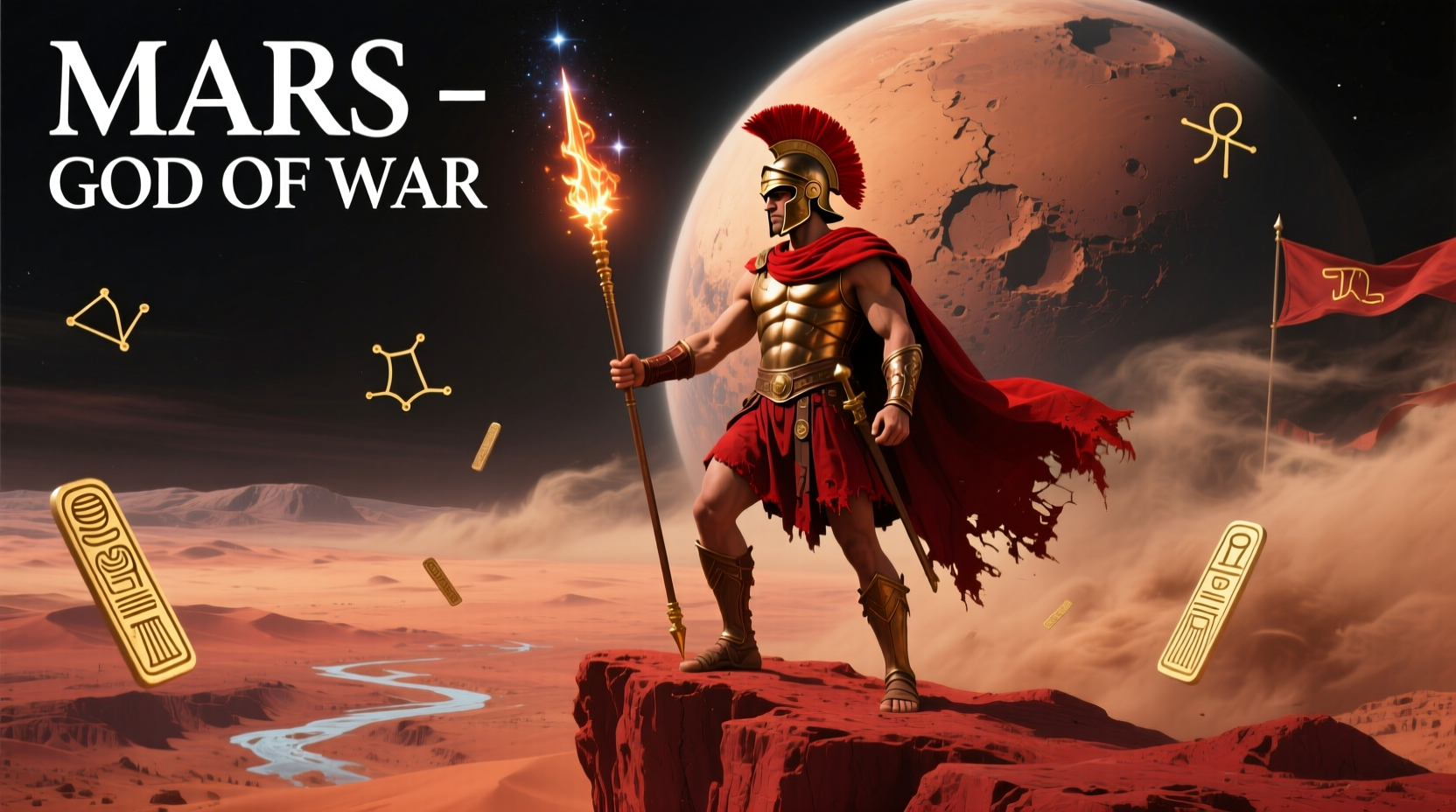
The planet Mars takes its name from the Roman god of war, Mars—a central figure in Roman mythology and religion. Revered as a father of the Roman people through his legendary sons Romulus and Remus, Mars was more than just a deity of battle; he symbolized agricultural vitality, virility, and the protection of Rome. Unlike the Greek Ares, who was often portrayed as volatile and destructive, the Roman Mars was respected as a disciplined and strategic warrior—worthy of temples, festivals, and state worship.
Astronomers in antiquity noticed that among the five visible planets (Mercury, Venus, Mars, Jupiter, and Saturn), Mars stood out. Its reddish tint resembled blood, evoking imagery of conflict and violence. This visual association made naming it after the god of war a natural choice. The Romans inherited much of their astronomical framework from the Greeks, who called the planet *Ares*, but they Latinized the name to *Mars*—a shift that endured through centuries of scientific development.
“Naming planets after gods was not superstition—it was a way of mapping the unknown through the familiar.” — Dr. Elena Torres, Historian of Ancient Astronomy
Linguistic and Cultural Evolution of the Name
The word “Mars” itself comes from Proto-Italic *Mavors*, which may derive from an older Indo-European root linked to masculinity and strength. Over time, “Mars” became embedded not only in religious practice but also in language and timekeeping. The month of March (*Martius* in Latin) was originally the first month of the Roman calendar and dedicated to Mars, marking the beginning of the military campaign season and springtime renewal.
This connection between Mars, war, and seasonal change illustrates how deeply planetary names were tied to lived experience. The planet’s appearance in the night sky—sometimes bright and close, other times faint and distant—was interpreted as omens or divine messages. Babylonian, Egyptian, and Hindu traditions also associated the red planet with aggression or destruction, though under different names:
| Culture | Name for Mars | Meaning/Association |
|---|---|---|
| Roman | Mars | God of war, agriculture, and father of Rome |
| Greek | Ares | God of war, chaos, and violence |
| Babylonian | Nergal | God of plague, fire, and the underworld |
| Hindu | Mangala | Planet associated with energy, action, and the color red |
| Chinese | Huǒxīng | \"Fire Star,\" based on elemental theory |
Despite linguistic differences, the recurring theme is clear: Mars, by virtue of its color and erratic motion, was universally linked to fire, blood, and conflict.
From Myth to Science: How Mars Got Its Modern Identity
As astronomy evolved from astrology into a scientific discipline, the mythological names remained—even as their meanings shifted. During the Renaissance, scholars like Johannes Kepler and Galileo Galilei began observing Mars through telescopes, noting its phases and surface features. By the 19th century, astronomers such as Giovanni Schiaparelli mapped what they believed were “canali” (channels) on Mars, sparking speculation about intelligent life.
Yet through all these discoveries, the name Mars persisted. When the International Astronomical Union (IAU) standardized planetary nomenclature in the 20th century, it retained classical names for consistency and tradition. Today, even missions launched by NASA, ESA, and CNSA refer to the planet as Mars—proving that ancient mythology still shapes how we speak about space exploration.
Why Mars Still Captures the Human Imagination
The legacy of Mars extends far beyond etymology. It occupies a unique place in both science and popular culture. From H.G. Wells’ *The War of the Worlds* to modern films like *The Martian*, Mars symbolizes humanity’s ambition, fear, and hope. It’s the most Earth-like planet in our solar system—similar in day length, seasonal cycles, and geological history—making it the prime candidate for future colonization.
Interestingly, the mythological connotations of Mars haven’t faded—they’ve transformed. Where once it represented war and destruction, today it stands for exploration, resilience, and the next frontier. SpaceX’s Mars ambitions, NASA’s Perseverance rover, and international plans for crewed missions all echo the spirit of conquest—but now directed toward knowledge and survival rather than battle.
Mini Case Study: The Naming of Rovers
In 2003, NASA launched twin rovers to Mars. One was named Spirit, the other Opportunity. While not directly referencing the god Mars, their names reflect aspirational values—perseverance, curiosity, discovery. Later missions followed suit: Curiosity (2011), Perseverance (2020). These names subtly reframe Mars not as a domain of war, but of human endeavor. Yet the underlying link remains: just as the god Mars embodied strength in adversity, so too do these robotic explorers embody resilience in one of the harshest environments known.
Step-by-Step: How Ancient Observers Identified and Named Mars
- Observe planetary motion: Early stargazers noticed that unlike fixed stars, certain lights moved unpredictably across the sky—these were planets (“wanderers” in Greek).
- Note distinctive color: Among the five visible planets, Mars appeared distinctly red, especially during opposition (when closest to Earth).
- Associate with known deities: Given its color and erratic path, it was linked to gods of war and destruction in multiple cultures.
- Assign symbolic meaning: In Rome, it became Mars; in Greece, Ares; in Babylon, Nergal—each carrying cultural interpretations of power and danger.
- Incorporate into calendars and omens: The planet’s position was used in astrological predictions and agricultural planning.
- Preserve through language: Latin terms were adopted by medieval and Renaissance astronomers, eventually becoming standard in scientific use.
Frequently Asked Questions
Did the Romans discover Mars?
No, the Romans did not discover Mars. It has been visible to the naked eye since prehistoric times and was observed by many ancient cultures, including the Babylonians, Egyptians, and Chinese. The Romans gave it the name we use today, derived from their god of war.
Is Mars always red in the sky?
To the naked eye, Mars typically appears as a reddish-orange point of light due to iron oxide (rust) on its surface. Its brightness varies depending on its distance from Earth, appearing brightest roughly every 26 months during opposition.
Why didn’t scientists rename Mars when they learned it wasn’t a god?
Scientific communities retained traditional names for continuity and historical respect. Changing established names would create confusion in literature, navigation, and education. Mythological names are now seen as cultural heritage rather than literal belief.
Checklist: Understanding Planetary Names in Our Solar System
- Identify the planet’s visible characteristics (color, brightness, movement)
- Research its name in Roman and Greek mythology
- Compare naming conventions across cultures (e.g., Chinese, Hindu, Mesopotamian)
- Trace how the name evolved into modern scientific usage
- Explore how mythology still influences space mission naming (e.g., Apollo, Artemis)
Conclusion: A Name That Endures Across Eras
The name Mars is more than a label—it’s a bridge between ancient belief and modern science. Born from myth, shaped by observation, and preserved through language, it reminds us that humanity’s relationship with the cosmos is deeply narrative. We don’t just study planets; we tell stories about them.
Today, as we send robots to drill into Martian soil and plan for human footprints on its dunes, the name Mars carries forward a legacy of courage, conquest, and curiosity. Whether viewed as a god, an omen, or a destination, Mars continues to challenge and inspire. And perhaps, in naming it after a warrior, the ancients unknowingly honored the very spirit needed to reach it.




 浙公网安备
33010002000092号
浙公网安备
33010002000092号 浙B2-20120091-4
Comments
No comments yet. Why don't you start the discussion?