
Matcha has become a global sensation—prized for its vibrant green hue, earthy sweetness, and potential health benefits. Yet many new drinkers are surprised by its price tag, especially when comparing different grades. A tin of ceremonial-grade matcha can cost three or four times more than a bag labeled “culinary.” The reasons go far beyond branding. From labor-intensive farming practices to precise processing methods, the cost of matcha reflects its quality, origin, and intended use. Understanding the distinctions between grades not only explains the price gap but also helps consumers make informed choices that align with their taste and wellness goals.
The Labor Behind the Luxury: Why Matcha Costs More Than Regular Green Tea
Unlike most teas where leaves are steeped and discarded, matcha is made from ground whole tea leaves, meaning you consume 100% of the leaf. This concentration amplifies both flavor and nutritional content—but also increases production complexity.
High-quality matcha begins weeks before harvest. About 20–30 days prior, tea farmers shade the Camellia sinensis plants using bamboo mats or black polyester covers. This shading process reduces sunlight exposure, which triggers the plant to produce more chlorophyll and L-theanine—an amino acid responsible for matcha’s signature umami flavor and calming effects. The result is a deeper green leaf with enhanced sweetness and reduced bitterness.
After harvesting, only the youngest, tenderest leaves are selected. These are steamed to halt oxidation, then dried and sorted. What remains is called *tencha*—the unground precursor to matcha. Tencha is then stone-ground into an ultra-fine powder using traditional granite mills, a slow process that produces about 1–2 grams per minute. This meticulous method prevents heat buildup, preserving the delicate compounds that define premium matcha.
“Shading, hand-selection, and slow stone grinding aren’t just tradition—they’re essential to achieving the balance of umami, aroma, and color that defines true ceremonial matcha.” — Dr. Haruto Yamada, Japanese Tea Scientist, Shizuoka University
Ceremonial vs. Culinary Grade: Origins, Appearance, and Purpose
The distinction between ceremonial and culinary matcha isn’t arbitrary—it reflects fundamental differences in leaf selection, processing, and intended use. While both come from the same plant, their journey diverges early in production.
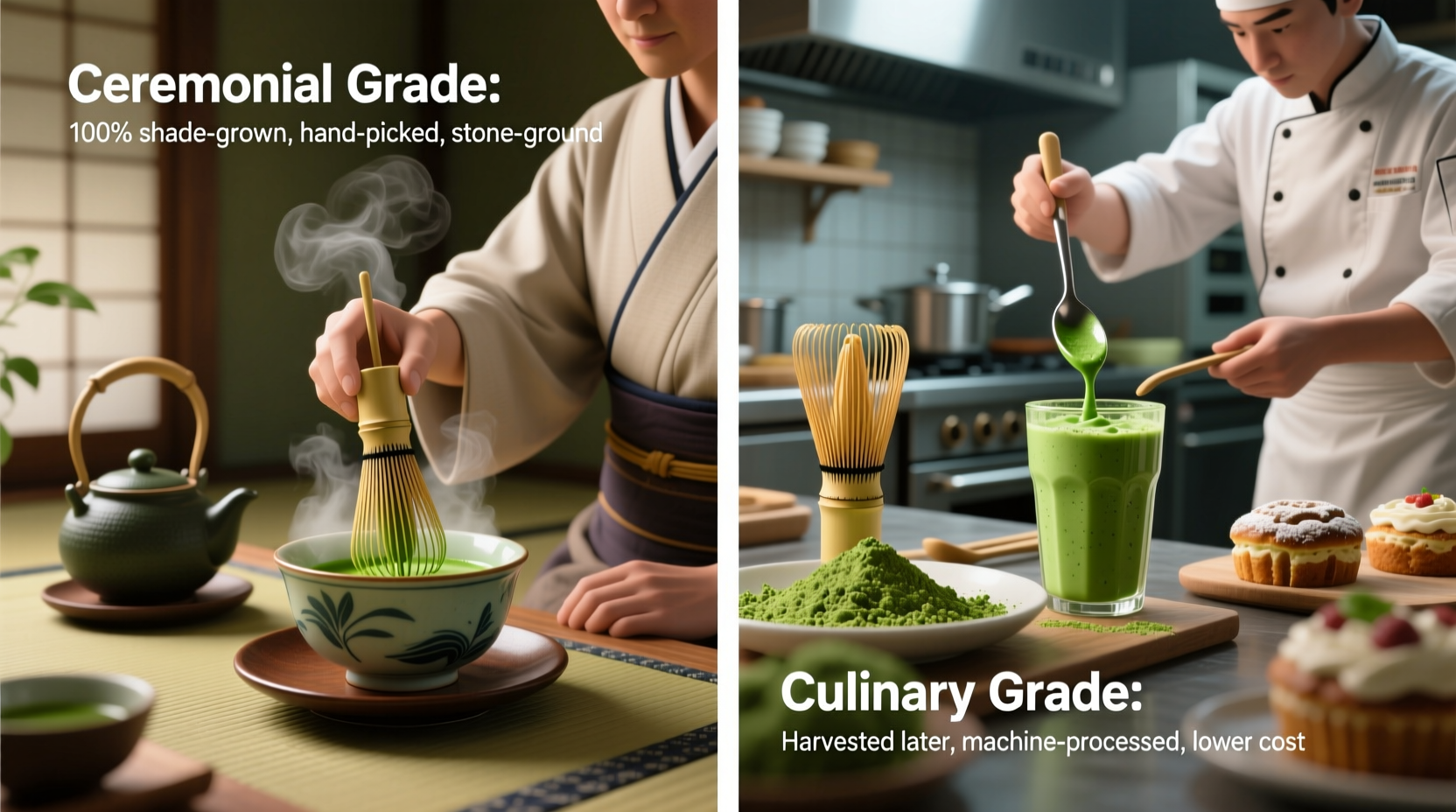
Ceremonial grade is made from the first harvest (known as *ichiban-cha*), typically picked in spring. These leaves grow at the top of the plant, receiving the most nutrients and benefiting fully from the shading process. They are soft, vibrant, and rich in umami. After processing, ceremonial matcha yields a fine powder with a bright emerald green color and a smooth, slightly sweet taste with minimal astringency. It’s designed to be whisked with hot water and enjoyed on its own, as in traditional Japanese tea ceremonies.
Culinary grade, on the other hand, often uses leaves from later harvests (*niban-cha* or third flush) or lower on the plant. These leaves are more mature, exposed to more sunlight, and naturally more bitter. While still shaded, the duration may be shorter, resulting in less chlorophyll and L-theanine. The powder tends to be duller green and coarser in texture. Its robust flavor holds up well when mixed with milk, sugar, or baked goods, making it ideal for lattes, smoothies, and desserts.
Key Differences at a Glance
| Feature | Ceremonial Grade | Culinary Grade |
|---|---|---|
| Harvest Time | First flush (spring) | Second or third flush |
| Leaf Position | Top young leaves | Mature lower leaves |
| Shading Duration | 20–30 days | 10–20 days |
| Color | Bright emerald green | Dull or yellowish green |
| Taste Profile | Sweet, umami-rich, smooth | Bitter, grassy, robust |
| Texture | Ultra-fine, silky | Coarser, may feel grainy |
| Best Use | Whisked with water | Cooking, baking, blending |
| Price Range (per 30g) | $15–$40+ | $5–$15 |
What Drives the Price Difference?
The cost disparity between grades stems from several interrelated factors:
- Yield Limitations: Only a small portion of the tea plant qualifies for ceremonial grade. Farmers may discard up to 70% of harvested leaves during sorting.
- Seasonality: First-flush leaves are available only once a year, creating scarcity and driving demand.
- Processing Precision: Stone-grinding is time-consuming and requires skilled oversight. Mass-produced matcha may use steel ball mills, which generate heat and degrade quality.
- Origin Authenticity: True high-grade matcha comes primarily from Uji, Nishio, or Kagoshima in Japan. Imitations from China or Vietnam—often labeled as “matcha” but made from inferior leaves or dyed powders—are cheaper but lack depth and safety standards.
- Packaging & Freshness: Premium brands vacuum-seal matcha in opaque tins to preserve freshness. Since matcha oxidizes quickly, shelf life is short (ideally consumed within 6–8 weeks of opening).
Importantly, certification plays a role. Look for labels like JAS (Japanese Agricultural Standard) or third-party lab testing for heavy metals and pesticides, especially with budget options. Contaminated or adulterated products may be cheap but pose health risks.
How to Choose the Right Matcha for Your Needs
Selecting matcha shouldn’t be about chasing the highest price—it should align with how you plan to use it.
- For Traditional Preparation: If you want to prepare matcha the Japanese way—whisked with hot water in a bowl—ceremonial grade is essential. Its delicate flavor shines without additives.
- For Lattes and Smoothies: Culinary grade performs better here. Its stronger taste cuts through milk and sweeteners, and the lower cost makes daily use economical.
- For Baking and Desserts: Use culinary matcha in cookies, cakes, or ice cream. Heat alters matcha’s flavor, so there’s no benefit to using ceremonial grade in high-temperature applications.
- For Health Benefits: Ceremonial grade offers higher concentrations of antioxidants, L-theanine, and chlorophyll due to superior leaf quality and processing.
Mini Case Study: A Café’s Switch to Dual-Grade Sourcing
A specialty café in Portland initially used ceremonial-grade matcha for all drinks, believing it would impress customers. However, baristas noticed the subtle notes were lost in lattes loaded with oat milk and vanilla syrup. Meanwhile, the high cost ($35 per 30g) made beverages prohibitively expensive. After consulting a tea educator, the owner began sourcing separate grades: ceremonial for solo servings and tasting flights, culinary for blended drinks. Customer satisfaction rose—the pure matcha experience was respected, and latte prices dropped by $1.50 per serving. Waste decreased, profits improved, and the café gained a reputation for authenticity.
Expert Tips for Maximizing Value and Quality
You don’t need to spend $40 per tin to enjoy good matcha, but smart habits ensure you get what you pay for.
“Even mid-tier ceremonial matcha from reputable farms can outperform flashy branded versions. Know your source, not just the label.” — Rina Sato, Tokyo-based Tea Sommelier
Checklist: How to Buy High-Quality Matcha
- ✅ Check the origin: Should be Japan (preferably Uji, Nishio, or Kagoshima)
- ✅ Verify the ingredient list: Only “matcha” or “green tea powder”
- ✅ Observe the color: Bright green—not brown or yellow
- ✅ Smell the powder: Fresh, grassy, slightly sweet—not musty or stale
- ✅ Ask about harvest date: Fresher is better; avoid products without dates
- ✅ Confirm packaging: Opaque, resealable, ideally nitrogen-flushed
Step-by-Step Guide to Preparing Ceremonial Matcha
- Sieve 1–2 teaspoons of matcha into a bowl to break clumps.
- Add 70–80ml (about ¼ cup) of hot water (160–175°F / 70–80°C).
- Hold a bamboo whisk (chasen) between palms and rotate rapidly in a zig-zag motion for 15–20 seconds until frothy.
- Sip immediately to enjoy peak aroma and texture.
This method highlights the tea’s nuances. Culinary matcha, when used alone, will taste harsh and astringent—proof that not all matcha is meant for this ritual.
Frequently Asked Questions
Can I use culinary matcha for drinking straight?
Technically yes, but it’s not recommended. Culinary matcha is more bitter and lacks the refined sweetness of ceremonial grade. When whisked with water alone, its flaws become pronounced. Save it for recipes where other flavors balance it.
Is expensive matcha worth it?
It depends on your purpose. For daily lattes, a good culinary grade offers excellent value. For mindfulness, ceremony, or health-focused consumption, investing in ceremonial matcha delivers superior flavor, aroma, and nutrient density. Think of it like olive oil—extra virgin for drizzling, regular for cooking.
Why does some matcha taste fishy or seaweed-like?
An oceanic note can indicate high umami, which is desirable in moderation. But a strong fishy smell usually signals poor storage or oxidation. Matcha should smell fresh and vegetal, like spinach or fresh-cut grass. Store it properly and use it within two months of opening.
Final Thoughts: Respecting the Craft, One Sip at a Time
Matcha’s price reflects centuries of refinement, seasonal discipline, and agricultural precision. Ceremonial and culinary grades serve different roles—one invites contemplation, the other enables creativity. Recognizing this distinction empowers you to choose wisely, avoid waste, and truly appreciate what’s in your cup.
The next time you see a steep price tag, remember it’s not just about marketing. It’s about shaded fields in Kyoto, slow stone mills turning tencha into silk-like powder, and a culture that treats tea as art. Whether you’re sipping ceremonial matcha in silence or blending culinary grade into a post-workout smoothie, you’re participating in a tradition that values quality over convenience.




 浙公网安备
33010002000092号
浙公网安备
33010002000092号 浙B2-20120091-4
Comments
No comments yet. Why don't you start the discussion?