
Martin Luther King Jr. Day is a federal holiday in the United States that honors one of the most influential civil rights leaders in American history. Observed annually on the third Monday of January, the date carries both symbolic weight and practical legislative reasoning. While many recognize the holiday as a day off work or school, fewer understand the complex journey that led to its establishment—and why it falls on a shifting Monday rather than Dr. King’s actual birthday, January 15. This article explores the historical context, political struggle, and cultural impact behind the timing and recognition of MLK Day.
The Origins of the Holiday Movement
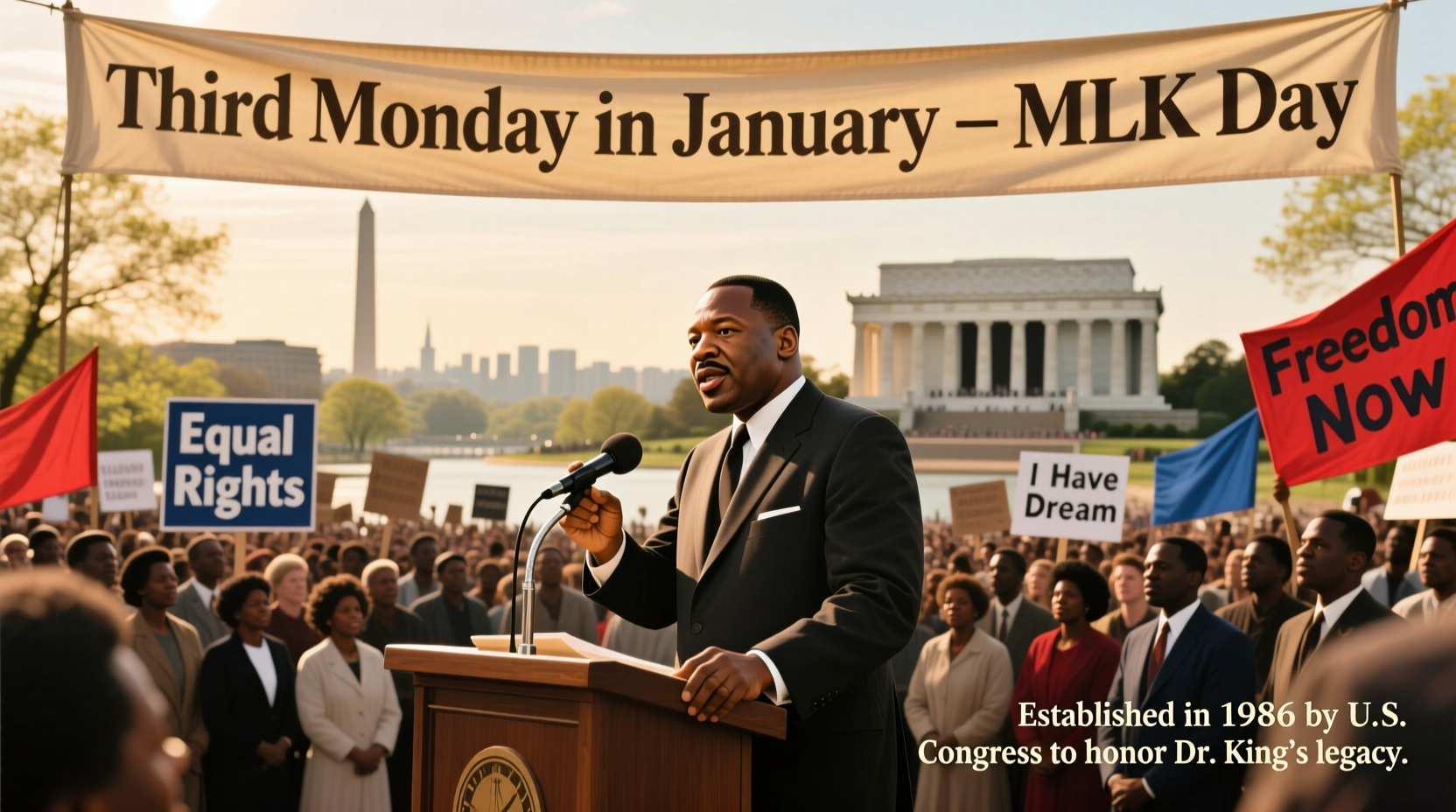
Dr. Martin Luther King Jr. was born on January 15, 1929, in Atlanta, Georgia. As a Baptist minister and civil rights activist, he played a pivotal role in ending legal segregation and advancing voting rights through nonviolent protest. His leadership in events such as the Montgomery Bus Boycott, the Birmingham Campaign, and the 1963 March on Washington—where he delivered his iconic “I Have a Dream” speech—cemented his place in American history.
Following his assassination on April 4, 1968, in Memphis, Tennessee, calls for a national holiday in his honor began almost immediately. Just four days after his death, Congressman John Conyers of Michigan introduced the first bill in Congress to make January 15 a federal holiday. Civil rights organizations, labor unions, and ordinary citizens rallied in support, collecting over six million signatures—a record at the time—for a petition urging Congress to act.
Despite widespread public backing, the proposal faced significant resistance. Critics questioned the precedent of honoring a private citizen (rather than a president or war hero) with a federal holiday. Others raised concerns about cost, arguing that adding another paid holiday would burden taxpayers and businesses. The debate dragged on for over a decade.
How the Third Monday Was Chosen
The breakthrough came in 1983, when President Ronald Reagan signed the King Holiday Bill into law. However, instead of fixing the holiday to January 15—Dr. King’s actual birthday—it was designated for the third Monday of January. This decision stemmed from the Uniform Monday Holiday Act of 1968, a federal law designed to create more three-day weekends for workers by moving certain holidays to Mondays.
Under this framework, the third Monday ensures the holiday always falls between January 15 and January 21. It never coincides exactly with King’s birthday unless the 15th falls on a Monday. For example, in 2035, January 15 will be a Monday, making it the first time since 1986 that MLK Day aligns precisely with his birth date.
A Long Road to National Recognition
The passage of the holiday was not the end of the story. Even after federal enactment, several states resisted full observance. Arizona initially rejected the holiday in a public referendum, prompting the NFL to move Super Bowl XXVII from Phoenix to Pasadena in 1993. Similarly, New Hampshire celebrated “Civil Rights Day” instead of naming it after King until 1999. South Carolina became the last state to officially recognize MLK Day as a paid holiday for all state employees—in 2000.
Opposition wasn't solely regional. Some lawmakers, including Senator Jesse Helms of North Carolina, vocally opposed the holiday, even accusing King of having ties to communist elements—an allegation widely discredited by historians. Yet, the persistence of activists, artists like Stevie Wonder (whose song “Happy Birthday” helped popularize the campaign), and growing public sentiment eventually tipped the balance.
“Life's most persistent and urgent question is, ‘What are you doing for others?’” — Martin Luther King Jr.
Timeline of Key Events in Establishing MLK Day
- April 8, 1968: Four days after King’s assassination, Congressman John Conyers introduces the first bill for a King holiday.
- 1970–1980: Multiple bills fail in Congress despite growing grassroots support.
- 1980: Stevie Wonder releases “Happy Birthday,” amplifying public awareness.
- November 2, 1983: President Ronald Reagan signs the King Holiday Bill into law.
- January 20, 1986: First federally recognized Martin Luther King Jr. Day is observed.
- 1990s–2000: All 50 states adopt the holiday in some form; South Carolina becomes the final holdout to grant full paid status.
- 1994: Congress designates MLK Day as a national day of service, encouraging volunteerism.
Cultural Significance and Modern Observance
Today, MLK Day serves not only as a tribute to King’s life but also as a call to action. Schools often host lessons on civil rights history, while communities organize service projects, marches, and interfaith dialogues. The Corporation for National and Community Service coordinates the “MLK Day of Service,” promoting the idea that the holiday should be “a day on, not a day off.”
The choice of the third Monday reinforces the holiday’s integration into the national rhythm. By aligning with other long-weekend observances like Presidents’ Day and Memorial Day, it ensures broader participation and visibility. At the same time, educators and advocates emphasize the importance of remembering King’s actual birthday—January 15—as a moment for deeper reflection.
Do’s and Don’ts on MLK Day
| Do | Don't |
|---|---|
| Participate in a community service project | Use the day solely as a day off without reflection |
| Educate yourself or your children about civil rights history | Oversimplify King’s legacy to just \"peace\" and \"equality\" |
| Support Black-owned businesses or organizations | Ignore ongoing racial justice issues |
| Attend a local MLK commemorative event | Assume the struggle for equity ended with the 1960s |
FAQ
Why isn’t MLK Day on January 15?
Although Dr. King was born on January 15, the holiday is set on the third Monday of January due to the Uniform Monday Holiday Act, which aims to provide consistent long weekends for federal employees. This means the holiday can fall anywhere from January 15 to 21.
Was Martin Luther King Jr. the first private citizen honored with a federal holiday?
No. While rare, Christopher Columbus was also a private citizen (an explorer, not a president or military figure) honored with a federal holiday—Columbus Day—on the second Monday of October. However, King remains the only non-president and the only African American with a standalone federal holiday.
Do all U.S. states celebrate MLK Day the same way?
All 50 states now recognize MLK Day as a state government holiday. However, how it’s observed varies. Some states combine it with other commemorations (e.g., Confederate holidays in the past), though most now mark it independently. Only in 2000 did every state officially give it a distinct name and full recognition.
Conclusion: Honoring Legacy Through Action
The placement of Martin Luther King Jr. Day on the third Monday in January is more than a bureaucratic compromise—it reflects a nation’s evolving commitment to justice and remembrance. From a grassroots movement spanning decades to nationwide observance, the holiday stands as a testament to perseverance in the face of opposition.
Understanding the history behind the date deepens our appreciation for what the day represents. It’s not merely a pause in the workweek but an invitation to continue Dr. King’s mission through education, service, and advocacy.




 浙公网安备
33010002000092号
浙公网安备
33010002000092号 浙B2-20120091-4
Comments
No comments yet. Why don't you start the discussion?