
Your home address appearing in search results or on public websites can feel like a privacy violation. Unlike social media posts you control, personal details such as your physical address often appear without consent—on data broker sites, real estate listings, or government records. The reality is that much of this information stems from legally public records, but that doesn’t mean you’re powerless. With the right approach, you can significantly reduce or eliminate your address from most online platforms.
Why Is My Address Publicly Available?
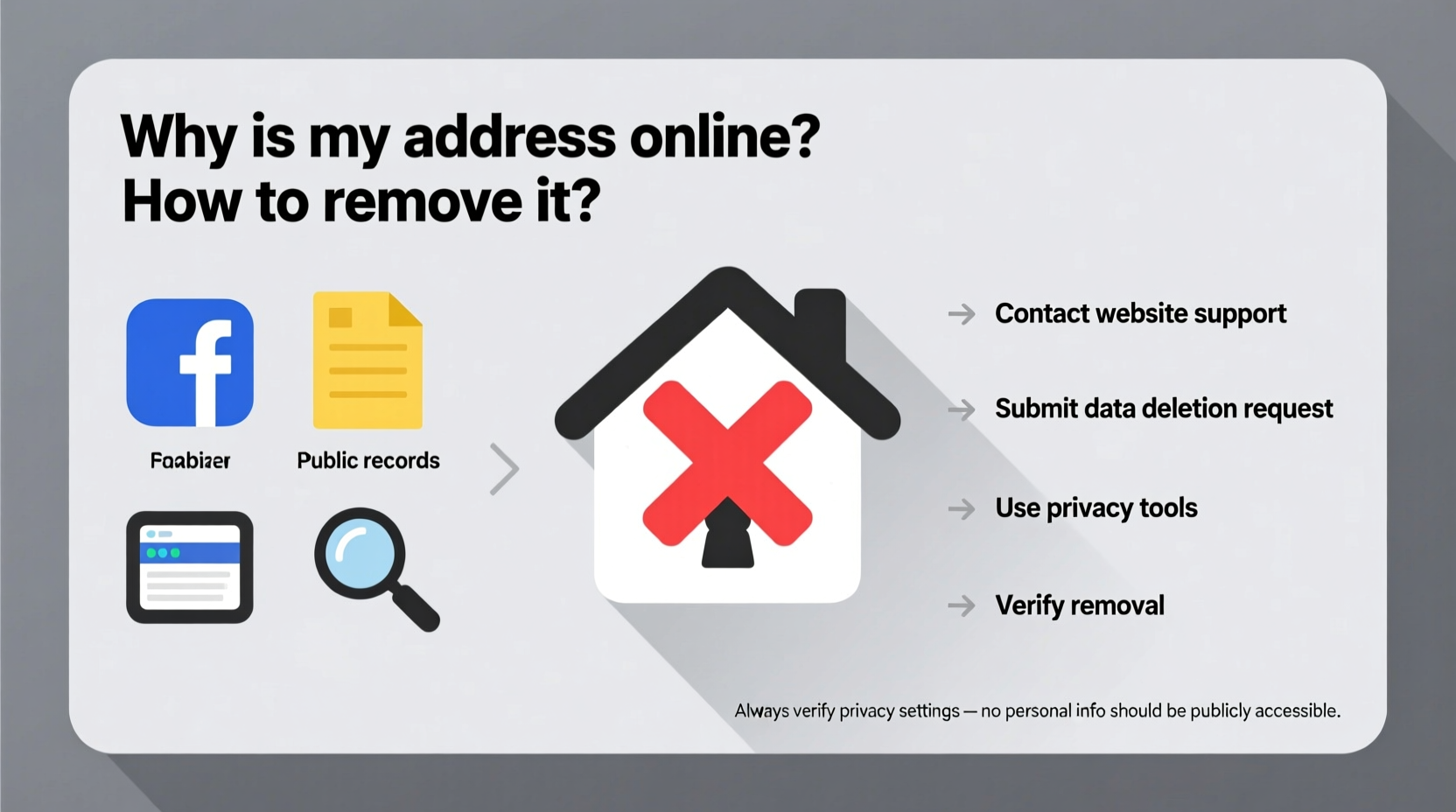
In the United States and many other countries, certain personal information is considered part of the public record. This includes property ownership documents, voter registrations, court filings, and business licenses. When you buy a home, register to vote, or file incorporation papers, your address becomes accessible through official channels. Over time, third-party companies known as “data brokers” scrape this information and compile detailed profiles, which they sell or display online.
These brokers operate legally under current laws, aggregating data from:
- County assessor and recorder offices
- State voter registration databases
- Court records (e.g., divorce filings, bankruptcies)
- Marketing lists and warranty registrations
- Phone directories and utility records
The result? Your name, phone number, past addresses, and even family members’ names may be just a Google search away.
How Data Brokers Make Your Address Visible
Data brokers like Whitepages, Spokeo, PeopleFinder, and Intelius collect public records and enhance them with consumer data purchased from retailers, surveys, and online tracking. They then host searchable databases where anyone can access your address for free or a small fee. These sites profit from ads and premium subscriptions, making your personal information a commodity.
While some offer opt-out forms, the process is often tedious and temporary—your data may reappear weeks later if another source feeds it back into their system.
“Data brokers operate in a largely unregulated space. Even if you remove your info today, it can resurface from alternative public sources.” — Sarah Chen, Digital Privacy Researcher at the Electronic Frontier Foundation
Step-by-Step Guide to Remove Your Address Online
Removing your address completely is challenging, but you can drastically limit its visibility by following this systematic approach:
- Identify where your address appears: Search your full name, phone number, and address variations across Google, Bing, and DuckDuckGo. Save links to every page showing your information.
- Start with major data brokers: Visit the top 10–15 data broker sites individually. Most have an \"opt-out\" or \"privacy removal\" page. Examples include:
- Submit removal requests: Follow each site’s process. Some require email verification; others need proof of identity. Keep a log of submission dates and confirmation numbers.
- Use automated services (optional): Tools like DeleteMe, OneRep, or Incogni automate removals across dozens of brokers for a monthly fee. These are effective but not foolproof.
- Request removal from search engines: If your address appears in cached pages or outdated directories, use Google’s incomplete or outdated results form to request de-indexing.
- Re-check monthly: Reappearance is common. Repeat the process every 30–60 days until results stabilize.
Do’s and Don’ts When Removing Personal Information
| Do’s | Don’ts |
|---|---|
| Verify removal success after 7–14 days | Assume one-time removal is permanent |
| Use a dedicated email for opt-out confirmations | Share sensitive documents (e.g., driver’s license) unless absolutely necessary |
| Opt out of voter list rentals via your state elections office | Pay for “instant deletion” services without research |
| Enable two-factor authentication on accounts used during the process | Ignore local county or municipal data portals |
Real Example: How Maria Reduced Her Digital Footprint
Maria, a school counselor in Austin, Texas, discovered her home address while searching her name before a job interview. She found her profile on six data broker sites, including a photo of her house from a real estate listing. Alarmed, she began the removal process.
She started by documenting all URLs where her information appeared. Over three weekends, she submitted opt-out requests to 14 sites. Two required ID uploads, which she redacted to show only her name and address. After four weeks, five sites had removed her data. One, however, reinstated it after pulling updated records from a county database.
Maria contacted her county clerk and requested her address be excluded from future public disclosures where possible. While not all requests were granted, she successfully limited distribution through voter roll opt-outs and property privacy programs. Within three months, her address no longer appeared in standard searches.
Alternative Protection Strategies
If complete removal isn’t feasible, consider these alternatives to minimize exposure:
- Use a P.O. Box or mail forwarding service: For registrations requiring an address, use a commercial mailbox instead of your home address.
- Opt out of voter list sales: Many states allow you to request your voter registration information not be sold or shared. Check with your Secretary of State.
- Freeze public records access: Some counties offer “confidential address” programs for victims of domestic violence or public officials. Eligibility varies.
- Limit online sharing: Avoid entering your real address on warranty cards, sweepstakes, or non-essential sign-ups.
Frequently Asked Questions
Can I completely erase my address from the internet?
Complete erasure is nearly impossible due to archived government records and private databases. However, you can remove it from most consumer-facing websites and prevent casual discovery through search engines.
Is it safe to send ID documents for removal verification?
Only provide identification when absolutely required and always redact unrelated information (e.g., driver’s license numbers, birth date). Use PDF editors to black out sensitive fields before uploading.
How long does it take to remove personal data?
Most data brokers respond within 3–14 days. Automated services may take 30–60 days to cycle through all partners. Persistence is key—some sites require multiple requests.
Conclusion: Take Control of Your Digital Privacy
Your address doesn’t have to remain exposed indefinitely. While public records ensure some level of accessibility, proactive steps can shield your information from unwanted eyes. From manual opt-outs to leveraging privacy tools, the power to reclaim your digital footprint is within reach. Start today by searching your name, identifying leaks, and initiating removals. Privacy isn’t about hiding—it’s about choosing who gets access to your life.




 浙公网安备
33010002000092号
浙公网安备
33010002000092号 浙B2-20120091-4
Comments
No comments yet. Why don't you start the discussion?