
As the holiday season approaches, animated Christmas decorations bring joy and festive energy to homes across the country. From dancing Santa figures to rotating reindeer and twirling snowmen, these motorized displays rely on precise mechanics to deliver their charm. But when the music plays and the lights flash—yet the figure stands frozen—the magic fades fast. If your animated Christmas decoration isn’t moving, the culprit is often a motor issue. Understanding how these motors work, what can go wrong, and how to fix it can save both time and holiday spirit.
These decorations typically use small electric motors powered by AC adapters or batteries to drive gears, cams, or linkages that create motion. Over time, exposure to moisture, dust, wear, or electrical faults can cause failure. This guide walks through common causes of motor malfunction and provides actionable solutions to get your display back in motion—safely and effectively.
Understanding How Animated Decoration Motors Work
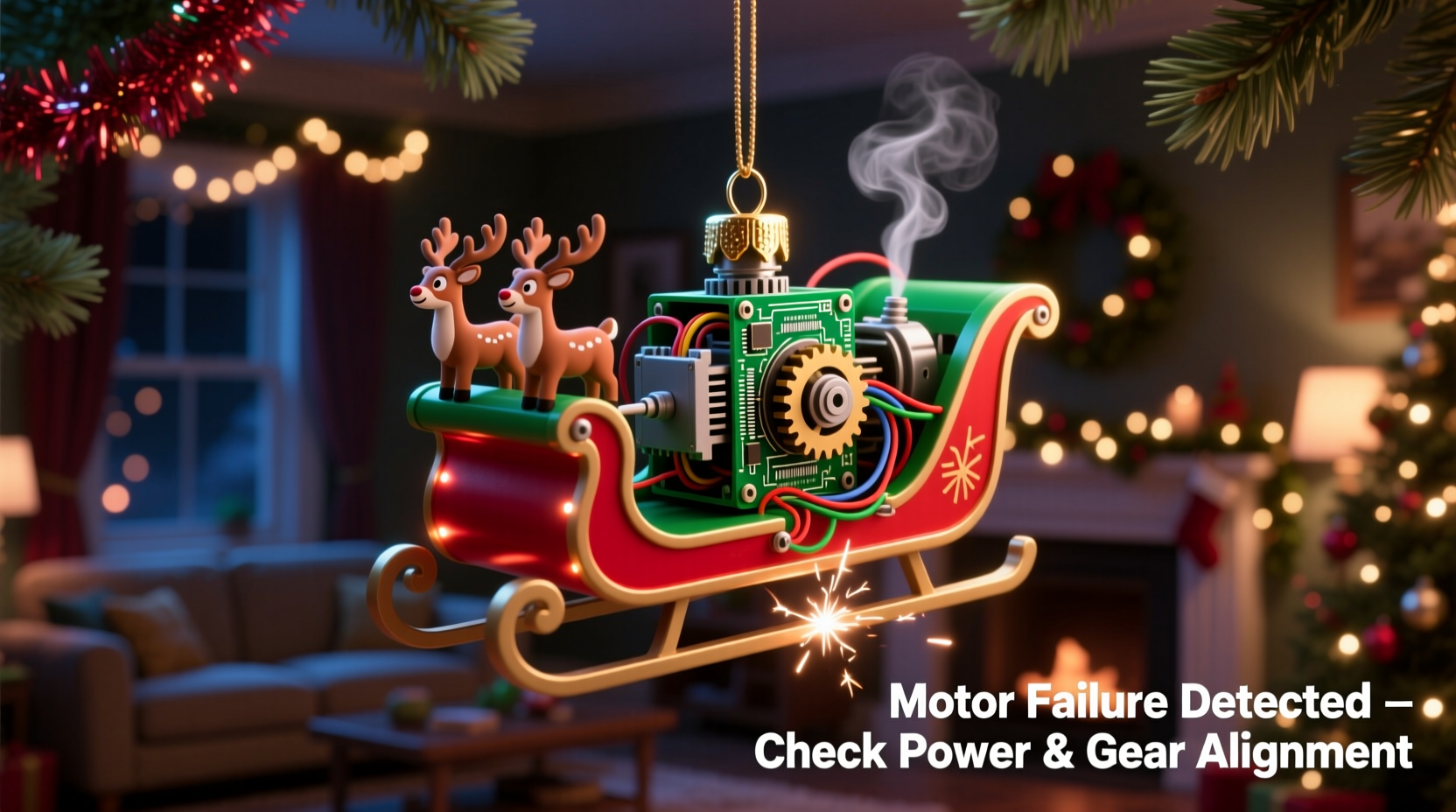
Most animated outdoor or indoor Christmas decorations use one of two motor types: DC (direct current) or low-voltage AC (alternating current). These motors are usually housed within a plastic or metal casing at the base or inside the figure’s torso. They connect to mechanical components like cranks, gears, or levers that convert rotational movement into lifelike motion—such as waving arms, bobbing heads, or spinning platforms.
The motor receives power from either a wall adapter (typically 6V–12V) or internal batteries. A control board may regulate speed, timing, and synchronization with music or lighting effects. In simpler models, the motor runs continuously when powered; in advanced ones, microcontrollers activate motion sequences intermittently.
When motion stops but lights or sound remain functional, the issue likely lies within the motor circuit, mechanical linkage, or physical obstruction—not necessarily the power source itself.
“Over 70% of animated decoration failures during the holiday season stem from preventable motor issues—often due to improper storage or environmental exposure.” — Greg Holloway, Seasonal Lighting Technician with 15 years of field experience
Step-by-Step Guide to Diagnose Motor Problems
Before disassembling your decoration, follow this logical sequence to identify where the breakdown occurs:
- Verify Power Supply: Confirm the outlet works by plugging in another device. Check the adapter output voltage with a multimeter if possible. For battery-powered units, replace old batteries even if they seem functional—voltage drops under load can stall motors.
- Listen for Motor Hum or Clicks: Turn on the decoration and place your ear near the motor housing. A faint hum indicates power is reaching the motor but mechanical resistance may be preventing rotation.
- Inspect for Physical Obstructions: Look for tangled wires, bent rods, or debris caught in moving parts. Snow, leaves, or pet hair can jam linkages after seasonal storage.
- Test Motor Independently: Disconnect the motor leads and apply direct power using a known-good adapter or battery pack of matching voltage. If the motor spins freely, the fault lies upstream—in wiring, switches, or controls.
- Check Gear Train Integrity: Open the access panel (if safe and designed for user service) and manually rotate the output shaft. Resistance suggests worn gears, stripped teeth, or dried lubricant.
Common Causes of Motor Failure and How to Fix Them
Several recurring issues disable motors in animated decorations. Identifying which applies to your situation streamlines repairs.
1. Moisture Damage and Corrosion
Outdoor decorations exposed to rain, snow, or high humidity are vulnerable to water ingress. Even small amounts can corrode motor windings, connections, or circuit boards. Signs include greenish residue on terminals, pitting on metal gears, or musty odors.
To address this, dry the unit completely in a warm, ventilated area for 24–48 hours. Use compressed air to remove moisture from crevices. Apply electronic contact cleaner to corroded terminals and gently scrub with a toothbrush. Avoid submerging any part unless explicitly rated waterproof.
2. Worn or Stripped Gears
Plastic gears driving the animation mechanism degrade over time. Repeated stress leads to chipped or stripped teeth, especially in older models. When this happens, the motor may run but fail to transfer motion.
Replacement gears are sometimes available from manufacturers or third-party suppliers. Search using the model number printed on the base. Alternatively, consider upgrading to brass or nylon-reinforced gears for longer life. Ensure alignment during reassembly—misaligned gears bind quickly.
3. Dried or Absent Lubrication
Motors and gearboxes require light lubrication to reduce friction. During long-term storage, grease hardens or migrates away from critical points. The resulting drag stalls slow-speed motors unable to overcome static resistance.
Apply a small amount of silicone-based lubricant (not petroleum-based) to gear teeth, pivot joints, and motor shaft bearings. Rotate the mechanism by hand while applying to ensure even distribution. Wipe off excess to prevent dust accumulation.
4. Burnt-Out Motor Windings
If the motor receives power but produces no sound or heat, the internal coil may be open-circuited. A multimeter set to continuity mode can confirm this—no beep means broken windings.
In most cases, replacing the entire motor is more cost-effective than rewinding. Match voltage, RPM (revolutions per minute), and shaft size carefully. Universal replacement motors for holiday decor are sold online and often come with mounting brackets and connectors.
5. Faulty Wiring or Connectors
Vibration and flexing over seasons can loosen wire connections between the power input and motor. Inspect for frayed wires, cold solder joints, or disconnected plugs. Reflow loose solder with a low-wattage iron and secure wires with heat-shrink tubing.
Some decorations use quick-disconnect tabs that wear out. Replace them with crimp terminals or soldered joints for reliability.
Troubleshooting Checklist: Get Your Decoration Moving Again
Use this checklist to methodically restore function:
- ✅ Confirm power source is active and delivering correct voltage
- ✅ Replace batteries or test with alternate adapter
- ✅ Listen for motor noise when activated
- ✅ Visually inspect for obstructions in moving parts
- ✅ Manually turn the output shaft to check for binding
- ✅ Clean corrosion from terminals and contacts
- ✅ Lubricate gears and pivots with silicone spray
- ✅ Test motor directly with external power supply
- ✅ Inspect gear train for damage or misalignment
- ✅ Repair or replace damaged wiring and connectors
- ✅ Install replacement motor if all else fails
Do’s and Don’ts of Motor Maintenance for Holiday Decorations
| Do’s | Don’ts |
|---|---|
| Store decorations in sealed bins with desiccants to prevent moisture buildup | Leave decorations outdoors year-round without protection |
| Use dielectric grease on electrical connectors before sealing | Use WD-40 as a lubricant—it attracts dust and degrades plastics |
| Inspect moving parts annually before setup | Force a stuck mechanism—this can break gears or bend shafts |
| Lubricate sparingly with food-grade or silicone-based products | Submerge non-waterproof units in cleaning solutions |
| Keep spare adapters labeled by voltage and polarity | Use mismatched power supplies—they can overheat or destroy motors |
Real Example: Reviving a Frozen Dancing Santa
Martha from Ohio had a beloved 6-foot-tall dancing Santa that stopped moving mid-dance one December. The lights blinked, and music played, but the arms and legs remained rigid. She followed basic checks: confirmed the outlet worked, tried a new adapter, and listened closely. A faint buzzing came from the base.
She opened the access panel and found the motor was hot but the main drive gear wasn’t turning. Upon closer inspection, she discovered a single tooth broken on a plastic gear connected to the crankshaft. The motor was attempting to turn but slipped every time it hit the gap.
She searched online using the manufacturer name and model number (“HolidayMotion DMX-2020”) and found a compatible gear kit for $8. After replacing the gear and applying a drop of synthetic lubricant, the Santa danced smoothly again. Martha now inspects all her animated figures before display season and stores them in climate-controlled conditions.
Frequently Asked Questions
Can I replace the motor with a different brand or model?
Yes, provided the replacement matches key specifications: voltage, RPM, shaft diameter, and mounting configuration. Universal hobby motors used in robotics or appliances often serve as substitutes. Double-check polarity and current draw to avoid damaging control circuits.
Why does my decoration start moving but stop after a few seconds?
This often indicates thermal overload. The motor may be straining due to mechanical binding or low voltage. It heats up, triggers internal safety cutoff, cools briefly, then restarts the cycle. Address friction points, clean gears, and verify full-rated voltage delivery.
Is it worth repairing an older animated decoration?
It depends on sentimental value and repair cost. Simple fixes like lubrication, cleaning, or minor part replacements are almost always worthwhile. If the motor requires custom ordering or extensive disassembly, compare the cost to a new unit. Many modern replacements offer better durability and energy efficiency.
Conclusion: Keep the Holiday Spirit Alive with Proactive Care
An animated Christmas decoration not moving doesn’t mean it’s destined for the trash. Most motor-related issues stem from preventable causes—moisture, dirt, lack of lubrication, or simple wear—and many can be resolved with basic tools and patience. By understanding how these systems operate and following a structured diagnostic process, you can restore motion and extend the life of your favorite holiday displays.
Start early next season. Inspect, clean, and lubricate before setup. Store properly after takedown. Treat your decorations not just as seasonal items, but as reusable investments in family tradition. With care, a well-maintained animated figure can delight for a decade or more.




 浙公网安备
33010002000092号
浙公网安备
33010002000092号 浙B2-20120091-4
Comments
No comments yet. Why don't you start the discussion?