
Avocado toast has become a breakfast staple for good reason—it’s nutritious, quick to prepare, and endlessly customizable. But there’s one common frustration that turns many people off: sogginess. You’ve likely experienced it—your toast starts out crispy, but within minutes, the bread softens, collapses under the weight of creamy avocado, and becomes unpleasantly wet. This isn’t just about texture; it’s about the entire eating experience. The good news? Soggy avocado toast is preventable. With the right techniques, ingredients, and timing, you can enjoy a perfectly crisp base every time.
The Science Behind Soggy Avocado Toast
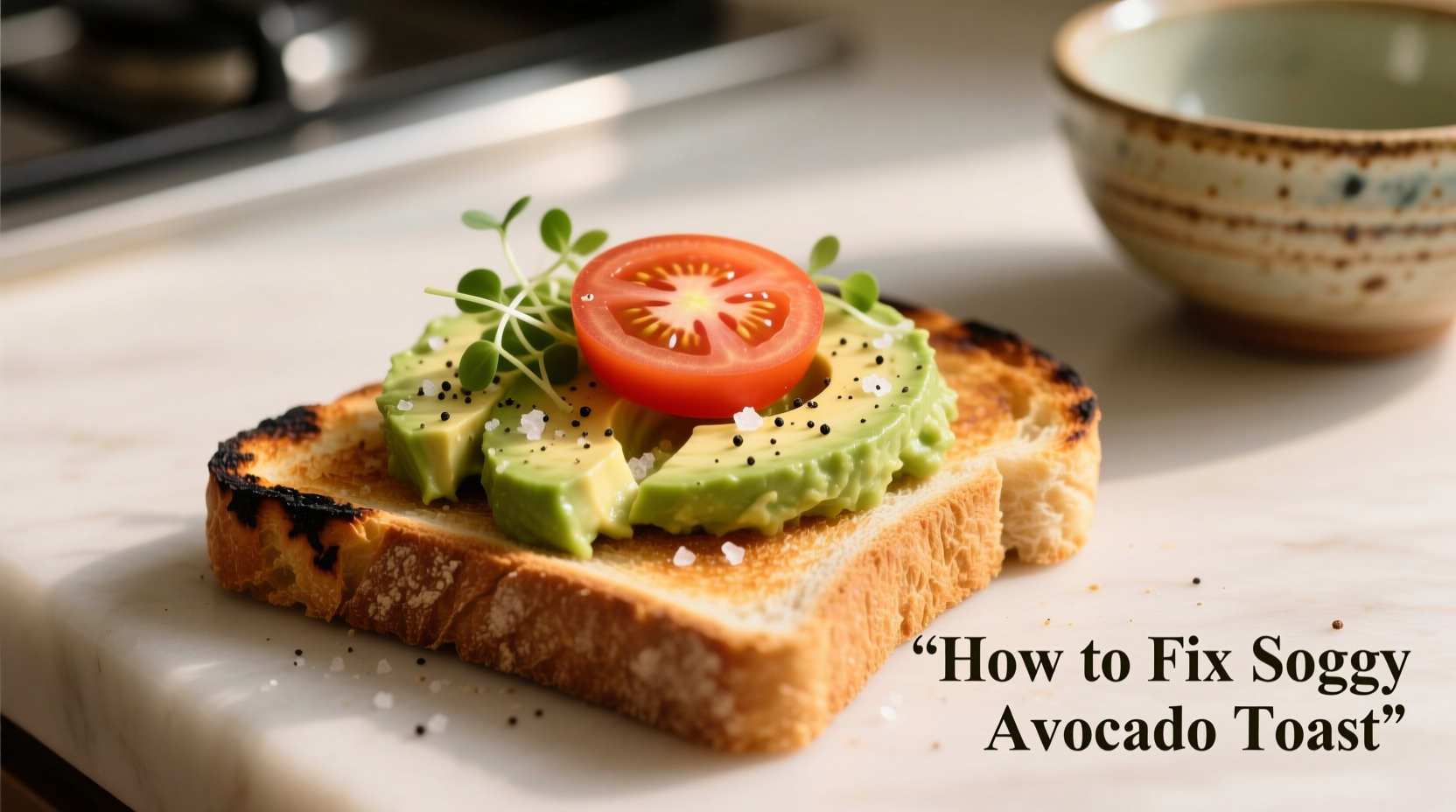
Sogginess occurs when moisture from the avocado or other toppings migrates into the bread faster than the bread can resist. Bread, especially softer varieties, contains starches that readily absorb water. When mashed avocado—naturally high in moisture—is spread over warm toast, the heat accelerates moisture transfer. Additionally, any added salt draws out more liquid from the avocado through osmosis, further speeding up the process.
Another contributing factor is the internal structure of the bread. Many popular breads used for avocado toast—like sourdough, whole grain, or artisanal loaves—are porous. While this gives them excellent flavor and chew, it also makes them highly absorbent. Without intervention, they act like sponges, soaking up avocado juices almost immediately after contact.
“Moisture control is key in any layered dish involving bread. The moment you place a wet topping on bread, the clock starts ticking.” — Dr. Lena Torres, Food Scientist & Culinary Educator
Choosing the Right Bread Matters More Than You Think
Not all breads are created equal when it comes to structural integrity and moisture resistance. The type of bread you choose plays a foundational role in whether your toast stays crisp or turns mushy.
Denser, lower-moisture breads tend to hold up better. For example, a thick-cut sourdough with a tight crumb and sturdy crust resists sogginess far better than a fluffy brioche or standard sandwich loaf. Similarly, seeded rye or pumpernickel offer robust textures that can withstand heavier toppings.
Frozen bread, when toasted directly from the freezer, can also yield a drier, more resilient base because freezing removes some moisture and alters starch behavior during toasting. Just avoid pre-sliced supermarket white bread unless it's specifically designed for toasting—it tends to burn before crisping properly.
Mastering the Toast: Technique Over Timing
How you toast your bread is just as important as what kind you use. Many people under-toast their bread, assuming a light golden color is sufficient. In reality, for avocado toast, you want a deeper level of crispness—almost bordering on crunchy—to create a moisture-resistant barrier.
Use a toaster oven or conventional oven instead of a pop-up toaster whenever possible. These allow for more even browning and greater control over temperature. Set your oven to 375°F (190°C) and toast each side for 3–4 minutes until deeply golden and dry to the touch. The goal is to dehydrate the surface slightly so it repels moisture rather than absorbing it.
If using a toaster, go for the darkest safe setting. Check after each cycle and continue until the bread feels firm, not springy. Let it cool for 15–20 seconds before topping—this allows surface steam to escape, reducing immediate moisture condensation.
| Toasting Method | Pros | Cons |
|---|---|---|
| Oven/Toaster Oven | Even browning, deep crisp, large surface area | Slower, uses more energy |
| Pop-Up Toaster | Fast, convenient | Inconsistent results, limited browning depth |
| Skillet Toasting | Adds flavor (especially with butter/oil), great crust development | Requires attention, risk of burning |
Pre-Treat the Bread: The Secret Step Most People Skip
One of the most effective yet overlooked strategies is pre-treating the toast before adding avocado. A thin layer of fat or protein creates a moisture barrier between the bread and the topping.
Lightly brush each slice with olive oil, melted butter, or even mayonnaise before toasting. This not only enhances flavor but also seals the pores in the bread. Mayonnaise, in particular, contains egg yolk and oil, both of which form a hydrophobic film when heated. The result? A crispier, longer-lasting foundation.
Alternatively, sprinkle a dusting of finely grated Parmesan or Pecorino Romano on the hot toast immediately after toasting. As the cheese melts and rehardens slightly, it forms a protective crust that delays sogginess by several minutes.
Handle the Avocado Like a Pro
How you prepare the avocado dramatically affects moisture output. Mashing it too finely breaks down cell walls and releases more liquid. Instead of pulverizing it into a smooth paste, try chopping or coarsely mashing it with a fork. Larger chunks retain more structure and release less juice onto the bread.
Season the avocado *after* spreading it, not before. Salt pulls moisture out rapidly—so if you salt the avocado while it’s sitting in a bowl, you’ll end up pouring that liquid directly onto your toast. Add salt, lemon juice, and spices only once the avocado is already on the bread.
Lemon or lime juice does double duty: it prevents browning and slightly firms the avocado due to its acidity. However, apply citrus sparingly—too much adds unwanted moisture. A light drizzle is enough.
Mini Case Study: From Soggy to Stellar in One Week
Jessica, a freelance designer in Portland, loved avocado toast for breakfast but hated how fast it turned soggy. She’d often eat half quickly and leave the rest uneaten. After reading about moisture barriers, she experimented. On Monday, she used regular sourdough, lightly toasted, with pre-salted mashed avocado—same as usual. Result: completely limp by bite three.
Tuesday, she brushed her bread with olive oil before toasting it darker than normal. She chopped (not mashed) the avocado and seasoned it only after placing it on the toast. The difference was immediate—the toast stayed crisp for nearly eight minutes, long enough to enjoy every bite. By Friday, she had refined her method: skillet-toasted sourdough with a hint of garlic butter, topped with chunky avocado, microgreens, and a sprinkle of feta. No sogginess. Her breakfast routine was transformed.
Build Smart: The Right Order of Toppings
Layering matters. Putting avocado directly on bare toast—even if well-toasted—still risks absorption. Instead, consider intermediate layers that act as shields.
Start with a thin smear of ricotta, hummus, or labneh. These dairy or legume-based spreads are thicker than avocado and less watery. They adhere well to toast and provide a stable platform for the avocado. Then add your avocado on top. The result is creaminess without collapse.
If you’re adding poached or fried eggs, let the toast cool slightly before placing the egg on top. A hot egg on hot toast creates steam, which softens the bread from within. Alternatively, blot excess moisture from the bottom of the egg with a paper towel before placing it down.
- Step 1: Toast bread until deeply golden and crisp
- Step 2: Brush with oil or spread with a moisture-blocking base (e.g., ricotta)
- Step 3: Add avocado—chunky, not runny
- Step 4: Season avocado lightly
- Step 5: Add wet toppings (egg, tomatoes) last, and blot if necessary
Checklist: How to Prevent Soggy Avocado Toast
- Choose dense, low-moisture bread (e.g., sourdough, rye)
- Toast until deeply golden and dry—not just light brown
- Pre-brush bread with olive oil, butter, or mayonnaise
- Chop or coarsely mash avocado—avoid pureeing
- Season avocado only after it’s on the toast
- Add a protein or dairy layer (ricotta, hummus, cheese) beneath avocado
- Blot wet toppings like tomatoes or poached eggs
- Eat within 5–7 minutes for peak crispness
Frequently Asked Questions
Can I make avocado toast ahead of time?
Not if you want it crisp. Pre-assembled avocado toast will always turn soggy due to ongoing moisture migration. However, you can prep components separately: toast the bread and store it in an airtight container, and keep mashed avocado covered with plastic wrap pressed directly on the surface to limit oxidation. Assemble right before eating.
Does toasting frozen bread help prevent sogginess?
Yes. Frozen bread, when toasted from frozen, develops a drier, crunchier texture because ice crystals alter the starch matrix during heating. This makes it more resistant to moisture absorption. Just don’t thaw it first—go straight from freezer to toaster or oven.
Is there a bread substitute that never gets soggy?
For a completely different approach, try open-faced crackers, rice cakes, or roasted sweet potato slices. These bases are inherently drier and sturdier. While not traditional, they offer a satisfying crunch and work well for those prioritizing texture over classic toast experience.
Final Thoughts: Crispness Is Within Reach
Soggy avocado toast doesn’t have to be inevitable. It’s not a flaw in the recipe—it’s a solvable engineering challenge involving moisture, heat, and structure. By selecting the right bread, toasting it thoroughly, creating protective barriers, and assembling with intention, you can consistently enjoy a crisp, satisfying bite from start to finish.
The best part? These fixes require no special tools or rare ingredients. They’re simple adjustments grounded in food science and real kitchen experience. Once you implement even two or three of these strategies, the improvement will be undeniable.




 浙公网安备
33010002000092号
浙公网安备
33010002000092号 浙B2-20120091-4
Comments
No comments yet. Why don't you start the discussion?