
Avocado toast has become a staple of modern breakfast culture—simple, nutritious, and endlessly customizable. Yet, despite its apparent simplicity, many home cooks struggle with one persistent issue: sogginess. A once-crisp slice of bread quickly becomes waterlogged under the weight of ripe avocado, leaving behind a mushy, unappetizing mess. This isn't just about texture—it's about the entire eating experience. The good news? Soggy avocado toast is entirely preventable. With the right techniques, ingredients, and timing, you can achieve golden, crunchy toast topped with creamy, flavorful avocado that holds up from first bite to last.
The Science Behind Sogginess
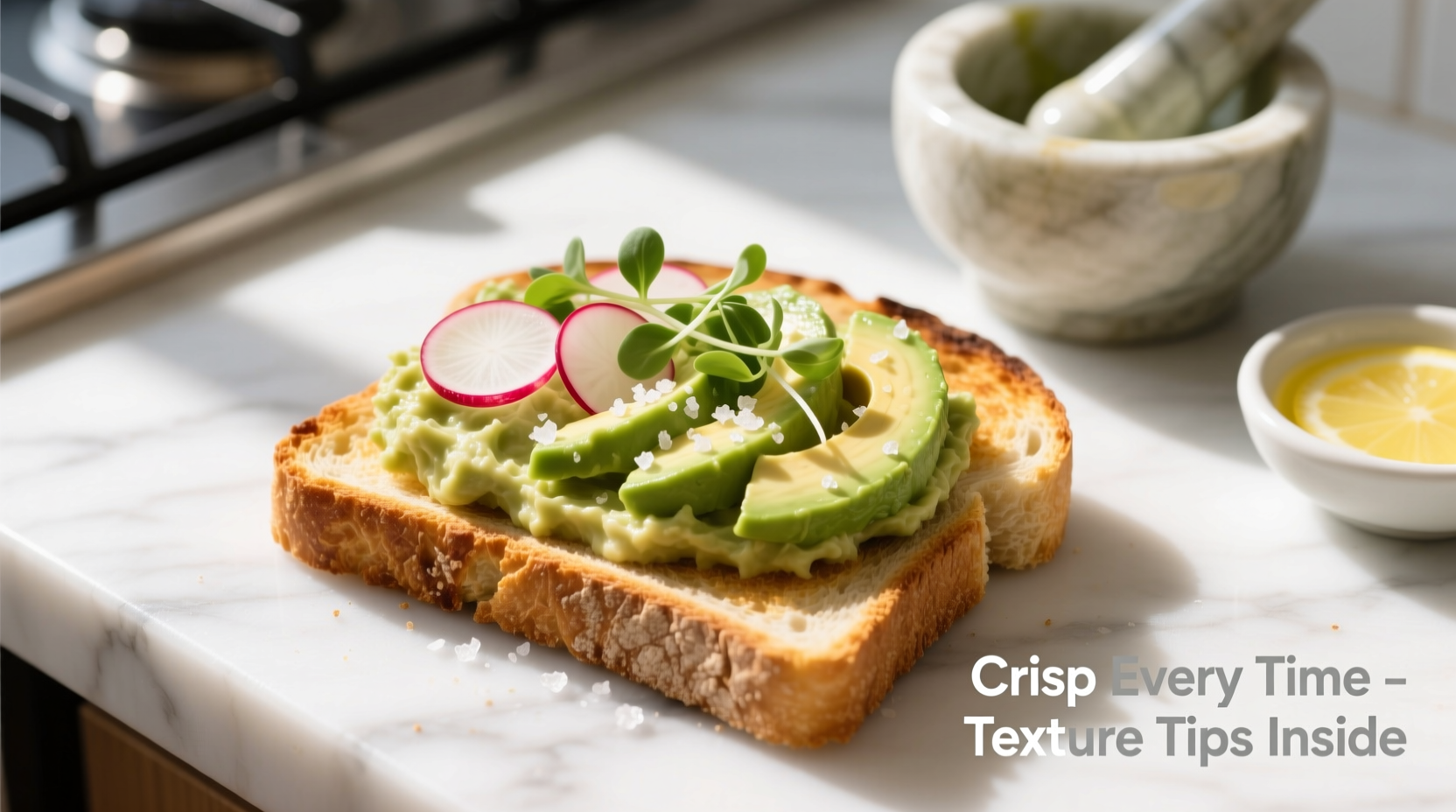
Sogginess in avocado toast occurs when moisture migrates from the avocado into the bread faster than the toast can resist it. Bread, especially when toasted, has a porous structure designed to absorb liquids—think of how well it soaks up coffee or soup. When mashed avocado, which contains up to 70% water, is spread over warm toast, the residual heat opens the bread’s pores further, accelerating absorption.
This process is compounded by several factors:
- Overripe avocado: While deliciously creamy, overripe avocados release more moisture.
- Thin-sliced bread: Offers less structural integrity and absorbs moisture faster.
- Immediate topping after toasting: Warm toast continues to draw in moisture as it cools.
- Acidic additions (like lemon juice): Increase moisture content and lower pH, softening the bread faster.
“Moisture management is key in any layered food item. In avocado toast, the interface between bread and topping is where success or failure happens.” — Dr. Lena Torres, Food Scientist & Texture Analyst
Choosing the Right Bread for Structure and Crispness
Not all breads are created equal when it comes to holding up against moist toppings. The foundation of great avocado toast starts long before the avocado hits the plate—it begins at the grocery shelf.
Opt for breads with a tight crumb structure and sturdy crust. Dense sourdough, country loaf, or whole grain varieties perform best because they have thicker cell walls and less air space, slowing moisture penetration. Avoid soft sandwich breads like white Pullman loaf or brioche unless you’re willing to take extra steps to reinforce their structure.
| Bread Type | Crispness Score (1–5) | Moisture Resistance | Best For |
|---|---|---|---|
| Sourdough | 5 | High | All-purpose, classic choice |
| Rye | 4 | Moderate-High | Hearty, savory variations |
| Whole Grain | 4 | Moderate | Nutrient-rich builds |
| White Sandwich | 2 | Low | Not recommended without reinforcement |
| Brioche | 1 | Very Low | Dessert-style versions only |
Perfect Toasting Techniques for Maximum Durability
Toasting isn’t just about flavor—it’s a structural transformation. Proper toasting dehydrates the surface and interior of the bread, creating a barrier that delays moisture absorption. However, not all toasting methods are equally effective.
For optimal results, use a toaster oven or conventional oven instead of a pop-up toaster. These allow for even browning and deeper drying. Set your oven to 375°F (190°C) and toast the bread for 8–10 minutes, flipping halfway through. This dual-side exposure ensures both surfaces are fully crisped, forming a protective shell.
If using a toaster, select the darkest safe setting—but watch closely to avoid burning. The goal is deep golden-brown color, not blackened edges. After toasting, let the bread sit for 1–2 minutes to stabilize its internal temperature and reduce steam buildup.
Step-by-Step Guide: How to Toast Bread for Avocado Topping
- Select a thick-cut slice (minimum 3/4 inch).
- Preheat oven to 375°F (190°C) or set toaster to highest safe setting.
- Optional: Brush both sides lightly with extra virgin olive oil.
- Toast until deeply golden on both sides (8–10 min in oven, 3–4 min in toaster).
- Remove and place on a cooling rack for 60 seconds to release trapped steam.
- Proceed immediately to topping—or delay slightly if prepping other components.
Preparing the Avocado: Less Moisture, More Flavor
The way you prepare the avocado dramatically impacts the final texture. Many people mash the entire fruit with salt and lemon juice in one go, then pile it onto toast. This method maximizes moisture exposure and accelerates sogginess.
Instead, follow a controlled prep method:
- Use avocados that are ripe but still firm—not mushy.
- Scoop out the flesh and gently mash with a fork, avoiding blenders or food processors that introduce air and break down cell walls excessively.
- Add lemon or lime juice sparingly—just enough to enhance flavor. Excess acid increases liquid content and speeds up bread degradation.
- Let the mashed avocado rest for 1 minute, then blot the surface with a paper towel to absorb excess moisture.
For an even drier texture, consider draining the avocado overnight. Place the mashed flesh in a fine-mesh strainer over a bowl and refrigerate for 4–6 hours. This removes up to 15% of free water without sacrificing creaminess.
“I started blotting my avocado after seeing chefs do it on a brunch segment. One paper towel press made a night-and-day difference.” — Maya R., home cook from Portland, OR
Smart Assembly: Timing and Layering Matter
Even perfect ingredients fail if assembled incorrectly. The sequence and timing of layering determine whether your toast stays crisp or collapses within minutes.
The golden rule: assemble just before serving. Never prep avocado toast more than 5 minutes ahead of eating. If hosting brunch, toast the bread in advance and keep it warm in a low oven (200°F / 95°C), but add toppings only when guests are ready to eat.
Consider adding a moisture barrier between the bread and avocado. A thin layer of ricotta, hummus, or cream cheese acts as a sealant, protecting the toast from direct contact with wet ingredients.
Do’s and Don’ts of Avocado Toast Assembly
| Action | Do | Don't |
|---|---|---|
| Timing | Assemble immediately before eating | Prepare more than 5 minutes ahead |
| Layering | Add condiment barrier first (e.g., cream cheese) | Place avocado directly on bare toast |
| Seasoning | Light sprinkle of flaky salt after topping | Soak avocado in lemon juice |
| Storage | Keep components separate until service | Store assembled toast in fridge or container |
Real-World Example: From Soggy to Stellar
James, a software engineer in Austin, loved avocado toast but hated how fast it turned mushy. He’d make it every Sunday morning, only to find his second slice limp and unappealing. After researching texture issues, he changed three things:
- Switched from store-bought white bread to a local bakery’s thick-cut sourdough.
- Started brushing bread with olive oil and toasting in the oven for full crispness.
- Pressed his mashed avocado in a chinois for 10 minutes to remove excess liquid.
The result? His toast stayed crisp for nearly 15 minutes—long enough to enjoy both slices slowly with coffee. “I didn’t realize how much technique mattered,” he said. “Now my weekend ritual feels restaurant-quality.”
Frequently Asked Questions
Can I make avocado toast ahead of time for meal prep?
Not in traditional form. Pre-assembled avocado toast will become soggy due to moisture transfer. However, you can prep components separately: toast and cool bread, store it in a paper bag; mash avocado with lemon and store with plastic wrap pressed directly on the surface to limit oxidation. Assemble fresh when ready to eat.
Why does restaurant avocado toast stay crisp longer?
Professional kitchens often use high-output convection ovens that dry bread more thoroughly than home appliances. Chefs also control moisture by blotting avocado, using barriers like cheese or egg, and timing assembly precisely. Some even double-toast bread for extra durability.
Does adding an egg help prevent sogginess?
Yes, but indirectly. A fried or poached egg adds heat and richness, but the real benefit comes when you place the avocado *under* the egg. The egg acts as a secondary topping, reducing direct pressure on the bread. Just be cautious—if the egg leaks too much yolk early, it can contribute to dampness.
Checklist for Crisp Avocado Toast Every Time
- ✅ Use thick-cut, dense bread (sourdough, rye, whole grain)
- ✅ Toast in oven or toaster until deeply golden on both sides
- ✅ Optional: Brush bread with olive oil before toasting
- ✅ Cool toast briefly on a rack to release steam
- ✅ Mash avocado gently; blot with paper towel to remove moisture
- ✅ Apply a moisture barrier (cream cheese, hummus, yogurt) before avocado
- ✅ Assemble no more than 5 minutes before serving
- ✅ Store components separately if prepping ahead
Conclusion: Elevate Your Morning Ritual
Avocado toast doesn’t have to be a battle against sogginess. By understanding the science of moisture transfer and applying practical techniques—from smart bread selection to strategic layering—you can transform a common kitchen frustration into a consistently excellent experience. Crispness isn’t luck; it’s the result of attention to detail. Whether you’re making a quick weekday breakfast or hosting a weekend brunch, these methods ensure your toast remains structurally sound and texturally satisfying from first bite to last.




 浙公网安备
33010002000092号
浙公网安备
33010002000092号 浙B2-20120091-4
Comments
No comments yet. Why don't you start the discussion?