
Baking bread at home should be a rewarding experience—soft, airy loaves with a golden crust and the comforting aroma of fresh yeast. But when your dough refuses to rise, it can feel like a kitchen mystery with no clues. The truth is, several factors influence yeast activity, and even small oversights can halt fermentation entirely. Understanding what’s going wrong—and how to fix it—is essential for consistent success. This guide dives deep into the science of yeast, identifies common pitfalls, and offers practical solutions so you can revive your dough and bake with confidence.
The Science Behind Yeast and Dough Rising
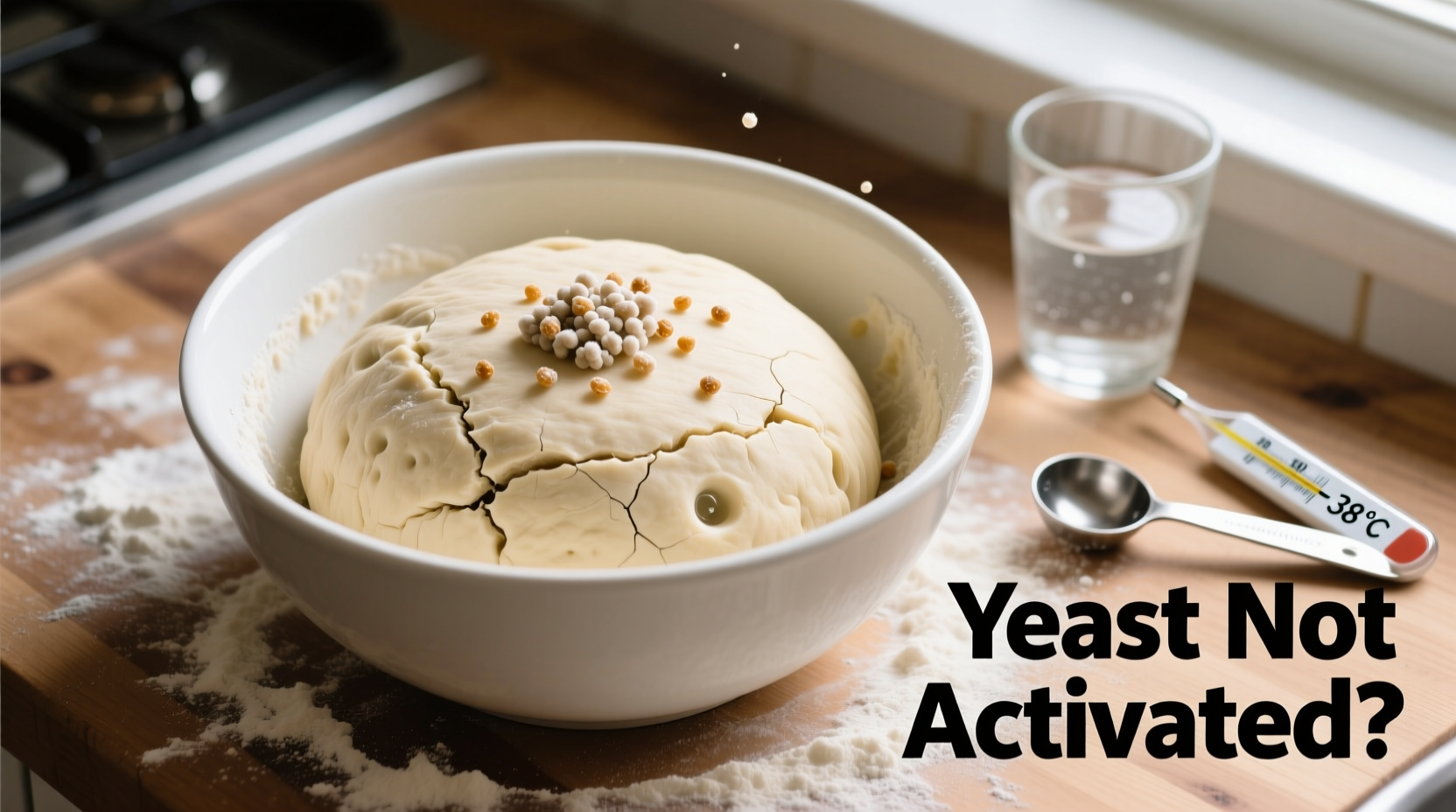
Yeast, specifically *Saccharomyces cerevisiae*, is a living microorganism that consumes sugars in flour and produces carbon dioxide (CO₂) and alcohol as byproducts. The CO₂ gets trapped in the gluten network of the dough, causing it to expand—a process known as leavening. For this to happen efficiently, yeast needs three key conditions: food (sugar or starch), moisture, and warmth.
Temperature plays a crucial role. Yeast thrives between 75°F and 85°F (24°C–29°C). Below 60°F (15°C), its activity slows dramatically; above 130°F (54°C), it dies. Many home bakers overlook ambient room temperature, especially in colder months, which can delay or stop rising altogether.
Different types of yeast behave differently:
- Active dry yeast requires rehydration in warm water before use.
- Instant yeast can be mixed directly into flour and doesn’t need proofing.
- Fresh yeast (cake yeast) is perishable and must be used quickly.
Misunderstanding these differences often leads to improper activation and failed rises.
Common Reasons Why Bread Dough Fails to Rise
1. Inactive or Dead Yeast
Yeast is alive—but only if stored and handled correctly. Exposure to heat, moisture, or age can kill it. If your yeast has been sitting in a hot pantry or near the stove, it may no longer be viable. Even refrigerated yeast loses potency over time.
To test yeast activity, mix 1 teaspoon of sugar and 2¼ teaspoons of yeast (one packet) with ¼ cup of warm water (105°F–115°F). Let sit for 10 minutes. If the mixture bubbles and develops a yeasty aroma, the yeast is active. If not, discard it and start fresh.
2. Incorrect Water Temperature
Too hot? Yeast dies. Too cold? It remains dormant. The ideal range for dissolving active dry yeast is 105°F to 115°F (40°C–46°C). Instant yeast tolerates slightly cooler liquids but still performs best within this window.
A common mistake is using tap water straight from the faucet, which can vary widely in temperature. Use a thermometer or test by touch—warm but not hot, like baby bottle temperature.
3. Cold Environment
If your kitchen is chilly, especially in winter, dough will rise extremely slowly or not at all. A drafty room, proximity to an open window, or a basement kitchen can create suboptimal conditions.
Consider creating a proofing box: place the bowl of dough in the oven with the light on (but oven off). The gentle warmth from the bulb often provides just enough heat to encourage fermentation.
4. Excessive Salt or Sugar
Salt controls yeast activity and strengthens gluten, but too much can inhibit rising. Similarly, while sugar feeds yeast, high concentrations (as in sweet doughs) can dehydrate yeast cells through osmotic pressure.
Balancing ingredients is key. As a rule, salt should not exceed 2% of flour weight, and sugar over 10% may require osmotolerant yeast strains.
5. Poor Gluten Development
Without a strong gluten network, gas produced by yeast escapes instead of being trapped. This results in flat, dense dough. Under-kneading or using low-protein flour (like cake flour) can prevent proper structure formation.
For standard bread, use bread flour (12–14% protein). Knead until the dough passes the \"windowpane test\"—stretch a small piece thin enough to see light through without tearing.
“Yeast is resilient, but it’s sensitive to imbalance. Get the fundamentals right—temperature, hydration, and timing—and your dough will reward you.” — Dr. Laura Chen, Food Microbiologist and Baking Scientist
Troubleshooting Checklist: What to Do When Dough Won’t Rise
Follow this step-by-step checklist to diagnose and correct rising issues:
- Verify yeast freshness: Perform a proofing test with warm water and sugar.
- Check water temperature: Use a thermometer to ensure it’s between 105°F and 115°F for active dry yeast.
- Assess room temperature: Move dough to a warmer spot (75°F–80°F) away from drafts.
- Review ingredient ratios: Confirm salt isn’t exceeding 2% of flour weight; adjust sugar levels if needed.
- Evaluate kneading: Ensure dough is smooth, elastic, and passes the windowpane test.
- Allow more time: In cool environments, rising can take 2–3 hours or longer. Patience is part of the process.
- Try a second rise attempt: If dough shows no signs after 2 hours, dissolve fresh yeast in warm water, work it into the dough, and restart fermentation.
Do’s and Don’ts of Yeast Handling and Dough Proofing
| Do’s | Don’ts |
|---|---|
| Store yeast in an airtight container in the fridge or freezer | Leave yeast in a humid or warm environment (e.g., near stove or sink) |
| Proof active dry yeast before mixing into dough | Use boiling or ice-cold water when activating yeast |
| Cover dough with a damp cloth or plastic wrap during proofing | Let dough dry out on the surface, which forms a crust and inhibits expansion |
| Use a thermometer for precise liquid temperatures | Guess water temperature by hand—too risky for consistency |
| Pre-warm bowls or pans with hot water before placing dough inside | Place dough in a cold metal bowl that draws heat away |
Real Example: A Home Baker’s Wake-Up Call
Sarah, an enthusiastic weekend baker in Vermont, had been struggling with her sourdough starter and sandwich loaves for months. Her dough consistently failed to rise, resulting in bricks instead of boules. She followed recipes precisely but couldn’t understand the issue.
After testing her yeast (which foamed properly), she realized her kitchen averaged only 62°F in winter. Her oven was gas-powered and unheated, offering no residual warmth. She began placing her dough bowl near a radiator wrapped in a towel, then upgraded to using the oven-with-light trick. Within days, her loaves doubled in size and baked up light and airy.
Her breakthrough wasn’t a new recipe—it was environmental control. Once she stabilized the temperature, her yeast responded immediately.
Step-by-Step Guide to Reviving Stalled Dough
If your dough hasn’t risen after the expected time, don’t give up. Try this recovery protocol:
- Inspect the dough: Look for any small bubbles or slight puffiness. Even minimal activity suggests the yeast is struggling, not dead.
- Warm the environment: Move the bowl to a warmer location—ideally 75°F–80°F. Use a heating pad on low, a turned-off oven with light on, or a microwave with a cup of boiling water.
- Add fresh yeast: Dissolve 1 teaspoon of instant yeast in 2 tablespoons of warm water with a pinch of sugar. Let sit 5 minutes, then gently knead into the dough.
- Knead briefly: Work the revived dough for 2–3 minutes to redistribute yeast and refresh gluten.
- Re-cover and wait: Return to a warm spot and allow 60–90 minutes for rising. Check every 20 minutes.
- Proceed to shaping: If the dough doubles in size, continue with shaping and final proof. If still unresponsive after 2 hours, consider repurposing as crackers or pizza base.
This method has saved countless batches of would-be-failed bread. The key is intervention before irreversible gluten breakdown occurs.
Frequently Asked Questions
Can I use expired yeast?
Technically yes, but with caution. Expired yeast may still have partial activity. Always perform a proofing test. If it doesn’t foam within 10 minutes, discard it. Using weak yeast leads to slow or incomplete rising and poor texture.
Why did my dough rise once but not the second time?
This often happens when the first rise occurred at room temperature, but the shaped loaf was placed in a cold area for the final proof. Over-proofing in the first rise can also exhaust yeast reserves. Limit the first rise to 1.5–2 times original volume, then move promptly to the next stage.
Is it safe to eat bread made with dead yeast?
Yes, but it won’t be leavened. Dough with inactive yeast bakes into a dense, cracker-like loaf. While edible, it lacks the texture and flavor development from fermentation. For safety, ensure no mold or off smells are present before baking.
Conclusion: Master Your Environment, Master Your Bread
The failure of bread dough to rise is rarely due to one single error—it’s usually a combination of overlooked details. From stale yeast to cold countertops, each factor chips away at the delicate balance required for successful fermentation. By understanding yeast biology, respecting temperature, and applying careful technique, you gain control over the process.
Bread baking is both art and science. When things go wrong, treat it as data, not defeat. Test your yeast, monitor your kitchen climate, and refine your methods. Every batch teaches you something new.




 浙公网安备
33010002000092号
浙公网安备
33010002000092号 浙B2-20120091-4
Comments
No comments yet. Why don't you start the discussion?