
If your car’s air conditioning suddenly starts blowing warm air instead of cool, you’re not alone. This issue affects millions of drivers every summer, especially after months of disuse or due to wear and tear. The good news is that in many cases, the problem can be diagnosed and even resolved with basic knowledge and a few tools. Understanding why your car AC is blowing hot air—particularly the most common causes like refrigerant leaks and low charge levels—is the first step toward restoring comfort on the road.
The air conditioning system in your vehicle relies on a closed-loop cycle involving refrigerant, compressor, condenser, evaporator, and expansion valve. When any part of this system fails or loses efficiency, cooling performance drops. One of the most frequent culprits behind warm airflow is insufficient refrigerant, often caused by leaks. But not all issues are created equal. Some problems require professional repair, while others may be safely handled at home with caution.
How Car Air Conditioning Works: A Quick Overview
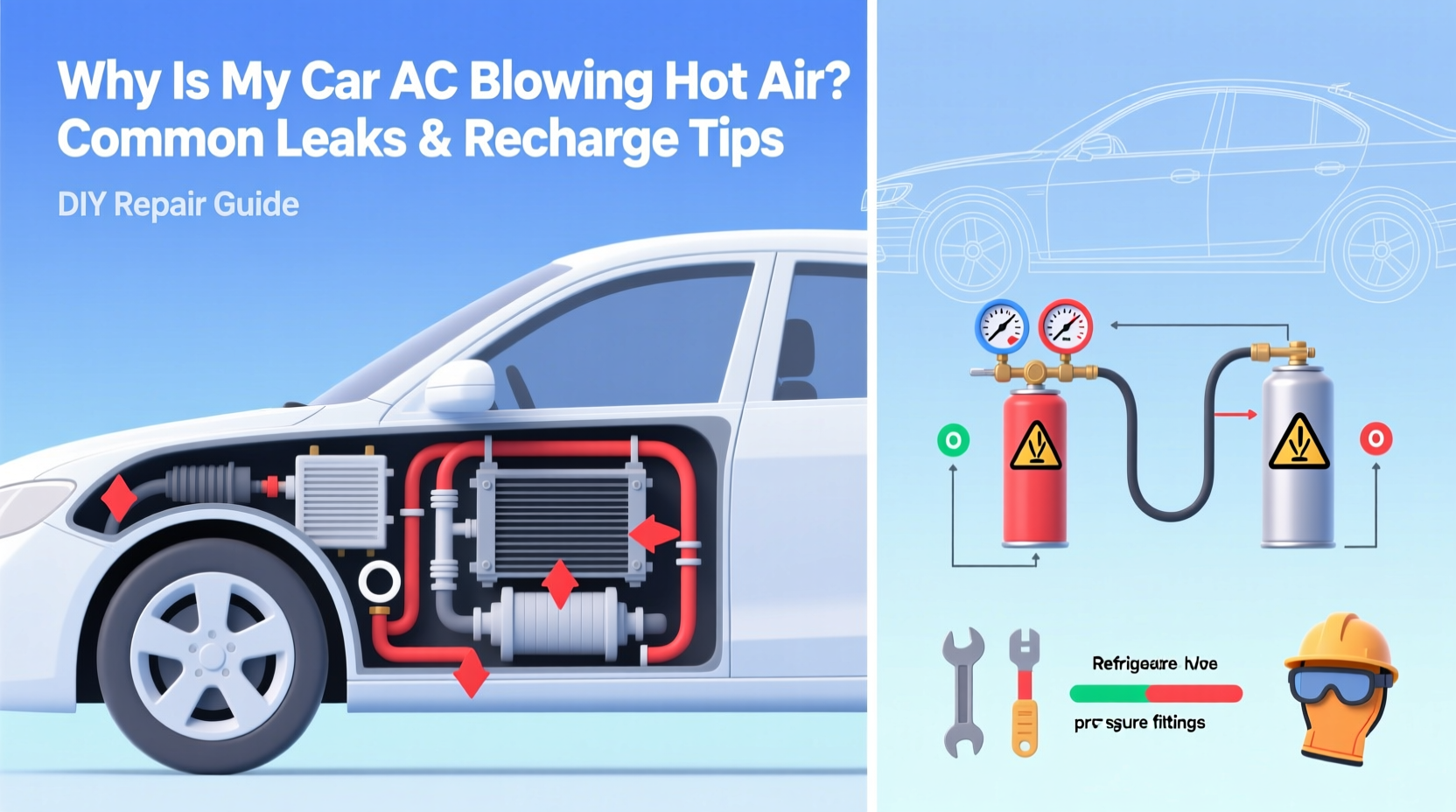
To understand why your AC might be failing, it helps to know how it functions. Refrigerant (commonly R-134a or newer R-1234yf) circulates through the system under pressure. The compressor pressurizes the refrigerant into a hot gas, which then travels to the condenser at the front of the car, where heat dissipates and the gas becomes a high-pressure liquid. This liquid passes through the expansion valve or orifice tube, reducing its pressure before entering the evaporator inside the cabin. As it expands, it cools rapidly, absorbing heat from the air blown over it by the blower fan. The cooled air enters the cabin, while the refrigerant returns to the compressor to repeat the cycle.
For this process to work efficiently, two things must be true: the refrigerant level must be correct, and there must be no blockages or leaks in the system. If either condition fails, cooling capacity diminishes—or stops entirely.
Common Causes of Hot Air from Your Car AC
While refrigerant leaks are the leading cause of poor cooling, several other issues can mimic the same symptoms. Identifying the root cause saves time, money, and unnecessary repairs.
- Refrigerant Leak: Over time, seals degrade, hoses crack, and metal components corrode. Even tiny leaks can deplete refrigerant enough to impair cooling.
- Failed Compressor: The compressor is the heart of the system. If it seizes or its clutch fails to engage, refrigerant won’t circulate.
- Clogged Orifice Tube or Expansion Valve: Debris or moisture buildup can restrict refrigerant flow, causing uneven cooling or no cooling at all.
- Electrical Issues: Blown fuses, faulty relays, or broken sensors can disable the compressor or fans.
- Condenser Damage: Located in front of the radiator, the condenser is vulnerable to road debris. Bent fins or internal blockages reduce heat dissipation.
- Low Refrigerant Pressure Switch Failure: This safety switch prevents compressor engagement if pressure is too low—but if the switch itself fails, the compressor won’t turn on.
Spotting the Signs of a Refrigerant Leak
Leak detection isn't always obvious. Unlike engine oil, refrigerant is invisible when released as gas. However, some telltale signs point to a leak:
- Gradual decline in cooling performance over weeks or months
- Hissing sound near AC components (indicates active gas escape)
- Oily residue around hose connections or valves (refrigerant carries lubricating oil)
- Compressor cycling on and off rapidly (due to low pressure)
“Most AC failures we see in shops start with small leaks that go unnoticed for months. By the time customers come in, the system is completely empty.” — Mark Reynolds, ASE-Certified Technician, 15 years in automotive HVAC
DIY Recharge: When It Makes Sense—and When It Doesn’t
Many auto parts stores sell “AC recharge kits” with gauges and pre-charged cans of refrigerant. These kits can temporarily restore cooling—if used correctly and only when appropriate.
Recharging should only be attempted if:
- You’ve confirmed the compressor engages
- There are no visible signs of major damage
- The system previously worked well but has gradually lost cooling
- You're using the correct type of refrigerant (R-134a vs. R-1234yf)
However, recharging a leaking system without fixing the source is like filling a bucket with a hole—it provides short-term relief but wastes money and harms the environment. Refrigerants are greenhouse gases; releasing them contributes to climate change and may violate EPA regulations.
Step-by-Step Guide to Safely Recharge Your Car AC
- Check Compressor Operation: Turn on the AC to max cold and high fan. Open the hood and observe the center hub of the AC compressor. It should spin when AC is on. If not, diagnose electrical issues first.
- Identify Refrigerant Type: Look for a label under the hood specifying R-134a or R-1234yf. Newer vehicles (2013+) typically use R-1234yf, which requires specialized equipment.
- Purchase the Correct Kit: Buy a recharge kit matching your refrigerant type. Kits include a pressure gauge, hose, and one or more cans.
- Attach the Gauge: Screw the hose onto the low-pressure service port (larger diameter, usually labeled \"L\"). Do not connect to the high-pressure side.
- Start the Engine: Run the engine at idle with AC and fan on maximum.
- Read Initial Pressure: The gauge will show current system pressure. Normal operating range is 25–45 psi on the low side.
- Add Refrigerant Slowly: Shake the can and puncture it according to instructions. Hold upright to add vapor (not liquid). Add half a can, wait 2–3 minutes, then check pressure again.
- Aim for Optimal Pressure: Continue adding until pressure stabilizes between 30–40 psi. Avoid overfilling, which can damage the compressor.
- Remove Hose and Test: Once done, disconnect the hose and test cabin temperature. It should drop significantly within 10 minutes.
Common Leak Locations and Detection Methods
Even if you successfully recharge your system, recurring issues suggest an unresolved leak. Knowing where leaks commonly occur helps prioritize inspection.
| Component | Leak Likelihood | Inspection Tips |
|---|---|---|
| Hose Connections | High | Check O-rings and fittings for oil stains or brittleness |
| Evaporator Core | Moderate | Signaled by damp carpet or musty odor; hard to access |
| Condenser | High | Inspect front fins for dents, corrosion, or oily spots |
| Compressor Shaft Seal | Moderate | Oil streaks around the front of the compressor |
| Accumulator or Receiver-Drier | Low-Moderate | Leaks rare, but moisture ingress here ruins desiccant |
Detection methods vary in accuracy and complexity:
- UV Dye: Add dye during recharge. Use a UV light to scan for glowing spots after running the system.
- Electronic Leak Detector: Handheld devices sense refrigerant concentration in the air. Effective for pinpointing small leaks.
- Bubble Solution: Apply soapy water to suspected areas. Bubbling indicates escaping gas. Low-cost but less sensitive.
- Negative Pressure Testing (Professional): Evacuate the system with a vacuum pump and monitor for pressure rise, indicating leaks.
Mini Case Study: Sarah’s Summer Commute Struggle
Sarah, a schoolteacher in Phoenix, noticed her 2017 sedan’s AC wasn’t cooling as well in early May. At first, she thought it was just hot weather. But by June, the vents were blowing nearly hot air. She bought a recharge kit and added refrigerant, which helped briefly. Two weeks later, cooling faded again. Frustrated, she visited a local mechanic who used an electronic detector and found a slow leak at the condenser’s lower fitting. After replacing the condenser and recharging properly, her AC returned to full strength. The lesson? Temporary fixes don’t replace proper diagnostics.
When to Call a Professional
Some situations demand expert attention. Attempting DIY repairs beyond your skill level risks further damage or personal injury.
Seek professional help when:
- The compressor doesn’t engage despite correct voltage
- You suspect internal component failure (e.g., seized compressor)
- Multiple leaks are present or located in hard-to-reach areas
- The system requires evacuation, deep cleaning, or replacement of the receiver-drier
- You lack proper tools or refrigerant handling certification
Licensed technicians have access to recovery machines that capture old refrigerant, vacuum pumps to remove moisture, and precision scales to charge accurately. They can also perform leak tests under pressure and offer warranties on repairs.
Preventive Maintenance Checklist
Regular care extends the life of your AC system and prevents sudden breakdowns. Use this checklist seasonally:
- Run the AC for at least 10 minutes weekly, even in winter, to keep seals lubricated.
- Inspect belts and hoses for cracks, fraying, or looseness.
- Ensure cabin air filters are clean to maintain airflow.
- Listen for unusual noises (grinding, squealing) when AC turns on.
- Watch for fogging or odors, which may indicate mold in the evaporator case.
- Have a professional inspect refrigerant levels and system integrity every 2 years.
Frequently Asked Questions
Can I mix R-134a and R-1234yf refrigerants?
No. These refrigerants are chemically different and incompatible. Mixing them can damage the system and create unsafe operating conditions. Always use the refrigerant specified by your vehicle manufacturer.
How long does a recharge last if there’s a small leak?
It depends on the leak size. A minor seepage might deplete refrigerant over 3–6 months, while larger leaks can empty the system in weeks. Repeated recharging without repair is not cost-effective or environmentally responsible.
Why does my AC work fine at highway speeds but blow warm air in traffic?
This often points to poor airflow through the condenser, possibly due to a failed cooling fan or blocked radiator fins. The system can’t dissipate heat effectively when the car isn’t moving fast enough for natural airflow.
Conclusion: Take Action Before the Heat Sets In
A malfunctioning car AC isn’t just uncomfortable—it can make driving dangerous during extreme heat. While some issues can be resolved with a careful recharge, lasting solutions require identifying and repairing leaks. Whether you choose to handle minor maintenance yourself or rely on professionals for complex repairs, staying proactive ensures your vehicle remains reliable and comfortable year-round.




 浙公网安备
33010002000092号
浙公网安备
33010002000092号 浙B2-20120091-4
Comments
No comments yet. Why don't you start the discussion?