
Every year, millions of households welcome a Christmas tree into their homes with excitement and care—only to find it toppled by morning, with a smug-looking cat sitting nearby. If you've ever woken up to pine needles scattered across the floor and a lopsided tree leaning against the wall, you're not alone. Cats knocking down Christmas trees is a surprisingly common issue, rooted in instinct rather than mischief. The good news: there are humane, practical solutions that protect both your tree and your cat’s well-being.
Understanding your cat’s behavior is the first step toward prevention. Rather than scolding or punishing, focus on redirecting natural instincts through environmental enrichment, secure anchoring, and thoughtful decoration choices. This guide explores the reasons behind this festive feline habit and offers science-backed strategies to keep your tree upright—and your cat content.
Why Cats Are Drawn to Christmas Trees
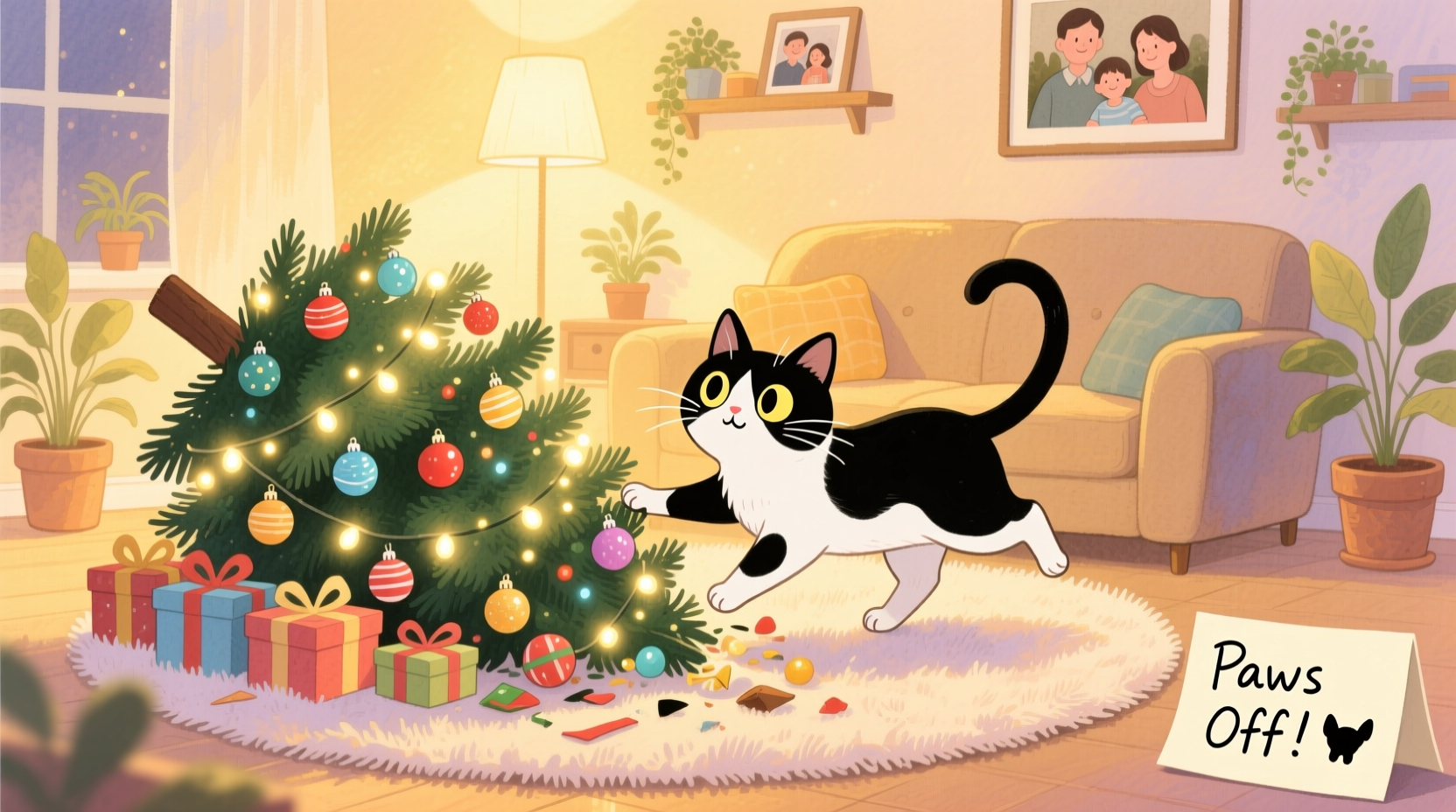
Cats are curious, agile predators whose behaviors stem from deeply ingrained instincts. A Christmas tree, especially when adorned with ornaments, tinsel, and lights, becomes an irresistible sensory playground. From a cat’s perspective, the tree resembles a giant vertical territory—perfect for climbing, swatting, and exploring.
The movement of dangling ornaments mimics prey. Shiny objects reflect light unpredictably, triggering a hunting response. Even the scent of real pine can be stimulating. Combine these elements with a structure that sways slightly when nudged, and you have what feels like a living jungle gym to your cat.
Dr. Sarah Thompson, a certified feline behavior consultant, explains:
“Cats don’t knock over trees out of spite. They’re responding to environmental cues that signal opportunity—climbing space, moving objects, novel scents. It’s exploration, not destruction.”
In multi-cat homes, competition for attention or territory may amplify this behavior. One cat might initiate play near the tree, prompting others to join—not necessarily because they want to climb, but because social dynamics encourage participation.
Humane Strategies to Prevent Tree Tipping
Punishment is ineffective and harmful. Instead, create a cat-friendly environment that satisfies natural needs while protecting your holiday centerpiece. The goal isn’t to eliminate curiosity—it’s to channel it appropriately.
Secure the Tree Physically
The most direct way to prevent tipping is to anchor the tree so it cannot fall, even under a cat’s weight. This doesn’t mean restricting access entirely—it means making the tree stable enough to withstand playful interaction.
- Use a heavy base: Opt for a solid metal stand filled with water and weighted down with sandbags or bricks (hidden beneath the tree skirt).
- Attach to the wall: Use fishing line or soft straps to tether the top of the tree to a wall hook or ceiling joist. Ensure the line is taut but invisible from normal viewing angles.
- Place in a low-traffic corner: Avoid high-activity zones where cats might chase toys into the tree. A quiet corner reduces accidental collisions.
Modify the Tree Environment
Making the tree less appealing—without eliminating holiday joy—is key. Focus on reducing temptation while increasing alternative attractions elsewhere.
- Keep lower branches bare: Remove all ornaments, tinsel, and lights from the bottom 2–3 feet of the tree. This eliminates easy targets and discourages pawing.
- Use unbreakable ornaments: Swap glass baubles for fabric, wood, or plastic versions. Hang fragile items higher up, out of reach.
- Avoid tinsel and ribbons: These mimic strings and can cause intestinal blockages if ingested. Choose safer alternatives like paper chains or felt garlands.
- Use motion-activated deterrents sparingly: Devices that emit a puff of air or sound when triggered can startle cats. Use only if necessary, and never as a primary solution.
Redirect Behavior with Enrichment
Cats don’t need fewer activities—they need better ones. When your cat has engaging alternatives, the tree loses its novelty.
Create Feline-Friendly Zones
Designate areas in your home specifically for climbing, scratching, and play. A catio, tall cat tree, or window perch near bird feeders can provide hours of stimulation.
| Enrichment Type | Best For | Holiday Application |
|---|---|---|
| Vertical Climbing Structures | Territory expansion, exercise | Place near the tree to offer an alternative climb |
| Interactive Toys | Hunting simulation | Rotate daily to maintain interest |
| Scented Surfaces (catnip, silvervine) | Exploration, relaxation | Rub on scratching posts or toys near play zones |
| Food Puzzles | Mental engagement | Use during family gatherings to keep cat occupied |
Introduce new toys and structures before putting up the tree. This allows your cat to form positive associations with alternative spaces early in the season.
Engage in Daily Play Sessions
A tired cat is less likely to seek out trouble. Schedule two 10–15 minute play sessions per day using wand toys that mimic birds or rodents. End each session by letting your cat “catch” the toy and reward with a treat—this satisfies the full predatory sequence.
Step-by-Step Guide: Cat-Safe Tree Setup Timeline
Preparation starts weeks before the holidays. Follow this timeline to minimize stress and maximize success.
- Week 1: Assess Your Space
Identify safe corners for the tree. Measure clearance from walls and furniture. Plan anchoring points. - Week 2: Introduce Alternatives
Set up or refresh cat trees, window perches, and puzzle feeders. Rotate in new toys to spark interest. - Week 3: Bring in the Tree (Unadorned)
Assemble the tree without decorations. Let your cat investigate under supervision. Reward calm behavior with treats. - Week 4: Decorate Strategically
Add lights and upper ornaments. Keep lower branches clear. Install anchors and test stability. - Daily: Monitor and Reinforce
Supervise interactions. Redirect pawing or climbing attempts to approved structures. Continue scheduled play.
This gradual approach helps your cat adjust to the tree as part of the environment—not a sudden intrusion.
Real Example: The Miller Family’s Solution
The Millers had battled a fallen tree for three consecutive Christmases. Their 3-year-old tabby, Luna, would leap onto the branches within hours of setup, sending ornaments flying. After consulting a veterinary behaviorist, they implemented a multi-pronged strategy.
They moved the tree from the living room center to a quieter corner adjacent to a newly installed cat tower. The tower was rubbed with silvervine and topped with a feather wand toy. They used a wall anchor for the tree and removed all decorations below 30 inches. Each evening, they played with Luna for 15 minutes near the tower before bedtime.
By Christmas Eve, Luna showed more interest in her tower than the tree. On Christmas morning, the tree stood firm—decorated, intact, and surrounded by only a few stray needles. “We stopped seeing her as a problem,” said Sarah Miller, “and started seeing her needs. That changed everything.”
Frequently Asked Questions
Can I train my cat not to go near the tree?
You can’t train a cat to ignore instinct, but you can teach them preferred behaviors. Use positive reinforcement—treats, praise, play—to reward distance from the tree and engagement with alternatives. Never punish; this increases anxiety and can worsen the behavior.
Are artificial trees safer than real ones?
Artificial trees are generally safer in terms of toxicity (real trees can be mildly toxic if ingested), but both types pose tipping risks. The key difference is scent—real trees emit odors that may attract cats more strongly. If using a real tree, consider placing a barrier (like a decorative fence) around the base to limit access.
What if my cat eats tinsel or ornament fragments?
Ingesting tinsel, string, or small decorations can cause life-threatening intestinal blockages. Seek veterinary care immediately if you suspect ingestion. Symptoms include vomiting, lethargy, loss of appetite, or straining to defecate. Prevention is critical—avoid linear objects on the tree entirely.
Checklist: Cat-Safe Christmas Tree Preparation
- ✅ Choose a sturdy tree stand and add extra weight (sandbags, bricks)
- ✅ Anchor the tree to a wall or ceiling using fishing line or soft straps
- ✅ Keep bottom 2–3 feet of the tree free of ornaments, lights, and tinsel
- ✅ Use unbreakable, non-toxic decorations
- ✅ Set up alternative climbing structures nearby
- ✅ Introduce puzzle feeders and interactive toys before decorating
- ✅ Schedule daily play sessions to burn energy
- ✅ Supervise initial interactions with the tree
- ✅ Remove tree promptly after the holidays to reduce prolonged exposure
Conclusion: Harmony Over Holiday Hazards
Your Christmas tree doesn’t have to become a casualty of feline curiosity. By understanding the motivations behind your cat’s actions and responding with empathy and planning, you can enjoy a festive, cat-safe holiday. The goal isn’t perfection—it’s coexistence. A securely anchored tree, enriched environment, and consistent routines create peace for both pets and people.
Remember, your cat isn’t trying to ruin your holiday. They’re simply being a cat. Meet their needs with kindness, and you’ll likely find that the most memorable moments aren’t the untouched ornaments—but the quiet purrs from a satisfied cat curled up beside their own decorated perch.




 浙公网安备
33010002000092号
浙公网安备
33010002000092号 浙B2-20120091-4
Comments
No comments yet. Why don't you start the discussion?