
Cats are naturally drawn to movement, light, and novelty—traits that evolved from their predatory instincts. During the holiday season, blinking Christmas lights present an irresistible combination of flickering motion and unpredictable patterns, making them a magnet for feline attention. While this behavior may seem endearing or amusing at first, it can quickly escalate into obsession, anxiety, or even destructive habits. Understanding why cats fixate on these lights—and how to gently redirect their focus—is essential for maintaining a calm, safe environment for both pets and owners.
The Science Behind Feline Light Fascination
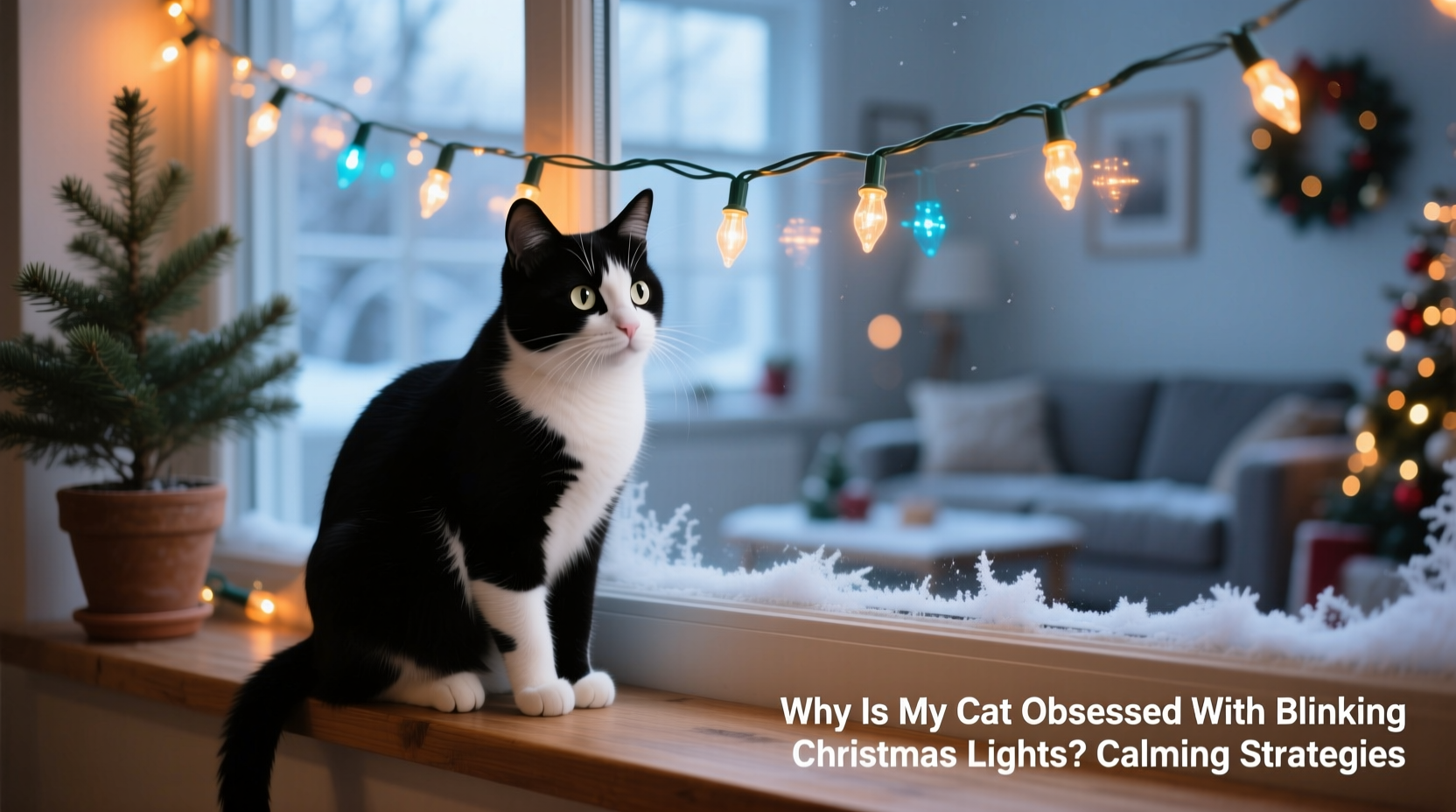
Cats possess highly developed visual systems optimized for detecting motion, especially in low-light conditions. Their retinas contain a high concentration of rod cells, which are sensitive to movement and dim lighting—ideal for hunting at dawn or dusk. Blinking Christmas lights mimic the erratic movements of prey: sudden flashes, intermittent illumination, and shifting points of light trigger a cat’s innate predatory response.
Moreover, cats are neophilic—they are naturally curious about new stimuli. Introducing holiday decorations, particularly those with dynamic lighting, activates exploratory behaviors. The unpredictability of blinking sequences keeps a cat mentally engaged, sometimes to the point of fixation. This isn’t just play; it’s a form of environmental enrichment that, when unmanaged, can become overstimulating.
“Cats don’t see colors the same way humans do, but they are exceptionally sensitive to changes in light intensity and motion. A string of blinking lights is like a moving target in their peripheral vision.” — Dr. Lena Torres, Veterinary Ethologist
When Curiosity Turns Into Obsession
Occasional interest in Christmas lights is normal. However, signs of obsession include:
- Pacing near the tree for extended periods
- Swatting, biting, or pawing at lights repeatedly
- Refusing to leave the room where lights are displayed
- Vocalizing intensely when lights turn off
- Displaying redirected aggression toward people or other pets
In some cases, the constant stimulation can lead to chronic stress. Cats under prolonged sensory overload may develop compulsive behaviors such as excessive grooming, loss of appetite, or litter box avoidance. The issue isn't merely about the lights themselves—it's about how the environment affects a cat’s emotional regulation.
Calming Strategies to Reduce Light Obsession
Managing a cat’s fixation on blinking lights requires a multi-pronged approach that addresses environmental triggers, mental stimulation, and routine stability. Below are proven strategies to help your cat stay calm and engaged without relying on overstimulating visuals.
1. Replace Blinking Lights With Steady or Warm-Tone LEDs
Flickering lights are more stimulating than steady ones. Opt for warm-white LED strings instead of multicolored or strobing varieties. These emit a softer glow that is less likely to trigger predatory reflexes. Research suggests that blue-enriched white light increases arousal in animals, while warmer tones (2700K–3000K) promote relaxation.
2. Use Timers to Control Exposure
Limited exposure reduces overstimulation. Set lights to turn on for only 1–2 hours per evening, preferably when you can supervise. This creates a predictable routine and prevents your cat from developing dependency on the visual stimulus.
3. Create Visual Barriers
If removing the lights isn’t an option, consider placing the tree in a room with a baby gate or using decorative screens to block direct line of sight. Cats rely heavily on visual cues; reducing access to the light source often diminishes fixation over time.
4. Provide Alternative Stimulation
Redirect your cat’s energy with interactive toys that simulate prey-like movement. Wand toys with feathers, motorized mice, or puzzle feeders offer healthy outlets for hunting instincts. Schedule play sessions before turning on the lights to tire your cat mentally and physically.
5. Introduce Calming Aids
For highly sensitive cats, veterinarian-approved calming tools can make a significant difference:
- Feliway diffusers (synthetic facial pheromones)
- Calming collars infused with lavender or chamomile
- Supplements containing L-theanine or alpha-casozepine
These aids work best when used consistently, starting a few days before introducing holiday decor.
Step-by-Step Plan to Transition Your Cat Through the Holiday Season
Follow this five-week timeline to minimize stress and prevent obsessive behaviors:
- Week 1: Prepare the Environment
Set up the tree without lights or ornaments. Allow your cat to investigate freely. Reward calm behavior with treats or affection. - Week 2: Introduce Non-Blinking Lights
Add steady LED lights on a timer (30 minutes/day). Observe your cat’s reaction. If agitation occurs, reduce duration or switch to battery-operated flameless candles as an alternative. - Week 3: Add Ornaments Strategically
Use lightweight, breakable-free ornaments placed higher than 3 feet. Avoid shiny or dangling items that mimic prey. Reinforce boundaries with positive reinforcement. - Week 4: Gradually Increase Light Time
Extend lighting periods to 1–2 hours in the evening. Pair with interactive play to associate the tree area with fun, not fixation. - Week 5: Monitor and Adjust
Assess your cat’s behavior weekly. If obsession persists, consider switching to a fabric tree or projected lights on the wall, which are less accessible and tactile.
Do’s and Don’ts: Managing Holiday Decor Around Cats
| Do | Don’t |
|---|---|
| Use shatterproof ornaments made from felt or wood | Hang fragile glass or metal baubles within reach |
| Secure electrical cords with cord covers or tape | Leave loose cords exposed—chewing risks electrocution |
| Place the tree in a stable, anchored location | Allow the tree to wobble or tip easily |
| Offer daily enrichment (play, puzzles, climbing) | Leave your cat unsupervised with new stimuli for long periods |
| Introduce changes gradually | Sudden decor changes without acclimation |
A Real-Life Example: Helping Luna Adjust
Maria, a cat owner in Portland, noticed her 3-year-old tabby Luna became hyperactive every evening when the living room Christmas lights turned on. Luna would stare intently at the tree, twitch her tail, and lunge at the flickering bulbs. Over two weeks, she began refusing to sleep in her usual spot and started scratching the couch nearby—a sign of redirected stress.
Maria consulted her vet, who recommended a gradual desensitization plan. She replaced the blinking lights with steady warm-white LEDs, set a 45-minute nightly timer, and introduced two 10-minute play sessions before lighting time. She also installed a Feliway diffuser in the living room and moved Luna’s bed slightly farther from the tree.
Within 10 days, Luna’s fixation decreased significantly. By the third week, she would glance at the tree briefly, then settle on her perch to groom herself. Maria continued the routine through January, and Luna showed no signs of anxiety once the decorations were removed.
FAQ: Common Questions About Cats and Christmas Lights
Can blinking lights hurt my cat’s eyes?
No, standard Christmas lights do not emit harmful radiation or brightness levels that damage feline vision. However, constant flicker can contribute to sensory overload and stress, especially in cats with pre-existing anxiety or neurological sensitivity.
Is it safe to leave Christmas lights on overnight with cats?
No. Besides fire hazards and potential chewing on cords, continuous exposure can disrupt a cat’s circadian rhythm. Cats benefit from consistent day-night cycles. Use timers to limit lighting to supervised hours only.
What if my cat won’t stop chewing the lights?
Chewing poses serious risks, including electrocution and intestinal blockage. Immediately secure all cords with protective tubing, apply pet-safe bitter sprays, and consider using battery-powered lights instead. If the behavior persists, consult your veterinarian—compulsive chewing may indicate underlying anxiety.
Checklist: Preparing a Cat-Safe Holiday Space
Use this checklist to ensure a peaceful holiday season for your feline companion:
- ✅ Choose steady, warm-toned LED lights instead of blinking or flashing types
- ✅ Install a timer to limit light exposure to 1–2 hours per day
- ✅ Secure all electrical cords with cord protectors or tape
- ✅ Anchor the Christmas tree to prevent tipping
- ✅ Remove or hang out-of-reach any small, shiny, or dangling ornaments
- ✅ Introduce the decorated space gradually over several days
- ✅ Increase daily play and mental enrichment
- ✅ Use a pheromone diffuser in shared living areas
- ✅ Supervise interactions during initial exposure
- ✅ Have a backup plan (e.g., screen, alternate room) if stress persists
Conclusion: Creating Harmony During the Holidays
A cat’s obsession with blinking Christmas lights stems from deep-seated instincts, not misbehavior. With thoughtful planning and compassionate management, you can honor both holiday traditions and your pet’s emotional needs. The goal isn’t to eliminate joy—but to share it in a way that keeps your cat feeling safe, engaged, and calm.
Start implementing these strategies early, observe your cat’s cues closely, and adjust as needed. A little preparation goes a long way in preventing stress and building positive associations with seasonal changes.




 浙公网安备
33010002000092号
浙公网安备
33010002000092号 浙B2-20120091-4
Comments
No comments yet. Why don't you start the discussion?