
If you’ve ever brought home a new appliance only to find your cat immediately claiming the empty cardboard box as their personal throne, you’re not alone. Cats across the world exhibit an undeniable fascination with cardboard boxes—squeezing into ones too small, nesting in delivery packaging, or simply lounging inside a flattened square on the floor. While it may seem whimsical or even irrational, this behavior is deeply rooted in biology, psychology, and environmental adaptation. The truth is, your cat isn’t just being cute—they’re following hardwired instincts that have evolved over thousands of years.
Understanding why cats are drawn to cardboard boxes goes beyond mere entertainment. It reveals insights into their emotional needs, stress responses, and natural behaviors. Whether you're a curious pet owner or someone trying to improve your cat’s well-being, unpacking the science behind this habit can lead to better care practices and a deeper bond with your feline companion.
The Evolutionary Advantage of Enclosed Spaces
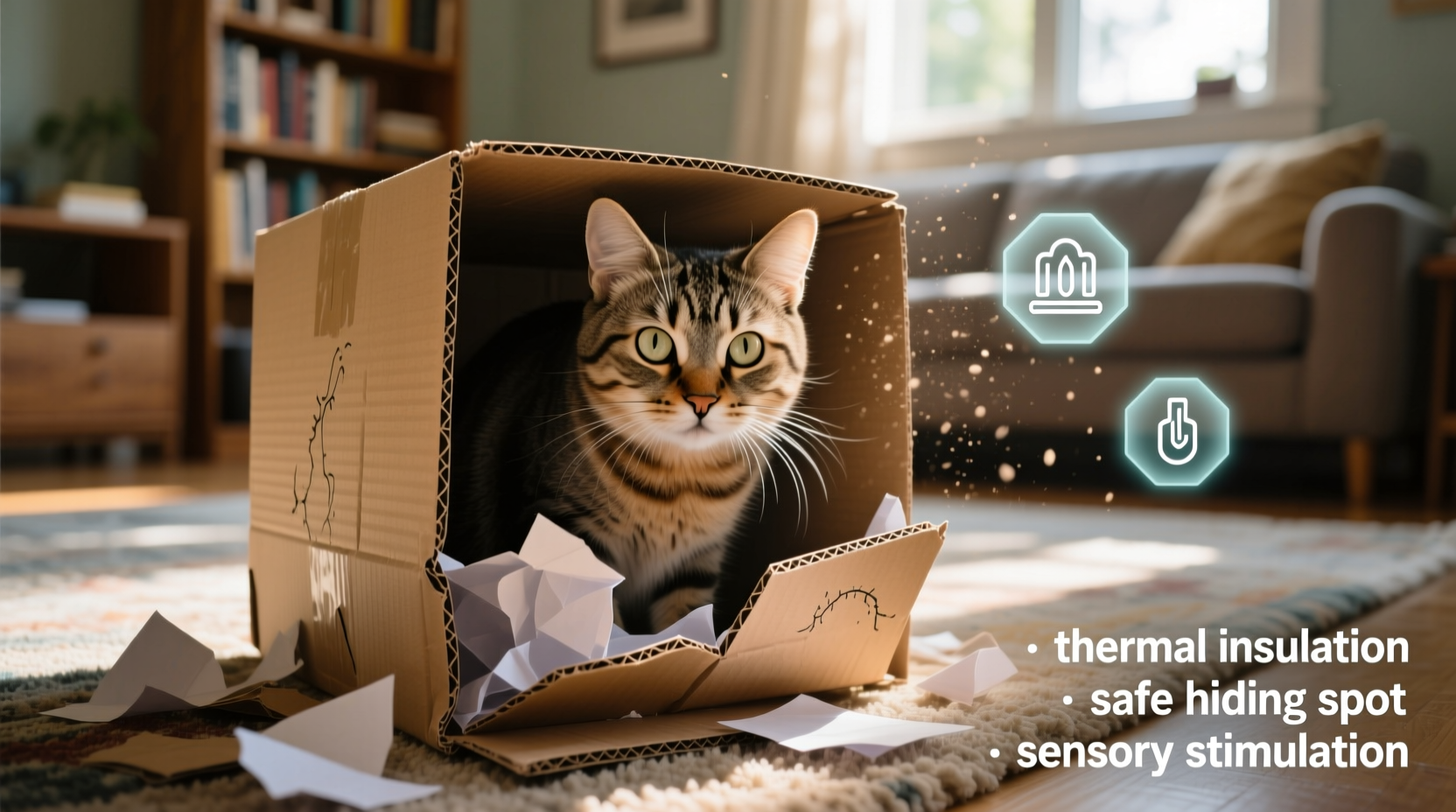
Cats, even domesticated ones, retain many of the survival instincts of their wild ancestors. In nature, small predators like wildcats seek out enclosed, hidden spaces to rest, hunt, and avoid larger threats. These shelters provide protection from predators, insulation from weather, and vantage points for ambush hunting. Cardboard boxes, despite their humble origins, fulfill all these criteria in a modern household.
A box offers walls on four sides and a roof (if closed), creating a den-like environment. This sense of enclosure reduces exposure and increases perceived safety. For a cat, being able to see without being seen is crucial for mental comfort. Even in a secure home, cats remain alert to environmental stimuli—sudden noises, unfamiliar visitors, or changes in routine can trigger low-level stress. A cardboard box becomes a refuge where they can observe their surroundings while feeling shielded.
“Enclosed spaces reduce a cat’s anxiety by providing control over visibility and access. That’s why boxes are more than toys—they’re functional sanctuaries.” — Dr. Sarah Collier, Feline Behavior Specialist, American Veterinary Society
This need for security is especially pronounced in multi-cat households or homes with frequent activity. Studies have shown that shelter cats given access to hiding boxes adjust to new environments faster and display fewer signs of stress compared to those without such resources.
Thermoregulation: Why Warmth Matters More Than You Think
One of the most underappreciated reasons cats love cardboard boxes lies in thermal regulation. The average indoor temperature comfortable for humans—around 68–72°F (20–22°C)—is actually on the cooler side for cats. Domestic cats maintain a higher body temperature than humans, typically between 100.5°F and 102.5°F (38–39.2°C). To conserve energy, they prefer warmer resting spots.
Cardboard is a surprisingly effective insulator. Its fibrous structure traps air, forming a buffer against cold floors and drafts. When a cat curls up inside a box, their body heat warms the interior, and the cardboard helps retain that warmth. This makes boxes ideal napping spots, particularly during colder months or in air-conditioned homes.
Interestingly, kittens and older cats show an even stronger preference for insulated spaces due to less efficient thermoregulation. Providing accessible boxes can support their comfort and overall health.
Sensory Appeal and Environmental Enrichment
Cardboard isn’t just structurally appealing—it engages multiple senses. The texture invites scratching and kneading, behaviors tied to territorial marking and muscle relaxation. The faint scent of paper pulp and glue (non-toxic varieties) may also be intriguing to cats, who rely heavily on olfactory cues to assess safety and familiarity.
Moreover, chewing or tearing at the edges of a box provides mild mental stimulation. While not a substitute for proper enrichment tools like puzzle feeders or interactive toys, this low-level engagement satisfies a cat’s natural urge to manipulate their environment. Some experts suggest that the crinkly sound of crushed cardboard may even mimic rustling prey, triggering brief predatory interest.
| Sensory Input | Cat Response | Benefit |
|---|---|---|
| Tactile (texture) | Scratching, kneading, biting | Stress relief, territory marking |
| Olfactory (smell) | Sniffing, rubbing cheeks | Familiarization, comfort |
| Auditory (crinkling) | Head turns, paw swipes | Mental stimulation |
| Visual (enclosure) | Peering out, hiding | Security, surveillance |
In multi-sensory terms, a cardboard box acts as a micro-habitat—a self-contained space that meets several behavioral needs simultaneously. This is especially valuable in sterile or minimalist homes where natural stimuli are limited.
Stress Reduction and Behavioral Health
Modern veterinary research increasingly emphasizes the importance of environmental enrichment in preventing feline anxiety and depression. Unlike dogs, cats often internalize stress, which can manifest as over-grooming, aggression, or inappropriate elimination. Access to safe hiding places is now recognized as a cornerstone of feline mental wellness.
A landmark 2014 study published in *Applied Animal Behaviour Science* observed newly arrived shelter cats divided into two groups: one given a cardboard box daily, the other without. Over two weeks, the “box group” showed significantly lower stress scores, faster acclimation, and increased social interaction with caregivers. The researchers concluded that even temporary hiding spots can dramatically improve psychological resilience.
In homes, similar benefits occur. Major life events—moving, introducing a new pet, or hosting guests—can unsettle even confident cats. Placing extra boxes in quiet rooms gives them control over their environment, reducing helplessness and fear. Some owners report that their cats rotate between boxes depending on mood, much like choosing different chairs based on comfort or view.
“When cats feel in control of their space, they feel in control of their lives. A simple box can be a powerful tool for emotional balance.” — Dr. Lena Torres, Clinical Ethologist, International Cat Care
Practical Tips for Using Boxes to Enhance Your Cat’s Well-Being
While tossing a random box on the floor might seem sufficient, strategic placement and maintenance can maximize its benefit. Consider these best practices:
- Vary size and location: Offer boxes in different rooms to create a network of safe zones.
- Add soft bedding: Line boxes with removable blankets or towels for added warmth and washability.
- Rotate boxes: Replace or reposition boxes weekly to maintain novelty and hygiene.
- Use non-toxic materials: Avoid boxes with heavy ink printing, plastic linings, or tape residue.
- Combine with play: Hide treats or toys inside to encourage positive associations.
Checklist: Optimizing Cardboard Boxes for Your Cat
- Choose sturdy, clean boxes free of staples or chemicals.
- Cut entry holes large enough for easy access but small enough to provide snugness.
- Place boxes in low-traffic, warm areas (e.g., laundry room, bedroom corner).
- Monitor usage—replace if soiled, chewed excessively, or collapsed.
- Provide at least one box per cat in multi-cat homes, plus extras for choice.
- Introduce new boxes gradually after major household changes.
Mini Case Study: Reducing Anxiety in a Multi-Cat Home
Sophia, a cat owner in Portland, noticed tension between her two cats—Milo, a 3-year-old tabby, and Luna, a 7-year-old rescue—after moving to a new apartment. Luna began avoiding common areas and hiding under furniture. Following advice from her veterinarian, Sophia placed three cardboard boxes in separate rooms, each lined with a t-shirt carrying her scent.
Within days, Luna started using the boxes regularly, rotating between them. Milo, initially uninterested, began playing near the boxes and eventually claimed one as his nighttime bed. Over six weeks, food aggression decreased, and both cats resumed grooming each other. Sophia noted, “The boxes didn’t fix everything, but they gave Luna a sense of control. That made all the difference.”
Frequently Asked Questions
Is it safe for my cat to eat cardboard?
Small amounts of incidental chewing are generally harmless, but ingesting large pieces can cause gastrointestinal blockages. If your cat frequently eats cardboard, consult your vet—this could indicate pica, a condition linked to nutritional deficiencies or stress.
Can I reuse the same box?
Yes, as long as it remains structurally sound and clean. However, replace it if it becomes damp, torn, or soiled. Regular replacement ensures hygiene and maintains your cat’s interest through novelty.
Are there alternatives to cardboard boxes?
Yes. Commercial cat caves, insulated beds, and DIY enclosures made from fabric-covered frames can serve similar purposes. But many cats still prefer cardboard due to its affordability, texture, and natural insulation properties.
Conclusion: Embrace the Box, Enhance Your Cat’s Life
The next time you catch your cat curled up in a shipping container meant for recycling, remember: this isn’t a quirk—it’s a window into their primal psychology. From evolutionary survival tactics to modern-day stress management, cardboard boxes fulfill essential physical and emotional needs. They are more than makeshift furniture; they are tools for comfort, control, and calm.
By understanding and supporting this natural behavior, you’re not indulging a silly habit—you’re practicing thoughtful, science-backed caregiving. So keep a few spare boxes on hand. Customize them, place them strategically, and observe how your cat responds. You might just discover that the simplest solution is also the most profound.




 浙公网安备
33010002000092号
浙公网安备
33010002000092号 浙B2-20120091-4
Comments
No comments yet. Why don't you start the discussion?